
Resources
Explore a wide range of valuable resources on GCED to deepen your understanding and enhance your research, advocacy, teaching, and learning.
1,407 Results found
 Recommendation on the Ethics of Artificial Intelligence Year of publication: 2022 Corporate author: UNESCO This Recommendation addresses ethical issues related to the domain of Artificial Intelligence to the extent that they are within UNESCO’s mandate. The protection of human rights and dignity is the cornerstone of this Recommendation. It is based on the advancement of fundamental principles such as transparency and fairness, and remembers the importance of human oversight of AI systems. However, what makes the Recommendation exceptionally applicable are its extensive Policy Action Areas, which allow policymakers to translate the core values and principles into action with respect to data governance, environment and ecosystems, gender, education and research, and health and social wellbeing, among many other spheres.
  Recommandation sur l’éthique de l’intelligence artificielle Year of publication: 2022 Corporate author: Organisation des Nations Unies pour l'éducation, la science et la culture (UNESCO) La présente Recommandation traite des questions éthiques soulevées dans le domaine de l’intelligence artificielle, dans la mesure où celles-ci relèvent du mandat de l’UNESCO. Elle aborde l’éthique de l’IA en tant que réflexion normative systématique, basée sur un cadre global, détaillé, multiculturel et évolutif de valeurs, de principes et d’actions interdépendants de nature à orienter les sociétés pour qu’elles apportent des réponses responsables aux conséquences connues et inconnues des impacts des technologies de l’IA sur les êtres humains, les sociétés, l’environnement et les écosystèmes, et leur offre une base pour accepter ou rejeter les technologies de l’IA. Elle considère l’éthique comme une base dynamique pour l’évaluation et l’orientation normatives des technologies de l’IA, en faisant de la dignité humaine, du bien-être et de la prévention des dommages des repères et en s’appuyant sur l’éthique des sciences et des technologies.
  Défendre les voix créatives: artistes en situation d'urgence, apprendre de la sécurité des journalistes Year of publication: 2023 Author: Rosario Soraide Corporate author: Organisation des Nations Unies pour l'éducation, la science et la culture (UNESCO) Les artistes et les professionnels de la culture se heurtent souvent à des obstacles importants à leur liberté d'expression, comme la violence et le harcèlement, en ligne et hors ligne, la persécution juridique, la détention, l'emprisonnement et, dans le pire des cas, l'assassinat. Les situations d'urgence peuvent engendrer des risques supplémentaires pour ces groupes, car nombre d'entre eux sont de plus en plus ciblés en raison de la visibilité de leur travail et voient leurs moyens de subsistance affectés par la perte de revenus et la hausse du chômage dans le secteur culturel. Alors que les attaques et les menaces auxquelles sont confrontés les artistes et les professionnels de la culture dans les situations d'urgence sont similaires à celles qui touchent les journalistes, ils ne bénéficient pas du même niveau d'attention ni du même accès aux mécanismes de protection et aux aides disponibles. Au cours des dernières décennies, un cadre solide a été mis en place pour promouvoir la sécurité des journalistes aux niveaux international, régional et national, notamment via des instruments juridiques et réglementaires, des mécanismes de protection, des réseaux de soutien et une mobilisation collective constante en faveur de leurs droits. Malgré une prise de conscience croissante de la vulnérabilité des artistes et des professionnels de la culture dans les situations d'urgence et un développement des initiatives visant à sauvegarder leurs droits et garantir leur sécurité, les progrès à cet égard restent comparativement beaucoup plus embryonnaires. Avec le soutien des Secteurs de la Culture, et de la Communication et de l’Information de l'UNESCO, et sur la base d'une analyse comparative, cette étude vise à renforcer la protection des artistes et des professionnels de la culture dans les situations d'urgence en tirant les leçons de l'expérience, des défis et des résultats obtenus dans le domaine de la sécurité des journalistes. Elle élabore des recommandations réalisables et définit les domaines dans lesquels la collaboration entre les principaux acteurs promouvant, respectivement, la liberté artistique et la liberté des médias pourrait servir à renforcer la protection des artistes et des journalistes en danger.
  Greening Curriculum Guidance: Teaching and Learning for Climate Action Year of publication: 2024 Corporate author: UNESCO This Guidance responds to the calls from young people for a holistic approach to climate change and sustainability in the curriculum. It outlines a common language on how quality climate change and sustainability can be reflected in the curriculum by setting expected learning outcomes per age group (from 5-year olds and up to 18+ age group, including a lifelong learning approach).This is crucial for accelerating country-level action and ensuring joint monitoring of progress. The objective is to have 90 per cent of all countries include climate change in their curricula by 2030, as established by the Greening Education Partnership.This Guidance aims to support countries, schools or individual practitioners in reassessing their ongoing practices to adopt a more action-oriented, holistic, scientifically accurate, justice-driven and lifelong learning approach to climate change.
 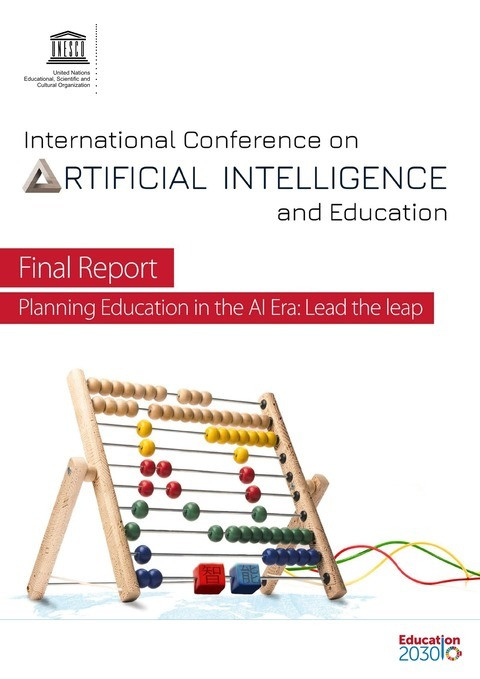 International Conference on Artificial Intelligence and Education, Planning Education in the AI Era: Lead the Leap; Final Report Year of publication: 2019 Corporate author: UNESCO The current report is an exhaustive account of the discussion and debate at the International Conference on Artificial Intelligence and Education (hereafter referred to as ‘the conference’) held in Beijing from 16 to 18 May 2019. Under the overarching theme of ‘Planning Education in the AI Era: Lead the Leap’, the conference was structured into seven plenary sessions and 16 breakout sessions complemented by a live exhibition and study tours to facilitate forwardlooking debates, share cutting-edge knowledge and AI solutions, and deliberate on sector-wide strategies.
  Couvrir les migrations et les réfugiés : manuel pour les formateurs en journalisme Year of publication: 2023 Corporate author: Organisation des Nations Unies pour l'éducation, la science et la culture (UNESCO) Couvrir les migrations : Un défi pour les formateurs en journalisme du monde entier Ce manuel permet aux formateurs en journalisme du monde entier de relever l'un des défis du XXIe siècle : la migration et le déplacement forcé. Cet ensemble de treize modules constitue un cursus complet. Il couvre tous les aspects nécessaires pour enseigner l'analyse, la recherche documentaire, la mise en forme, le démarchage des organes de presse et l'éthique de la couverture des migrations. Unique en son genre, il intègre les connaissances issues des champs de la communication et des sciences politiques et sociales. Il a été conçu par un groupe international et interculturel de chercheurs, de formateurs et de journalistes.Les enseignants seront à même de lancer un programme d'études innovant. Les étudiants apprendront que les questions de migration et de déplacement forcé concernent des êtres humains et nécessitent donc une connaissance et une attention particulière à l'exactitude des faits, à la fiabilité des sources, à l'éthique de la collecte d'informations et aux bonnes pratiques en la matière. Les journalistes expérimentés y trouveront un outil d'auto-apprentissage. Quant aux organisations de développement des médias, elles pourront intégrer le cursus à leurs plans de formation.Cette initiative vise à couvrir de manière plus complète les questions relatives aux migrants et aux réfugiés dans les pays d'origine, de transit et de destination, pour que puisse s’instaurer un débat public plus équilibré et plus éclairé à travers le monde et les cultures. Cubrir la migración: Un desafío para los educadores/as Репортажи о мигрантах и беженцах: Руководство для преподавателей журналистики Year of publication: 2023 Corporate author: Организация Объединенных Наций по вопросам образования, науки и культуры (UNESCO) Освещение миграции: Вызов для преподавателей журналистики во всем мире Это руководство позволяет преподавателям журналистики во всем мире решать одну из проблем 21 века проблемы миграции и беженцев. В наборе из тринадцати модулей преподавателям журналистики предлагается комплексная учебная программа. Она охватывает все аспекты, необходимые для обучения анализу, исследованиям, презентации, маркетингу и этике освещения миграции.Справочник уникален тем, что в нем собраны результаты исследований в области коммуникации, а также политических и социальных наук. Он был разработан международной и межкультурной группой исследователей медиа, медиапедагогов и медиапрактиков.Преподаватели журналистики получат возможность запустить новую учебную программу. Студенты-журналисты узнают, что вопросы миграции и вынужденного перемещения касаются человека и поэтому требуют знания и осведомленности о точных фактах, надежных источниках, этичном освещении и надлежащей практике. Опытные журналисты получат пользу от использования этого тома в качестве инструмента самообучения, а организации по развитию СМИ могут адаптировать учебную программу к своим учебным планам.Проект повлияет на более полное освещение вопросов мигрантов и беженцев в странах происхождения, транзита и назначения, а также на более сбалансированные и информированные общественные дебаты в разных странах и культурах.
  Mapping Cultural Policies in Small Island Developing States: Amplifying SIDS Voices in the Global Policy Dialogue on Culture and Sustainable Development Year of publication: 2025 Corporate author: UNESCO Mapping Cultural Policies in Small Island Developing StatesSpanning three sub-regions – the Atlantic, Indian Ocean and South China Sea (AIS), the Caribbean, and the Pacific – the Small Island Developing States (SIDS) represent 39 UNESCO Member States and 9 Associate Members. Countries and regional organizations have increasingly demonstrated their commitment in the context of fast-evolving policy landscape and cultural ecosystems, encompassing the different dimensions of culture through its diversity and a wide spectrum of concerned stakeholders. Today, a SIDS-specific, culture-led development vision is on the rise.Culture has a multifaceted impact on sustainable development pathways of the SIDS, from climate action, biodiversity protection and food security to economic diversification, social inclusion, gender equality or urban sustainability. The voices and aspirations of SIDS must be heard in the global policy dialogue, in acknowledgement of their priorities, opportunities and insights. International cooperation efforts by UNESCO and other organizations are also essential in identifying areas for future policy investment and adaptation at the national and regional levels.Following the UNESCO World Conference on Cultural Policies and Sustainable Development – MONDIACULT 2022, SIDS are championing culture for sustainable development towards the adoption of a new Programme of Action, the Antigua and Barbuda Agenda for SIDS 2024-2034.
 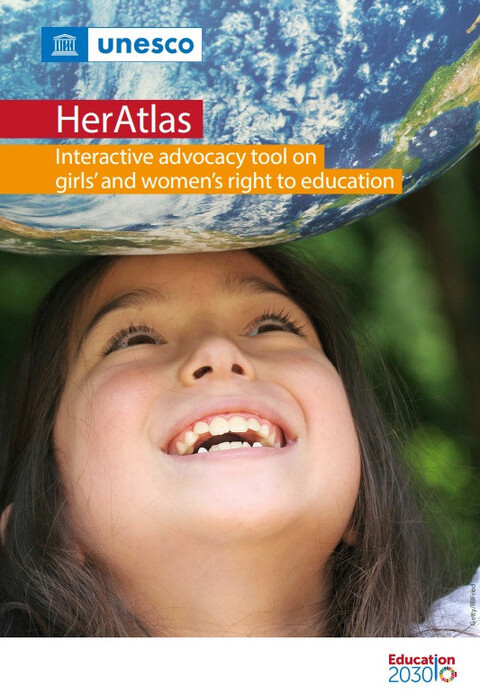 Her Atlas: Interactive Advocacy Tool on Girls’ and Women’s Right to Education Year of publication: 2023 Corporate author: UNESCO Many girls and women cannot exercise their right to education due to gender inequality and discriminatory practices. Poverty, early marriage, and gender-based violence are just some of the many reasons behind the high percentage of global female illiteracy and school drop-outs. Strengthening the right of girls and women to quality education is key to eliminate discrimination and to achieve equal rights between genders. This cannot be achieved without solid national legal frameworks that are rightsbased, gender responsive and inclusive. This is where HerAtlas comes in. HerAtlas, is a first of its kind online tool that maps the right to education of girls and women. It aims to enhance public knowledge and monitor the status of national constitutions, legislation and regulations related to education rights for girls and women to encourage countries to take action, strengthen their laws and policies, and lead to long term change. Concrete changes are already apparent. In 2019, 4% of countries were explicitly restricting the right to education of married, pregnant, and parenting girls. This has dropped to 2% in 2022, benefiting millions of girls who can now legally attend school when they marry or become pregnant.
  South-Eastern Europe regional synthesis: climate change, displacement and the right to education Year of publication: 2023 Corporate author: UNESCO In 2021 alone, 23.7 million people were displaced in 137 countries and territories due to natural disasters, which the scientific community has recognized have become more frequent and intense due to climate change. Climate change and displacement is currently taking place in Europe, with particularly disastrous consequences in South-Eastern Europe due to regional specificities. Comparative country case studies were carried out in Bosnia and Herzegovina, the Republic of Moldova, and Serbia, as they exemplify clear, present patterns of climate displacement, to examine the impacts of climate change on the right to education in the region. The case studies show that climate change directly threatens education through the destruction of schools and property. It also indirectly puts learning in peril by leading people across borders where their legal residency nor right to education is ensured. This publication aims to guide policy-makers by providing recommendations on how to ensure the protection of the right to education in South-Eastern Europe in the face of climate change and displacement. It is one of four regional reports that will lead to the development of a global report providing global policy guidance.