
Resources
Explore a wide range of valuable resources on GCED to deepen your understanding and enhance your research, advocacy, teaching, and learning.
950 Results found
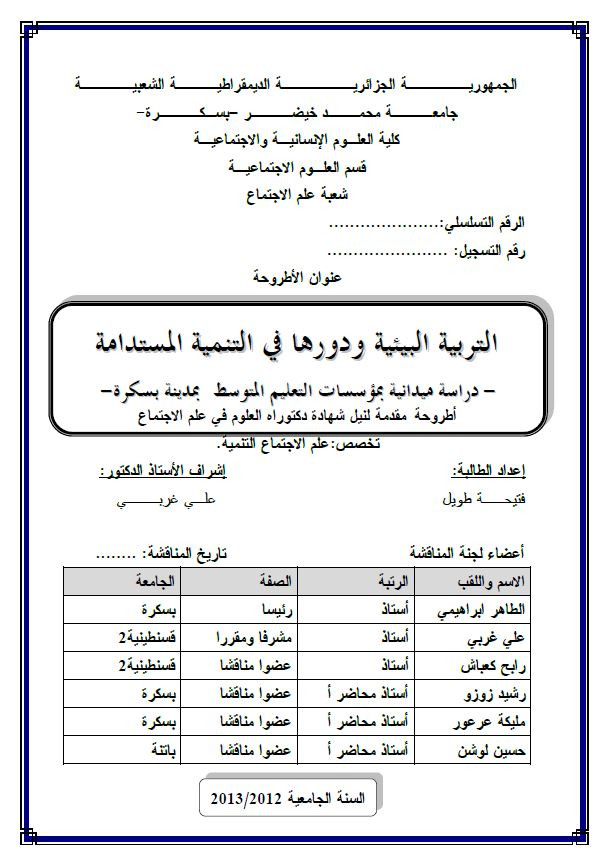 Environmental Education and Its Role in Sustainable Development: A Field Study in Intermediate Education Institutions in the City of Biskra Year of publication: 2013 Corporate author: University Mohamed Khider Biskra The file is a doctoral thesis in an Algerian university. The thesis discusses the role of environmental education in achieving sustainable development. The study used the descriptive approach and focused on the city of Biskra. التربية البيئية ودورها في التنمية المستدامة- دراسة ميدانية بمؤسسات التعليم المتوسط بمدينة بسكرة- Year of publication: 2013 Corporate author: University Mohamed Khider Biskra الملف عبارة عن أطروحة دكتوراه بأحد الجامعات الجزائرية. تناقش الاطروحة دور التربية البيئية في تحقيق التنمية المستدامة. استخدمت الدراسة المنهج الوصفي وركزت على مدينة بسكرة.
 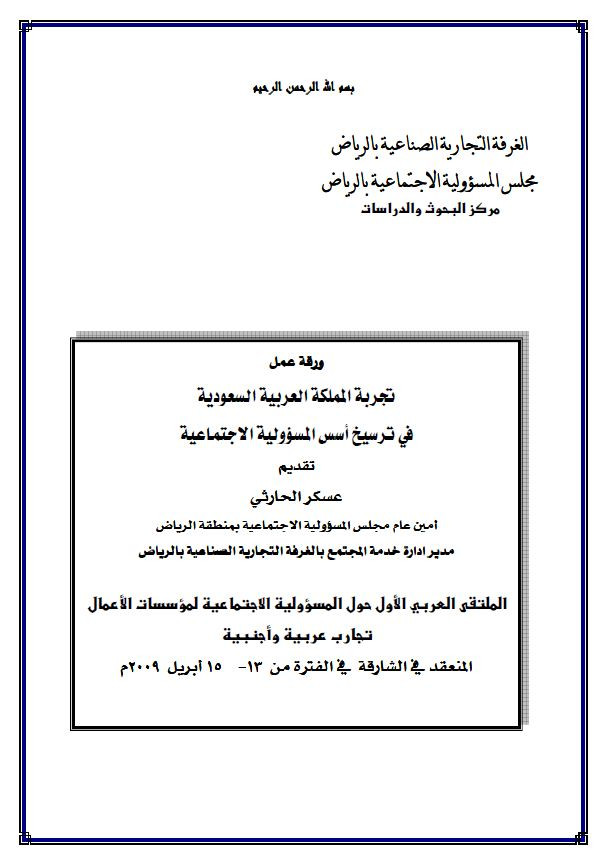 The Experience of the Kingdom of Saudi Arabia in Consolidating the Foundations of Social Responsibility Year of publication: 2009 Author: Mahmoud Issaf The paper reviews the experience of the Kingdom of Saudi Arabia in applying responsibility by identifying the economic and social framework that is the general structure for building this responsibility. Giving a brief overview of the position of social responsibility in the circle of interest of the main sectors, namely the concerned government departments in the country, the charitable sector, and the Chambers of Commerce and Industry, with a review of the experience of the Chamber of Commerce and Industry in Riyadh as a model, and the private sector. تجربة المملكة العربية السعودية في ترسيخ أسس المسؤولية الاجتماعية Year of publication: 2009 Author: Mahmoud Issaf تستعرض الورقة تجربة المملكة العربية السعودية في تطبيق المسؤولية من خلال التعـرف علـى الإطار الاقتصادي والاجتماعي الذي يعد الهيكل العام لبناء هذه المسؤولية. وإعطاء نبذة موجزة عن موقـع المسؤولية الاجتماعية في دائرة اهتمام القطاعات الرئيسية وهي الدوائر الحكومية المعنية في الدولة، والقطاع الخيري، والغرف التجارية الصناعية مع استعراض تجربة الغرفة التجارية الصناعية بالرياض كنمـوذج، والقطاع الخاص.
 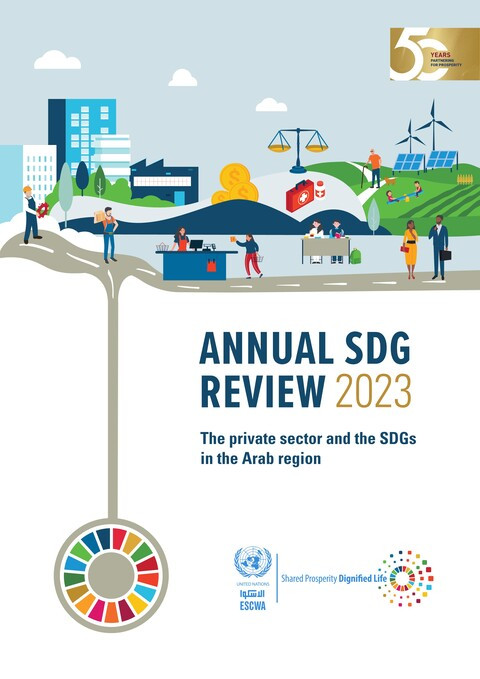 Annual SDG Review 2023: The Private Sector and The SDGs in The Arab Region Year of publication: 2023 Author: Mario Jales | Jana El Baba | Hania Sabbidin Dimassi Corporate author: UN. Economic and Social Commission for Western Asia (UN. ESCWA) The ESCWA Annual SDG Review 2023, the second in the series, explores the contributions of the private sector to the realization of the 2030 Agenda and the SDGs in the Arab region. Building on limited available data on the subject, the report offers an indicative reading of existing trends and gaps in the region. The analysis is guided not only by the Agenda’s goals and targets, but also by the whole-of-society and rights-based approaches and the principles of universality, leaving no one behind, combating inequality and promoting gender equality and the empowerment of women.The Review examines the contributions of the private sector to sustainable development in the Arab region from three lenses: delivering the SDGs through business action, mobilizing private finance for the SDGs, and engaging the private sector in SDG planning and coordination. Each chapter assesses evidence for private sector engagement in the delivery of the SDGs in the region and provides guidance on actions needed to address current gaps. الاستعراض السنوي لأهداف التنمية المستدامة 2023: القطاع الخاص وأهداف التنمية المستدامة في المنطقة العربية Year of publication: 2023 Author: Mario Jales | Jana El Baba | Hania Sabbidin Dimassi Corporate author: UN. Economic and Social Commission for Western Asia (UN. ESCWA) يستكشف الاستعراض السنوي لأهداف التنمية المستدامة لعام 2023 الصادر عن الإسكوا، وهو الثاني ضمن سلسلة الاستعراضات هذه، مساهمات القطاع الخاص في تحقيق خطة عام 2030 وأهداف التنمية المستدامة في المنطقة العربية. يستند هذا الاستعراض إلى البيانات المتاحة في هذا الشأن، رغم محدوديتها، ليقدّم قراءة إرشادية لما تشهده المنطقة من اتجاهات وما يعوقها من ثغرات. ولا يسترشد التقرير في تحليله بأهداف وغايات خطة عام 2030 وحدها، بل يسترشد كذلك بمبادئ الخطة ولا سيما نَهج المجتمع بأسره وحقوق الإنسان والشمول، وعدم إهمال أحد، والتصدي لعدم المساواة، وتعميم منظور المساواة بين الجنسين، وتمكين المرأة.ويستعرض التقرير مساهمات القطاع الخاص في التنمية المستدامة في المنطقة العربية من حيث ثلاثة اعتبارات: تحقيق أهداف التنمية المستدامة من خلال أنشطة الأعمال التجارية؛ تعبئة التمويل الخاص خدمة لأهداف التنمية المستدامة؛ إشراك القطاع الخاص في التخطيط لأهداف التنمية المستدامة وتنسيق العمل عليها. يقيِّم كل فصل الأدلة على مشاركة القطاع الخاص في تحقيق أهداف التنمية المستدامة في المنطقة، ويقدم إرشادات بشأن الإجراءات اللازمة لتدارك الفجوات القائمة.
 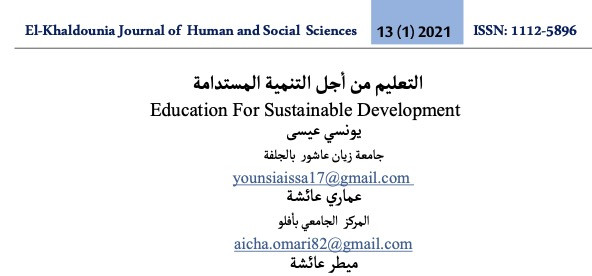 Education for Sustainable Development (vol.13 , no.1; El-Khaldounia Journal of Human and Social Sciences) Year of publication: 2021 Author: Younesi Aissa, Omari Aicha, Maitar Aicha Corporate author: Ibn Khaldoun University. Faculty of Human and Social Sciences This presentation aims to underscore the significance of education in attaining sustainable development, a topic of paramount importance globally. It emphasizes the necessity of enhancing three fundamental dimensions: economic, social, and environmental. To realize the concept of sustainable development, it is imperative to integrate it into educational curricula, ensuring that young people are adequately educated about it. التعليم من أجل التنمية المستدامة (vol.13 , no.1 مجلة الخلدونية للعلوم الإنسانية والاجتماعية) Year of publication: 2021 Author: Younesi Aissa, Omari Aicha, Maitar Aicha Corporate author: Ibn Khaldoun University. Faculty of Human and Social Sciences تهدف هذه المداخلة لإبراز أهمية التعليم من أجل تحقيق التنمية المستدامة ،وهذا باعتبارها من المواضيع التي تلقى اهتماما كبيرا في جميع دول العالم، باعتبارها قضية مهمة في الوقت الراهن، ومحور اهتمامها يتمثل في تحسين ثلاث جوانب أساسية ، وهذه الجوانب تتعلق بالجانب الاقتصادي والاجتماعي والبيئي، ولتحقيق هذا المفهوم-التنمية المستدامة- لدى النشء لابد من تعليمها لهم، ويكون هذا بادراجها في المناهج التعليمية
  Inclusion of the Domains of Sustainable Development in Al Hadith Text Books in the Intermediate Stage Year of publication: 2019 Author: Zubaida S. Al Shamary | Talal M. Al Maaajal Corporate author: Sultan Qaboos University This study aims to identify the areas of sustainable development that should be included in the textbooks of Prophetic Sayings (Hadeeth) in the Kingdom of Saudi Arabia, to determine the degree of availability, and to find out if there are statistically significant differences at (α≤0.05) in the degree of availability. The descriptive analytical method was used to analyze the whole study population. Cooper coefficient of stability, frequencies, and percentages were used to analyze the results and measure the degree of availability of these fields. Chi Square equation was also used to measure the differences between the availability of fields among grades. The social field was firstly ranked with a percentage of 78.16%, and a total of 433 frequencies, while the environmental field followed it with a percentage of 6.98% and a total of 37 frequencies. The paper showed that there were statistically significant differences in the inclusion in Chi equation. تضمين مجالات التنمية المستدامة في كتب الحديث للمرحلة المتوسطة Year of publication: 2019 Author: Zubaida S. Al Shamary | Talal M. Al Maaajal Corporate author: Sultan Qaboos University هدف البحث إلى التعرف على مجالات التنمية المستدامة لتضمينها في كتب الحديث للمرحلة المتوسطة بالمملكة العربية السعودية، والكشف عن فروق دالة إحصائيا عند مستوى (0.05≥α) في درجة توفرها. واستخدمت الطريقة التحليلية الوصفية لتحليل كل العينة. واستخدمت الباحثان معامل اختبار كاي تربيع للاستقلالية لقياس الفروق بين درجة توافر المجالات بين الصفوف الدراسية، وأظهرت نتائج البحث: أن المجال الاجتماعي كان الأعلى تكراراً إذ بلغ ٤٣ بنسبة مئوية 16.78بينما يتضح أن المجال البيئي الأقل تكرارا إذ بلغ ٣٧ بنسبة مئوية 98.6 وظهر من خلال اختبار كاي للاستقلالية وجود فروق دالة احصائيا.