
Resources
Explore a wide range of valuable resources on GCED to deepen your understanding and enhance your research, advocacy, teaching, and learning.
3,454 Results found
 Intercultural and Inclusive Teacher Training: The Conceptualization and Operationalization of Professional Skills Year of publication: 2016 Author: Julie Larochelle-Audet | Corina Borri-Anadon | Maryse Potvin Corporate author: Éducation et francophonie In the context of globalization, educational systems, from elementary to university, must take into account the increasingly complex realities they face, especially in terms of skills that teachers need to develop. In this respect, on both political and scientific levels, the importance of training on ethnocultural, religious and linguistic diversity comes up regularly. However, a portrait of teacher training in Québec universities has revealed an overall deficiency in this area (Larochelle-Audet, Borri-Anadon, McAndrew and Potvin, 2013). While a competency-based approach has prevailed since 2001 in teacher training, an inter-university work group has begun to address this gap by enriching the Department of Education’s professional frame of reference on teacher competencies. The work of the group, presented in this article, is based on a critical analysis of the department’s frame of reference, which reveals an absence of tangible considerations on ethnocultural diversity and the objectives of intercultural and inclusive teacher training. The members of the group developed two methods aiming to add intercultural and inclusive competencies to the reference framework: the first proposes the integration of 21 components into the 12 existing professional competencies, and the second favours the addition of a new intercultural and inclusive competency. Their operationalization entails some limitations and risks, which are the subject of a discussion in this article. La formación intercultural e incluyente del personal docente: conceptualización y operacionalización de competencias Year of publication: 2016 Author: Julie Larochelle-Audet | Corina Borri-Anadon | Maryse Potvin Corporate author: Éducation et francophonie En el contexto de la globalización, los sistemas educativos, desde la primaria hasta la universidad, deben tomar en cuenta las realidades cada vez más complejas que les interpelan, sobre todo en lo referente a las competencias que deben desarrollar los docentes. Al respecto, con frecuencia se recuerda la importancia de una formación relacionada con la diversidad etnocultural, religiosa y lingüística, tanto sobre el plano político que científico. Sin embargo, una evocación de dicha formación en las universidades quebequenses muestra que aun es, en su conjunto, incompleta (Larochelle-Audet, Borri-Anadon, Mc Andrew et Potvin, 2013). Si bien desde 2001 prevalece un enfoque por competencias profesionales en la formación magisterial, un grupo de trabajo interuniversitario se dedicó a corregir esa falta enriqueciendo el referencial ministerial de competencias profesionales del personal docente. Los trabajos del grupo, que presentamos en este artículo, se fundan en un análisis crítico de dicho referencial, el cual muestra la ausencia de consideraciones concretas en lo referente a la diversidad etnocultural y a las finalidades de una formación intercultural incluyente en enseñanza. Los miembros del grupo elaboraron dos modalidades con el objetivo de insertar en el referencial las competencias culturales y incluyentes: la primera propone integrar 21 competencias directamente en las 12 competencias profesionales ya existentes y la segunda privilegia la adjunción de una nueva competencia denominada intercultural e incluyente. Su operacionalización comporta algunos límites y ciertos riesgos que constituyen el tema que aquí se discute.
  The Do's and Don’ts of Global Citizenship Education Year of publication: 2015 Author: Carlos Alberto Torres | Jason Nunzio Dorio Corporate author: Éducation des Adultes et Développement UNESCO is promoting Global Citizenship Education (GCED), not only creating a new global norm in education but also a new analytical perspective. The concept of global citizenship is ambiguous and complex, we need a theoretical clarification of what it means and what it could mean. The purpose of the article is therefore to briefly introduce a Global Multicultural Democratic Citizenship theory of GCED and highlight the implications of GCED for adult education. Qué hacer y qué evitar en la educación para la ciudadanía mundial Year of publication: 2015 Author: Carlos Alberto Torres | Jason Nunzio Dorio Corporate author: Éducation des Adultes et Développement La UNESCO está promoviendo la educación para la ciudadanía mundial (ECM), no solo creando una nueva normativa mundial sobre educación, sino introduciendo además una nueva perspectiva de análisis. Como el concepto de ciudadanía mundial es ambiguo y complejo, se requiere una aclaración teórica de lo que signifi ca y de lo que podría denotar. El objetivo de este artículo es, por tanto, exponer brevemente una teoría de ECM basada en una ciudadanía mundial democrática y multicultural, y subrayar las implicaciones de la ECM para la educación de adultos. Les choses à faire et à éviter dans le domaine de l’éducation à la citoyenneté mondiale Year of publication: 2015 Author: Carlos Alberto Torres | Jason Nunzio Dorio Corporate author: Éducation des Adultes et Développement L’UNESCO promeut l’éducation à la citoyenneté mondiale (ECM), en créant non seulement une nouvelle norme mondiale dans l’éducation, mais aussi un nouvel angle analytique. Le concept de la citoyenneté mondiale est ambigu et complexe. Aussi convient-il de mettre au point au plan théorique ce qu’il veut dire et ce qu’il pourrait vouloir dire. Par conséquent, cet article a pour objectif de présenter rapidement une théorie de l’ECM portant sur la citoyenneté mondiale multiculturelle et démocratique, et de mettre en lumière ce qu’implique l’ECM pour l’éducation des adultes.
 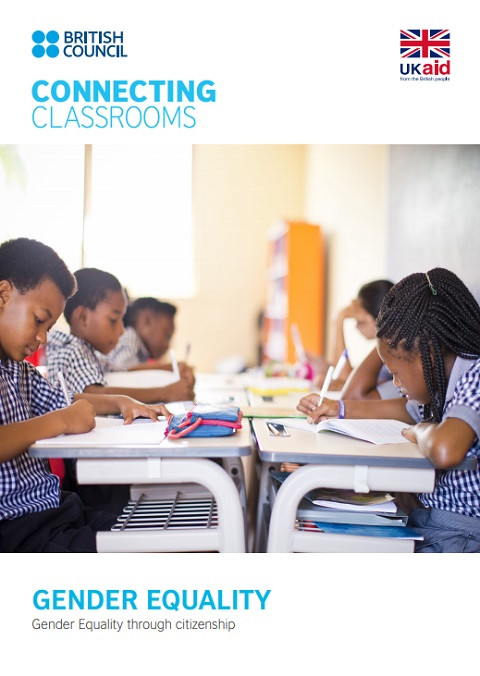 Connecting Classrooms: Gender Equality; Gender Equality through Citizenship Year of publication: 2019 Corporate author: British Council | UK aid This material shows an example of how you can support the development of pupils’ core skills such as citizenship, critical thinking, problem solving, creativity and imagination through the study and investigation of gender equality. This can be done in the context of English, citizenship, geography, history or other subjects. The materials can be used either with an international partner school or without one and instructions are provided on how to best use the resources. This learning unit will explore the Global Goals for Sustainable Development, and in particular, gender equality.
 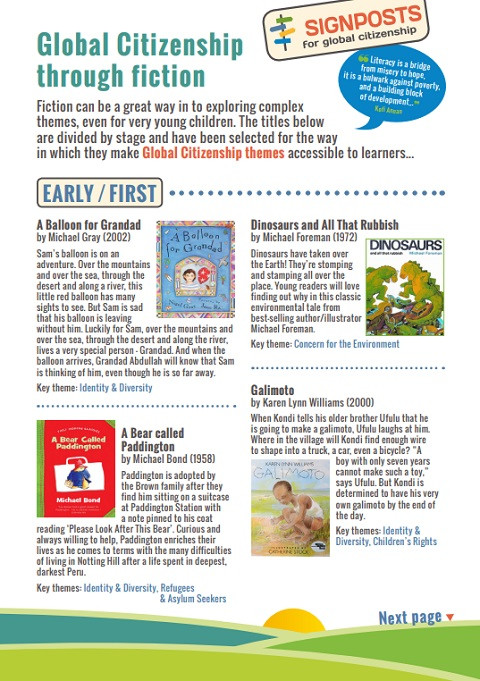 Global Citizenship through Fiction Year of publication: 2016 Corporate author: Signposts | International Development Education Association Scotland (IDEAS) This flyer summarises a selection of texts linking global citizenship and fiction. There is a synopsis of each text and texts range from Early Years to Stage 2.
 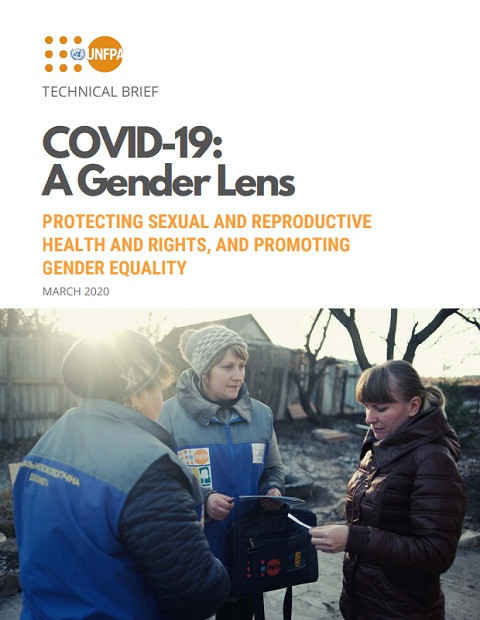 فيروس كورونا المستجد (كوفيد- 19): من منظور النوع الاجتماعي; حماية الصحة والحقوق الجنسية والإنجابية وتعزيز المساواة بين الجنسين Year of publication: 2020 Corporate author: United Nations Population Fund (UNFPA) يؤثر تفشى الأمراض تأثيرآ مختلفآ على النساء والرجال، تجعل الأوبئة أوجه عدم المساواة القائمة ضد النساء والفتيات والتمييز بين الفئات المهمشة الأخرى، مثل الأشخاص ذوي الإعاقة والأشخاص الذين يعيشون في فقر مدقع، أسوأ. يجب الأخذ في الأعتبار هذا الأمر عند النظر إلى التأثيرات المختلفة المحيطة بعمليات أكتشاف المرض والحصول على العلاج بالنسبة النساء والرجال.تمثل المرأة 70 بالمائة من القوى العاملة بالقطاع الصحي والاجتماعي على مستوى العالم، وينبغي إيلاء اهتمام خاص لكيفية تعرضهن للتمييز في بيئة عملهن، وكذلك التفكير في صحتهن الجنسية والإنجابية واحتياجاتهن النفسية كعاملات صحيات يعملن في الخطوط الأمامية. COVID-19: A Gender Lens; Protecting Sexual and Reproductive Health and Rights, and Promoting Gender Equality Year of publication: 2020 Corporate author: United Nations Population Fund (UNFPA) Disease outbreaks affect women and men differently, and pandemics make existing inequalities for women and girls and discrimination of other marginalized groups such as persons with disabilities and those in extreme poverty, worse. Women represent 70 percent of the health and social sector workforce globally and special attention should be given to how their work environment may expose them to discrimination, as well as thinking about their sexual and reproductive health and psychosocial needs as frontline health workers. This technical brief provides key messages and recommendations for protecting sexual and reproductive health and rights, and promoting gender equality during the COVID-19 pandemic. COVID-19: Un Enfoque de Género; Proteger la salud y los derechos sexuales y reproductivos y promover la igualdad de género Year of publication: 2020 Corporate author: United Nations Population Fund (UNFPA) Los brotes de enfermedades afectan a las mujeres y los hombres de manera diferente, y las pandemias exacerban las desigualdades existentes entre las mujeres y las niñas, lo mismo que la discriminación en contra de otros grupos marginados como las personas con discapacidad y aquellas en situación de pobreza extrema. Las mujeres representan el 70 por ciento de la fuerza laboral en el sector social y de salud en el mundo y, por ello, es importante prestar atención especial a la forma en que su entorno laboral puede exponerlas a actos de discriminación, además de pensar en sus necesidades psicosociales y de salud sexual y reproductiva como personal de salud de primera línea.