
Resources
Explore a wide range of valuable resources on GCED to deepen your understanding and enhance your research, advocacy, teaching, and learning.
3,229 Results found
 Expo et outils pédagogiques Year of publication: 2015 Corporate author: La maison des solidarités locales et internationales Éduquer à la citoyenneté c’est changer les mentalités et les comportements de chacun dans le but de contribuer individuellement et collectivement à la construction, dès le plus jeune âge, d’un monde juste, solidaire et durable.Dans ce sens, le centre de ressources de la Maison propose à la location ou à la vente des outils pour donner les moyens, par l’information et la sensibilisation, de faire des choix plus responsables.
 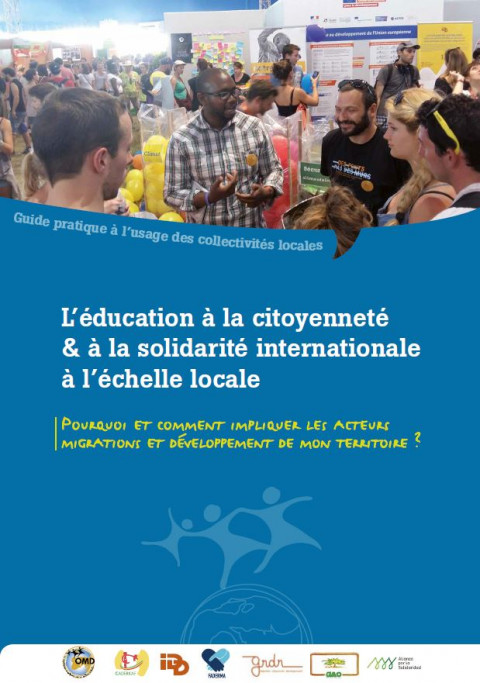 L’éducation à la citoyenneté & à la solidarité internationale à l’échelle locale : Guide pratique à l’usage des collectivités locales Corporate author: Les OMD pour les OMD Dans le cadre du programme « les OMD pour les OMD », le Grdr et ses partenaires ont édité un guide présentant l’offre d’Education à la Citoyenneté et à la Solidarité Internationale (EADSI) portée par les acteurs migrations & développement. Il est prioritairement destiné aux collectivités territoriales et à tous les acteurs locaux engagés dans la solidarité internationale qui souhaitent mobiliser les associations de migrants. Ce guide a été produit avec le soutien financier de l’Union européenne et de l’Agence française de développement.L’éducation à la citoyenneté et à la solidarité internationale, demeure un canal de communication privilégié entre citoyens et décideurs pour comprendre et agir collectivement. Ce guide entend promouvoir les initiatives engagées par le mouvement associatif de solidarité internationale issu des migrations en France, en Espagne et en Italie. Ces organisations ont définit les contours d’une offre citoyenne qui positionne la migration comme une réponse aux enjeux du développement, témoins de l’interdépendance qui caractérise les échanges mondiaux et pousse les acteurs locaux à s’engager à l’échelle internationale.Ce guide (L’éducation à la citoyenneté & à la solidarité internationale à l’échelle locale) présente en deux grands chapitres les atouts et les pratiques des acteurs de solidarité internationale issus des migrations en matière d’animation territoriale et de plaidoyer. Il se fonde sur l’expérience des partenaires du programme « Les OMD pour les OMD ». Il vise ainsi à renforcer les liens entre les collectivités et leurs partenaires, sur la base d’animations citoyennes qui peuvent être menées conjointement à l’échelle d’un quartier, d’une ville ou d’une région.Ce travail est le fruit d’une coopération étroite entre associations en France, en Espagne et en Italie impliquées dans la construction d’une offre d’EADSI portant sur les enjeux de migrations & développement.
  Education for All: Meeting the Challenges of the 21st Century Year of publication: 2017 Corporate author: Global Partnership for Education (GPE) In this speech at the London School of Economics on May 22 2017, Julia Gillard, Board Chair of the Global Partnership for Education, described the global education crisis that the world is facing, and how investing in inclusive, quality education is urgently needed to achieve sustainable development.
 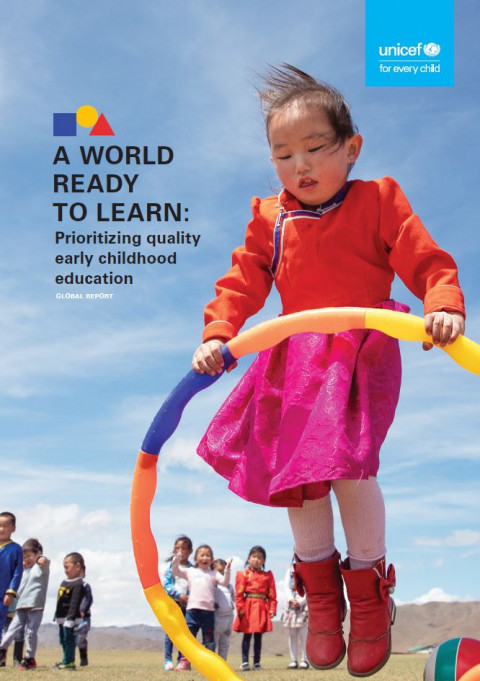 A World Ready to Learn: Prioritizing Quality Early Childhood Education Year of publication: 2019 Corporate author: United Nations Children's Fund (UNICEF) The Sustainable Development Goals (SDGs), and target 4.2 specifically, convey a clear objective that all girls and boys have access to quality early childhood development, care and pre-primary education so that they are ready for primary education. This global report confirms the importance of early childhood education in achieving SDG 4 and supports a bold challenge: Provide all children with at least one year of quality pre-primary education by 2030.The reasons for this aspiration are clear, as a solid body of evidence shows that the foundations for learning are largely built in the early years of life, before a child ever crosses the threshold of a primary school.In recent proposals on how to achieve universal education at all levels, the International Commission on Financing Global Education Opportunity (the Education Commission), the World Development Report and the Global Education Monitoring Reports3,4,5 have all emphasized that investments in early childhood education have positive returns not only for individual children but also for building more efficient and effective education systems.Yet, currently, both domestic financing and international aid invested in pre-primary education are poorly targeted and grossly inadequate. This represents one of the greatest missed opportunities to nurture the world’s human capital and help children reach their fullest potential.Based on comprehensive, data-driven analysis, this report examines the current status of pre-primary education and offers a practical vision for expanding equitable access and improving quality. Recognizing that many countries, especially low- and lower-middle-income countries, are at the beginning of this journey, providing universal access to pre-primary education in all countries by 2030 requires a realistic yet bold approach.
 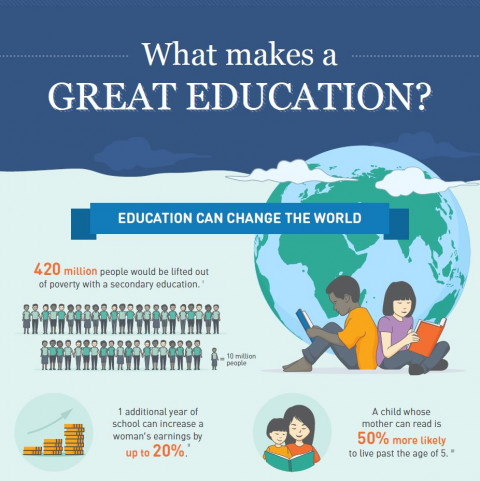 What Makes a Great Education? Year of publication: 2019 Corporate author: Global Partnership for Education (GPE) GPE works to strengthen national education systems to dramatically increase the number of children who are in school and learning.Since 2002, GPE has worked with more than 65 developing countries to improve education planning and implementation, with great results.
  [Video] Global Education Week 2018 Highlights Year of publication: 2019 Corporate author: North-South Centre of the Council of Europe This video clip shows some highlights from the 2018 edition (The world is changing: What about us?) of the Global Education Week (GEW).#GlobalEducationWeek#GEW18
  Programme d’éducation à la citoyenneté mondiale : Guide de présentation des propositions Year of publication: 2018 Corporate author: Direction de la Francophonie et de la Solidarité internationale La solidarité est l’un des volets prioritaires de la nouvelle Politique internationale du Québec. Le PÉCM favorise une action cohérente et renforce le rayonnement international des actions du Gouvernement du Québec en solidarité internationale.Il appuie les organismes de coopération internationale (OCI) et leurs activités d’ÉCM visant à sensibiliser le public québécois aux Objectifs de développement durable (ODD) et à la solidarité internationale, tout en favorisant l’acquisition de connaissances, de valeurs et de comportements qui contribuent à la mise en place d’un monde plus juste, durable et équitable.Afin d’atteindre cet objectif, le programme se décline en deux volets distincts : Volet 1 – Appui à la mission globale Volet 2 – Soutien aux projets ponctuels
 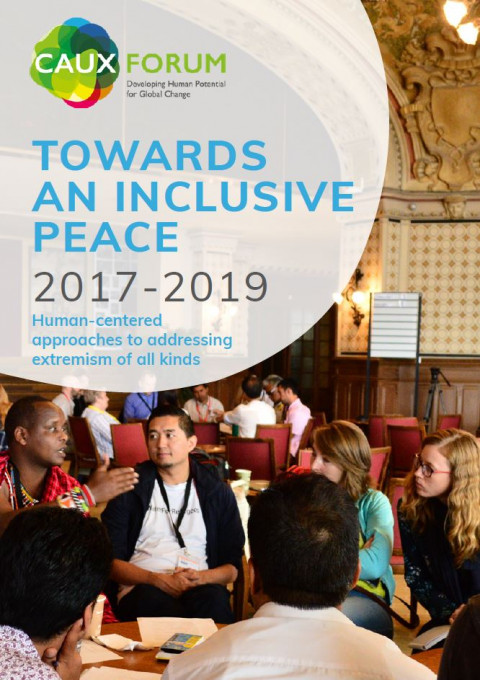 Towards an Inclusive Peace, 2017-2019: Human-centered Approaches to Addressing Extremism of All Kinds Year of publication: 2018 Author: Eliana Jimeno | Johannes Langer Corporate author: Initiatives of Change Switzerland Current approaches to violent extremism which excessively focus on counter terrorism and increasing military capacity, have failed to either stop violence or create peace. On the contrary, they have led to distrust in government institutions and alienation of large sections of the population.Doubling down on these past approaches will not resolve the issue. A new approach is needed and Towards an Inclusive Peace can offer it. Come and learn about human-centred approaches that prioritize sustainable peace, while dealing with root causes, advancing human rights, strengthening communities and enabling development.
 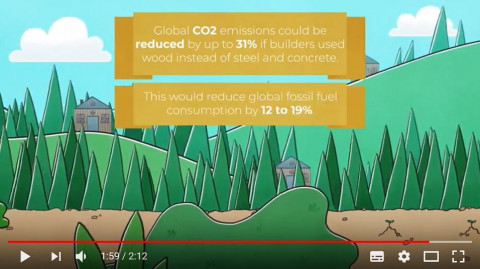 [Video] The Three Little Pigs and Climate Change: The Benefits of Wood as a Low-emission Construction Material Year of publication: 2018 Corporate author: United Nations Economic Commission for Europe (UNECE) | Poland. Ministry of Environment | State Forests Poland Wood can play a crucial role in cutting down emissions when replacing more carbon-intensive materials in the construction sector. The cartoon entitled “The Three Little Pigs & Climate Change”, reminds us that carbon emissions of concrete and steel respectively are 40 and 30 percent higher than those of wood.This video was a joint production of the Forest, Land and Housing Division of the United Nations Economic Commission for Europe, the Polish Ministry of the Environment and State Forests Poland. The video was launched at the 24th Conference of the Parties to the UN Framework Convention on Climate Change (COP24), held in Katowice, Poland, from 2 to 14 December 2018, where global action to reduce emissions and keep global warming within the temperature limits of the Paris Agreement was discussed.UNECE works to promote sustainable solutions for climate neutral buildings:http://www.unece.org/housing.htmlTogether with FAO, it also works to promote the sustainable management of forests:http://www.unece.org/forests/welcome.html
  Global Citizenship in Sub-Saharan Africa Year of publication: 2015 Author: Akemi Yonemura Corporate author: Éducation des Adultes et Développement Learners today are required to develop a comprehensive understanding of local, national and global challenges, so that they can influence the political, social, cultural, economic and environmental development both in their societies and their personal lives. UNESCO has been promoting education for peace and sustainable development as the overarching goal of its education programme, focusing on transformative education through Global Citizenship Education (GCED). This paper discusses GCED in Sub-Saharan Africa in the context of the post-2015 education agenda, with a particular focus on adult education.