
Resources
Explore a wide range of valuable resources on GCED to deepen your understanding and enhance your research, advocacy, teaching, and learning.
1,451 Results found
 Turning Promises into Action: Gender Equality in the 2030 Agenda for Sustainable Development Year of publication: 2018 Corporate author: United Nations Entity for Gender Equality and the Empowerment of Women (UN Women) “Turning promises into action: Gender equality in the 2030 Agenda for Sustainable Development” provides a comprehensive and authoritative assessment of progress, gaps and challenges in the implementation of the Sustainable Development Goals (SDGs) from a gender perspective. This report monitors global and regional trends in achieving the SDGs for women and girls based on available data, and provides practical guidance for the implementation of gender-responsive policies and accountability processes. As a source of high-quality data and policy analysis, the report is a key reference and accountability tool for policymakers, women’s organizations, the UN system, and other stakeholders. Traduire les promesses en actions : L’égalité des sexes dans le Programme de développement durable à l’horizon 2030 Year of publication: 2018 Corporate author: United Nations Entity for Gender Equality and the Empowerment of Women (UN Women) « Traduire les promesses en actions : l’égalité des sexes dans le Programme de développement durable à l’horizon 2030 » offre une évaluation exhaustive et fiable des progrès, des manquements et des difficultés dans la mise en œuvre des Objectifs de développement durable (ODD) dans une perspective de genre. Ce rapport analyse, sur la base des données disponibles, les grandes tendances mondiales et régionales dans la réalisation des ODD pour les femmes et les filles, et offre des conseils pratiques pour la mise en œuvre de politiques et de processus de responsabilisation sensibles au genre. En tant que source de données et d’analyse des politiques de grande qualité, le rapport constitue une référence et un outil de responsabilisation clé pour les décideurs politiques, les organisations de femmes, le système des Nations Unies, et d’autres parties prenantes. Hacer las promesas realidad: La igualdad de género en la agenda 2030 para el desarrollo sostenible Year of publication: 2018 Corporate author: United Nations Entity for Gender Equality and the Empowerment of Women (UN Women) “Hacer las promesas realidad: La igualdad de género en la Agenda 2030 para el Desarrollo Sostenible” presenta una evaluación exhaustiva y fidedigna de los avances, dificultades y posibilidades de la aplicación de los Objetivos de Desarrollo Sostenible (ODS) desde una perspectiva de género. El informe hace seguimiento de las tendencias mundiales y regionales con miras a la consecución de los ODS para las mujeres y las niñas sobre la base de los datos disponibles, y ofrece orientación práctica para la ejecución de políticas sensibles al género y los consiguientes procesos de rendición de cuentas. Como fuente de análisis de alta calidad de datos y políticas, el informe es una referencia e instrumento de rendición de cuentas esencial para responsables de la formulación de políticas, organizaciones de mujeres, el sistema de las Naciones Unidas y otras partes interesadas.
  Gender and Climate Change: Training Handbook Year of publication: 2018 Author: Višnja Baćanović | Jasmina Murić Corporate author: United Nations Entity for Gender Equality and the Empowerment of Women (UN Women) | Government of Serbia | United Nations Development Programme (UNDP) This handbook aims to improve the understanding of gender aspects in climate change. It is intended for experts and interested public, and is organized as a training program for male and female representatives of institutions and state administration, so that it may can be used as a source for practical training, as well as a guide for the introduction of gender perspective in programs and projects.The manual is organized according to thematic units of training and includes basic concepts, gender roles and stereotypes; key gender aspects of climate change; legal and strategic frameworks; and the introduction of gender perspectives in policies and programs in the field of climate change.
  Centre Hubertine Auclert Year of publication: 2010 Author: Marie-Pierre Badré Corporate author: Centre Hubertine Auclert (CHA) L'Égalithèque est une banque de donnée unique en France recensant des milliers de guides, expositions, ouvrages, affiches, vidéos, spectacles vivants, diaporamas, formations, quiz, etc. sur l'égalité femmes-hommes et la lutte contre les violences de genre. Elle propose à la fois les ressources créées par le Centre Hubertine Auclert - publications, campagnes de sensibilisation, malles virtuelles et expositions - ainsi que de nombreuses autres ressources créées par des structures oeuvrant pour l'égalité. Enrichie et actualisée régulièrement par l'équipe du Centre, l'Égalithèque sera très prochainement participative : les membres du Centre pourront soumettre un outil qui sera contrôlé avant d'être référencé. The Égalithèque is a database unique in France, containing thousands of guides, exhibitions, books, posters, videos, live shows, slide shows, training courses, quizzes, etc. on gender equality and the fight against gender violence. It includes resources created by the Centre Hubertine Auclert - publications, awareness-raising campaigns, virtual trunks and exhibitions - as well as many other resources created by structures working for equality. Enriched and updated on a regular basis by the Centre's team, the Égalithèque will soon be participative: Centre members will be able to submit a tool, which will be checked before being referenced.
  Strengthening Kazakhstan's Education Systems: An Analysis of PISA 2009 and 2012 Year of publication: 2014 Author: Keiko Inoue | Lucas Gortazar Corporate author: World Bank This report is the result of the World Bank's education sector providing technical and analytical support to the Government of the Republic of Kazakhstan (RK) from 2013 to 2015 under the leadership of Keiko Inoue (Senior Education Specialist, Europe and Central Asia Region, World Bank) as part of the Joint Economic Research. This report is also part of a series of PISA country reporting programs prepared by the Education Sector for the Europe and Central Asia Region, and it is also the second World Bank report on the effectiveness of the education system in Kazakhstan based on an analysis of PISA data. Укрепление системы образования Казахстана: Анализ результатов исследования PISA, проводимого в 2009 и 2012 годах Year of publication: 2014 Author: Keiko Inoue | Lucas Gortazar Corporate author: World Bank Этот отчет является результатом работы сектора образования Всемирного банка по технической и аналитической поддержке правительства Республики Казахстан (РК) в период с 2013 по 2015 год под руководством Кейко Иноуэ (старший специалист по образованию, Регион Европы и Центральной Азии, Всемирный банк) в рамках Программы Совместных Экономических Исследований. Этот отчет также является частью серии программы страновых отчетов PISA, подготовленной Сектором образования по региону Европы и Центральной Азии, а также это второй отчет Всемирного Банка о результативности системы образования РК на основе анализа данных PISA.
  Educational Pack: Claire Ravez, research analyst focused on monitoring and analysis, IFE Year of publication: 2021 Corporate author: French Institute of Netherlands As a professor of history and geography, Claire Ravez joined the Monitoring and Analysis team of the French Institute of Education within the École normale supérieure de Lyon in 2017.Pedagogical file #1 is dedicated to civic education, with contributions from Claire Ravez, Dominique Schnapper, FEi, and the National Library of France. Dossier pédagogique : Claire Ravez, chargée d'étude Veille et Analyses, IFE Year of publication: 2021 Corporate author: French Institute of Netherlands Professeure d’histoire-géographie, Claire Ravez a rejoint l’équipe Veille et Analyses de l’Institut français de l’éducation au sein de l’École normale supérieure de Lyon en 2017.Dossier pédagogique #1 consacré à l’éducation à la citoyenneté, avec les contributions de Claire Ravez, Dominique Schnapper, FEi et la BnF.
 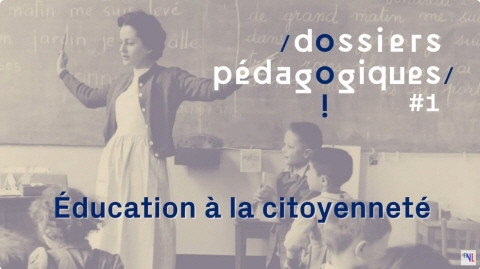 Education Pack: Dominique Schnapper, sociologue Year of publication: 2023 Corporate author: French Institute of Netherlands Member of the Constitutional Council from 2001 to 2010, Dominique Schnapper is a French sociologist and political scientist. pedagogical file #1 is dedicated to civic education, with contributions from Claire Ravez, Dominique Schnapper, FEi and the BnF.