
Resources
Explore a wide range of valuable resources on GCED to deepen your understanding and enhance your research, advocacy, teaching, and learning.
1,471 Results found
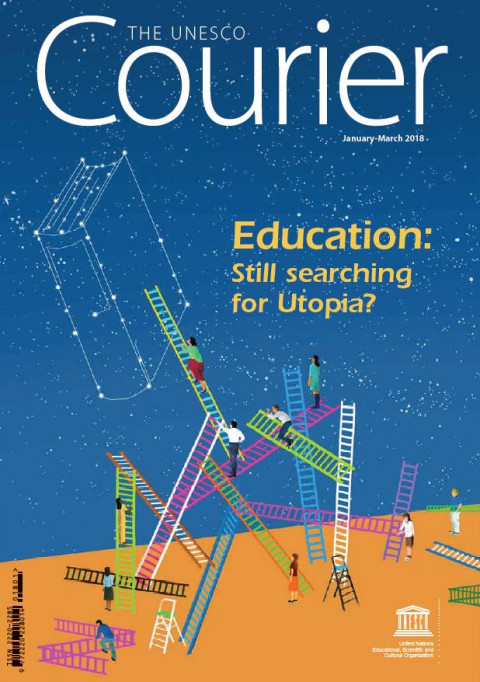 Education: Still Searching for Utopia? (The UNESCO Courier no. 1, January-March 2018) Year of publication: 2018 Corporate author: UNESCO At a time of heightened global tension, when human rights, freedom of speech, peace and the future of the planet itself may seem challenged as never before, the transformational power of education is of critical importance.In Learning: The Treasure Within, the landmark Report to UNESCO by the International Commission on Education for the Twenty-first Century in 1996, Jacques Delors, then Chairman of the Commission (1992 to 1996), spoke of education as “the necessary Utopia” and “an indispensable asset in its attempt to attain the ideals of peace, freedom and social justice.”Education was held up as neither miracle nor magic, but rather the best means to foster a climate where humanity would be improved −. and where the rich potential for learning, inherent in every individual, would be tapped. Our humanity is confronted with a very strange paradox: the world’s population has never been better educated, and yet, according to the UNESCO Institute for Statistics, 263 million children and young people are out of school, 617 million children and adolescents worldwide do not meet the minimum threshold for literacy and mathematics, at least 750 million adults are illiterate, and girls remain more likely than boys to never set foot in a classroom. Yet education is still called upon to address inequalities, poverty, terrorism and conflict. It is seen as one of the keys to global citizenship and sustainable development, two of UNESCO’s fields of action. The Organization is also mandated to lead the Education 2030 global agenda with a special focus on ensuring that no one is left behind. Under the title, “Education: Still searching for Utopia?”, the UNESCO Courier evaluates the state of global education and explores how it responds to some of the main challenges we face. Education: en quête d'une utopie nécessaire (Le Courrier de l’UNESCO no. 1, Janvier-Mars 2018) Year of publication: 2018 Corporate author: UNESCO À une époque où la tension ne cesse de croître, où les droits de l'homme, la liberté d'expression, la paix et l'avenir de la planète semblent plus que jamais remis en question, le pouvoir de transformation véhiculé par l'éducation revêt une importance cruciale.L’éducation est une « utopie nécessaire », elle est « un atout indispensable pour permettre à l’humanité de progresser vers les idéaux de paix, de liberté et de justice sociale », lit‑on dans le rapport historique de l’UNESCO, L’éducation : un trésor est caché dedans, élaboré par la Commission internationale sur l'éducation pour le XXIe siècle, présidée en 1996 par Jacques Delors.L'éducation n'y est présentée ni comme miracle, ni comme baguette magique, mais comme le meilleur moyen de favoriser un climat permettant à l'humanité de s’améliorer.Notre humanité est confrontée à un paradoxe très étrange : la population mondiale n’a jamais été aussi instruite, alors que, selon l’Institut de statistiques de l’UNESCO, 263 millions d’enfants et de jeunes ne sont pas scolarisés, que 617 millions d’enfants et d’adolescents dans le monde n’atteignent pas le seuil minimal de compétence en lecture et en mathématiques, qu’au moins 750 millions d’adultes sont analphabètes, et que les filles demeurent plus susceptibles que les garçons de ne jamais mettre les pieds dans une classe. Cependant l’éducation est toujours appelée à remédier aux inégalités, à la pauvreté, au terrorisme et aux conflits. Elle est considérée comme une des clés essentielles de la citoyenneté mondiale et du développement durable, deux domaines d’action de l’UNESCO, qui a aussi pour mandat de diriger l’agenda mondial Éducation2030 en veillant tout particulièrement à ce que personne ne soit laissé pour compte.Sous le titre « Éducation : en quête d'une utopie nécessaire », Le Courrier de l'UNESCO porte un regard panoramique sur l'éducation dans le monde et explore comment elle peut répondre à certains grands défis. La Educación, una utopia necesaria (El Correo de la UNESCO no.1, Enero-Marzo 2018) Year of publication: 2018 Corporate author: UNESCO El poderoso vector de transformación que es la educación reviste una importancia fundamental en estos tiempos en que parecen ponerse en tela de juicio más que nunca los derechos humanos, la libertad de expresión, la paz y el futuro de nuestro planeta.La educación es una “utopía necesaria” y “constituye un instrumento indispensable para que la humanidad pueda progresar hacia los ideales de paz, libertad y justicia social”, tal como se afirma en el histórico informe “La educación encierra un tesoro”, presentado a la UNESCO en 1996 por la Comisión Internacional sobre la Educación para el siglo XXI presidida por Jacques Delors.La educación, según ese informe, no es un remedio milagroso ni un mágico “ábrete sésamo”, sino una vía mejor que otras para lograr que la humanidad sea mejor.Nuestra época afronta una situación extremadamente paradójica. Mientras que el nivel de instrucción de la población mundial ha alcanzado su más alto nivel histórico, todavía quedan en el mundo 263 millones de niños y adolescentes sin escolarizar y otros 617 millones no logran alcanzar un nivel mínimo de competencia en lectura, escritura y matemáticas. Además, hay 750 millones de adultos analfabetos y actualmente la posibilidad de que las niñas y las jóvenes no pisen jamás una escuela es mucho más alta que en el caso de los varones. Ahora bien, la educación sigue siendo un instrumento indispensable para reducir las desigualdades, la pobreza, elterrorismo y los conflictos armados, así como un factor clave para la mentalización de las personas con vistas a que lleguen a “ciudadanos del mundo” y coadyuven a al desarrollo sostenible. La educación para la ciudadanía y para el desarrollo sostenible son dos ámbitos de acción de la UNESCO, que además tiene el mandato de liderar la agenda mundial Educación 2030, procurando en especial que los sistemas educativos no dejen a nadie atrás.Bajo el título “La educación, una utopía necesaria”, El Correo de la UNESCO traza una panorámica de determinados aspectos de la educación en el mundo, así como de la manera en que ésta puede responder a algunos de los grandes retos planteados a la humanidad.
  一起重新构想我们的未来:为教育打造新的社会契约 Year of publication: 2022 Corporate author: International Commission on the Futures of Education | UNESCO 我们人类和地球正遭受着威胁。新冠肺炎疫情只不过证明了我们的脆弱性和相互关联性。我们现在需要采取紧急行动,一起改变方向,重新构想我们的未来。“教育的未来”国际委员会的这份报告认可教育可以带来深刻变革。我们目前面临着双重挑战,即兑现尚未实现的承诺,确保每位儿童、青少年和成年人都有权接受优质教育,以及把教育当作我们通往可持续共同未来的路径,充分实现其变革潜力。为了做到这一点,我们需要一份能够在改变未来的同时,修复现有不公正的新的教育社会契约。这一新的社会契约必须以人权为依据,以非歧视性、社会正义、尊重生命、人的尊严和文化多样性等原则为基础。它必须包含关怀、互惠和团结的伦理。它必须加强教育作为公共事业、共同利益的地位。这份报告建立在历时两年、约100万人参与的全球协商过程的基础之上,它邀请世界各地政府、机构、组织和公民为教育订立一份新的社会契约,帮助我们为所有人创造和平、公正和可持续的未来。这份报告所提出的愿景、原则和建议只是一个起点。对其进行解读和本土化实践,是我们需要共同努力完成的事业。目前的工作中已经存在许多亮点,本报告试图捕捉这些亮点,同时也以其为基础进行构建。本报告既不是一部指南,也不是一幅蓝图,而是一场至关重要的对话的起点。
  함께 그려보는 우리의 미래: 교육을 위한 새로운 사회계약 Year of publication: 2022 Corporate author: International Commission on the Futures of Education | 유네스코 우리 인류와 지구는 위기에 처해 있다. 코로나19 팬데믹은 우리의 취약성과 상호연결성을 동시에 증명해 주었다. 이 경로를 바꾸고 우리의 미래를 다시 구상하기 위해서는 모두 함께 긴급한 행동에 나서야 한다. 국제미래교육위원회의 이 보고서는 교육의 힘이 심대한 변화를 불러일으킬 수 있다고 믿는다. 인류는 이중의 도전과제에 직면하고 있다. 한편으로는 모든 아동, 청소년, 성인들이 질 높은 교육을 받을 권리를 보장하겠다는 미완의 약속을 이행하면서, 다른 한편으로는 모두에게 지속가능한 미래로 가는 경로로서 교육이 갖고 있는 변혁적 잠재력을 완전히 실현해야 한다. 이를 위해서는 정의롭지 못한 부분을 바로잡으면서 미래를 바꿔 놓을 교육을 위한 새로운 사회계약이 필요하다. 이 새로운 사회계약은 인권에 근간을 두고 차별금지와 사회정의, 생명 존중, 인간 존중 및 문화 다양성에 기초해야 한다. 또한 돌봄의 윤리, 호혜주의, 연대를 포괄해야 하며, 공동의 사회적 노력(shared societal endeavours)이자 공동재(common good)로서 교육을 강화해야 한다. 이 보고서는 2년에 걸쳐 약 백만 명이 참여하는 세계적 협의 과정을 통해 작성되었으며, 전 세계의 정부, 교육기관, 단체, 시민들에게 모두를 위한 평화롭고 정의로우며 지속가능한 미래를 건설할 수 있도록 교육을 위한 새로운 사회계약을 맺는 데 참여할 것을 요청한다. 이 보고서가 제시하는 비전과 원칙, 제안은 단지 출발점일 뿐이다. 이를 각각의 상황에 맞게 변혁하기 위해서는 집단적 노력이 있어야 한다. 이미 긍정적인 부분도 많이 있다. 이 보고서는 그런 부분을 포착해 기반으로 삼으려고 노력했다. 이 보고서는 실용적 매뉴얼이나 청사진이 아니라, 역동적인 대화의 시작이다.
  Repenser nos futurs ensemble: un nouveau contrat social pour l'éducation Year of publication: 2021 Corporate author: International Commission on the Futures of Education | UNESCO L’avenir de l’humanité sur la planète est, nous le savons aujourd’hui, compromis. La pandémie a eu au moins le mérite de démontrer combien nos existences sont fragiles et combien nos destins sont inextricablement liés. Il est nécessaire et urgent désormais, d’agir collectivement pour changer de cap et réinventer notre avenir. Dans ce tournant, l’éducation jouera un rôle crucial pour sa capacité, universellement reconnue, à provoquer le changement. Mais pour jouer son rôle, elle devra surmonter un double défi : honorer, d’une part, sa plus vieille promesse, c’est-à-dire d’être effective et d’assurer le droit à une éducation de qualité pour chaque enfant, chaque jeune, chaque adulte partout à travers le monde ; et, d’autre part, assumer entièrement son potentiel transformateur, afin d’ouvrir la voie vers un avenir collectif durable. Pour y parvenir, il convient de s’engager dans un nouveau contrat social pour l’éducation, qui permette de corriger les injustices tout en transformant l’avenir. Ce nouveau contrat social doit être enraciné dans les droits humains et être fondé sur les principes de non-discrimination, de justice sociale, de respect de la vie, de la dignité humaine et de la diversité culturelle ; il doit aussi s’appuyer sur une éthique de la sollicitude, de la réciprocité et de la solidarité ; il doit enfin renforcer l’éducation comme projet public et un bien commun de l’humanité. Le présent rapport, préparé durant deux ans et qui a pu s’appuyer sur une consultation mondiale de près d’un million de personnes, invite les gouvernements, les partenaires et les citoyens du monde entier à élaborer un nouveau contrat social en faveur de l’éducation, pour construire un avenir pacifique, juste et durable pour toutes et tous. Les conceptions, les principes et les propositions avancés ici ne constituent qu’un point de départ. Seul un effort collectif pourra les traduire en actes et les adapter aux situations locales. Il existe en effet de vraies lueurs d’espoir. Ce rapport essaie de les ressaisir afin que l’avenir se construise sur ces fondations. Qu’on n’y voit donc pas un manuel ou un plan directeur : c’est le début d’une conversation vitale.
  Reimaginar juntos nuestros futuros: un nuevo contrato social para la educación Year of publication: 2022 Corporate author: International Commission on the Futures of Education | UNESCO La humanidad y el planeta Tierra están amenazados. La pandemia solo ha servido para demostrar nuestra fragilidad y nuestra interconexión. Ahora es necesario actuar urgentemente, de forma conjunta, para cambiar el rumbo y reimaginar nuestros futuros. Este informe de la Comisión Internacional sobre los Futuros de la Educación reconoce el poder de la educación para provocar un cambio profundo. Nos enfrentamos a un doble reto: cumplir la promesa de garantizar el derecho a una educación de calidad para todos los niños, jóvenes y adultos, y aprovechar plenamente el potencial transformador de la educación como vía para un futuro colectivo sostenible. Para ello, necesitamos un nuevo contrato social para la educación que pueda reparar las injusticias, al tiempo que transforma el futuro. Este nuevo contrato social debe basarse en los derechos humanos y en los principios de no discriminación, justicia social, respeto a la vida, dignidad humana y diversidad cultural. Debe incluir una ética de cuidado, reciprocidad y solidaridad. Debe reforzar la educación como un proyecto público y un bien común. Este informe, que se ha elaborado en dos años y se ha basado en un proceso de consulta mundial en el que han participado alrededor de un millón de personas, invita a gobiernos, instituciones, organizaciones y ciudadanos de todo el mundo a forjar un nuevo contrato social para la educación que nos ayude a construir un futuro pacífico, justo y sostenible para todos. Las visiones, los principios y las propuestas que aquí se presentan deben considerarse simplemente un punto de partida. Traducirlos y contextualizarlos es un esfuerzo colectivo. Existen ya muchos aspectos positivos. Este informe intenta recogerlos y aprovecharlos. No se trata de un manual ni de un modelo, sino de un punto de partida para una conversación fundamental.
 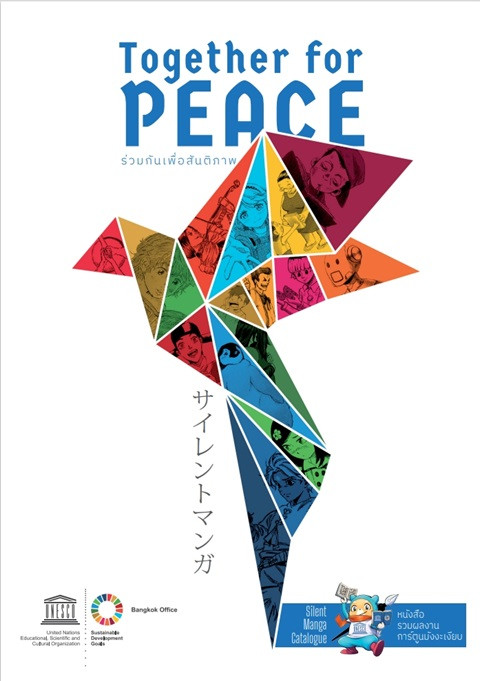 Together for Peace: Silent Manga Catalogue Year of publication: 2020 Author: Walden Schertz | Jeremy Clay | Santibhap Ussavasodhi Corporate author: UNESCO Bangkok | Coamix This Together for Peace Silent Manga Catalogue is a compilation of silent manga – manga stories told entirely through illustration without the use of dialogue. These works of art were selected from 274 entries submitted by artists in 117 countries worldwide to join SILENT MANGA AUDITION® Round 13 held under the theme Together for Peace, in collaboration with UNESCO Bangkok, the Asia and Pacific Regional Bureau for Education. Silent manga is a powerful medium of communication in the Asia-Pacific. Although the region is the most diverse in the world, it can be enjoyed by anyone regardless of their background. Silent manga has no language barrier. These works showcase different reflections of peace as expressed by artists around the world while conforming to the Japanese manga style.
 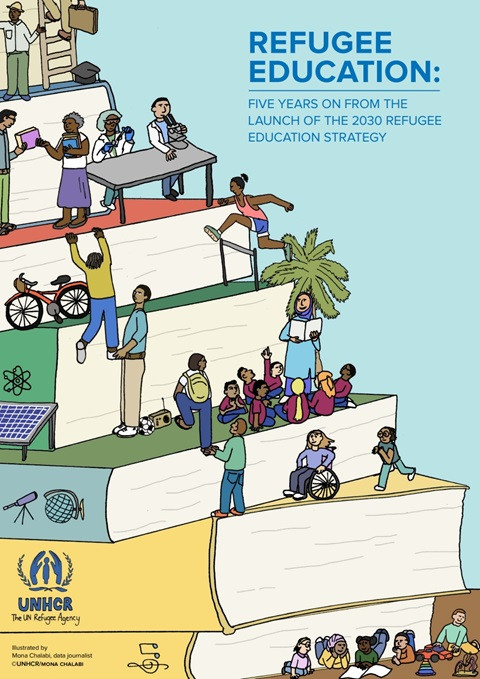 Refugee Education; Five Years on from the Launch of the 2030 Refugee Education Strategy Year of publication: 2024 Author: Cirenia Chavez Villegas | Kate Bond Corporate author: UN. Office of the United Nations High Commissioner for Refugees (UNHCR) The 2024 UNHCR Refugee Education Report draws on data from more than 65 countries worldwide to provide the most detailed picture yet of the state of refugee education and enrolment. The report reflects on the 2030 Refugee Education Strategy (launched in 2019) and where notable progress has been made as well as areas where greater investment and enhanced collaboration are needed to meet the strategic objectives of the Strategy.
  Safe Schools Declaration Year of publication: 2015 Corporate author: Global Coalition to Protect Education from Attack (GCPEA) The Safe Schools Declaration is an intergovernmental political commitment that was developed at an international conference held in Oslo, Norway, on 28-29 May 2015. The Declaration allows countries the opportunity to express their political support for the protection of students, teachers and schools during times of armed conflict; the importance of the continuation of education during armed conflict; and the implementation of the Guidelines for Protecting Schools and Universities from Military Use during Armed Conflict.