
Resources
Explore a wide range of valuable resources on GCED to deepen your understanding and enhance your research, advocacy, teaching, and learning.
1,451 Results found
 Global Citizenship Education and the Crises of Multiculturalism: Comparative Perspectives Year of publication: 2016 Author: Massimiliano Tarozzi, Carlos Alberto Torres The notion of global citizenship education (GCE) has emerged in the international education discourse in the context of the United Nations Education First Initiative that cites developing global citizens as one of its goals. In this book, the authors argue that GCE offers a new educational perspective for making sense of the existing dilemmas of multiculturalism and national citizenship deficits in diverse societies, taking into account equality, human rights and social justice.The authors explore how teaching and research may be implemented relating to the notion of global citizenship and discuss the intersections between the framework of GCE and multiculturalism. They address the three main topics which affect education in multicultural societies and in a globalized world, and which represent unsolved dilemmas: the issue of diversity in relation to creating citizens, the issue of equality and social justice in democratic societies, and the tension between the global and the local in a globalized world.Through a comparative study of the two prevailing approaches – intercultural education within the European Union and multicultural education in the United States – the authors seek what can be learned from each model. Global Citizenship Education and the Crises of Multiculturalism offers not only a unifying theoretical framework but also a set of policy recommendations aiming to link the two approaches. Preface 1. The Priority of Global Citizenship EducationPart One Defference and Citizenship 2. Theoretical Conceptualization: The Challenge of Diversity 3. Multiculturalism: The US Perspective 4. Interculturalism: The European Union Perspective 5. Comparing Intercultural and Multicultural EducationPart Two Justice in Democracies 6. Theoretical Conceptualization: The Challenge of Equlaity 7. From Multiculturalism to Global Citizenship Education 8. ConclusionBibliographyIndex
  The National Youth White Paper on Global Citizenship Year of publication: 2015 Corporate author: Centre for Global Citizenship Education and Research (CGCER) On March 20, 2015, over 400 students from five high schools across Canada, in partnership with the Centre for Global Citizenship Education, The Centre for Global Education and TakingITGlobal, came together to collaborate, through the use of technology, in a Virtual Town Hall to discuss the youth’s vision for Global Citizenship Education. From Alberta to Ontario, downtown Toronto to Yellowknife, the youth of Canada exchanged ideas, debated alternatives, and ultimately created a document that represents their voice on the relationship Canadians should have with the rest of the world. The Virtual Town Hall, an “archetype of grassroots democracy,” (Senator Grant Mitchell) was the culmination of over a month of online teamwork, 2000 hours of student collaboration, over 100 hours of teacher facilitation, and the passion of over 1000 youth to engage in a national conversation and have their voices heard.In the month prior to the Virtual Town Hall, student leaders, systematically chosen from each school to represent Canada’s diverse geographic and demographic population, met on a weekly basis to exchange ideas, work with and listen to experts, and create a common framework. Concurrently, the students were trained to use an arsenal of Web 2.0 tools (YouTube, Twitter, cell phone voting, Google Docs, H.323 Video Conference, discussion boards, blogs, etc.) to collaborate, build consensus, and create community regardless of time or location.Equipped with this knowledge and empowered through online technology, the student leaders facilitated a full-day virtual town hall. In the morning, 400 youth peers engaged in a dialogue with local and international experts. Following this session, the youth participated in breakout groups to address three critical questions: What are our obligations as global citizens? What are the rights and responsibilities that we have? To what extent can well-intentioned global citizenship initiatives reinforce or resist power inequities? What types of policies/practices will enable/facilitate global citizenship? The National Youth White Paper on Global Citizenship, written collaboratively by Canadian students, is the direct result of this full-day, interactive event. The evolution of the document involved equipping leaders with knowledge and technology, having those leaders facilitate a larger conversation among their peers, taking the data generated to their community at large for feedback and direction, and then synthesizing the results in the student white paper. It represents the voices of over one thousand youth, introduced to the complexities of global citizenship education, unified through the power of 21st century technology, and sharing a passion to contribute to the dialogue taking place on the future of Canada and its relationship to the rest of the world. Le Livre blanc de la jeunesse nationale sur la citoyenneté mondiale Year of publication: 2015 Corporate author: Centre for Global Citizenship Education and Research (CGCER) Le 20 Mars, 2015, plus de 400 élèves de cinq écoles secondaires à travers le Canada, en partenariat avec le Centre d'éducation à la citoyenneté mondiale, le Centre for Éducation globaleet TakingITGlobal, se sont réunis pour collaborer, par l'utilisation de la technologie, dans une salle virtuelle ville pour discuter de la vision de la jeunesse pour l'éducation sur la citoyenneté mondiale. De l'Alberta à l'Ontario, le centre-ville de Toronto à Yellowknife, la jeunesse du Canada a échangé des idées, débattre des solutions de rechange, et, finalement, a créé un document qui représente leur voix sur les relations Canadiens devraient avoir avec le reste du monde. Le Virtual Town Hall, un «archétype de la démocratie de base» (le sénateur Grant Mitchell) est l'aboutissement de plus d'un mois de travail d'équipe en ligne, 2000 heures de la collaboration des élèves, plus de 100 heures de facilitation des enseignants, et la passion de plus de 1000 jeunes engager dans une conversation nationale et faire entendre leurs voix dans le mois précédant l'Hôtel virtuel Ville, les leaders étudiants, systématiquement choisis parmi chaque école pour représenter la diversité population géographique et démographique du Canada, se sont réunis sur une base hebdomadaire pour échanger des idées, travailler avec et écouter les experts, et de créer un cadre commun. En même temps, les étudiants ont été formés à l'utilisation d'un arsenal d'outils Web 2.0 (YouTube, Twitter, téléphone cellulaire vote, Google Docs, H.323 Vidéo Conférence, forums de discussion, les journaux, etc.) pour collaborer, établir un consensus et créer une communauté quelle que soit de temps ou de lieu. Equipé de cette connaissance et le pouvoir grâce à la technologie en ligne, les leaders étudiants ont facilité une mairie virtuelle d'une journée complète. Dans la matinée, 400 pairs de jeunes engagés dans un dialogue avec des experts locaux et internationaux. Suite à cette session, les jeunes ont participé à des groupes de petits groupes pour répondre à trois questions essentielles: 1. Quelles sont nos obligations en tant que citoyens du monde? Quels sont les droits et les responsabilités que nous avons? 2. Pour les initiatives de citoyenneté mondiale dans quelle mesure peut bien intentionnés renforcer ou résister à des inégalités de pouvoir? 3. Quels types de politiques / pratiques permettront / faciliter la citoyenneté mondiale. Le Livre blanc de la jeunesse nationale sur la citoyenneté mondiale, écrite en collaboration par les étudiants canadiens, est le résultat direct de cette journée complète, événement interactif. L'évolution du document impliqué équipant les dirigeants ayant des connaissances et de la technologie, ayant ces dirigeants facilitent une plus grande conversation entre leurs pairs, en prenant les données générées à leur communauté dans son ensemble pour la rétroaction et la direction, et ensuite la synthèse des résultats dans le livre blanc de l'étudiant. Elle représente les voix de plus de mille jeunes, présenter à la complexité de l'éducation à la citoyenneté mondiale, unifiée par la puissance de la technologie du 21e siècle, et le partage de la passion de contribuer au dialogue qui se déroule sur l'avenir du Canada et de sa relation avec le reste du monde.
  Global citizenship education: the school as a foundation for a fair world Year of publication: 2009 Corporate author: Conectando Mundos Consortium (Cidac, inizjamed, Intermon Oxfam, Ucodep) This publication is based on an initiative about the development education, intercultural education, popular education, the education of values, human rights education, education for sustainability, education for peace, education for gender equality, etc. The pedagogical proposal of Global Citizenship Education aspires to integrate in a coherent and challenging vision all these themes, keeping them in a close relationship with one another and taking into consideration the (increasing) interdependence of human beings living in a planet whose sustainability is under threat. This book is the fruit of a process that was triggered off by the joint effort of four European development NGOs, namely Cidac, Inizjamed, Intermón Oxfam and Ucodep within the frame of a project co-financed by the European Commission. These organisations set for themselves the objective to promote the acknowledgment and the inclusion of the contents and the methodology of Global Citizenship Education in the formal educational contexts in their respective countries, in order to kick-start a process of change in attitudes, values, and the beliefs of the pupils. Thanks to the initiative and efforts of the above-mentioned four organisations, and through various meetings and seminars carried out over the last three years in Spain, Italy, Portugal and Malta, groups of educators have been able to come face-to-face with each other, exchange experiences and reflect on the role of formal education with respect to the challenges of our times. Among the other experiences, the publication contains that of a key moment in the process. This took place in July 2008 in Cortona, a small and beautiful Tuscan city close to the border with Umbria, and in which many educators shared the benefit of what was the first international encounter of educators for global citizenship. The Cortona experience, in which around ninety teachers coming from Spain, Portugal, Malta, Italy, the Dominican Republic and Costa Rica have participated, was one of the stages – the starting point, in fact – of a process and a relationship that it is our aim to develop at the regional, national and international levels. In this publication, therefore, one can find theoretical cues put forward at Cortona that encourage educators to share their experiences and to compare the work done by different groups.This publication has two parts. The first part contains contributions of a theoretical type, whereas the second part concentrates on the educational experiences of the participants in the Cortona meeting. Global citizenship education: the school as a foundation for a fair world Year of publication: 2009 Corporate author: Conectando Mundos Consortium (Cidac, inizjamed, Intermon Oxfam, Ucodep) Cette publication est basée sur une initiative sur l'éducation au développement, l'éducation interculturelle, l'éducation populaire, l'éducation des valeurs, l'éducation des droits de l'homme, l'éducation pour le développement durable, l'éducation pour la paix, l'éducation pour l'égalité des sexes, etc. La proposition pédagogique de l’éducation à la citoyenneté mondiale aspire d'intégrer dans une vision cohérente et stimulante, tous ces thèmes, les maintenir dans une relation étroite avec l'autre et en tenant compte de la (augmentation) interdépendance des êtres humains vivant dans une planète dont la pérennité est menacée. Ce livre est le fruit d'un processus qui a été déclenché par l'effort conjoint de quatre ONG européennes de développement, à savoir Cidac, Inizjamed, Intermon Oxfam et Ucodep dans le cadre d'un projet cofinancé par la Commission européenne. Ces organisations se sont données pour objectif de promouvoir la reconnaissance et la prise en compte du contenu et de la méthodologie de l’Éducation à la Citoyenneté Mondiale dans les contextes éducatifs formels dans leurs pays respectifs, afin de démarrer un processus de changement dans les attitudes, les valeurs et les croyances des élèves. Merci à l'initiative et les efforts des quatre organisations mentionnées ci-dessus, et par le biais de diverses réunions et séminaires réalisés au cours des trois dernières années en Espagne, Italie, Portugal et Malte, des groupes d'éducateurs ont été en mesure de venir en face-à-face avec les uns des autres, d'échanger des expériences et réfléchir sur le rôle de l'éducation formelle par rapport aux défis de notre temps. Parmi les autres expériences, la publication contient celle d'un moment clé dans le processus. Cela a eu lieu en Juillet 2008 à Cortona, une petite et belle ville Toscane près de la frontière avec l'Ombrie, et dans lequel de nombreux éducateurs partagent le bénéfice de ce qui était la première rencontre internationale des éducateurs pour la citoyenneté mondiale. L'expérience Cortona, dans lequel près de quatre-vingt dix enseignants venant d'Espagne, le Portugal, Malte, l'Italie, la République dominicaine et le Costa Rica ont participé, a été l'une des étapes - le point de départ, en fait - d'un processus et d'une relation avec pour objectif de développer aux niveaux régional, national et international. Dans cette publication, par conséquent, on peut trouver des indices théoriques mis en avant à Cortona qui encouragent les éducateurs à partager leurs expériences et de comparer le travail accompli par les différents groupes. Cette publication comporte deux parties. La première partie contient des contributions d'un type théorique, alors que la deuxième partie se concentre sur les expériences éducatives des participants à la réunion Cortona.
  Découvrir le monde, apprendre la solidarité Year of publication: 2018 Corporate author: UNICEF Belgique | Croix-Rouge Belgique | Îles de Paix | Oxfam | Plan International Belgique Destinée aux futur.e.s enseignant.e.s des Hautes Écoles pédagogiques, la brochure "Découvrir le monde, apprendre la solidarité" a été développée par sept organisations: l’UNICEF Belgique, la Croix-Rouge Belgique, les Îles de Paix, Oxfam magasin du monde, Oxfam solidarités, Quinoa et Plan International Belgique pour aborder l’éducation à la citoyenneté mondiale et solidaire en classe avec les élèves.
  Découvrir le monde, apprendre la solidarité : Éducation à la citoyenneté mondiale et solidaire dans l’enseignement (ECMS) ; 2020-2022 Year of publication: 2020 Corporate author: Fédération Francophone et Germanophone des Associations de Coopération au Developpement (ACODEV) | Annoncer la Couleur (ALC) | Îles de Paix Cette publication explique ce qu’est l’ECMS et sa plus-value dans la formation de vos élèves, comment s’en emparer dans vos (futures) classes et présente les différents types d’appui que vous pouvez attendre des ONG et d’Annoncer la Couleur.
 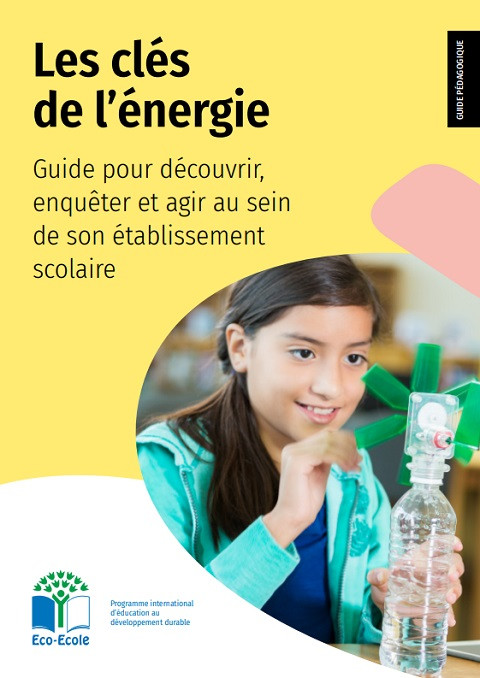 Les clés de l’énergie: Guide pour découvrir, enquêter et agir au sein de son établissement scolaire Year of publication: 2020 Corporate author: Eco-Ecole L’énergie est présente dans toutes les sphères de notre quotidien et favoriser sa gestion durable et responsable est un enjeu majeur dans la lutte contre le réchauffement climatique ! Afin d’aider les communautés éducatives à s’approprier ce sujet, le programme Eco-Ecole, en partenariat avec le Conseil Départemental de Seine-Saint-Denis et l’ADEME, dévoile son nouvel outil : Les clés de l’énergie : Guide pour découvrir, enquêter et agir au sein de son établissement.En abordant l’énergie à travers le bâti, l’alimentation, le numérique et les déplacements, ce guide permet aux enseignant.e.s et à leurs élèves de se questionner sur les enjeux environnementaux liés à cette thématique et de réfléchir à des solutions à mettre en place à leur échelle.Destiné principalement à être utilisé dans le secondaire, cet outil contient :• des éléments de contexte et des clés de compréhension sur le thème de l’énergie ;• des pistes d’enquête concrètes pour réaliser un diagnostic ;• des déroulés d’ateliers pour découvrir la thématique et faire émerger des idées d’actions dans son établissement ;• des supports d’activités (à photocopier, découper ou reproduire) disponibles dans le corps du guide et dans les annexes. Becoming Citizens in a Changing World: IEA International Civic and Citizenship Education Study 2016 International Report Year of publication: 2017 Author: Wolfram Schulz, John Ainley, Julian Fraillon, Bruno Losito, Gabriella Agrusti, Tim Friedman Corporate author: International Association for the Evaluation of Educational Achievement (IEA) The International Civic and Citizenship Education Study 2016 (ICCS 2016) investigated the ways in which young people are prepared to undertake their roles as citizens in a range of countries in the second decade of the 21st century. It studied students’ knowledge and understanding of civics and citizenship as well as students’ attitudes, perceptions, and activities related to civics and citizenship. Based on nationally representative samples of students, the study also examined differences among countries in relation to these outcomes of civic and citizenship education, and explored how cross-national differences relate to student characteristics, school and community contexts, and national characteristics. As the second cycle of this study, ICCS 2016 is a continuation and an extension of ICCS 2009.
 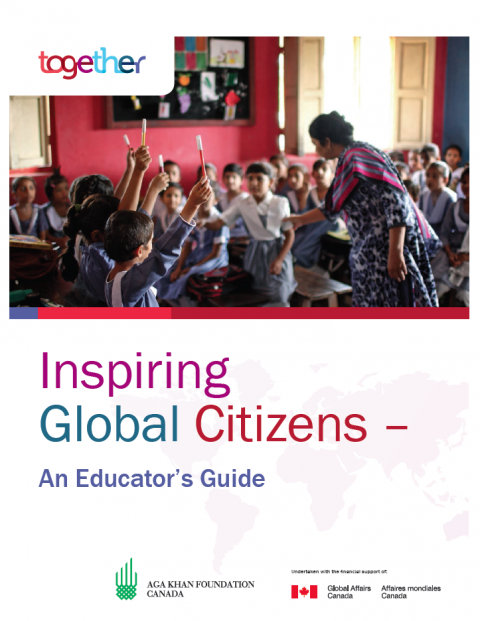 Inspiring Global Citizens - An Educator's Guide Year of publication: 2017 Corporate author: AGA Khan Foundation Canada This resource is intended for use by teachers of intermediate and secondary school grades to support education about global development and related themes such as global citizenship. The activities included in the resource are designed to assist students in increasing their understanding of the interconnectedness of the world, of the factors contributing to global inequalities, and of some effective and sustainable ways to help reduce global poverty. It is hoped that students will be inspired to take action to make their own contribution to improving lives everywhere.