
Resources
Explore a wide range of valuable resources on GCED to deepen your understanding and enhance your research, advocacy, teaching, and learning.
1,727 Results found
 United Nations Decade on Education for Sustainable Development (2005-2014): Education for Sustainable Development Year of publication: 2005 Corporate author: UNESCO The Declaration of the International Conference on Ecology and Development, held in Rio de Janeiro in 1992, begins with the following words: "People are the main concern for sustainable development. They have the right to a healthy and productive life in harmony with nature. "The Declaration adopted at the World Summit on Sustainable Development, held in Johannesburg in 2002, reflected the commitment of world leaders to "create a humane, equitable and attentive to civil society, recognizing that each member of this society has its own human dignity". Education is the foundation of sustainable development, as discussed in chapter 36 of the Program-21 of the summit that was held in Rio de Janeiro in 1992. This idea was reiterated at the Johannesburg summit. The implementation plan foresees a link between the Millennium Development Goals for universal primary education for both boys and girls, with special attention paid to girls, and the Dakar Plan of Action on Education for All. The creation of a gender-sensitive educational system at all levels and in all types of education - formal, informal and informal - to reach those who are not involved in the educational process is an essential component of education for sustainable development. Education is considered a tool to address such important issues as rural development, health, the prevention of the spread of HIV / AIDS, the environment, as well as broader ethical and legal issues (for example, human values and human rights).There is no universal model of education for sustainable development. Despite the countries' agreement on the overall concept, the approaches to education in each country will differ due to local characteristics and priorities. Each country should define its priorities and actions, as well as goals, accents and processes, based on environmental, social, economic conditions and appropriate ways of solving the problem. Education for sustainable development is equally critical for both developed and developing countries. ОБРАЗОВАНИЕ ДЛЯ УСТОЙЧИВОГО РАЗВИТИЯ: Декада ООН по образованию для устойчивого развития (2005 – 2014) Year of publication: 2005 Corporate author: Организация Объединенных Наций по вопросам образования, науки и культуры (UNESCO) Декларация Международной конференции по экологии и развитию, прошедшей в Рио-де-Жанейро в 1992 г., начи-нается следующими словами: “Люди являются главной за-ботой устойчивого развития. Они имеют право на здоровую и продуктивную жизнь в гармонии с природой”. Декларация, принятая на Всемирном саммите по устойчи-вому развитию, состоявшемся в Йоханнесбурге в 2002 г., отразила обязательства лидеров мировых держав “создать гуманное, равноправное и внимательное к проблемам че-ловека общество, признающее то, что каждый член этого общества имеет свое человеческое достоинство”. Образование является фундаментом устойчивого развития, об этом говорится в главе 36 Программы–21 саммита, про-шедшего в Рио-де-Жанейро в 1992 г. Еще раз эта мысль была подтверждена на саммите в Йоханнесбурге. План реализации предусматривает установление связи между Целями развития тысячелетия в отношении всеобщего на-чального образования как для мальчиков, так и для девочек, где девочкам уделяется особое внимание, и Дакарским пла-ном действий по Образованию для всех. Создание гендер-но–чувствительной системы образования на всех уровнях и во всех типах образования – формальном, неформальном и неофициальном – в целях охвата тех, кто не принимает участия в образовательном процессе, – важнейший компо-нент образования для устойчивого развития. Образование считается инструментом, направленным на решение таких важных вопросов, как развитие сельских регионов, здраво-охранение, предотвращение распространения ВИЧ/СПИД, экология, а также более широких вопросов этического и правового характера (например, общечеловеческие цен-ности и права человека).Универсальной модели образования для устойчивого разви-тия не существует. Несмотря на согласие стран в отношении общей концепции, подходы к образованию в каждой стране будут различаться в силу местных особенностей и приори-тетов. Каждая страна должна определить свои приоритеты и действия, а также цели, акценты и процессы, исходя из экологических, социальных, экономических условий и со-ответствующих путей решения проблемы. Образование для устойчивого развития в равной степени является критиче-ски важным как для развитых, так и для развивающихся стран.
  Promouvoir l’education a la citoyennete mondiale en afrique de l’ouest : Atelier international de renforcement de capacités des pays de la CEDEAO 07 – 09 Juillet 2015, Dakar, Sénégal Year of publication: 2015 Corporate author: Organisation des Nations Unies pour l'éducation, la science et la culture (UNESCO) Ce rapport est le fruitde l’atelier international de renforcement de capacités organisé par l’UNESCO dans l’objectif de renforcer les capacités des pays membres de la Communauté économique des États de l'Afrique de l'Ouest (CEDEAO) pour la promotion de l’Education à la citoyenneté mondiale aux niveaux nationaux et régionaux. Autonomiser des citoyens du mon de actifs et construire un sens d’appartenance à une humanité commune ne font pas uniquement partie du mandat de l’UNESCO mais sont aussi des problèmes prioritaires pour l’Afrique de l’Ouest. Ce rapport d’atelier fournit des ressources, stratégies et feuilles de routes pour l’avancée et une meilleure intégration de l’ECM dans les politiques et les programmes éducatifs en Afrique de l’Ouest. Les feuilles de route ont été proposées par les Etats membres eux-mêmes et leur mise en œuvre dépendra de la disponibilité des ressources et des partenariats potentiels.
 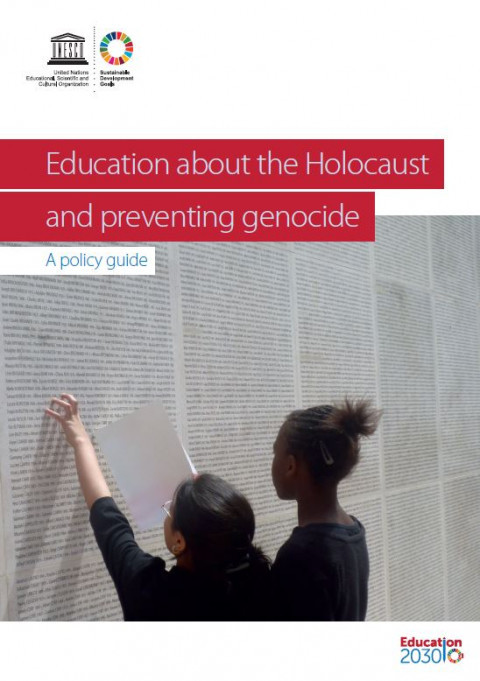 Education about the Holocaust and Preventing Genocide: A Policy Guide Year of publication: 2017 Corporate author: UNESCO This Guide provides policy-makers with solutions to introduce education about the Holocaust, and possibly broader education about genocide and mass atrocities, into education systems and curricula. It is the first of its kind, focusing on matters that are relevant to policy, rather than on teaching practices alone.The publication addresses a wide range of essential questions, including: Why teach about the Holocaust? What learning outcomes can be expected from such educational endeavours? How do they relate to global education priorities? How to introduce the subject in the curriculum, train teachers, promote the most relevant pedagogies, and work with the non-formal sector of education?Based on UNESCO’s Global Citizenship Education work, the Guide draws on years of research and experience in the fields of Holocaust and genocide education. Numerous academics, educators and other experts offered insights and suggestions throughout the process. Multiple Holocaust and genocide related organizations – including the United States Holocaust Memorial Museum – contributed to the content. This creation benefited from the time and expertise of many. This Guide raises challenging questions for education stakeholders. It also provides concrete solutions regarding how educators can deal with deeply troubling histories, to build a better future for all. Enseignement de l'Holocauste et prévention du genocide: guide à l'intention des décideurs politiques Year of publication: 2017 Corporate author: Organisation des Nations Unies pour l'éducation, la science et la culture (UNESCO) Le present document a pour objectif de guider les responsables politiques qui souhaitent organiser ou renforcer l’etude de l’Holocauste et, plus generalement, du genocide et des crimes de masse, dans le systeme educatif de leur pays. Il y est explique pourquoi et comment l’enseignement et l’apprentissage relatifs a l’Holocauste peuvent contribuer a la realisation des priorites strategiques mondiales par l’education, notamment en cultivant la citoyennete mondiale, en promouvant les droits de l’homme et en instaurant une culture de paix et de prevention du genocide.Le document est principalement axe sur l’enseignement de l’Holocauste, et s’appuie sur des decennies de recherches, d’allocations de ressources et de pratiques pedagogiques qui en demontrent l’efficacite. Il prodigue des conseils sur la maniere de fixer des objectifs d’apprentissage clairs, realistes et adaptes au contexte, afin de promouvoir un enseignement de qualite dans ce domaine. Educación sobre el Holocausto y la prevención del genocidio: Una guía para la formulación de políticas Year of publication: 2017 Corporate author: Organización de las Naciones Unidas para la Educación, la Ciencia y la Cultura (UNESCO) La presente guía proporciona a los responsables de la formulación de políticas diversas soluciones para la introducción de la educación sobre el Holocausto, y posiblemente una educación más amplia sobre el genocidio y las atrocidades masivas, en los sistemas educativos y los planes de estudios. Es la primera obra de este tipo, al hacer hincapié en asuntos que atañen a las políticas, más que en la mera enseñanza de las prácticas. En la publicación se aborda una amplia gama de cuestiones, entre las que figuran: ¿Por qué conviene impartir enseñanza sobre el Holocausto? ¿Qué resultados de aprendizaje cabe esperar de estas iniciativas educativas? ¿Cuál es su relación con las prioridades educativas a escala global? ¿Cómo introducir el tema en los planes de estudios, formar a los profesores, promover las pedagogías más pertinentes, y trabajar con el sector no formal de la educación?
  Tools for Planning and Monitoring Programmes of Multilingual Education in Asia Year of publication: 2020 Corporate author: UNESCO | UNESCO Bangkok This booklet provides some tools that programme personnel may use in the M&E of their multilingual education (MLE) programmes. This booklet complements the five booklets of UNESCO’s MTB MLE Resource Kit – Including the Excluded: Promoting Multilingual Education (2018).
  Guidelines on the Development of Open Educational Resources Policies Year of publication: 2019 Corporate author: UNESCO | Commonwealth of Learning Open educational resources (OER) – and to a greater extent, OER policies – can increase the quality and accessibility of teaching and learning as well as foster knowledge creation within a country.This publication provides detailed guidelines on how to develop systematic and effective policies on OER. Such policies are important to coordinate, strengthen and drive initiatives in a country; they involve government and institution actors on various levels working together to leverage OER toward achieving common goals under a national educational framework. OER policy provisions can be a part of a dedicated national masterplan, be under the framework of an overall education programme, or be elements incorporated into various strategies across multiple sectors.These guidelines lay out steps to review, analyse, develop, implement and monitor a context-relevant OER policy. They guide, but do not determine, what involved actors should do in a specific set of circumstances, providing a comprehensive framework for governments and institutions to set out vision and the scope of their policy.Each chapter introduces the purpose of the phase, provides background information and references practical examples for illustration. At the end of each chapter, specific tasks are set for the policy designer, which will help with the formulation of the final OER policy.
 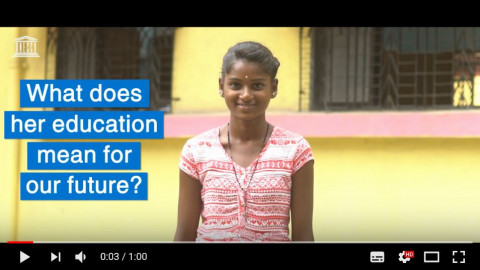 Her Education, Our Future Year of publication: 2019 Corporate author: UNESCO Too many girls and women are still held back by social norms and traditional school practices influencing their educational right and opportunities. But we know that their education is the most powerful investment to make for our collective future. Her education, our future is UNESCO’s new drive to accelerate action for girls’ and women’s education by leveraging political and financial commitments, as well as leadership for women and girls.Join #HerEducationOurFuture and be a part of our collective movement to advance girls’ and women’s education. Learn more: http://on.unesco.org/HerEducation
 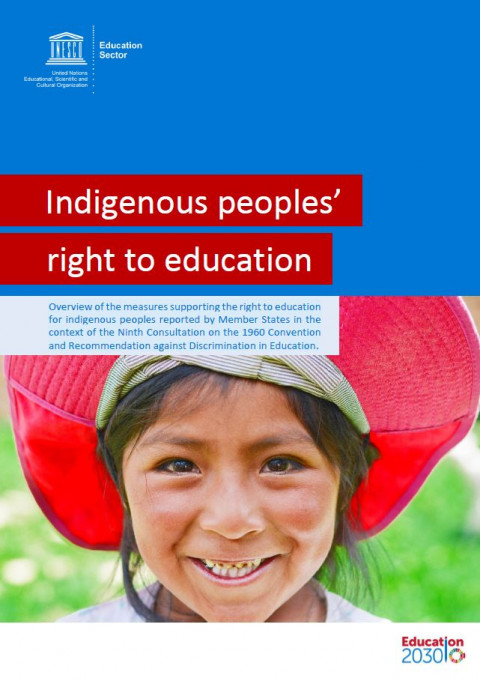 Indigenous Peoples’ Right to Education Year of publication: 2019 Corporate author: UNESCO Among the many inequalities that indigenous peoples face, the lack of access to quality education is particularly blatant. The 2030 Agenda commitment to ‘leave no one behind’, brings new impetus to ensure that indigenous peoples’ priorities are heard. In 2017, UNESCO adopted the Policy on engaging with indigenous peoples. Concurrently, as part of its mandate, UNESCO monitors the implementation of the 1960 Convention and Recommendation against Discrimination in Education. During the Ninth Consultation on the implementation of this instrument, several Member States reported upon measures they have taken in relation to the right to education for indigenous peoples. This document (Indigenous Peoples’ Right to Education: Overview of the Measures Supporting the Right to Education for Indigenous Peoples Reported by Member States in the Context of the Ninth Consultation on the 1960 Convention and Recommendation against Discrimination in Education) compiles practical examples extracted from these reports for information sharing and advocacy.