
Resources
Explore a wide range of valuable resources on GCED to deepen your understanding and enhance your research, advocacy, teaching, and learning.
2,781 Results found
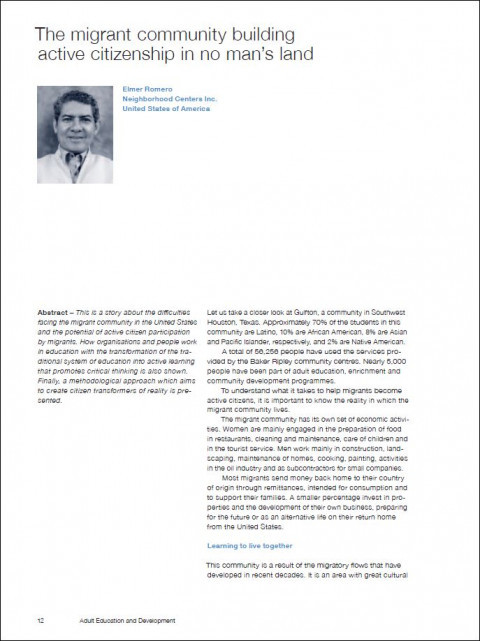 La comunidad migrante como constructora de la ciudadanía activa en tierra de nadie Year of publication: 2015 Author: Elmer Romero Corporate author: Éducation des Adultes et Développement Esta es una historia sobre las dificultades que afronta la comunidad migrante en Estados Unidos, y el potencial de participación ciudadana activa que poseen las y los migrantes. Asimismo, en esta nota se expone el papel de las entidades y personas que trabajan en el área educativa con respecto a la transformación del tradicional sistema de educación hacia un aprendizaje activo que propicie el pensamiento crítico. Por último, se da a conocer un abordaje metodológico que tiene como fin último formar a ciudadanos transformadores de la realidad. Une communauté de migrants promotrice de la citoyenneté active dans le no man’s land Year of publication: 2015 Author: Elmer Romero Corporate author: Éducation des Adultes et Développement Cet article décrit les diffi cultés auxquelles sont confrontés les migrants aux États- Unis, et le potentiel que recèle la participation citoyenne active de cette communauté. Il montre également le travail réalisé par les organisations et les personnes impliquées dans le domaine de l’éducation pour transformer le système éducatif traditionnel en un apprentissage actif, promoteur de pensée critique. Pour fi nir, il propose une approche méthodologique visant à former des citoyens capables de changer l’ordre établi.
 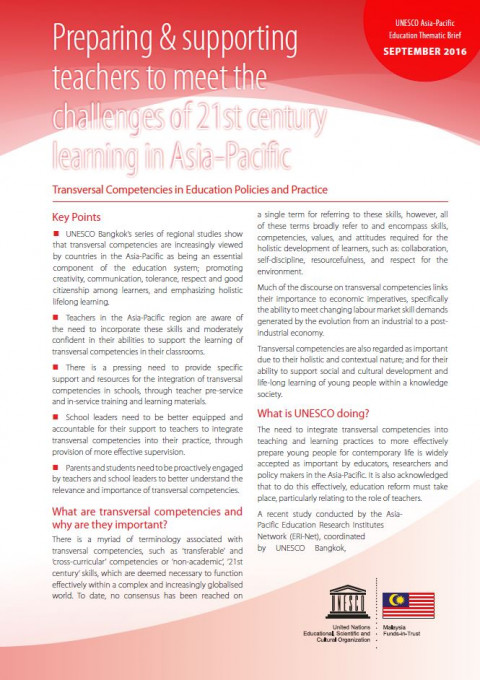 Preparing & Supporting Teachers to Meet the Challenges of 21st Century Learning in Asia-Pacific: Transversal Competencies in Education Policies and Practice Year of publication: 2016 Corporate author: Regional Bureau for Education in Asia and the Pacific | UNESCO Bangkok Preparing and supporting teachers to meet the challenges of 21st century learning in Asia-Pacific. Transversal Competencies in Education Policies and Practice. This is a summary of ERI-Net’s Phase III research into transversal competencies in education policy and practice. The regional synthesis report will be published in December 2016.
  内蒙古生态文化建设战略研究 Year of publication: 2019 Author: WEI Zhiyong | BAI Zhifeng Corporate author: China Environment Publishing Group 《内蒙古生态文化建设战略研究》是由魏智勇教授和白志峰主任主持完成的内蒙 古哲学社会科学重点项目的最终研究成果。在认真分析研究国内外生态文化建设文献资料的基础上,深入系统地论证了内蒙古加强生态文化的必要性和重要性,较为全面地分析了内蒙古生态文化建设的现 状,明确了内蒙古生态文化建设的优劣条件、机遇和挑战,提出了内蒙古生态文化建 设的指导思想、目标、原则、重点任务,探索了一些切实可行的保障措施,希望对于 推动内蒙古生态文明和生态文化建设起到重要的理论指导作用。
 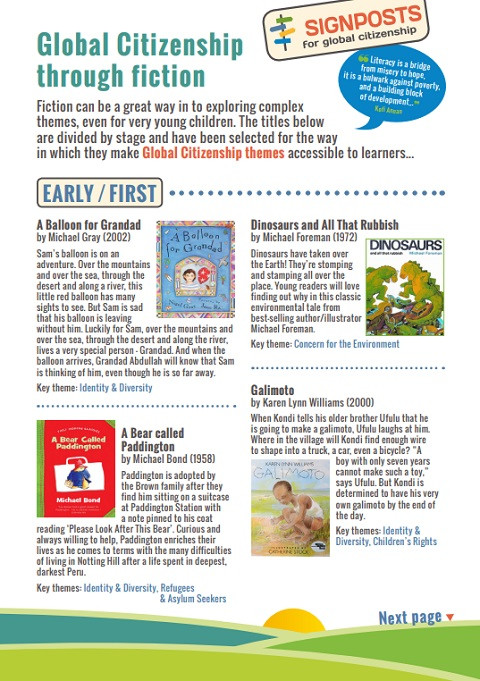 Global Citizenship through Fiction Year of publication: 2016 Corporate author: Signposts | International Development Education Association Scotland (IDEAS) This flyer summarises a selection of texts linking global citizenship and fiction. There is a synopsis of each text and texts range from Early Years to Stage 2.
 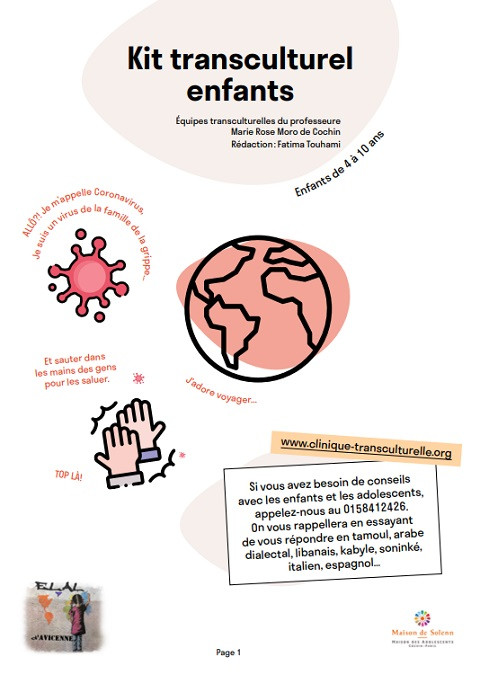 Kit transculturel enfants Year of publication: 2020 Author: Marie Rose Moro Corporate author: Maison de Solenn Ce kit transculturel est destiné à aider les les familles migrates en période de confinement où il devient crucial d’expliquer à chacun, avec les bons mots et dans sa langue, ce qui se passe. Il est nécéssaire d’aider l’enfant à continuer sa vie d’enfant.
 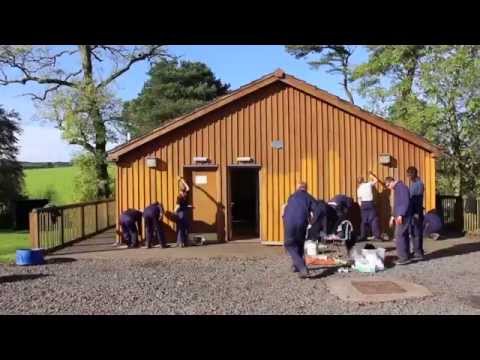 L'engagement citoyen à l'international Year of publication: 2015 Author: Jeanne Lorrain Corporate author: Educasol La citoyenneté est présentée aujourd’hui comme un enjeu prioritaire par les pouvoirs publics français. Ce vidéo montre qu'il est nécessaire de rappeler que pour être gage de sens et de qualité, le désir d’engagement se doit d’être accompagné pour permettre, à tous les âges de la vie, de découvrir les multiples possibilités d’agir et de s’engager. C’est pourquoi les associations de solidarité internationale, de volontariat, de jeunesse et d’éducation populaire travaillent depuis longtemps sur les enjeux de citoyenneté et de mieux vivre ensemble ici et là-bas.
 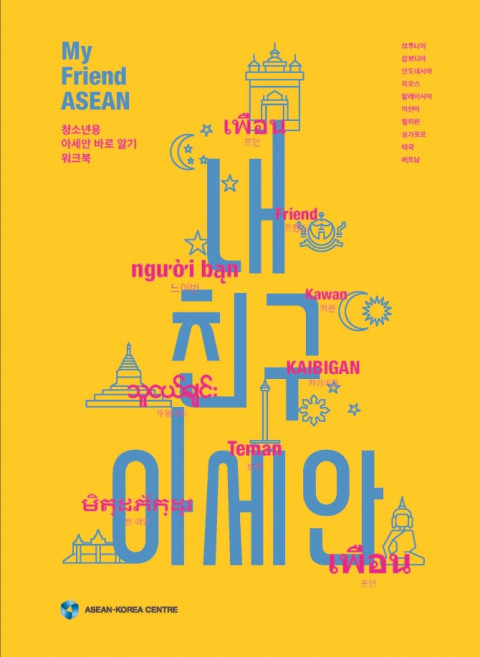 내 친구 아세안: 청소년용 아세안 바로 알기 워크북 Year of publication: 2019 Corporate author: 한-아세안센터 정보자료국 아시아 태평양 지역 중, 동남아시아 10개국의 연합을 아세안(ASEAN)이라고 하며 브루나이·캄보디아·인도네시아·라오스·말레이시아·미얀마·필리핀·싱가포르·태국·베트남이 그 국가들이다. 정치형태, 종족, 종교, 문화, 역사 등 다양한 환경을 가진 사람들이 공존하고 다양한 사람들이 어우러져 살고 있는 아세안 10개국은 2015년 말 ‘아세안 공동체’ 라는 하나의 공동체를 탄생시켰다. 이 책은 아세안 국가들과 우리나라와의 관계를 살펴보고 청소년들에게 다소 낯선 아세안 회원국을 각 나라별로 일러스트와 이미지를 통해 쉽게 알 수 있도록 설명한다.
  Addressing Inclusion: Effectively Challenging Racism in Schools Year of publication: 2019 Corporate author: Coalition for Racial Equality and Rights (CRER) | respectme | Government of Scotland Addressing Inclusion: Effectively Challenging Racism in Schools” is a resource developed by the Coalition for Racial Equality and Rights (CRER) and respectme, Scotland's anti-bullying service. The resource provides information and guidance to school staff on addressing racist bullying in Scottish schools and has been written to complement ‘Respect for All’, the national approach to anti-bullying.
  Celebrating Difference: Exploiting Stereotypes and Anti-Racism Year of publication: 2018 Corporate author: respectme This resource has been developed as part of the ‘Celebrating Difference’ campaign, which is run by Respect Me, in partnership with LGBT Youth Scotland, the Scottish Association for Mental Health, Show Racism the Red Card, and the Scottish Government. It contains various lessons about challenging stereotypes.