
Resources
Explore a wide range of valuable resources on GCED to deepen your understanding and enhance your research, advocacy, teaching, and learning.
2,165 Results found
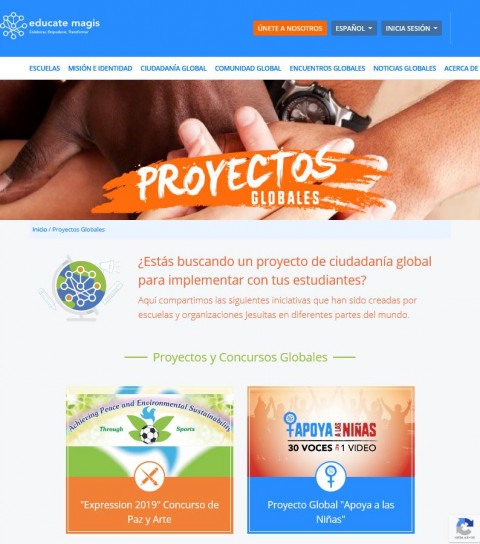 ¿Estás buscando un proyecto de ciudadanía global para implementar con tus estudiantes?: Proyectos y Concursos Globales Year of publication: 2019 Corporate author: Educate Magis En este espacio de la página web de Educate Magis de la Comunidad de Jesús se accede a un calendario de actividades y eventos a nivel global y a información sobre iniciativas que han sido creadas por escuelas y organizaciones Jesuitas en diferentes partes del mundo. Se accede a distintos proyectos educatiovs para fomentar una ciudadanía mundial como "La silla roja global", "Camina una milla en mis zapatos", o "Únete a las niñas".
 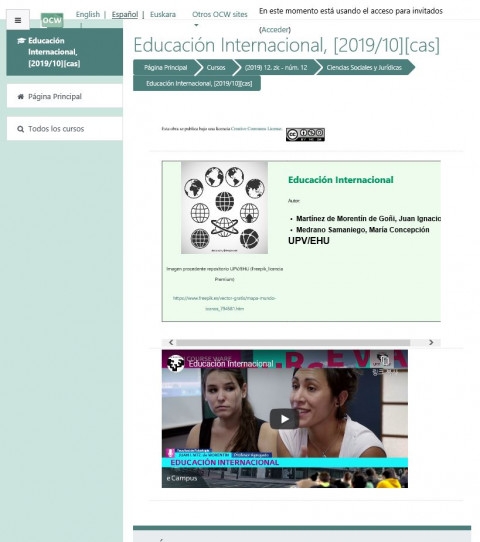 International Education Course Year of publication: 2019 Author: Juan Ignacio Martínez de Morentin | Concepción Medrano Corporate author: UNESCO Chair in Communication and Educational Values UNESCO understands international education as a process resulting from international understanding, cooperation, peace and global citizenship education. This results from combining three perspectives: the first, human rights--in a strict sense--the second, fundamental liberties--stressing its possibilities and requirements--and the third, the United Nations system--understanding the way in which it is committed to achieving peace.International education is education for international understanding. This understanding must impregnate all of its educational systems, actions and materials. It is not a separate course. Instead, it must be present in all courses. International education or education for international understanding is the entire programme, the motivation behind any teaching & learning process. This course explains ideas and models that UNESCO has worked with in order to clarify what it aims for in education. This is seen through the resolutions of the general conferences and the Executive Board decisions, which are UNESCO´s framework in defining international education. Curso de Educación Internacional Year of publication: 2019 Author: Juan Ignacio Martínez de Morentin | Concepción Medrano Corporate author: UNESCO Chair in Communication and Educational Values Para la UNESCO, la educación internacional es un proceso que desemboca en comprensión, educación para la ciudadanía, cooperación y paz internacionales.Este resultado depende de conjugar tres perspectivas: derechos humanos -sumergiéndose en su significado-, libertades fundamentales -ejercitando sus posibilidades y exigencias- y sistema de las Naciones Unidas -conociendo esa forma de comprometerse en el logro de la paz. La educación internacional es educación para la comprensión internacional.Y ha de impregnar todas las acciones y materias del sistema educativo. No es una asignatura aparte; ha de articularse con todas ellas. La educación internacional o educación para la comprensión internacional es el programa, la motivación de cualquier proceso de enseñanza/aprendizaje.Este curso muestra ideas y diseños que la UNESCO ha ido trabajando para llegar a clarificar lo que persigue en el ámbito educativo. Las resoluciones de las conferencias generales y las decisiones del Consejo Ejecutivo son mimbres utilizados por la UNESCO para definir la educación internacional.
 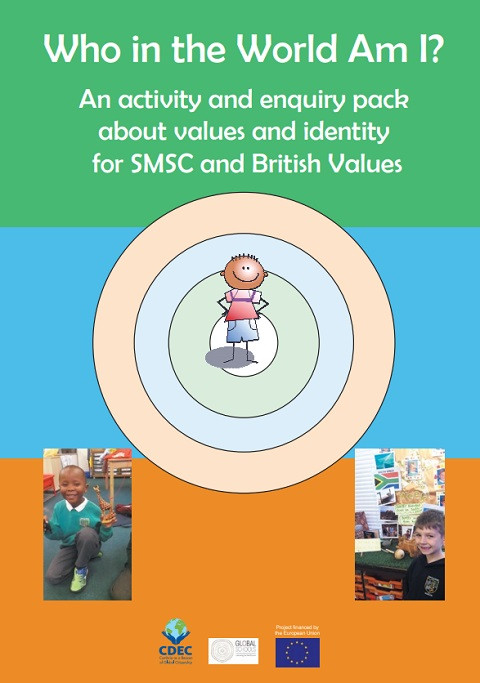 Who in the World Am I?: An Activity and Enquiry Pack about Values and Identity for SMSC and British Values Year of publication: 2018 Author: Caroline Harmer Corporate author: European Union (EU) | Global Schools Program | Cumbria Development Education Centre(CDEC) Who in the World Am I is a resource pack for teachers and children who want to actively explore their own identity from the personal right through to being part of a family, a community, a country and becoming a global citizen. The activities develop progressively through the global learning themes of valuing diversity and skills of self-awareness and reflection.
  La convivencia escolar, cuestión humana; manual: orientación escolar en asuntos de convivencia Year of publication: 2014 Corporate author: Secretaría de Educación del Distrito (SED) | Ficonpaz | District Secretariat of Education of Bogotá This manual, complementary to the module of the Integral Plans of Education for Citizenship and Civic Coexistence, has conceptual and methodological tools that support the reconstruction and systematization process. It’s a guide that is recommends to be employed with creativity, open dialogues with other participants and most of all, with constant territorial contextualization of the concepts, activities and tool-kits that are used. Citizenship education and coexistence: my body, my first territory; initial cycle (early education) Year of publication: 2014 Corporate author: Secretaría de Educación del Distrito (SED) | Fe y Alegría These twelve modules make reference to a series of activities that focus on how children from all the educative grades understand and live citizenship, strengthening and facilitating the learning processes based on autonomy. This educative materials, which are aimed at being implemented inside the classrooms, attempt to serve as input resources for educators and other agents that work on or are interested in working with citizenship education and coexistence. The overall objective is to provide quality education. Educación para la ciudadanía y la convivencia: mi cuerpo, mi primer territorio; ciclo inicial (prejardín, jardín y transición) Year of publication: 2014 Corporate author: Secretaría de Educación del Distrito (SED) | Fe y Alegría These twelve modules make reference to a series of activities that focus on how children from all the educative grades understand and live citizenship, strengthening and facilitating the learning processes based on autonomy. This educative materials, which are aimed at being implemented inside the classrooms, attempt to serve as input resources for educators and other agents that work on or are interested in working with citizenship education and coexistence. The overall objective is to provide quality education.
 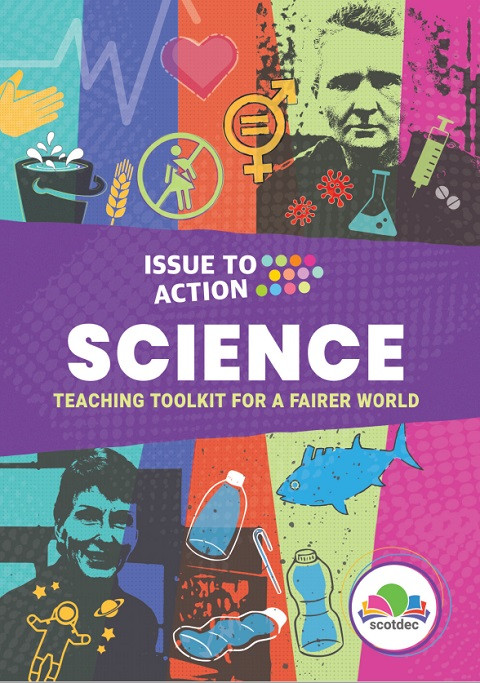 Issue to Action: Science; Teaching Toolkit for a Fairer World Year of publication: 2020 Author: Tracey Shaw | Claire Tatar | Krissie Davis Corporate author: Scotdec | European Union (EU) Global Citizenship Education is essential in enabling young people to access and participate in shaping modern society. All teachers and subjects have a role to play in educating young people to enable them to participate as fully as possible in building a fair and just world for all. Global Citizenship provides a wealth of real-life contexts for learning Science. By using relevant and meaningful topics, young people are more motivated to learn and understand the key role Science plays in driving change for a more sustainable future. The materials in this resource have been written by Science teachers and tested in Scottish classrooms. They focus on sustainability, plastic waste, health and wellbeing and women in Science. School coexistence, human inquiries: reflections about the role and function of school orientations towards issues of coexistence Year of publication: 2014 Corporate author: Bogotá. Secretaría de Educación del Distrito (SED) | Fundación para la Reconciliación In this module, the Secretariat of Education of Bogotá, presents pedagogical instruments and activities that seek to support the educative communities in the creation and implementation process of the Integral Plans of Education for Citizenship and Civic Coexistence, strategy developed by the Secretariat of Education of Bogotá with the intention of installing the education for citizenship and civic coexistence in all public schools of the city. This material is expected to be used by school managers, teachers and interested people in the elaboration and development of the plans in each school. La convivencia escolar, cuestión humana: reflexión acerca del rol y función de la orientación escolar en asuntos de convivencia Year of publication: 2014 Corporate author: Bogotá. Secretaría de Educación del Distrito (SED) | Fundación para la Reconciliación In this module, the Secretariat of Education of Bogotá, presents pedagogical instruments and activities that seek to support the educative communities in the creation and implementation process of the Integral Plans of Education for Citizenship and Civic Coexistence, strategy developed by the Secretariat of Education of Bogotá with the intention of installing the education for citizenship and civic coexistence in all public schools of the city. This material is expected to be used by school managers, teachers and interested people in the elaboration and development of the plans in each school.