
Resources
Explore a wide range of valuable resources on GCED to deepen your understanding and enhance your research, advocacy, teaching, and learning.
2,165 Results found
 La vie scolaire, question humaine: la réflexion sur le rôle et la fonction de l'orientation scolaire en matière de coexistence Year of publication: 2014 Corporate author: Bogotá. Secretaría de Educación del Distrito (SED) | Fundación para la Reconciliación Dans ce module, le Secrétariat d'Education de Bogotá présente des instruments pédagogiques et des activités qui visent à soutenir les communautés éducatives dans le processus de création et de mise en œuvre des plans intégrés d'éducation à la citoyenneté et à la coexistence civique élaboré par le Secrétariat à Bogotá Avec l'intention d'installer l'éducation pour la citoyenneté et la coexistence civique dans toutes les écoles publiques de la ville. Ce matériel devrait être utilisé par les directeurs d'école, les enseignants et les personnes intéressées dans l'élaboration et l'élaboration des plans dans chaque école. Education à la citoyenneté et de la coexistence: mon corps, mon premier territoire; cycle initial (pré-maternelle, jardin et transition) Year of publication: 2014 Corporate author: Secretaría de Educación del Distrito (SED) | Fe y Alegría Ces douze modules font référence à une série d'activités qui mettent l'accent sur la façon dont les enfants de toutes les classes éducatives comprennent et vivent la citoyenneté, en renforçant et en facilitant les processus d'apprentissage basés sur l'autonomie. Ces matériels éducatifs, qui visent à être mis en œuvre dans les salles de classe, tentent de servir de ressources pour les éducateurs et autres agents qui travaillent ou sont intéressés à travailler avec l'éducation à la citoyenneté et la coexistence. L'objectif global est de fournir une éducation de qualité.
 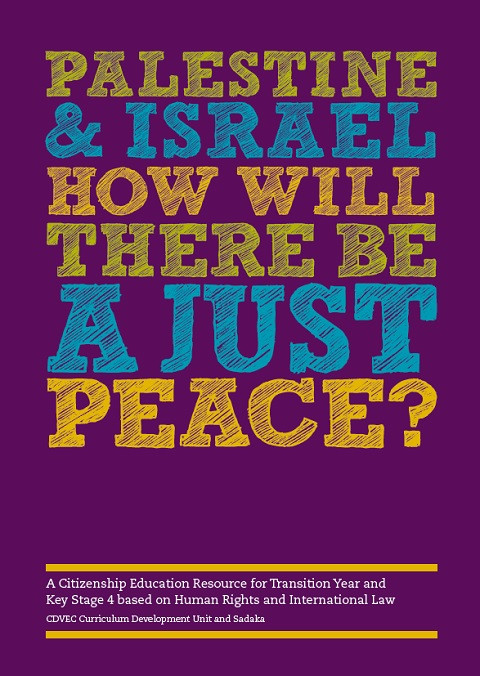 Palestine & Israel: How Will There Be a Just Peace?; A Citizenship Education Resource for Transition Year and Key Stage 4 based on Human Rights and International Law Year of publication: 2012 Author: Mary Gannon | Elaine Murtagh Corporate author: City of Dublin Vocational Education Committee (CDVEC). Curriculum Development Unit | Centre for Cross Border Studies This resource is an important development in helping post-primary students throughout the island of Ireland to explore the Palestinian Israeli situation within the context of Human Rights and International Law.The resource addresses key issues underlying the origins of the conflict and current obstacles to bringing about a just peace.
 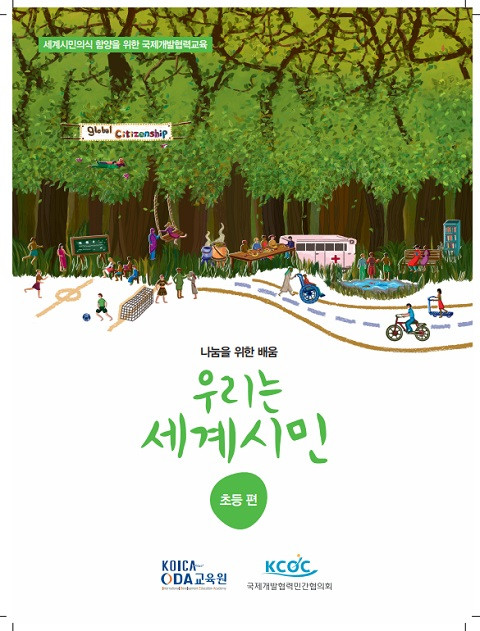 우리는 세계시민: 나눔을 위한 배움; 초등 편 Year of publication: 2013 Author: 고아라 | 고영주 | 김영미 | 성은경 | 홍지영 Corporate author: KOICA ODA 교육원 | 국제개발협력민간협의회 우리는 세계시민(초등편)은 상호연계성, 인권, 빈곤, 국제개발 진로 등 세계시민교육 관련 교사용 교수학습자료로 학생용 워크북이 포함되어 있다.
 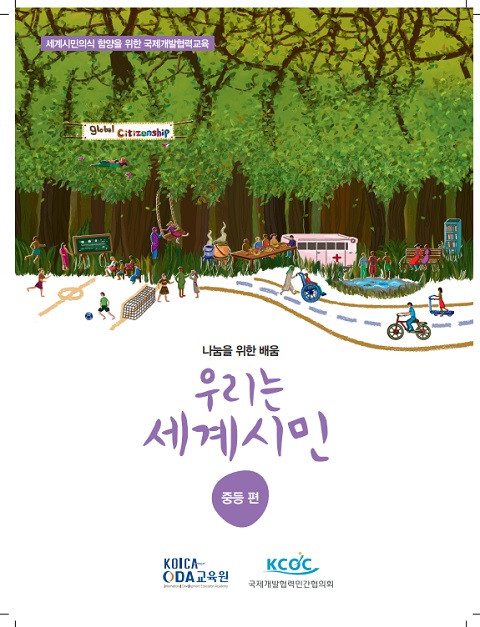 우리는 세계시민: 나눔을 위한 배움; 중등 편 Year of publication: 2013 Author: 고아라 | 고영주 | 김영미 | 성은경 | 홍지영 Corporate author: KOICA ODA 교육원 | 국제개발협력민간협의회 우리는 세계시민(중등편)은 상호연계성, 인권, 빈곤, 국제개발 진로 등을 주제로 한 세계시민교육 교사용 교수학습자료이다. 학생용 워크북 및 선택활동이 포함되어 있다.
 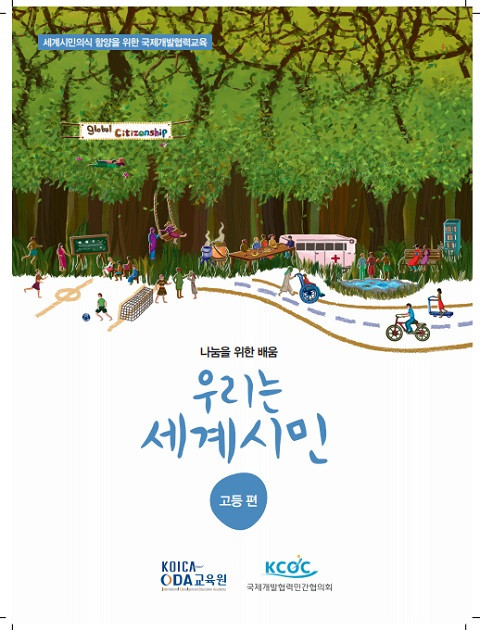 우리는 세계시민: 나눔을 위한 배움; 고등 편 Year of publication: 2013 Author: 고아라 | 고영주 | 김영미 | 성은경 | 홍지영 Corporate author: KOICA ODA 교육원 | 국제개발협력민간협의회 우리는 세계시민(고등편)은 상호연계성, 인권, 빈곤, 국제개발 진로 등을 주제로 한 세계시민교육 교사용 교수학습자료이다. 게임자료 및 선택활동이 포함되어 있다.
  Bank of Actions for Global Citizens Year of publication: 2020 Corporate author: Global Citizens Award The Bank of Actions guide can be used by anyone looking for creative inspiration to take action as global citizens. It is designed as a toolkit for engaging the public in global justice issues in meaningful ways that can help bring about positive change in our world.The Bank of Actions has been designed in the context of returned international volunteers participating in the Global Citizen Award programme.
  2020 연대와 공동체 의식으로 코로나바이러스감염증-19를 함께 극복해 나가는 세계시민교육 Year of publication: 2020 Corporate author: 서울특별시교육청 민주시민생활교육과 세계시민교육은 지역에서 일어나는 다양한 사안들이 지구 공동의 문제와 연결되어 있다는 것을 이해하고 공감하며 이러한 문제들을 해결하기 위한 다양한 방면에서의 지식, 기술, 태도를 기르고 지구 공동체의 더 평화롭고 행복한 미래를 지향하는 교육이다.이 자료는 서울특별시교육청에서 코로나바이러스감염증-19로 인한 위기에 대응하기 위해 발간한 혐오와 차별을 극복하는 연대와 책임의 세계시민성 함양 자료이다. 코로나 바이러스 감염으로 학교에 오지 못하는 학생들에게 온라인 수업 교재로 활용하여 관련 주제에 대해 학생 스스로 다양한 자료를 찾아보거나 자신의 생각을 온라인으로 공유하는 방법으로 사용할 수 있으며 직접 교실에서 학생들과 함께 교과 융합이나 주제 중심 수업으로도 활용 가능하다. Educación para la ciudadanía y la convivencia: construimos paz a nuestra medida; ciclo inicial (prejardín, jardín y transición) Year of publication: 2015 Corporate author: Secretaría de Educación del Distrito (SED) | Fe y Alegría These twelve modules make reference to a series of activities that focus on how children from all the educative grades understand and live citizenship, strengthening and facilitating the learning processes based on autonomy. This educative materials, which are aimed at being implemented inside the classrooms, attempt to serve as input resources for educators and other agents that work on or are interested in working with citizenship education and coexistence. The overall objective is to provide quality education.
  From Volunteers to Active Citizens Year of publication: 2015 Author: Grainne O’Neil Corporate author: Comhlámh This is a practical guide for volunteer sending-organisations, which aims to build capacity to support and deepen volunteers’ ongoing learning and critical engagement with international development issues, and to help volunteers “to address the structural and underlying causes of inequality and injustice to participate in social change making.”