
Resources
Explore a wide range of valuable resources on GCED to deepen your understanding and enhance your research, advocacy, teaching, and learning.
3,229 Results found
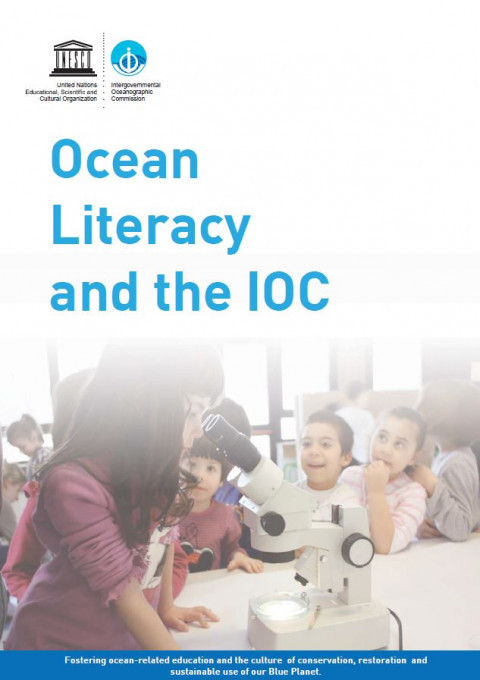 Ocean Literacy and the IOC: Fostering Ocean-related Education and the Culture of Conservation, Restoration and Sustainable Use of Our Blue Planet Year of publication: 2017 Corporate author: Intergovernmental Oceanographic Commission (IOC) The general public is not aware of the full extent of the medical, economic, social, political and environmental importance of the sea.Many of us are not aware that our day-to-day actions can have a cumulative effect on the health of the ocean and seas – a necessary resource that must be protected for all life on planet earth to exist.In other words, people lack a sense of ‘Ocean Literacy’ i.e. an understanding of the ocean’s influence on us and our influence on the ocean.In more detail, ocean literacy is more than just educating or informing the public and the marine and maritime stakeholders about the importance of oceans.Ocean literacy, through the use of behavioral change methods and by adopting a system approach, aims at facilitating the creation of an ocean literate society.
 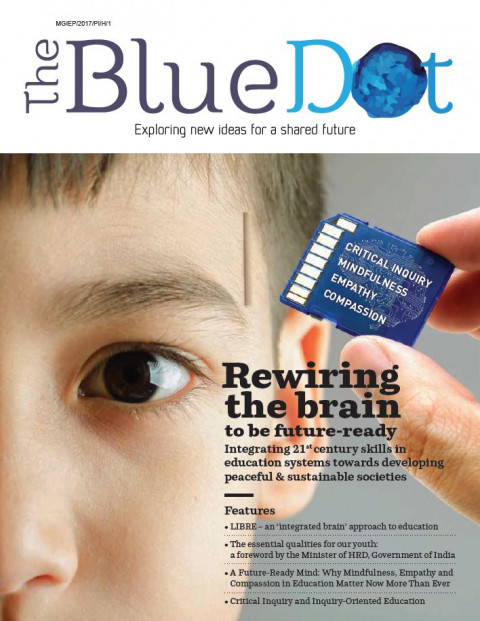 Rewiring the Brain to be Future-ready: Integrating 21st Century Skills in Education Systems Towards Developing Peaceful & Sustainable Societies (The Blue Dot Issue 6, 2017) Year of publication: 2017 Corporate author: Mahatma Gandhi Institute of Education for Peace and Sustainable Development (MGIEP) In the sixth issue of the Blue Dot, we focus on the importance of these 21st century skills for the young. The issue includes a foreword by the Minister of Human Resource Development, Government of India on the importance of inculcating 21st century skills in education systems and our Cover Story, which introduces UNESCO MGIEP’s LIBRE programme that follows an ‘integrated brain’ approach to education.Additionally, we feature opinions by specialists from academia, research and the industry on the lacuna present in existing education systems and the opportunities available to address this gap by introducing socio-emotional skills and inquiry oriented learning into curricula. Amongst various experts, we hear from Ines Kudo and Joan Hartley from The World Bank on the importance of ‘Teaching empathy and compassion in schools’; Prof. K.P. Mohanan on ‘Critical Inquiry and Inquiry oriented education’ and Dr. Marilee Bresciani Ludvik on how mindfulness forms the foundation for cultivating compassion.Further, we present excerpts from a collection of ‘Ask me Anything’ sessions focused on socioemotional skills, hosted on Knowledge Commons, UNESCO MGIEP’s knowledge sharing platform.We have been honoured to have the opportunity to host and learn from experts such as Dr. Richard Davidson, recognised as one of ‘The 100 most influential people in the world’ in 2006 by the Time Magazine and Chade-Meng Tan, currently the Chairman of Search Inside Yourself Leadership Institute and Co-chair of One Billion Acts of Peace, which has been nominated eight times for the Nobel Peace Prize.
  Rivers of the World Education Pack Year of publication: 2015 Author: Alison Willmott Corporate author: British Council This education resource pack extends the project’s reach to a much greater number of schools and provides a wealth of exciting cross-curricular activities for pupils aged 7–14. It is designed to expand knowledge and understanding, help your pupils to develop core skills and encourage them to explore and reflect on local and global issues. It also contains examples of artwork from the project and illustrations of how schools around the world have used the resources with their students.
 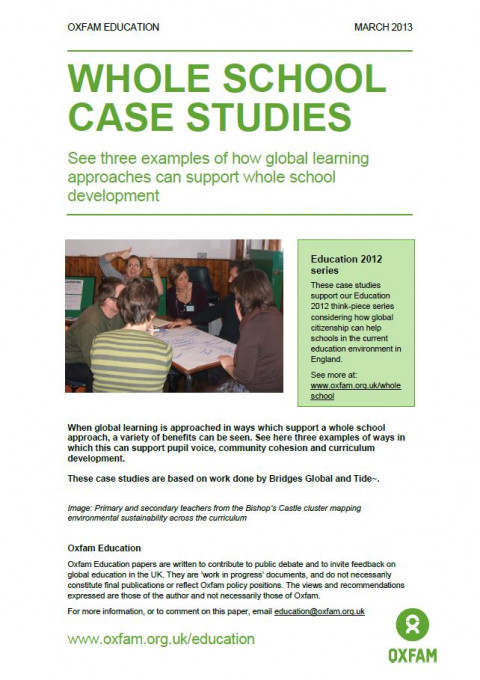 Whole School Case Studies: See Three Examples of How global Larning Approaches Can Support Whole School Development Year of publication: 2013 Corporate author: Oxfam GB These case studies support our Education 2012 think-piece series considering how global citizenship can help schools in the current education environment in England.When global learning is approached in ways which support a whole school approach, a variety of benefits can be seen. See here three examples of ways in which this can support pupil voice, community cohesion and curriculum development.These case studies are based on work done by Bridges Global and Tide~.See more at: www.oxfam.org.uk/wholeschool
 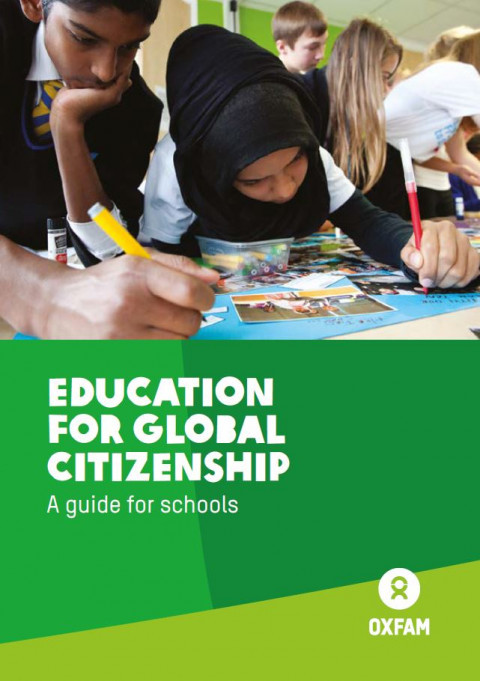 Education for Global Citizenship: A Guide for Schools Year of publication: 2015 Corporate author: Oxfam GB Education for global citizenship supports young people to explore and question the world around them. It promotes critical thinking, advocates social justice and encourages learners to apply their learning to real-world issues.This guide is packed with practical information for mapping global citizenship across different subject areas and age groups. It also includes inspiring case studies from schools that take a global citizenship approach to teaching and learning.
 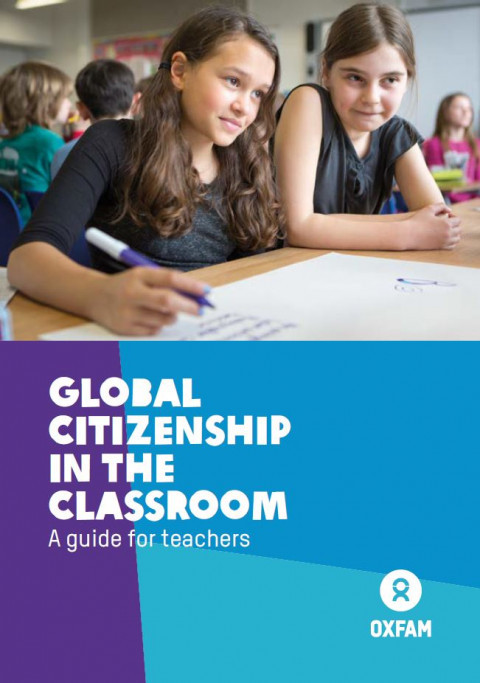 Global Citizenship in the Classroom: A Guide for Teachers Year of publication: 2015 Corporate author: Oxfam GB This guide is packed with practical tools and advice for teachers wanting to embed global citizenship in their classrooms. Learn how to effectively bring a global lens into your teaching with our handy planning framework, participation methods, and tools to assess learning.Develop your teaching practice with both innovative and tried-and-tested approaches. Help your learners ask questions, make connections, and take action as active global citizens.
  Global Digital Citizenship: Quick Start Guide Corporate author: Global Digital Citizen Foundation What does it mean to be a Global Digital Citizen? Who is this person and what do they stand for? What makes them true global leaders and creators? The journey to understanding begins here, with the Global Digital Citizen Quickstart Guide.This is the final book in the GDCF's Fluency Quickstart series. This guide explores the skills and practices that make an exemplary Global Digital Citizen.With this Quickstart Guide you can: Explore the tenets of global citizenship Develop unique skills and mindsets Measure student progress Create challenging PBL lessons Become a great global digital citizen
 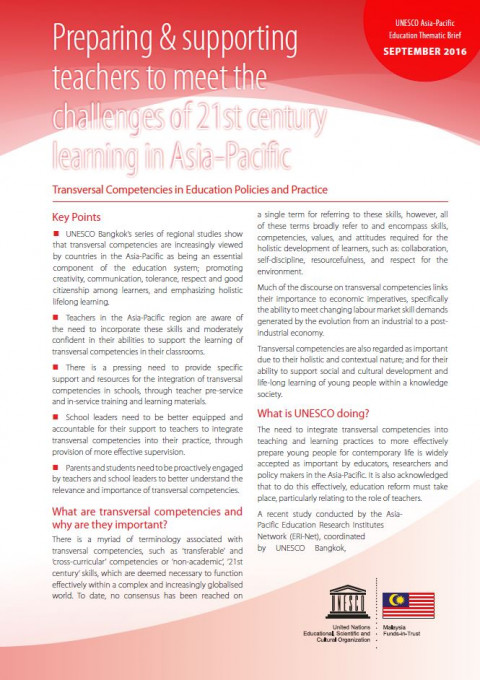 Подготовка и поддержка учителей для решения задач обучения 21-го века в Азиатско-Тихоокеанском регионе Year of publication: 2016 Corporate author: Regional Bureau for Education in Asia and the Pacific | UNESCO Bangkok Подготовка и поддержка учителей для решения задач обучения 21-го века в Азиатско-Тихоокеанском регионе. Междисциплинарные компетенции в области политики и практики в области образования. Это итог исследований III фазы ERI-Net для междисциплинарных компетенций в области политики и практики в образовании.
  Education for Sustainable Development in Central Asia: Analysis of Achievements, Challenges and Outlook Year of publication: 2018 Author: Tatiana Shakirova Corporate author: Regional Environmental Centre for Central Asia (CAREC) The article of the manager of the CAREC programme "Education for Sustainable Development" (ESD), Dr of Biology Tatiana Shakirova is devoted to the review of ESD process from 2002 to 2018, analysis of experience, lessons learned and challenges and perspectives for ESD development in Central Asia. Taking into consideration all the global and regional challenges in ESD, today CAREC is reconsidering and rethinking its role in ESD process in Central Asia. The main objective of the ESD Programme today is to provide a regional platform for dialogue, exchange of knowledge, experience, innovations and best educational practices/tools implemented at local/national/regional levels, and support CAREC's inter-program activities on education and capacity building, as well as intersectoral, interagency, interregional cooperation on ESD in the region with the involvement of all stakeholders and international expertise. Образование в Интересах Устойчивого Развития в Центральной Азии: Анализ Достижений, Вызовы и Взгляд в Будущее Year of publication: 2018 Author: Tatiana Shakirova Corporate author: Regional Environmental Centre for Central Asia (CAREC) Статья менеджера программы «Образование для устойчивого развития» (ОУР) РЭЦЦА, кандидата биологических наук Татьяны Шакировой посвящена обзору процесса ОУР с 2002 по 2018 годы, анализу опыта, уроков, а также вызовам и перспективам развития ОУР в Центральной Азии.Принимая во внимание глобальные и региональные вызовы в ОУР, сегодня РЭЦЦА пересматривает и переосмысливает свою роль в процессе ОУР в Центральной Азии. Основная цель Программы ОУР сегодня – это предоставление региональной площадки для диалога, обмена знаниями, опытом, инновациями и наилучшими образовательными практиками/ инструментами, реализованными на местном/национальном/региональном уровнях, и поддержка межпрограммной деятельности РЭЦЦА по образованию и повышению потенциала, а также обеспечение межсекторального, межведомственного, межрегионального сотрудничества по ОУР в регионе с привлечением всех заинтересованных сторон и международной экспертизы.