
Resources
Explore a wide range of valuable resources on GCED to deepen your understanding and enhance your research, advocacy, teaching, and learning.
2,199 Results found
 민주시민이 미래다 Year of publication: 2017 Corporate author: 중앙선거관리위원회 선거연수원 이 책자에 실린 내용은 중앙선거관리위원회 선거연수원의 「이종희 정치살롱」 (http://blog.naver.com/jongheesalon)에 지난 1여 년간 블로그에 축적된 다양한 선거·정치이야기 등을 모아서 제작한 것이다.
 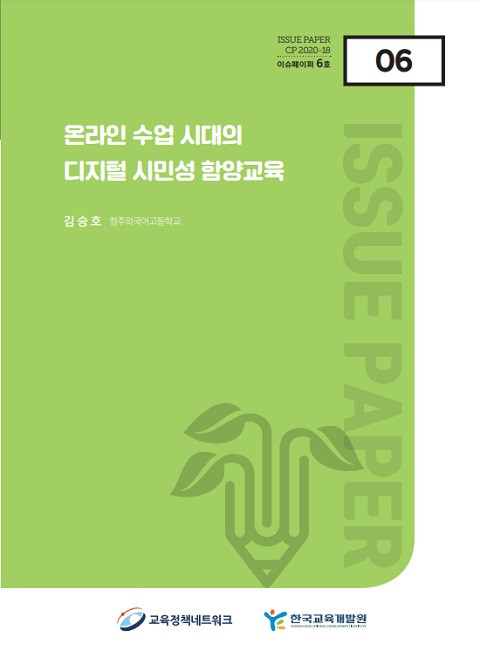 온라인 수업 시대의 디지털 시민성 함양교육 (2020 이슈페이퍼 6호) Year of publication: 2020 Author: 김승호 Corporate author: 한국교육개발원 교육정책네트워크 신종 코로나바이러스 감염증(코로나19)으로 인하여 교육 현장은 격변의 시대에 접어 들게 되었다. 별다른 준비 없이 원격수업이 시작되었고 한 학기가 흘렀다. 이 과정에서 온라인상에서의 윤리성 문제가 지적되었다. 본고에서는 온라인 상황에서의 윤리성에 대한 기존의 연구를 바탕으로 디지털 시민성으로 명명되는 온라인 윤리교육의 논의를 점검하고, 디지털 시민교육이 이루어질 수 있는 구체적 방안에 대해 제시하였다. 본 저작물은 한국교육개발원에서 2020년 작성하여 공공누리 제 4유형으로 개방한 ‘온라인 수업 시대의 디지털 시민성 함양교육 (김승호)’을 이용하였으며 해당 저작물은 교육정책네트워크 정보센터(edpolicy.kedi.re.kr)에서 무료로 다운받으실 수 있습니다.
  서울 세계시민교육 이행현황 및 향후 추진 과제 연구 Year of publication: 2021 Author: 김동택 | 서용덕 | 고선규 | 김지영 | 임재민 | 장경원 | 홍윤빈 Corporate author: 서울특별시교육청 교육연구정보원 이 연구는 서울시 교육청이 추진하고 있는 세계시민교육 이행 현황을 객관지표와 주관지표를 통해 분석하고 이를 바탕으로 향후 추진되어야 할 정책 과제들(협업체계, 교육 내실화, 내용·동력·변인, 데이터 축적 및 활동 플랫폼 구축 등)을 연구하는 데 목적이 있다. 이를 위하여 2015년부 터 시작되어 현재까지 진행된 세계시민교육의 성과를 확인하기 위해 객관 지표와 주관지표를 점검하였으며, 여기서 나타난 결과들을 바탕으로 앞으 로의 정책 방향을 설정하기 위해 정책 제안을 시도하였다. 서울특별시교육청교육연구정보원이(가) 창작한 서교연 2020-33 위탁연구(서울 세계시민교육 이행현황 및 향후 추진 과제 연구) 최종보고서 저작물은 "공공누리 제4유형(출처표시-상업적 이용금지-변경금지)" 조건에 따라 이용 할 수 있습니다.
 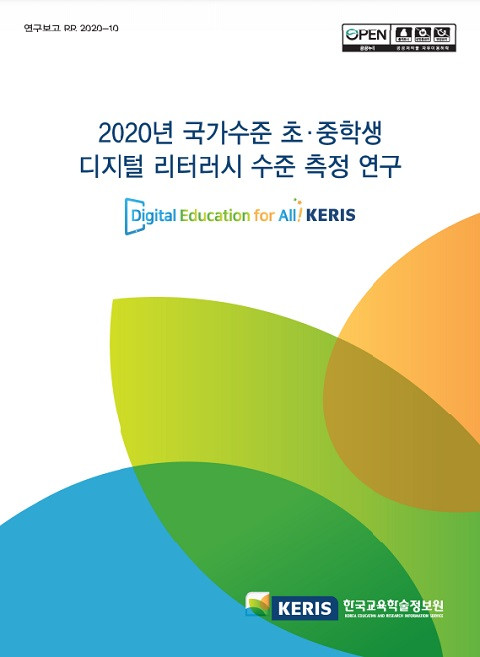 2020년 국가수준 초·중학생 디지털 리터러시 수준 측정 연구 Year of publication: 2021 Author: 정진명 | 이현숙 | 김주환 | 이운지 | 류기곤 | 김경아 | 조규복 | 구찬동 Corporate author: 한국교육학술정보원 2020년 국가수준 초중등학생의 디지털 리터러시 수준 측정 연구는 우리나라 초·중학생의 디지털 리터러시를 측정하고, 초·중학생의 디지털 리터러시 수준에 영향을 미치는 학교 환경과 관련 수업 및 교사 인식 등을 비교분석하여 주요 특징과 과제 및 개선방안을 제시하는 것이라고 할 수 있다. 또한 2020년 코로나19로 인하여 전면적인 원격교육이 일정기간 동안 시행되는 등 교육 환경에 기존과 다른 특수한 환경적 변수가 있었던 만큼 그로 인하여 학생의 디지털 리터러시와 교수학습 및 교사 인식에 어떠한 변화가 있었는지를 조사 분석하여 포스트 코로나19 교육 환경 변화에 대응하고자 하는 목적이 있다. 본 저작물은 한국교육학술정보원에서 2021년 작성하여 공공누리 제 4유형으로 개방한 ‘2020년 국가수준 초·중학생 디지털 리터러시 수준 측정 연구(정진명 외)’를 이용하였으며 해당 저작물은 한국교육학술정보원(www.keris.or.kr)에서 무료로 다운받으실 수 있습니다.
 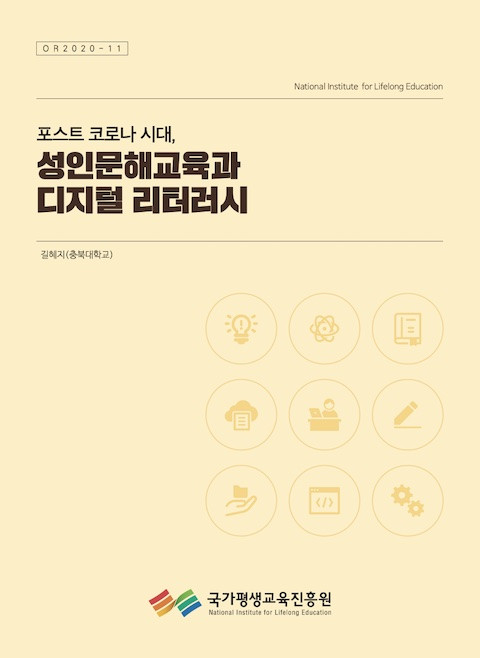 포스트 코로나 시대, 성인문해교육과 디지털 리터러시 Year of publication: 2020 Author: 길혜지 Corporate author: 국가평생교육진흥원 본 연구에서는 코로나 19로 가속화된 디지털 전환기 및 디지털 격차 문제를 인식하면서 문해의 새로운 영역인 디지털 리터러시의 개념 및 프레임워크를 살펴본다. 또한 디지털 정보격차의 실태와 성인문해교육의 맥락에서 디지털 리터러시 관련 교육에 대한 정부지원 현황을 알아본다. 본 연구의 결론에서는 학습자의 디지털 리터러시 교육 요구에 대한 실증 자료에 기반하여 국가수준에서 디지털 리터러시 교육 표준을 마련하고, 커리큘럼 및 교재를 개발하여 보급함으로써, 다양한 교육기관에서 유사 교육과정을 운영하거나 교사 및 강사 중심으로 교육 프로그램을 운영해 온 한계를 개선하는 데 도움이 될 수 있다고 기대한다.
  UN Youth 2030 전략과 한국 청년 Year of publication: 2020 Author: 임유진 | 김선기 | 정보영 | 정준영 | 진형익 Corporate author: 유네스코한국위원회 유네스코한국위원회가 2018년 유엔이 발표한 'Youth 2030 전략'을 바탕으로 청년 연구자들과 함께 한국사회의 청년 활동과 청년 정책, 청년 참여 등을 점검한 연구보고서이다.
 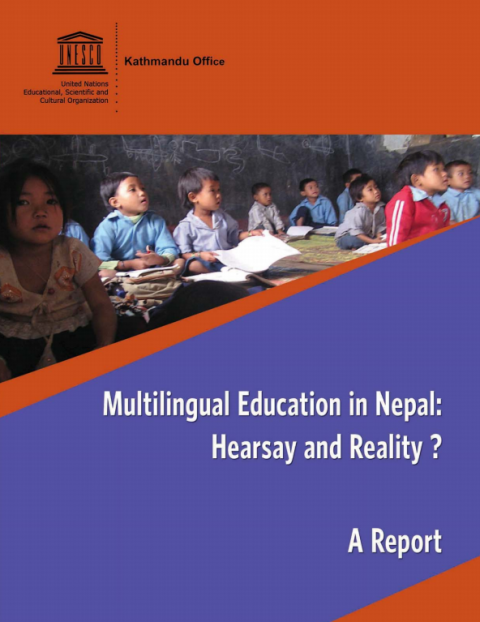 Multilingual education in Nepal: hearsay and reality? A report Year of publication: 2011 Author: Vishnu S. Rai | Maya Rai | Prem Phyak | Nabina Rai Corporate author: UNESCO Kathmandu The present study entitled “Multilingual Education in Nepal: Hearsay and Reality?” was started in April 2011 and completed on 25th May 2011. The main aim of the study was to explore and analyze the realities of the Multilingual Education (MLE) programme being practiced in seven schools from six different districts. The MLE programme was launched by the Department of Education (DOE) with the technical assistance of the Government of Finland in 2007. Nepal Government has planned to implement MLE in 300 schools in the coming years but there have been no comprehensive studies conducted to give an accurate picture of the MLE programme. In this context, the present study was carried out.
 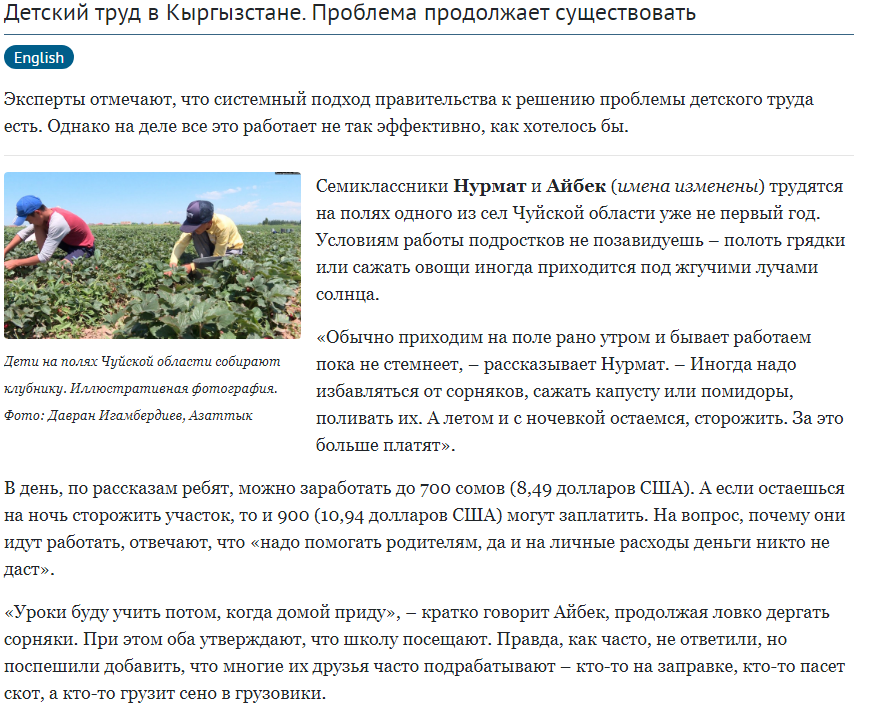 Child Labour in Kyrgyzstan: A Persisting Problem Year of publication: 2022 Corporate author: Central Asian Bureau for Analytical Reporting (CABAR) Experts note that in the presence of a systematic approach of the Kyrgyz Government to solve the problem of child labor, a number of challenges remain in practice. This article examines some of the reasons for the involvement of children in the labor market, including economic instability, mass migration of the population, rising poverty levels, the influence of local customs and traditions. The article also provides an overview of relevant statistical data and some national initiatives aimed at eliminating child labor. Детский труд в Кыргызстане: Проблема продолжает существовать Year of publication: 2022 Corporate author: Central Asian Bureau for Analytical Reporting (CABAR) Эксперты отмечают, что при наличии системного подхода правительства Кыргызстана к решению проблемы детского труда на практике сохраняется ряд вызовов. Данная статья рассматривает некоторые причины вовлечения детей в рынок труда, среди которых экономическая нестабильность, массовая миграция населения, рост уровня бедности, влияние местных обычаев и традиций. В статье также приведен обзор релевантных статистических данных и некоторых национальных инициатив, направленных на искоренение детского труда.
 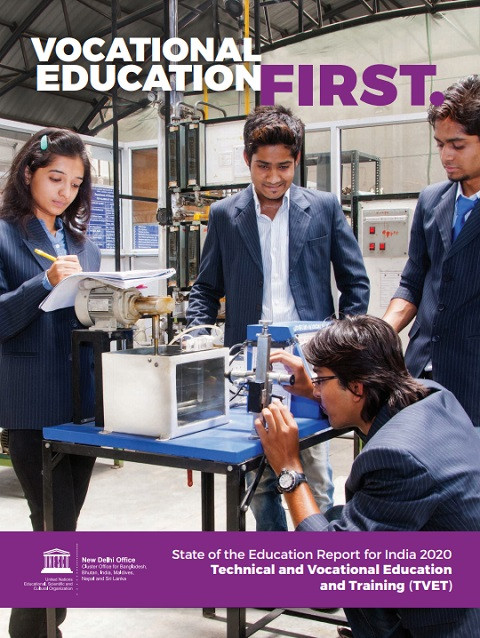 Vocational Education First: State of the Education Report for India 2020; Technical and Vocational Education Training (TVET) Year of publication: 2020 Author: Leena Chandran Wadia | Neela Dabir Corporate author: UNESCO New Delhi This report aims to capture the intense activity of the vocational education and training sector and highlights achievements and promising practices in India. The report makes important recommendations for reforms and for the use of TVET to empower youth to adapt to the post-COVID world.