
Resources
Explore a wide range of valuable resources on GCED to deepen your understanding and enhance your research, advocacy, teaching, and learning.
1,322 Results found
 Closing the Gap: Ensuring There Are Enough Qualified and Supported Teachers in Sub-Saharan Africa Year of publication: 2021 Corporate author: International Task Force on Teachers for Education 2030 | UNESCO The fourth Sustainable Development Goal (SDG 4) aims to ensure better learning opportunities and outcomes and more equitable and inclusive education for all. SDG target 4.c calls for an increase in the supply of qualified teachers, particularly in low-income countries. To achieve this ambitious target, the international community needs to pay renewed attention to teacher support and preparation.This advocacy brief considers what it will take to increase the supply of qualified teachers in sub-Saharan Africa, the region where the teacher shortage is most acute. It analyses the causes for teacher shortages, looks at trends affecting the region and describes the scale of the shortages. It examines the fiscal pressures on low-income countries to cover salary costs and the costs of initial teacher education and continuing professional development, and it proposes some recommendations for governments and the international community to achieve the essential target of substantially increasing the supply of well qualified teachers.
  Violence and Bullying in Educational Settings: The Experience of Children and Young People With Disabilities Year of publication: 2021 Corporate author: UNESCO Learners with disabilities are disproportionately affected by school violence and bullying at all ages and in all learning settings. This has significant adverse impacts on their education, health and well-being. This document aims to raise awareness of the problem and encourage action to ensure that children and young people with disabilities have access to a safe learning environment.
  Juvenile Crime Rate Rises in Kyrgyzstan Year of publication: 2023 Corporate author: CABAR.asia In Kyrgyzstan, the number of adolescents committing crimes is increasing. CABAR.asia explored possible reasons of it, what punishment children receive for offences, and whether the humanisation of legislation affected the situation. Преступность среди детей в Кыргызстане растет Year of publication: 2023 Corporate author: CABAR.asia В Кыргызстане растет число подростков, совершивших преступления. CABAR.asia выясняло возможные причины происходящего, какое наказание получают дети за правонарушения и повлияла ли как-то на ситуацию гуманизация законодательства.
  Социокультурные тренды языковой политики в Республике Казахстан Year of publication: 2023 Author: Дмитрий Алексеевич Черничкин Целью данной работы является выявление ключевых социокультурных трендов в языковой политике Республики Казахстан на современном этапе на основе результатов проведенного в январе 2023 г. социологического исследования, основной целевой группой которого выступили эксперты из различных сфер: науки, образования, культуры, общественной деятельности, государственной власти и др. В процессе исследования было выявлено отношение экспертов к современной языковой ситуации в Республике Казахстан, проанализированы основные проблемы, связанные с проводимой политикой трилингвизма, а также определено положение русского языка в стране.
 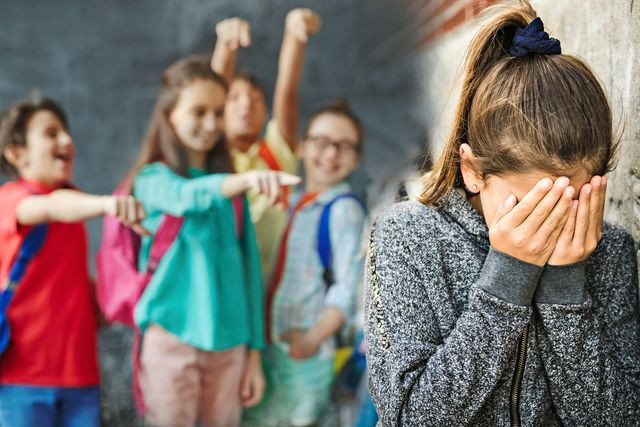 ОТЧЕТ по результатам проведенного исследования на тему «Мониторинг ситуации с профилактикой буллинга в средних образовательных школах Республики Казахстан» Year of publication: 2023 Corporate author: Қадір-қасиет (Казахстан) Общественное объединение «КадірКасиет» организовало и провело исследование, посвященное мониторингу ситуации с профилактикой буллинга в средних образовательных школах Казахстана. Целью исследования выступало изучение шести школ, в которых планируется внедрить пилотную программу «Ынсап» по противодействию буллингу в школах. Настоящий доклад подготовлен в рамках проекта «Фокус прав человека: женщины и дети», реализуемого ОО «Қадір-қасиет» и Агентством США по международному развитию (USAID).
  Современная система дошкольного образования Узбекистана Year of publication: 2023 Author: Келдиёрова Зарина Рустам кизи Статья посвящена реформам в системе дошкольного образования Республики Узбекистан, правовым основам дошкольного образования: проблемам и решениям.
  International Forum on AI and the Futures of Education: Developing Competencies for the AI Era Synthesis Report; 7-8 December 2020 Year of publication: 2021 Author: Fengchun Miao | Wayne Holmes Corporate author: UNESCO This synthesis report has been developed by the UNESCO Unit for Technology and Artificial Intelligence in Education within the Future of Learning and Innovation Team, drawing on the International Forum on AI and the Futures of Education held in Beijing and simultaneously online from 7 to 8 December 2020.The Forum underlined the importance of reviewing the very purpose of education, together with the opportunity for real transformation, and the role that AI might play. It is widely acknowledged that current educational practices and educational environment are very rigid, and that the future of education should be more flexible and responsive to changing circumstances and innovation. National education authorities should identify what skills young people need to enable them to live and thrive in the new realities of a constantly changing world, and what digital transformation makes possible in the national and international context. In short, new education models are needed to put students at the centre, to move away from a focus on memorizing content, to integrate the digital and the analogue, and to foster human cognitive, socioemotional and critical skills, all of which might – with foresight and careful attention – be enabled by AI and other digital technologies.
  Artificial Intelligence for Sustainable Development: Synthesis Report; Mobile Learning Week 2019 Year of publication: 2019 Corporate author: UNESCO During the five-day event for Mobile Learning Week 2019, UNESCO gathered participants from around the world to share experiences, initiatives and plan joint actions with a view to harnessing artificial intelligence (AI) to achieve Sustainable Development Goal (SDG) 4. The report stems from the work that the speakers presented and the insights that all the participants shared at the event.
  AI and Education: Guidance for Policy-Makers Year of publication: 2021 Author: Fengchun Miao | Wayne Holmes | Ronghuai Huang | Hui Zhang Corporate author: UNESCO Artificial intelligence (AI) is envisioned as a new tool to accelerate the progress towards the achievement of SDG 4. Policies and strategies for using AI in education are central to maximizing AI’s benefits and mitigating its potential risks. Fostering AI-ready policy-makers is the starting point of the policy development process.This publication offers guidance to policy-makers in understanding AI and responding to the challenges and opportunities in education presented by AI. Specifically, it introduces the essentials of AI such as its definition, techniques, technologies, capacities and limitations. It also delineates the emerging practices and benefit-risk assessment on leveraging AI to enhance education and learning, and to ensure inclusion and equity, as well as the reciprocal role of education in preparing humans to live and work with AI.The publication summarizes three approaches to the policy responses from existing practices: independent approach, integrated approach and thematic approach. In a further step, it proposes more detailed recommendations and examples for planning AI and education policies, aligned with the recommendations made in the 2019 Beijing Consensus on AI and Education.