
Resources
Explore a wide range of valuable resources on GCED to deepen your understanding and enhance your research, advocacy, teaching, and learning.
1,402 Results found
 Forum panafricain: sources et ressources pour une culture de la Paix Year of publication: 2013 Corporate author: African Union The Pan-African Forum “ Sources and resources for a culture of peace” was held in Luanda, Angola, from 26 to 28 March 2013, and was jointly organized by UNESCO, the African Union and the Government of Angola, under the High Patronage of H. E. Mr José Eduardo dos Santos, President of the Republic of Angola. This forum was the result of a close cooperation between UNESCO and the African Union, one of their main objectives being building peace in Africa, through the promotion of a culture of peace based on the intrinsic values of African societies. The Republic of Angola Government, through its President of the Republic H. E. Mr José Eduardo dos Santos, resolutely engaged in this process with major financial and technical support for the organization of the Forum in the Angolan capital city. As indicated in the Action Plan adopted by the participants in plenary (Annex I), recommendations made during the Forum are directed at all components of African society : political leaders, national and regional institutions, civil society, community associations, youth movements and women’s organizations, religious and traditional leaders, entrepreneurs and leaders from the private sector, etc. The implementation of the Action Plan will be continuously monitored by the two institutions that jointly organized the Luanda Forum, the African Union and UNESCO. Representatives from the 55 African countries participating in the Forum will both contribute to the proposal for action by bringing their national experience and take the lead in the follow‐up of the recommendations made at country level. In order to ensure this follow‐up it will be important to link together the participants by the creation of an African Network for the Promotion of a Culture of Peace and Non‐violence. The representatives of African countries will play the role of focal points of the awareness campaign at the national level. Finally, the agenda of the Forum includes a plan to hold a roundtable on the establishment of a multi-stakeholder partnership for action. Organized with the participation of regional institutions, public and private economic actors as well as representatives of Governments and Civil Society, this session will be the occasion to launch a continental and lasting Movement for the promotion of a culture of peace. For this round table and for the Campaign, the stakeholders can now witness the action as their Foundation / Company / Institution / Organization leads to help in building the defence of peace in the minds of men and women and ensure that peace is a reality: "Make Peace Happen". Fórum Panafricano: fundamentos e recursos para uma cultura de paz Year of publication: 2013 Corporate author: African Union The Pan-African Forum “ Sources and resources for a culture of peace” was held in Luanda, Angola, from 26 to 28 March 2013, and was jointly organized by UNESCO, the African Union and the Government of Angola, under the High Patronage of H. E. Mr José Eduardo dos Santos, President of the Republic of Angola. This forum was the result of a close cooperation between UNESCO and the African Union, one of their main objectives being building peace in Africa, through the promotion of a culture of peace based on the intrinsic values of African societies. The Republic of Angola Government, through its President of the Republic H. E. Mr José Eduardo dos Santos, resolutely engaged in this process with major financial and technical support for the organization of the Forum in the Angolan capital city. As indicated in the Action Plan adopted by the participants in plenary (Annex I), recommendations made during the Forum are directed at all components of African society : political leaders, national and regional institutions, civil society, community associations, youth movements and women’s organizations, religious and traditional leaders, entrepreneurs and leaders from the private sector, etc. The implementation of the Action Plan will be continuously monitored by the two institutions that jointly organized the Luanda Forum, the African Union and UNESCO. Representatives from the 55 African countries participating in the Forum will both contribute to the proposal for action by bringing their national experience and take the lead in the follow‐up of the recommendations made at country level. In order to ensure this follow‐up it will be important to link together the participants by the creation of an African Network for the Promotion of a Culture of Peace and Non‐violence. The representatives of African countries will play the role of focal points of the awareness campaign at the national level. Finally, the agenda of the Forum includes a plan to hold a roundtable on the establishment of a multi-stakeholder partnership for action. Organized with the participation of regional institutions, public and private economic actors as well as representatives of Governments and Civil Society, this session will be the occasion to launch a continental and lasting Movement for the promotion of a culture of peace. For this round table and for the Campaign, the stakeholders can now witness the action as their Foundation / Company / Institution / Organization leads to help in building the defence of peace in the minds of men and women and ensure that peace is a reality: "Make Peace Happen".
 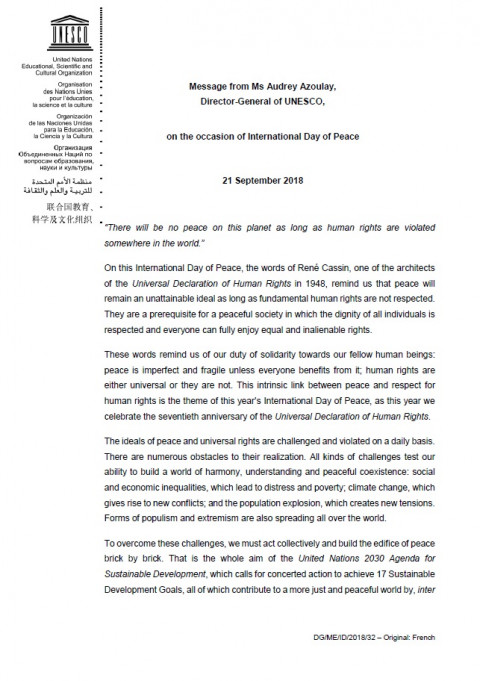 Message from Ms Audrey Azoulay, Director-General of UNESCO, on the occasion of International Day of Peace, 21 September 2018 Year of publication: 2018 Corporate author: UNESCO. Director-General, 2017-2025 (Azoulay, A.) This message was delivered by Audrey Azoulay, Director-General of UNESCO, on the occasion of the International Day of Peace, on 21 September 2018. 联合国教科文组织总干事奥德蕾·阿祖莱国际和平日致辞 Year of publication: 2018 Corporate author: UNESCO. Director-General, 2017-2025 (Azoulay, A.) 2018年9月21号,联合国教科文组织总干事奥德蕾·阿祖莱国际和平日致辞 Nuestra diversidad creativa: informe de la comisión mundial de cultura y desarrollo, versión resumida Year of publication: 1996 Corporate author: World Commission on Culture and Development This report is designed to address a diversified audience across the world that ranges from community activists, field workers, artists and scholars to government officials and politicians. We want it to inform the world’s opinion leaders and to guide its policy-makers. We want it to capture the attention of the world’s intellectual and artistic communities, as well as the general public. We aim to have shown them how culture shapes all our thinking, imagining and behaviour. It is the transmission of behaviour as well as a dynamic source for change, creativity, freedom and the awakening of innovative opportunities. For groups and societies, culture is energy, inspiration and empowerment, as well as the knowledge and acknowledgment of diversity: if cultural diversity is ‘behind us, around us and before us”, as Claude L&i-Strauss put it, we must learn how to let it lead not to the clash of cultures, but to their fruitful coexistence and to intercultural harmony. Just as in the tasks of building peace and consolidating democratic values, an indivisible set of goals, so too economic and political rights cannot be realized separately from social and cultural rights. The challenge to humanity is to adopt new ways of thinking, new ways of acting, new ways of organizing itself in society, in short, new ways of living. The challenge is also to promote different paths of development, informed by a recognition of how cultural factors shape the way in which societies conceive their own futures and choose the means to attain these futures. I have for some time been concerned with the “culture of peace”. There is now considerable evidence that neglect of human development has been one of the principal causes of wars and internal armed conflicts, and that these, in turn, retard human development. With government complicity and with the intention of raising export receipts, private businesses continue to sell advanced military technology, nuclear materials and equipment for the production of bacteriological and chemical warfare. The concept of state sovereignty which still prevails today has increasingly come under scrutiny. In the area of peace-keeping, the distinction between external aggression and internal oppression is often unrealistic. The predominant threat to stability are violent conflicts within countries and not between them. There is an urgent need to strengthen international human rights law. Many of the most serious troubles come from within states – either because of ethnic strife or repressive measures by governments. Conditions that lead to tyranny and large-scale violations of human rights at home sooner or later are likely to spill over into a search for enemies abroad. The temptation of repressive states to export internal difficulties is great. Consider the Soviet Union’s invasion of Hungary and Czechoslovakia after it had used domestic oppression and the persistent refusal - for many years - of the previous South African governments to grant independence to Namibia. An ounce of prevention is better than a ton of punishment.
  Protection of Victims of Sexual Violence in Côte d'Ivoire: Progress Made, but Many Gaps Remain (FIDH; no. 818f) Year of publication: 2023 Author: Alice Mogwe | Eléonore Morel Corporate author: International Federation for Human Rights (FIDH) The International Federation for Human Rights (FIDH) has published a follow-up report on sexual violence protection measures in Côte d'Ivoire, in association with several other local associations. The aim of this note is to study these new measures in the light of the recommendations in the FIDH report, in order to gain an overall view of the situation, draw up an initial assessment of the progress made, and highlight the points to be strengthened in order to improve the status of women in the country. Protection des victimes de violences sexuelles en Côte d’Ivoire : des avancées mais encore de nombreuses lacunes (FIDH; n° 818f) Year of publication: 2023 Author: Alice Mogwe | Eléonore Morel Corporate author: International Federation for Human Rights (FIDH) La Fédération internationale pour les droits humains (FIDH) publie une note de suivi des dispositifs de protection des violences sexuelles en Côte d’Ivoire avec plusieurs autres associations locales associées. Cette note vise à étudier ces nouveaux dispositifs à l’aune des recommandations du rapport de la FIDH afin d’avoir une vision globale de la situation, de dresser un premier bilan des avancées réalisées et de souligner les points à renforcer pour améliorer la condition des femmes dans le pays.
 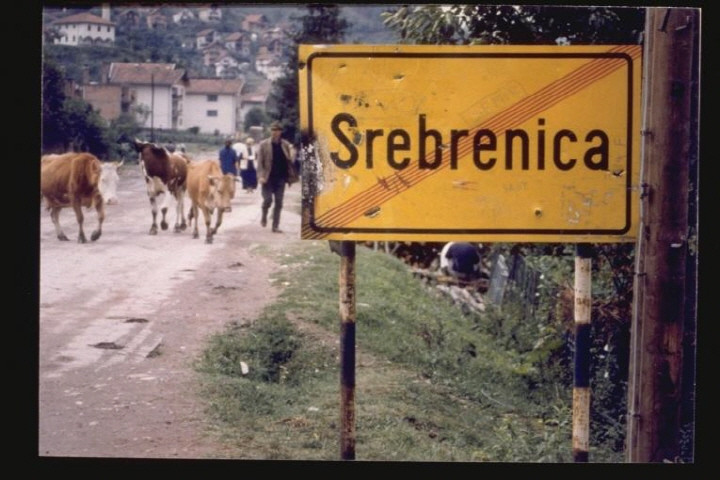 [Podcast] Back to Srebrenica Year of publication: 2022 Corporate author: Doctors without Borders Since its creation in 1971, Médecins Sans Frontières has been providing medical assistance to populations in need in numerous extremely complex situations. Its staff has often witnessed various types of crimes and abuses. In this podcast, we will take a closer look at one of these crises: the siege of the city of Srebrenica and the massacre that followed the fall of this city during the Bosnian War in the 1990s. [Podcast] Retour à Srebrenica Year of publication: 2022 Corporate author: Doctors without Borders Depuis sa création en 1971, Médecins Sans Frontières apporte une aide médicale aux populations qui en ont besoin dans nombre de situations extrêmement complexes. Son personnel a souvent été témoin de toutes sortes de crimes et d’abus. Dans ce podcast, nous allons examiner en détail l’une de ces crises : le siège de la ville de Srebrenica et le massacre qui suivra la chute de cette ville, lors de la guerre de Bosnie, au cours des années 1990.
 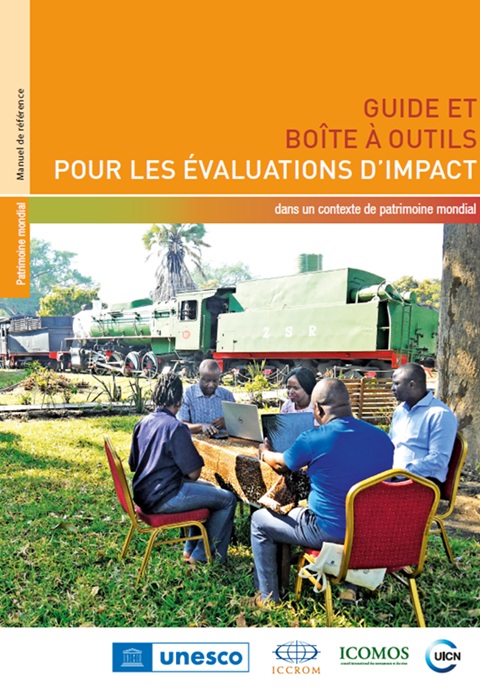 Guide et boîte à outils pour les évaluations d’impact dans un contexte de patrimoine mondial Year of publication: 2023 Author: Sarah Court | Eugene Jo | Richard Mackay | Mizuki Murai | Riki Therivel Corporate author: UNESCO | International Centre for the Study of the Preservation and Restoration of Cultural Property (ICCROM) | International Council on Monuments and Sites (ICOMOS) | International Union for Conservation of Nature (IUCN) Notre patrimoine mondial menacé : les évaluations d’impact offrent des solutionsLors du 50e anniversaire de la Convention du patrimoine mondial, en 2022, on dénombrait plus de 1 100 sites du patrimoine mondial de l’UNESCO. Ces sites sont si précieux pour l’humanité que leur conservation nous incombe à tous. Pourtant, nombre de ces lieux exceptionnels sont confrontés à la pression croissante qu’exercent les divers types de développement et des projets dans et autour des sites. L’évaluation des impacts de ces projets – avant toute décision de mise en œuvre – est essentielle pour éviter tout dommage causé au patrimoine mondial et identifier des choix durables.Le Guide et boîte à outils pour les évaluations d’impact dans un contexte de patrimoine mondial est la référence incontournable qui explique la démarche à suivre pour atteindre cet objectif. Grâce à des conseils et outils (dont des listes de contrôle et glossaire), il fournit un cadre permettant de réaliser des évaluations d’impact pour les sites du patrimoine culturel et naturel.Élaboré par l’UNESCO et les Organisations consultatives du Comité du patrimoine mondial – l’ICCROM, l’ICOMOS et l’UICN –, ce manuel constitue une base de collaboration intersectorielle et multidisciplinaire en vue de trouver des réponses permettant de protéger les sites du patrimoine mondial et de soutenir un développement qualitatif et approprié. Les États parties, les gestionnaires du patrimoine, les décideurs, les planificateurs et les aménageurs de la Convention du patrimoine mondial sont invités à l’utiliser pour contribuer à la réalisation de notre engagement collectif : la transmission de notre patrimoine inestimable aux générations futures.