
Resources
Explore a wide range of valuable resources on GCED to deepen your understanding and enhance your research, advocacy, teaching, and learning.
3,224 Results found
 Environmental Science Course Year of publication: 2021 Author: Ula Madwer | Sakher Ajouz | Ali Alsahyouni Corporate author: University of Hama This document provides an explanation of the initial practical session in the environment science course. The practical part of the environment science course contains a set of practical exercises. It includes the following objectives: Familiarize students with the tools and equipment of the environmental laboratory Determine the types and sources of environmental pollution Air quality standards and measurement units Measurement of carbon dioxide concentration مقرر علم البيئة Year of publication: 2021 Author: Ula Madwer | Sakher Ajouz | Ali Alsahyouni Corporate author: University of Hama يقدم المستند توضيحا للجلسة العملية الأولي في مقرر علم البيئة. ويحتوي الجزء العملي من مقرر علم البيئة على مجموعة من التدريبات العملية. وتتضمن الأهداف التالية: التعرف على أدوات وأجهزة المختبر البيئي تحديد أنواع ومصادر التلوث البيئي معايير جودة الهواء ووحدات القيا س قياس تركيز ثاني أوكسيد الكربون
 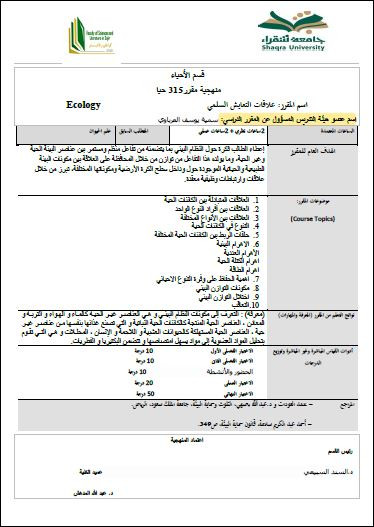 University Course: Relationships of Peaceful Coexistence Year of publication: 2021 Author: Somaya Youssef Al-Arabawy Corporate author: Shaqra University The goal is to give the student an idea about the ecosystem, including the organized and continuous interaction between the elements of the living and non-living environment, and the balance this interaction generates by maintaining the relationship between the components of the natural and living environment around and within the surface of the globe and its various components, which are highlighted through the relationships and complex functional connections. مقرر جامعي: علاقات التعايش السلمي Year of publication: 2021 Author: Somaya Youssef Al-Arabawy Corporate author: Shaqra University الهدف هو اعطاء الطالب فكرة حول النظام البيئي بما يتضمنه من تفاعل منظم ومستمر بين عناصر البيئة الحية وغير الحية، وما يولده هذا التفاعل من توازن من خلال المحافظة على العلاقة بين مكونات البيئة الطبيعية والحياتية الموجودة حول وداخل سطح الكرة الأرضية ومكوناتها المختلفة، تبرز من خلال علاقات وارتباطات وظيفية معقدة.
 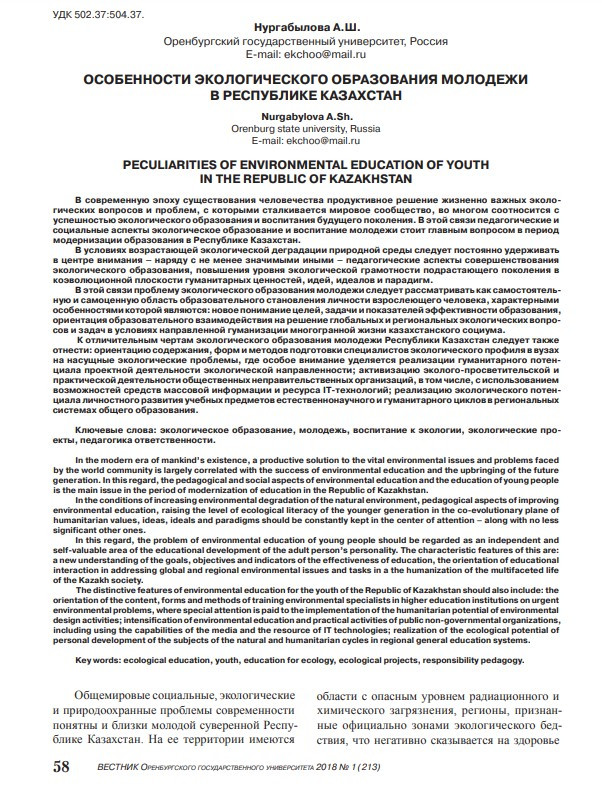 Peculiarities of Environmental Education of Youth in the Republic of Kazakhstan Year of publication: 2018 Author: Agila Sh. Nurgabylova In the modern era of mankind’s existence, a productive solution to the vital environmental issues and problems faced by the world community is largely correlated with the success of environmental education and the upbringing of the future generation. In this regard, the pedagogical and social aspects of environmental education and the education of young people is the main issue in the period of modernization of education in the Republic of Kazakhstan. Особенности экологического образования молодежи в республике Казахстан Year of publication: 2018 Author: Agila Sh. Nurgabylova В современную эпоху существования человечества продуктивное решение жизненно важных экологических вопросов и проблем, с которыми сталкивается мировое сообщество, во многом соотносится с успешностью экологического образования и воспитания будущего поколения. В этой связи педагогические и социальные аспекты экологическое образование и воспитание молодежи стоит главным вопросом в период модернизации образования в Республике Казахстан.
  Guardians of Planet Earth: Gamification in Early Childhood Education Year of publication: 2020 Corporate author: Instituto Nacional de Tecnologías Educativas y de Formación del Profesorado (INTEF) The project "Inspiring Educational Experiences" is part of the Educational Digital Transformation Plan launched by INTEF, specifically "Guardians of planet Earth" whose main objective is the internalization by students of the importance of caring for our planet around three fundamental axes: recycling and treatment of waste, care of flora and fauna. With this, it intends to impregnate the students and their families with solid values that are internalized and endure over time and for this it uses different methodologies and active and participatory teaching strategies, in turn, favors the development of creativity and imagination in all activity of the project and explains how ICTs are a transversal element, offering the youngest population a variety of opportunities to use and enjoy technology. Guardian@s del planeta Tierra: Gamificación en Educación Infantil Year of publication: 2020 Corporate author: Instituto Nacional de Tecnologías Educativas y de Formación del Profesorado (INTEF) The project "Inspiring Educational Experiences" is part of the Educational Digital Transformation Plan launched by INTEF, specifically "Guardians of planet Earth" whose main objective is the internalization by students of the importance of caring for our planet around three fundamental axes: recycling and treatment of waste, care of flora and fauna. With this, it intends to impregnate the students and their families with solid values that are internalized and endure over time and for this it uses different methodologies and active and participatory teaching strategies, in turn, favors the development of creativity and imagination in all activity of the project and explains how ICTs are a transversal element, offering the youngest population a variety of opportunities to use and enjoy technology.
  풀무원재단 환경교육 가이드라인 Year of publication: 2023 Author: 풀무원재단 이 가이드라인은 환경교육 프로그램을 통해 유아, 초등 학습자의 환경 소양(environmental literacy)을 증진시키고자 할 때 참고할 수 있는 안내서입니다.
 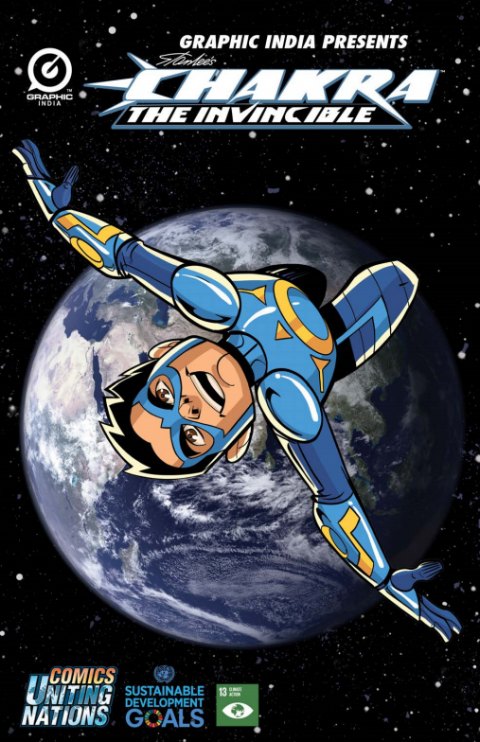 Chakra the Invincible: Climate Change Year of publication: 2015 Author: Stan Lee | Sharad Devarajan | Gotham Chopra | Ashwin Pande | Thiago Vale | Sesha Sainan Devarajan | Aditya Bidikar | Nilesh S. Mahadik | Rakesh B. Mahadik Corporate author: Graphic India Pte. ltd | POW Entertainment The legendary Stan Lee and Sharad Devarajan bring their character Chakra the Invincible to teach children about the global goals! Chakra and Mighty Girl learn from other children around the world how climate change is doing damage and spring into action!