
Resources
Explore a wide range of valuable resources on GCED to deepen your understanding and enhance your research, advocacy, teaching, and learning.
1,322 Results found
 Local Knowledge, Global Goals Year of publication: 2017 Author: Douglas Nakashima | Jennifer Rubis | Peter Bates | Bárbara Ávila Corporate author: UNESCO Local and indigenous knowledge refers to the understandings, skills and philosophies developed by societies with long histories of interaction with their natural surroundings. For rural and indigenous peoples, local knowledge informs decision-making about fundamental aspects of day-to-day life. This knowledge is integral to a cultural complex that also encompasses language, systems of classification, resource use practices, social interactions, rituals and spirituality. These unique ways of knowing are important components of the world’s cultural diversity, and contribute to the achievement of Agenda 2030 and the Paris Agreement. Conocimientos locales, objetivos globales Year of publication: 2017 Author: Douglas Nakashima | Jennifer Rubis | Peter Bates | Bárbara Ávila Corporate author: UNESCO Los conocimientos locales e indígenas se refieren a las concepciones, habilidades y filosofías que las sociedades han desarrollado a lo largo de generaciones y de una larga interacción con su entorno natural. Para los pueblos rurales e indígenas, los conocimientos locales orientan la toma de decisiones sobre aspectos fundamentales de la vida cotidiana. Estos conocimientos forman parte integrante de un complejo cultural que incluye el idioma, los sistemas de clasificación, las prácticas relacionadas con el uso de los recursos, las interacciones sociales, los rituales y la espiritualidad. Estas formas de conocimiento excepcionales son elementos importantes de la diversidad cultural mundial, y contribuyen a la ejecución de la Agenda 2030 y el Acuerdo de París. Savoirs locaux, objectifs globaux Year of publication: 2017 Author: Douglas Nakashima | Jennifer Rubis | Peter Bates | Bárbara Ávila Corporate author: UNESCO Les savoirs locaux et autochtones font référence aux connaissances, compétences et philosophies développées par des sociétés interagissant depuis de multiples générations avec leur environnement naturel. Pour les populations rurales et autochtones, les savoirs locaux aident à la prise de décision autour d’aspects fondamentaux de la vie quotidienne. Ces savoirs font partie intégrante d’un complexe culturel qui comprend la langue, des systèmes de classification, des pratiques liées à l’utilisation des ressources, des interactions sociales, des rituels et la spiritualité. Ces modes de savoirs uniques sont des composantes importantes de la diversité culturelle mondiale, et contribuent à la réalisation de l’Agenda 2030 et l’Accord de Paris.
  School Leadership Roles and Standards: Observations from the International Study of Teacher Leadership Year of publication: 2024 Author: Charles F. Webber | Dorothy Andrews | C.P. van der Vyver | Clelia Pineda-Báez | Janet M. Okoko | Edith J. Cisneros-Cohernour | José Gabriel Domínguez-Castillo | Mohammed Elmeski | Molly P. Fuller | Joan M. Conway | Cristina Moral-Santaella | Gloria Gratacós | Samira Idelcadi Corporate author: UNESCO | Global Education Monitoring Report Team This paper was commissioned by the Global Education Monitoring Report as background information to assist in drafting the 2024/5 GEM Report, Leadership in education. This report summarizes the findings of the International Study of Teacher Leadership(ISTL), conducted in 12 countries. The researchers share descriptions of the increasing interest in teacher leadershipas a factor in student learning and school improvement. ISTL researchers focus primarily on classroom-based teachers who—in collaboration with formal school leaders, parents, community members, and colleagues—impact school-wide decision making and pedagogical practices. The report offers insights related to teacher leader behaviours, the complexity of teacher leadership, how teacher leaders learn to lead, and the importance of contextual factors that support and impede teachers who provide informal leadership to schools and the communities they serve. The researchers compare cross-cultural requirements of good leadership and offer contextually situated analyses of leadership visions and goals, the impact of teacher leadership on educational outcomes, necessary preconditions for effective leadership, and policies that develop teacher leadership. The researchers also describe the readiness of school communities to embrace teacher leadership, described variously as parallel leadership, shared leadership, and distributed leadership. The report argues for a shift from considering standards for teacher leadership—too often based on the assumption that leadership is consistent across cultural and organizational settings—to the more flexible and contextualized conceptualization of leadership dimensions such as purpose, self-awareness, intentionality, and culture building. The ISTL researchers also argue that teacher leadership is but one component of an integrated approach to educational governance that addresses the complexities of teaching and learning in relation to rapid socioeconomic change, global migration, political tensions, and the emergence of new technologies. The ISTL also reinforces the ongoing importance of classroom teachers in the achievement of educational objectives. The ISTL team concludes this report with a set of research recommendations.
  Mainstreaming Social and Emotional Learning in Education Systems: Policy Guide Year of publication: 2024 Corporate author: UNESCO Why social and emotional learning is key to transform education Since 2015, there has been significant progress towards reimagining education for wider societal transformation in support of peace, justice, inclusion, equality and sustainability. Yet, the existing challenges have intensified, and new ones have emerged. The world is witnessing a resurgence of multiple forms of conflict and violence, from racism and discrimination, to hate speech and armed conflict. Our efforts to build sustainable peace through education are falling short. Some 250 million children are still out of school, and those in school are not acquiring the necessary knowledge and skills they need. This guide makes the case for integrating Social and Emotional Learning (SEL) in collective efforts to transform education. It highlights the impact of SEL in improving academic achievement, reducing drop- out rates, and improving overall mental health and well-being, and importantly, in strengthening emotional and relational dynamics of classrooms, schools, communities, and societies. The guide synthesizes the latest research and practice from the world, including case studies of concrete SEL implementation. It provides policy-makers with preliminary guidance to facilitate their conceptualization and integration of SEL in all facets of their education systems to build long-lasting peace and sustainable development.
  الصحافة، «الأخبار الزائفة» و«التضليل» : دليل التدريس والتدريب في مجال الصحافة Year of publication: 2020 Author: Julie Posetti | Cherilyn Ireton | Claire Wardle | Hossein Derakhshan | Alice Matthews | Magda Abu-Fadil | Tom Trewinnard | Fergus Bell | Alexios Mantzarlis Corporate author: منظمة الأمم المتحدة للتربية والعلم والثقافة (UNESCO) يسعى هذا الكتيب إلى توفير مقرر نموذجي ذي صلة دولياً، ومفتوح للتصرف أو التكييف، ويستجيب لمشكلة التضليل العالمي الناشئة التي تواجه المجتمعات بشكل عام، والصحافة بشكل خاص.تم تصميم هذا المقرر الدراسي النموذجي لتزويد مدارس ومدربي الصحافة بإطار ودروس لمساعدة الطلاب والممارسين في مجال الصحافة على التغلب على المشكلات المرتبطة بـ “الأخبار الزائفة“. ونأمل أيضاً أن يكون دليلاً مفيداً للصحفيين الممارسين.ويضم هذا المقرر مدخلات من كبار المدرسين والباحثين والمفكرين في مجال الصحافة الدولية الذين يسهمون في تحديث طرائق الصحافة وممارساتها لمواجهة تحديات التضليل ومعلوماته المضللة. والدروس قائمة على السياق وذات طبيعة نظرية، ولكن في حالة التحقق عبر الإنترنت، فهي عملية للغاية. وسواء استخدمت كمقرر دراسي في الجامعة أو بشكل مستقل، فإن هذه الصفحات تساعد في تحديث الوحدات التعليمية القائمة أو إنشاء مناهج جديدة.وهي جزء من “المبادرة العالمية للتميز في تدريس الصحافة“، والتي هي محور برنامج اليونسكو الدولي لتنمية الاتصال (IPDC). وتسعى هذه المبادرة إلى الانخراط في تدريس الصحافة والبحث في هذا المجال من منظور عالمي، بما في ذلك تبادل الممارسات الدولية الجديدة.
 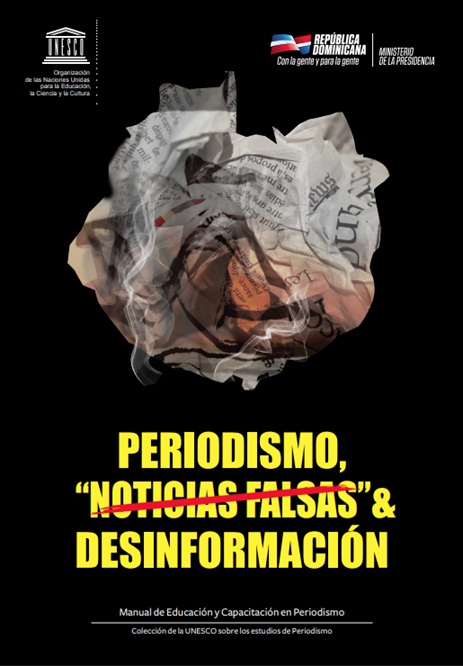 Periodismo, “Noticias Falsas” & Desinformación : Manual de Educación y Capacitación en Periodismo Year of publication: 2020 Author: Julie Posetti | Cherilyn Ireton | Claire Wardle | Hossein Derakhshan | Alice Matthews | Magda Abu-Fadil | Tom Trewinnard | Fergus Bell | Alexios Mantzarlis Corporate author: Organización de las Naciones Unidas para la Educación, la Ciencia y la Cultura (UNESCO) Esta guía tiene como objetivo proporcionar un plan de estudios modelo relevante a nivel internacional, abierto a la implementación y/o adaptación, que responda al problema global emergente de la desinformación que afrontan las sociedades en general y el periodismo en particular. Este plan de estudios modelo está diseñado para brindar a los educadores y formadores de periodistas un marco de referencia y lecciones, a fin de ayudar a estudiantes y profesionales del periodismo a lidiar con los problemas relativos a las “noticias falsas”.El texto reúne el aporte de los principales educadores, investigadores y pensadores internacionales del periodismo que están ayudando a actualizar el método y la práctica del periodismo para afrontar los desafíos de la desinformación y la información errónea. Las lecciones son contextuales, teóricas y, en el caso de la verificación en línea, extremadamente prácticas. Empleadas juntas como un curso, o de manera independiente, pueden ayudar a actualizar los módulos de enseñanza existentes o crear nuevas ofertas.La Guía forma parte de la “Iniciativa Mundial para la Excelencia en la Enseñanza del Periodismo”, elemento esencial del Programa Internacional para el Desarrollo de la Comunicación de la UNESCO (PIDC). La Iniciativa tiene como objetivo contribuir con la enseñanza, la práctica y la investigación del periodismo, desde una perspectiva global, incluyendo el intercambio de buenas prácticas internacionales.
  Journalisme, fake news & désinformation : Manuel pour l’enseignement et la formation en matière de journalisme Year of publication: 2019 Author: Julie Posetti | Cherilyn Ireton | Claire Wardle | Hossein Derakhshan | Alice Matthews | Magda Abu-Fadil | Tom Trewinnard | Fergus Bell | Alexios Mantzarlis Corporate author: Organisation des Nations Unies pour l'éducation, la science et la culture (UNESCO) Cette publication vise à fournir un modèle de programme applicable à l’échelle internationale, qui peut être adopté tel quel ou adapté, pour répondre au problème de la désinformation auquel sont confrontées toutes les sociétés en général, dans le monde, et le secteur du journalisme en particulier. Ce modèle de programme a été conçu pour fournir aux formateurs et aux enseignants en journalisme un cadre et une série de leçons, destinés aux étudiants et aux professionnels du journalisme, sur les questions associées aux « fake news ».Ce manuel a été rédigé avec la contribution de journalistes, enseignants, chercheurs et intellectuels internationaux de premier plan, engagés dans l’innovation des méthodes et des pratiques journalistiques face aux menaces de la mésinformation et de la désinformation. Ces leçons sont contextuelles, théoriques et, en ce qui concerne la vérification en ligne, extrêmement pratiques. Qu’elles soient utilisées dans le cadre d’un cours complet ou chacune séparément, elles peuvent contribuer à mettre à jour les modules d’enseignement existants ou à créer une nouvelle offre. Cette publication fait partie de l’« Initiative mondiale d’excellence pour l’enseignement du journalisme » qui est au centre du Programme international pour le développement de la communication (PIDC) de l’UNESCO. Cette initiative souhaite traiter l’enseignement, la pratique et la recherche en matière de journalisme dans une perspective mondiale, y compris par le partage de bonnes pratiques internationales.
 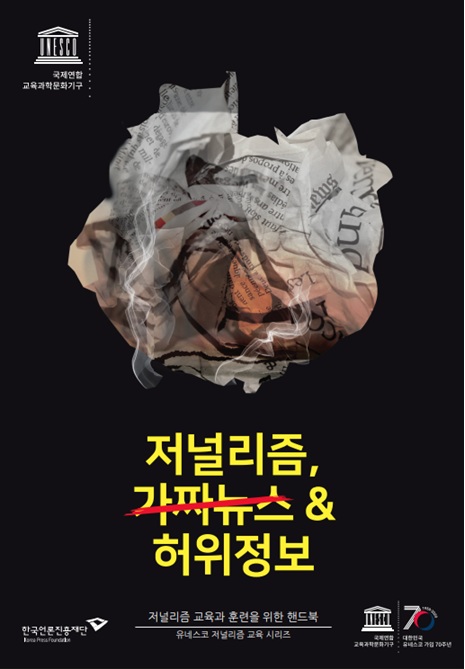 저널리즘, 가짜뉴스 & 허위정보 : 저널리즘 교육과 훈련을 위한 핸드북 Year of publication: 2020 Author: Julie Posetti | Cherilyn Ireton | Claire Wardle | Hossein Derakhshan | Alice Matthews | Magda Abu-Fadil | Tom Trewinnard | Fergus Bell | Alexios Mantzarlis Corporate author: 유네스코 | 유네스코한국위원회 | 한국언론진흥재단 이 핸드북은 여러 나라에서 적절하게 활용할 수 있는 모델 커리큘럼을 제공하기 위해 만들어졌다. 그대로 채택하거나 상황에 맞게 수정해서 활용할 수 있다. 이를 통해 사회 문제로 떠오른, 특히 저널리즘 영역의 문제로 떠오른 전 세계적인 허위정보에 대응하고자 한다.모델 커리큘럼 역할을 할 이 책은 저널리즘 학생과 수행자들의 ‘가짜뉴스’와 관련된 이슈 탐구에 도움을 줄 수 있도록, 저널리즘 교육자와 훈련자들에게 적절한 프레임워크와 교과를 제공하도록 설계됐다. 우리는 또 이 자료가 저널리스트들의 실천에도 유용한 안내자가 되기를 바란다.이 콘텐츠들은 세계 최고 저널리즘 교육자, 연구자, 사상가들의 작업을 한데 모은 것이다. 이들은 잘못된 정보와 허위정보의 도전을 다루는 저널리즘 기법과 실천과 관련된 최신 정보를 제공하고 있다.이 교과들은 맥락적이며 이론적인 정보를 담고 있다. 하지만 온라인 검증은 굉장히 실질적인 내용들로 구성돼 있다. 이 자료들을 한 교과로 한꺼번에 사용할 수도 있고, 개별 모듈을 별도로 활용해도 된다. 이러한 자료들은 기존 교육 모델을 새롭게 하거나 새로운 교과를 만드는 데 도움이 될 것이다.이 책은 유네스코 국제 커뮤니케이션 개발 사업이 주력하고 있는 ‘탁월한 저널리즘 교육을 위한 글로벌 이니셔티브’의 일환이다. 이 이니셔티브는 국제적인 모범 실천 사례를 공유하고, 국제적 관점에서 저널리즘을 가르치고 실천하며 연구하는 작업에 참여하기 위해 노력한다.
 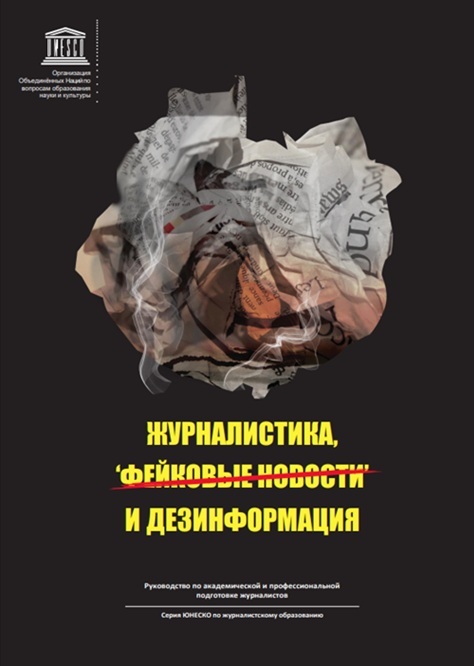 Журналистика, «фейковые новости» и дезинформация : Руководство для академической и профессиональной подготовки журналистов Year of publication: 2019 Author: Julie Posetti | Cherilyn Ireton | Claire Wardle | Hossein Derakhshan | Alice Matthews | Magda Abu-Fadil | Tom Trewinnard | Fergus Bell | Alexios Mantzarlis Corporate author: Организация Объединенных Наций по вопросам образования, науки и культуры (UNESCO) Данное руководство призвано служить образцом международной учебной программы, открытой для адаптации и внедрения. Это значимая попытка осмыслить глобальную проблему дезинформации, с которой сталкивается общество в целом и журналистика в частности. Типовая учебная программа предназначена для того, чтобы ознакомить преподавателей журналистики и студентов-журналистов с вопросами, связанными с "фейковыми новостями", и представить образец учебного плана.Оно объединяет вклад ведущих международных преподавателей журналистики и исследователей, которые помогают обновлять методы и практику журналистики для решения проблем дезинформации и некорректной информации. Занятия являются комплексными: теоретическими, а в случае онлайн-верификации в высшей степени практическими. Используемые вместе в качестве курса или независимо друг от друга, они могут помочь обновить существующие учебные модули или создать новые. Это руководство является частью глобальной инициативы по повышению качества журналистского образования, которая находится в центре внимания международной программы ЮНЕСКО по развитию коммуникации (МПРК) и направлена на привлечение внимания к преподаванию, практике и исследованию журналистики с глобальной точки зрения, включая обмен передовым международным опытом.