
Resources
Explore a wide range of valuable resources on GCED to deepen your understanding and enhance your research, advocacy, teaching, and learning.
1,322 Results found
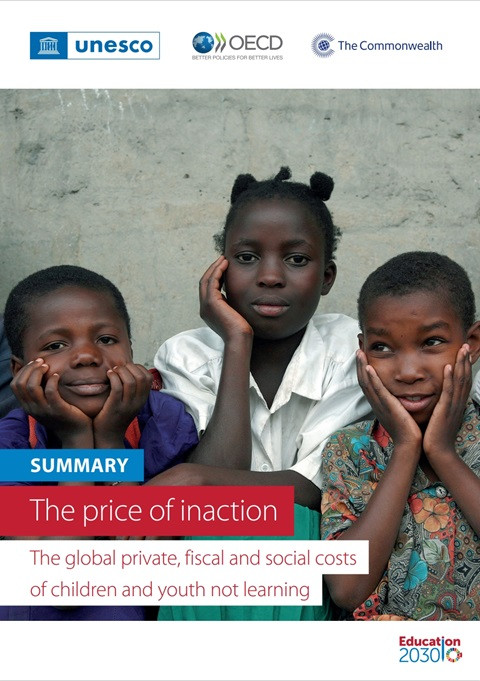 [Summary] The Price of Inaction: The Global Private, Fiscal and Social Costs of Children and Youth Not Learning Year of publication: 2024 Corporate author: UNESCO | Organisation for Economic Co-operation and Development (OECD) | Commonwealth Secretariat Education is a fundamental human right for all. The United Nations Sustainable Development Goal (SDG) 4 on education has received considerable attention since its adoption in 2015. But more than halfway through the implementation period, achieving the ambitious agenda of inclusive and equitable quality education for all by 2030 remains a significant challenge for countries around the globe. As this report shows, the US$10 trillion social cost of failing to educate all the world’s children is just too high. This is the summary of The Price of Inaction: The Global Private, Fiscal and Social Costs of Children and Youth Not Learning. [Resumen] El precio de la inacción: el costo global privado, fiscal y social de que los niños, niñas y jóvenes no aprendan Year of publication: 2024 Corporate author: UNESCO | Organisation for Economic Co-operation and Development (OECD) | Commonwealth Secretariat La educación es un derecho humano fundamental para todas y todos. El Objetivo de Desarrollo Sostenible (ODS) 4 de las Naciones Unidas sobre educación ha recibido una atención considerable desde su adopción en 2015. Sin embargo, a más de la mitad del periodo de implementación, la consecución de la ambiciosa agenda de una educación de calidad inclusiva y equitativa para todos en 2030 sigue siendo un desafío considerable para los países del mundo entero. Como muestra este estudio, el costo social de 10 billones de dólares de no educar a todas las niñas y todos los niños del mundo es demasiado elevado. [Résumé] Le prix de l’inaction : les coûts privés, fiscaux et sociaux à l’échelle mondiale des enfants et des jeunes qui n’apprennent pas Year of publication: 2024 Corporate author: UNESCO | Organisation for Economic Co-operation and Development (OECD) | Commonwealth Secretariat L'éducation est un droit humain fondamental pour tous. L'objectif de développement durable (ODD) 4 des Nations Unies sur l'éducation a suscité une attention considérable depuis son adoption en 2015. Cependant, à plus de la moitié de la période de mise en œuvre, atteindre l'ambitieux objectif d'une éducation de qualité, inclusive et équitable pour tous d'ici 2030 reste un défi majeur pour les pays du monde entier. Comme le montre ce rapport, le coût social de 10 000 milliards de dollars américains lié à l'échec de l'éducation de tous les enfants dans le monde est tout simplement trop élevé.
 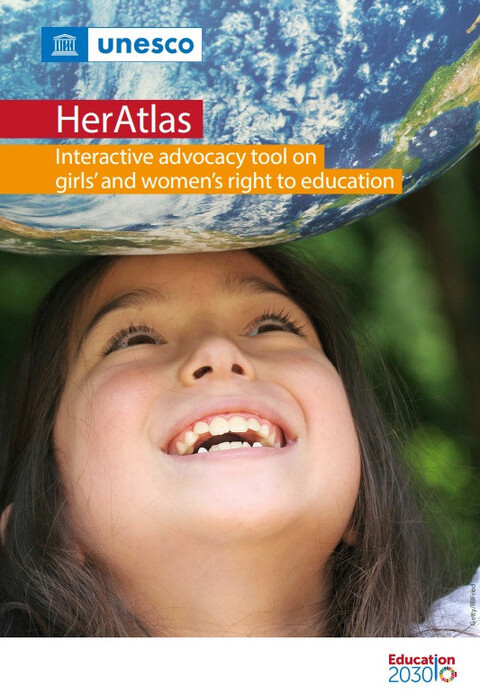 Her Atlas: Interactive Advocacy Tool on Girls’ and Women’s Right to Education Year of publication: 2023 Corporate author: UNESCO Many girls and women cannot exercise their right to education due to gender inequality and discriminatory practices. Poverty, early marriage, and gender-based violence are just some of the many reasons behind the high percentage of global female illiteracy and school drop-outs. Strengthening the right of girls and women to quality education is key to eliminate discrimination and to achieve equal rights between genders. This cannot be achieved without solid national legal frameworks that are rightsbased, gender responsive and inclusive. This is where HerAtlas comes in. HerAtlas, is a first of its kind online tool that maps the right to education of girls and women. It aims to enhance public knowledge and monitor the status of national constitutions, legislation and regulations related to education rights for girls and women to encourage countries to take action, strengthen their laws and policies, and lead to long term change. Concrete changes are already apparent. In 2019, 4% of countries were explicitly restricting the right to education of married, pregnant, and parenting girls. This has dropped to 2% in 2022, benefiting millions of girls who can now legally attend school when they marry or become pregnant.
 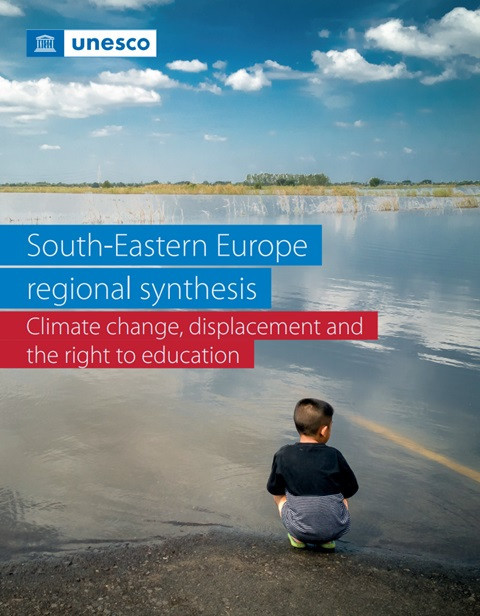 South-Eastern Europe regional synthesis: climate change, displacement and the right to education Year of publication: 2023 Corporate author: UNESCO In 2021 alone, 23.7 million people were displaced in 137 countries and territories due to natural disasters, which the scientific community has recognized have become more frequent and intense due to climate change. Climate change and displacement is currently taking place in Europe, with particularly disastrous consequences in South-Eastern Europe due to regional specificities. Comparative country case studies were carried out in Bosnia and Herzegovina, the Republic of Moldova, and Serbia, as they exemplify clear, present patterns of climate displacement, to examine the impacts of climate change on the right to education in the region. The case studies show that climate change directly threatens education through the destruction of schools and property. It also indirectly puts learning in peril by leading people across borders where their legal residency nor right to education is ensured. This publication aims to guide policy-makers by providing recommendations on how to ensure the protection of the right to education in South-Eastern Europe in the face of climate change and displacement. It is one of four regional reports that will lead to the development of a global report providing global policy guidance.
 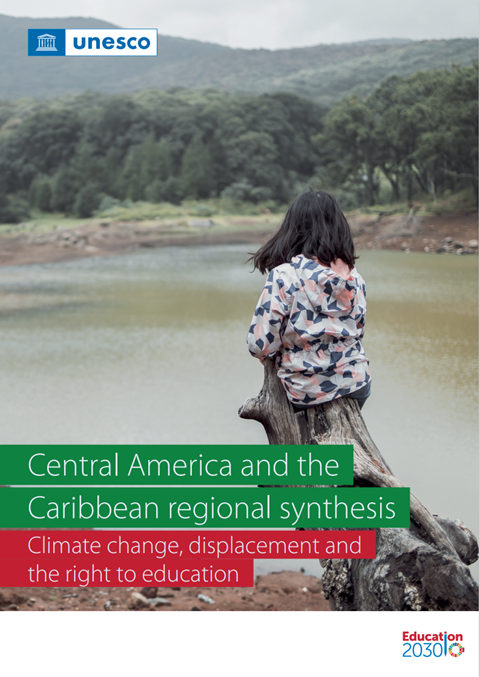 Central America and the Caribbean regional synthesis: climate change, displacement and the right to education Year of publication: 2023 Corporate author: UNESCO From rising sea level to drought and increasingly frequent natural disasters - the effects of climate change are well-known today. However, its effect on human mobility is just coming to the forefront of the political discussion. In 2020 alone, 30.7 million people globally were displaced by natural disasters. Central America and the Caribbean region is prone to the effects of climate change and displacement due to its socioeconomic characteristics and geographic location. Country case studies were carried out in the Bahamas, Cuba, the Dominican Republic, Guatemala, and Jamaica to examine the impacts on the right to education in the region. The research shows that climate change directly threatens education through the destruction of schools and property. It also leads people across borders where their legal residency and right to education are not guaranteed. This report aims to guide policy-makers on how to ensure education is protected in the face of climate change and displacement. The report is one of four being developed and will contribute to UNESCO’s global initiative on climate change, displacement and the right to education. It will inform the development of a Global Report with policy recommendations.
 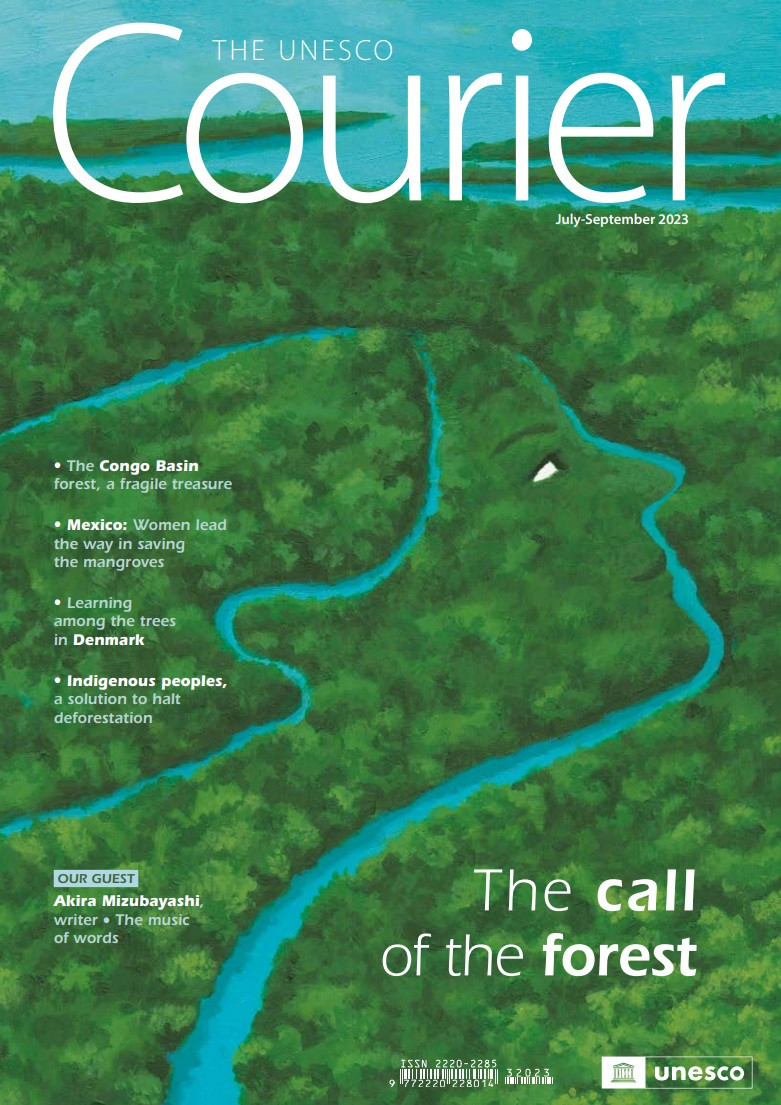 UNESCO World Heritage sites: key to biodiversity conservation Year of publication: 2023 Corporate author: UNESCO
  UNESCO and the Paris 2024 Olympic Games Year of publication: 2024 Corporate author: UNESCO For the Olympic and Paralympic Games, UNESCO and The Associated Press are joining forces to ensure quality media coverage of Paris 2024. The Associated Press will set up on the premises and roof of the UNESCO headquarters building, facing the Eiffel Tower, to record and broadcast its television programmes. The Agency will provide spectators with unique media coverage of the Games and offer original content on the social impact of sport and sports policies, in collaboration with UNESCO.
  School Leadership Roles and Standards: Observations from the International Study of Teacher Leadership Year of publication: 2024 Author: Charles F. Webber | Dorothy Andrews | C.P. van der Vyver | Clelia Pineda-Báez | Janet M. Okoko | Edith J. Cisneros-Cohernour | José Gabriel Domínguez-Castillo | Mohammed Elmeski | Molly P. Fuller | Joan M. Conway | Cristina Moral-Santaella | Gloria Gratacós | Samira Idelcadi Corporate author: UNESCO | Global Education Monitoring Report Team This paper was commissioned by the Global Education Monitoring Report as background information to assist in drafting the 2024/5 GEM Report, Leadership in education. This report summarizes the findings of the International Study of Teacher Leadership(ISTL), conducted in 12 countries. The researchers share descriptions of the increasing interest in teacher leadershipas a factor in student learning and school improvement. ISTL researchers focus primarily on classroom-based teachers who—in collaboration with formal school leaders, parents, community members, and colleagues—impact school-wide decision making and pedagogical practices. The report offers insights related to teacher leader behaviours, the complexity of teacher leadership, how teacher leaders learn to lead, and the importance of contextual factors that support and impede teachers who provide informal leadership to schools and the communities they serve. The researchers compare cross-cultural requirements of good leadership and offer contextually situated analyses of leadership visions and goals, the impact of teacher leadership on educational outcomes, necessary preconditions for effective leadership, and policies that develop teacher leadership. The researchers also describe the readiness of school communities to embrace teacher leadership, described variously as parallel leadership, shared leadership, and distributed leadership. The report argues for a shift from considering standards for teacher leadership—too often based on the assumption that leadership is consistent across cultural and organizational settings—to the more flexible and contextualized conceptualization of leadership dimensions such as purpose, self-awareness, intentionality, and culture building. The ISTL researchers also argue that teacher leadership is but one component of an integrated approach to educational governance that addresses the complexities of teaching and learning in relation to rapid socioeconomic change, global migration, political tensions, and the emergence of new technologies. The ISTL also reinforces the ongoing importance of classroom teachers in the achievement of educational objectives. The ISTL team concludes this report with a set of research recommendations.
 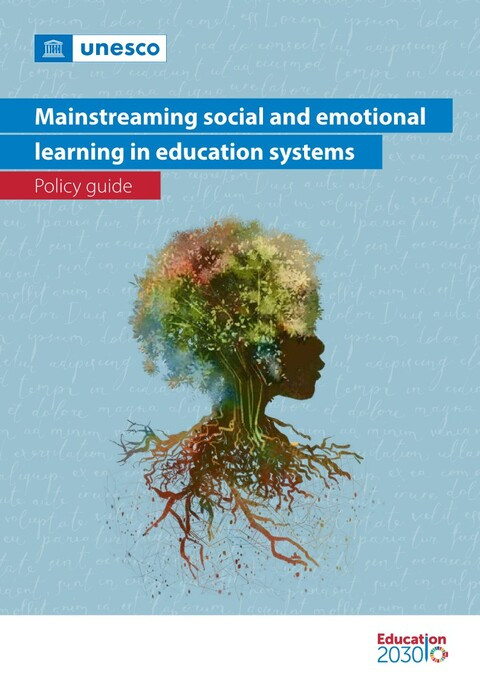 Mainstreaming Social and Emotional Learning in Education Systems: Policy Guide Year of publication: 2024 Corporate author: UNESCO Why social and emotional learning is key to transform education Since 2015, there has been significant progress towards reimagining education for wider societal transformation in support of peace, justice, inclusion, equality and sustainability. Yet, the existing challenges have intensified, and new ones have emerged. The world is witnessing a resurgence of multiple forms of conflict and violence, from racism and discrimination, to hate speech and armed conflict. Our efforts to build sustainable peace through education are falling short. Some 250 million children are still out of school, and those in school are not acquiring the necessary knowledge and skills they need. This guide makes the case for integrating Social and Emotional Learning (SEL) in collective efforts to transform education. It highlights the impact of SEL in improving academic achievement, reducing drop- out rates, and improving overall mental health and well-being, and importantly, in strengthening emotional and relational dynamics of classrooms, schools, communities, and societies. The guide synthesizes the latest research and practice from the world, including case studies of concrete SEL implementation. It provides policy-makers with preliminary guidance to facilitate their conceptualization and integration of SEL in all facets of their education systems to build long-lasting peace and sustainable development.