
Resources
Explore a wide range of valuable resources on GCED to deepen your understanding and enhance your research, advocacy, teaching, and learning.
3,790 Results found
 The Lack of Global Citizenship Education in China and Measurements for Improvement Year of publication: 2014 Author: Liu Qihong | Feng Jianjun Education needs to adapt to the needs of globalization and cultivate global citizens of global consciousness. Despite the fact that many countries in the world have attached importance to global citizenship education and China has also carried out related educational activities, there are still many problems in the implementation process according to the survey of middle school teachers. In order to solve these problems, in addition to the effort of front-line teachers, China's global citizenship education also needs the attention of schools, the reform of curriculum, and the policy support from the education administration. 我国世界公民教育的缺失及改善对策 Year of publication: 2014 Author: Liu Qihong | Feng Jianjun 教育作为培养人的活动,需适应全球化需求培养具有世界意识的世界公民。虽然世界上有很多国家开始重视世界公民教育,我国也开展了相关的教育活动,但从对中学教师的调查来看,各学校开展的世界公民教育还存在很多问题。为消解这些问题,我国世界公民教育除了要依靠一线教师在教学中的渗透,还需要学校的重视、课程的改革以及教育行政部门的政策支持。
  The Theory and Practice of Global Citizenship Education in Korean International School in Beijing Year of publication: 2014 Author: LIU Mei-xian | WANG Lu The purpose of this research is to explore the theory and practice of the global citizenship education of The Korean International School in Beijing. First,I outlined the concept and the theory of the global citizenship education. Second,I inquired the situation of global citizenship education of Korea. Third,I analyzed the curriculum of the elementary course of the Korean International School in Beijing in the viewpoint of global citizenship education. This research comes to the conclusion that the global citizenship education of this school is composed of three dimensions: Beijing citizenship,Korean citizenship and global citizenship in balance. 全球公民教育的理论与实践 —— 以北京韩国国际学校为例 Year of publication: 2014 Author: LIU Mei-xian | WANG Lu 本文阐述了全球公民的概念与全球公民教育的进程,探讨了韩国全球公民教育的实施现状,以“北京韩国国际学校”小学部全球公民教育的实践为主要个案进行分析,探讨该学校的全球公民教育是如何与北京社会公民意识、韩国国家公民意识以及全球公民意识三个层面的教育相融合的。
  The Concept and Practice of Global Citizenship Education under the Background of Globalization Year of publication: 2011 Author: Yang Yong | Yang Xiuyu The age of globalization requires the future citizens not only have international visual field and global consciousness,but also have the ability of participation as citizens in the affairs at all the levels from communities to global. The global citizenship education aims at cultivating children to be global citizens who have global thinking and ability of responsible participation. The probe into the concept connotation,the specific implementation in practice and future development orientation of global citizenship education under the background of globalization can provide some important reference for promoting the development of global citizenship education in China. 全球化背景下世界公民教育的理念与实践 Year of publication: 2011 Author: Yang Yong | Yang Xiuyu 全球化时代要求未来公民不仅要具有国际视野与全球意识,而且需要他们发展从社区到全球所有层次公民参与的能力。而世界公民教育就旨在将儿童塑造成具有全球思维且能负责任参与的世界公民。探讨全球化背景下世界公民教育的理念内涵、实践中的具体实施策略及其未来发展取向,希望为推进我国世界公民教育的开展提供参考与借鉴。
  The SDGs AND CITIES INTERNATIONAL HUMAN MOBILITY Year of publication: 2018 Corporate author: International Centre for the Promotion of Human Rights | (ICPHR) The Handbook is to address new situations – and responses to these situations – generated by the global phenomenon of human mobility in urban spaces. Democracies are being threatened by the sustained growth of social gaps and the exclusion of vast sectors of the population from political systems and benefits of development, placing structural limits on the exercise of human rights. In this context, where new tensions and problems have arisen such as massive displacements of the population, the appearance of diverse types of extremism, of wars and conflicts and climate change in turn place these social sectors under conditions of structural inequality, exclusion and discrimination, as the main victims of human rights violations. This Handbook was prepared and published with the support and assistance of the UNESCO Sector for Social and Human Sciences through its Regional Science Bureau in Montevideo and the Latin American and Caribbean Coalition of Cities against Racism, Discrimination and Xenophobia.
 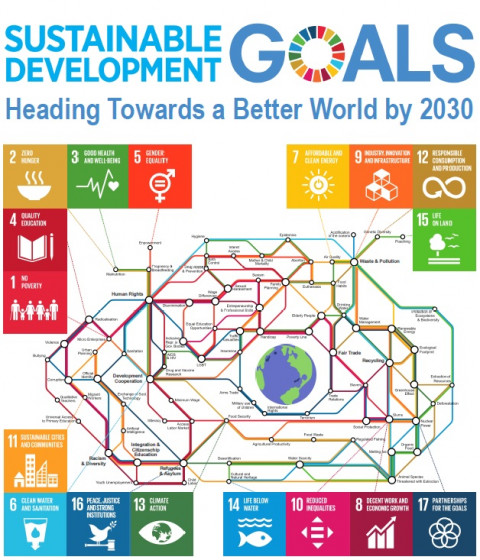 A metro map illustrated in the 17 sustainable development goals Year of publication: 2018 Author: Rembert Jonckheere Corporate author: ASPnet Flanders (Belgium) “Tackling one SDG… is tackling all of them!”This metro map is a complex illustration of the 17 sustainable development goals. With different kinds of topics as service stations and the SDG’s connecting them, it shows how the goals can relate to each other, and thus it emphasises their holistic nature. I do not pretend to be completely exhaustive or correct. Probably one can add more links and topics, but this map could be helpful in education or in other institutions as a source of inspiration to start up projects within the framework of the sustainable development goals.
 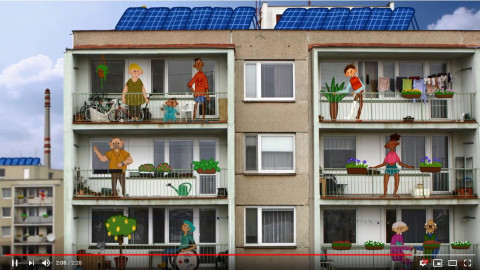 [Video] The future we need – and how we get there Year of publication: 2018 Corporate author: Friends of the Earth Europe Friends of the Earth groups across Europe are working for a socially-just, safe and peaceful future for all – and this is how they do it.
  Digital kids Asia-Pacific: insights into children’s digital citizenship Year of publication: 2019 Author: Taeseob Shin | Hyeyoung Hwang | Jonghwi Park | Jian Xi Teng | Toan Dang Corporate author: UNESCO Bangkok This report responds to the growing needs of Member States in the Asia-Pacific region to understand children’s knowledge, behaviour and attitudes in a hyper-connected digital world. It aims to create a data-driven, conducive educational and policy environment that maximizes opportunities that Information and Communications Technology (ICT) offers, while minimizing potential threats that the same may pose. The report was also developed in the context of the Education 2030 Agenda identifying digital skills as one of the key competencies for youth and adults to achieve and monitor until 2030.