
Resources
Explore a wide range of valuable resources on GCED to deepen your understanding and enhance your research, advocacy, teaching, and learning.
882 Results found
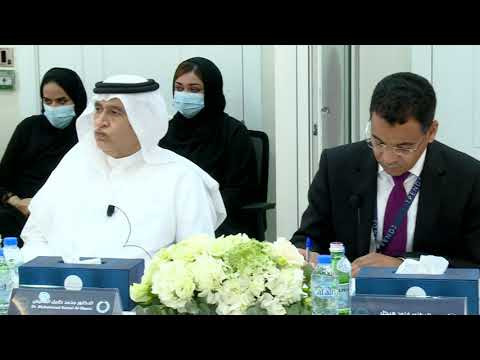 نشر ثقافة السلام والتسامح في العالم: ما الذي ينبغي علينا فعله؟ Year of publication: 2021 Corporate author: TRENDS Research & Advisory الفيديو عبارة عن ندوة أدراها الباحث والكاتب الإماراتي محمد خلفان الصوافي. تركز الندوة على ستة محاور رئيسية هي "الخطاب الديني وأهمية مواجهة خطابات الكراهية والتطرف، ووثيقة الأخُوَّة الإنسانية كإطار لتعزيز قيم السلام والتسامح حول العالم، وحقوق الإنسان كمدخل لتعزيز ثقافة التسامح والسلام، وجعلها مدخلاً لمواجهة صراعات العالم والمنطقة، وسبل تعزيزها في المنطقة والعالم، ونحو رؤية مشتركة لعالم أكثر سلاماً وتسامحاً". الفيديو يتحاور فيه مجموعة من المختصين.
 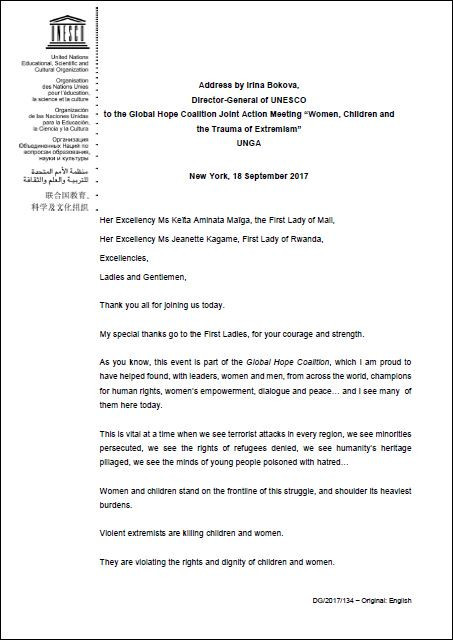 Address by Irina Bokova, Director-General of UNESCO, to the Global Hope Coalition Joint Action Meeting: Women, Children and the Trauma of Extremism Year of publication: 2017 Corporate author: UNESCO. Director-General, 2009-2017 (Bokova, I.G.) This address was delivered by Irina Bokova, Director-General of UNESCO, to the Global Hope Coalition Joint Action Meeting: Women, Children and the Trauma of Extremism; UNGA, New York, 18 September 2017.
 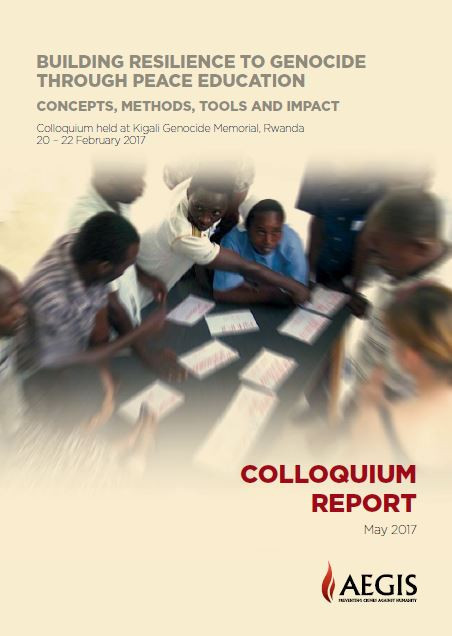 Colloquium Report: Building Resilience to Genocide through Peace Education: Concepts, Methods, Tools and Impact Year of publication: 2017 Author: Jonathan Bower, Mariana Goetz Corporate author: Aegis Trust A three-day Colloquium in Kigali in February brought together academics and practitioners in and around the field of peace education to share concepts, methods and means of measuring impact, contributing to a stronger evidence base for the effectiveness of peace education. Three interesting takeaways from the Colloquium: 1. Building resilience against genocide requires critical thinking about the process of identity-based violence and its reversal.2. The content of peace education programmes matters: interactive role-play type activities have been shown to have a longer lasting impact.3. Unhealed wounds need to be addressed to prevent a repeat of violence; psychosocial support must accompany peace education to reduce anxiety, which can be an obstacle when accessing empathy. A major achievement resulting from the consortium’s advocacy has been that the Government of Rwanda through the Ministry of Education has integrated Peace and Values education into the school curriculum. In a new phase of work Aegis is now supporting the implementation of the revised national curriculum that has integrated peace and values education (2016-19).
 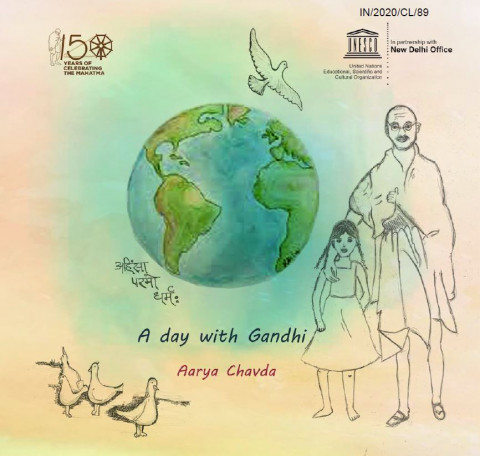 A Day with Gandhi Year of publication: 2020 Author: Aarya Chavda At an age of 10, author and illustrator of her 2 books, Aarya Chavda extends her support by donating her art proceeds to fundraise for the welfare of underpriviledge Cancer patients.Through her campaign on 'Preservation of Cultural Heritage', She also demonstrates her commitment and contributes in spreading awareness through her programs at government and private institutions.In this series of narrative illustrations, she pays her tributes to commemorate 150th birth anniversary of Gandhi. This shows her inclination to portray ideologies of 'The Mahatma' on the pursuit of liberation and tranquility.
  Evaluating the Link between Conflict and Education Year of publication: 2005 Author: Lynn Davies Corporate author: SAGE Publishing This paper examines two areas of important evaluation: the impact of education on peace and the impact of education on conflict, and argues that they are not necessarily the same type of evaluation. Evaluating the Link between Conflict and Education Year of publication: 2005 Author: Lynn Davies Corporate author: SAGE Publishing Cet article examine deux domaines importants d’évaluation : l'impact de l'éducation sur la paix et l'impact de l'éducation sur les conflits ; il démontre ensuite que le même type d'évaluation ne s’applique pas nécessairement au deux.
  Education in the twenty‐first century: Conflict, reconstruction and reconciliation1 Year of publication: 2005 Author: Alan Smith Corporate author: Taylor & Francis This paper is an attempt to map out an emerging and increasingly important field of study concerning the relationship between education and conflict. The paper argues that actions through various ‘entry points’ at each of these levels carry the potential to exacerbate or ameliorate conflict and suggests that a systemic analysis of investments in education systems from a conflict perspective should be a routine part of educational planning. Education in the twenty‐first century: Conflict, reconstruction and reconciliation1 Year of publication: 2005 Author: Alan Smith Corporate author: Taylor & Francis Ce papier tente d’établir un nouveau domaine d'étude de plus en plus important portant sur le lien entre l'éducation et les conflits. Le document fait valoir que les actions menées à travers différents « points d’entrée » à chaque niveau ont le potentiel d'exacerber ou bien d’atténuer les conflits. Le papier suggère qu'une analyse systémique des investissements dans les systèmes d'éducation contre les conflits devrait faire partie intégrante de la planification de l'éducation.
  ПОЛОЖЕНИЕ С ПРАВАМИ ЧЕЛОВЕКА В МИРЕ АПРЕЛЬ 2024 Year of publication: 2024 Corporate author: Amnesty International Le Rapport d’Amnesty International décrit la situation des droits humains dans le monde en 2023 dans 155 pays différents. Les équipes de journalistes et d’enquêteurs de l'ONG peignent un portrait plutôt sombre, avec notamment un recul du droit des femmes, les conséquences dramatiques du réchauffement climatique sur les populations les plus vulnérables, le recul du droit de manifester, ou encore la prolifération de la haine en ligne dans le monde. La multiplication des conflits armés et le choc du 7 octobre ont également eu des conséquences dramatiques. Cependant, quelques bonnes nouvelles sont aussi à noter, avec des avancées pour les droits des personnes LGBTI par exemple. Amnesty International Report describes the human rights situation worldwide in 2023 in 155 different countries. TheNGO's teams of journalists and investigators paint a rather gloomy picture, with, in particular, a decline in women's rights, the dramatic consequences of global warming on the most vulnerable populations, a decline in the right to protest, and the proliferation of online hate around the world. The multiplication of armed conflicts and the shock of October 7 have also had dramatic consequences. However, there is some good news too, with advances in LGBTI rights for example. The State of the World’s Human Rights: April 2024 Year of publication: 2024 Corporate author: Amnesty International Le Rapport d’Amnesty International décrit la situation des droits humains dans le monde en 2023 dans 155 pays différents. Les équipes de journalistes et d’enquêteurs de l'ONG peignent un portrait plutôt sombre, avec notamment un recul du droit des femmes, les conséquences dramatiques du réchauffement climatique sur les populations les plus vulnérables, le recul du droit de manifester, ou encore la prolifération de la haine en ligne dans le monde. La multiplication des conflits armés et le choc du 7 octobre ont également eu des conséquences dramatiques. Cependant, quelques bonnes nouvelles sont aussi à noter, avec des avancées pour les droits des personnes LGBTI par exemple. Amnesty International Report describes the human rights situation worldwide in 2023 in 155 different countries. TheNGO's teams of journalists and investigators paint a rather gloomy picture, with, in particular, a decline in women's rights, the dramatic consequences of global warming on the most vulnerable populations, a decline in the right to protest, and the proliferation of online hate around the world. The multiplication of armed conflicts and the shock of October 7 have also had dramatic consequences. However, there is some good news too, with advances in LGBTI rights for example.