
Resources
Explore a wide range of valuable resources on GCED to deepen your understanding and enhance your research, advocacy, teaching, and learning.
1,443 Results found
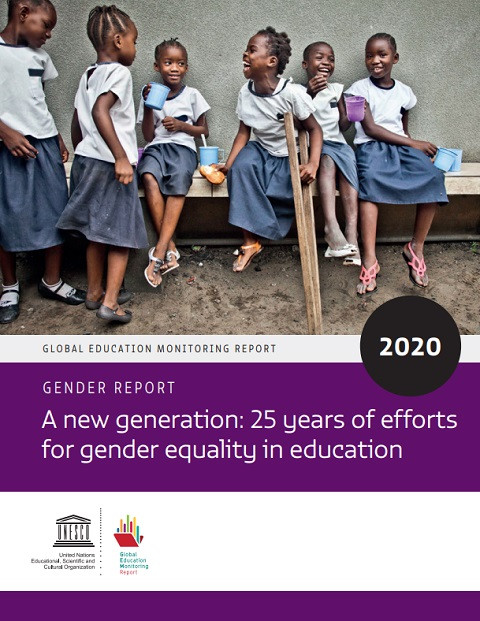 Gender Report 2020: A New Generation; 25 Years of Efforts for Gender Equality in Education (Global Education Monitoring Report) Year of publication: 2020 Corporate author: UNESCO | Global Education Monitoring Report Team Building on the 2020 Global Education Monitoring Report, this report investigates how inclusion in education can advance gender equality in and through education, which is critical to make progress towards gender equality in society. The goal of gender equality is, of course, not new. It was enshrined in the 1979 Convention on the Elimination of All Forms of Discrimination Against Women and was at the core of the 1995 Beijing Declaration and Platform for Action, whose 25th anniversary is marked in 2020.
 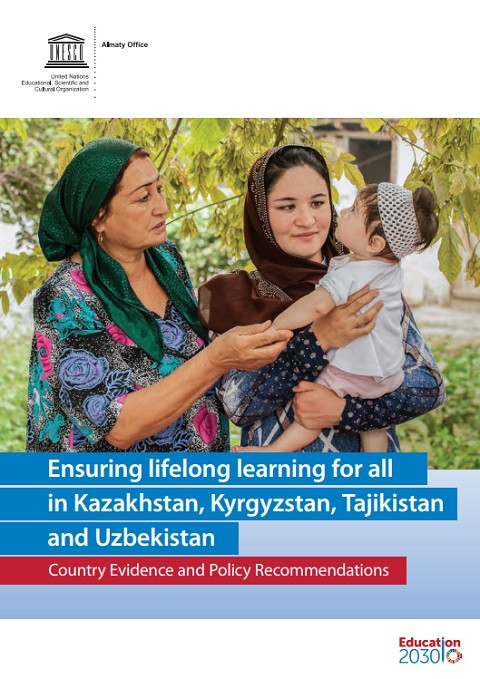 Ensuring Lifelong Learning for All in Kazakhstan, Kyrgyzstan, Tajikistan and Uzbekistan: Country Evidence and Policy Recommendations Year of publication: 2020 Author: Arne Carlsen Corporate author: UNESCO Lifelong Learning is at the heart of the 2030 Agenda for Sustainable Development and its 17 goals. More speci¬cally, Sustainable Development Goal 4 is devoted to ensuring quality education and lifelong learning opportunities for all. As the lead agency for education, UNESCO is mandated to support Member States in implementing SDG 4 through the Education 2030 Framework for Action. Central Asian countries – Kazakhstan, Kyrgyzstan, Tajikistan and Uzbekistan – have all shown their commitment to achieving the SDGs by 2030, including SDG 4, and have taken several actions in this regard. This sub-regional study aims to provide a broader picture of lifelong learning in Central Asia, supported by evidence and policy recommendations in order to propose a systemic approach for future education reforms. Обеспечение возможности обучения на протяжении всей жизни для всех в Казахстане, Кыргызстане, Таджикистане и Узбекистане: Опыт отдельных стран и рекомендации по вопросам политики Year of publication: 2020 Author: Arne Carlsen Corporate author: Организация Объединенных Наций по вопросам образования, науки и культуры (UNESCO) Обучение на протяжении всей жизни лежит в основе Глобальной программы устойчивого развития, состоящей из 17 целей. Суть Цели 4 в области устойчивого развития заключается в «Обеспечении всеохватного и справедливого качественного образования и поощрение возможности обучения на протяжении всей жизни для всех». ЮНЕСКО, как специализированному учреждению ООН по вопросам образования, было поручено оказывать государствам-членам содействие в достижении ЦУР 4 через выполнение Рамочной программы действий в области образования до 2030 года.Страны Центральной Азии – Казахстан, Кыргызстан, Таджикистан и Узбекистан – выразили заинтересованность в достижении к 2030 году всех ЦУР, включая ЦУР 4, и уже предприняли ряд действий в этом направлении. Цель настоящего субрегионального исследования состоит в предоставлении более точной картины положения дел в области обучения на протяжении всей жизни в Центральной Азии, подкрепленной фактическим материалом и рекомендациями по вопросам политики, для подготовки предложений по системному подходу к будущим реформам образования.
  World Programme for Human Rights Education: Plan of Action; Third Phase Year of publication: 2017 Corporate author: UNESCO | UN. Office of the United Nations High Commissioner for Human Rights (UN. OHCHR) The plan of action for the third phase (2015–2019) of the World Programme, which benefited from the input and review of governmental and nongovernmental experts and practitioners, proposes a concrete strategy and practical ideas for further implementing human rights education and training in the above-mentioned areas at the national level. Its key elements are highlighted below:Human rights education in the primary and secondary school systems and in higher education, and human rights training for teachers and educators, civil servants, law enforcement officials and the military. Programa mundial para la educación en derechos humanos: Plan de acción; Tercera etapa Year of publication: 2017 Corporate author: Organización de las Naciones Unidas para la Educación, la Ciencia y la Cultura (UNESCO) | UN. Office of the United Nations High Commissioner for Human Rights (UN. OHCHR) En el Plan de acción para la tercera etapa (2015-2019) del Programa Mundial —que contó con aportaciones y revisiones de diversos expertos y profesionales gubernamentales y no gubernamentales— se proponen una estrategia concreta e ideas prácticas para seguir impartiendo formación y educación en derechos humanos en los ámbitos mencionados en el plano nacional. A continuación se destacan sus elementos principales. Educación en derechos humanos en la enseñanza primaria y secundaria y en la enseñanza superior y formación en derechos humanos de los maestros y los educadores, los funcionarios públicos, los miembros de las fuerzas del orden y el personal military. Programme mondial en faveur de l’éducation aux droits de l’homme : Plan d’action ; Troisième phase Year of publication: 2017 Corporate author: Organisation des Nations Unies pour l'éducation, la science et la culture (UNESCO) | UN. Office of the United Nations High Commissioner for Human Rights (UN. OHCHR) Le plan d’action pour la troisième phase (2015-2019) du Programme mondial, qui a bénéficié de l’apport et des avis critiques d’experts et praticiens gouvernementaux et non gouvernementaux, propose une stratégie concrète et des idées pratiques pour poursuivre la mise en œuvre de l’éducation et de la formation aux droits de l’homme dans les secteurs susmentionnés au niveau national. Ses principaux éléments sont indiqués ci-dessous:L’éducation aux droits de l’homme dans les systèmes d’enseignement primaire, secondaire et supérieur, ainsi que la formation aux droits de l’homme des enseignants, des éducateurs, des fonctionnaires, des responsables de l’application des lois et du personnel militaire. Всемирная программа образования в области прав человека: План действий; Третий этап Year of publication: 2017 Corporate author: Организация Объединенных Наций по вопросам образования, науки и культуры (UNESCO) | UN. Office of the United Nations High Commissioner for Human Rights (UN. OHCHR) В плане действий для третьего этапа (2015–2019 годы) Всемирной программы образования в области прав человека, в составление и обзор которого внесли свой вклад эксперты и специалисты-практики из правительственных и неправительственных органов, предложена конкретная стратегия и практические идеи по дальнейшему внедрению образования в области прав человека в вышеупомянутых секторах на национальном уровне. Ниже изложены его ключевые элементы. Образование в области прав человека в системах начальных и средних школ и высшего образования, а также подготовка в области прав человека для учителей и воспитателей, государственных служащих, сотрудников правоохранительных органов и военнослужащих.
 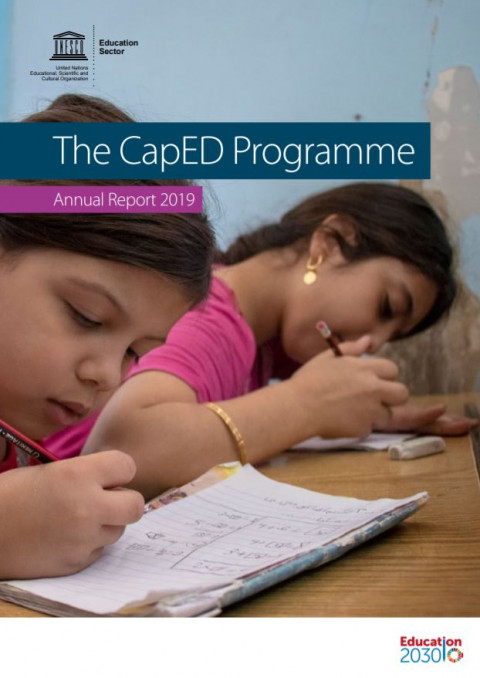 The CapED Programme: Annual Report 2019 Year of publication: 2020 Corporate author: UNESCO UNESCO is the United Nation’s specialized agency for education and is mandated to lead and coordinate progress towards Sustainable Development Goal 4 – “Ensure inclusive and equitable quality education and promote lifelong learning opportunities for all”.The CapED Programme is central to delivering on this mandate through capacity development. It mobilizes UNESCO’s worldwide network of specialized Institutes and offices and works with partners to assist countries as they develop and implement national plans to deliver on SDG4 commitments.The Annual Report 2019 provides information on achievements and progress made in the 26 countries where CapED is operational. Programme CapED: rapport annuel 2019 Year of publication: 2020 Corporate author: UNESCO Institution spécialisée des Nations Unies pour l'éducation, l'UNESCO est chargée de conduire et de coordonner les efforts entrepris pour atteindre l'Objectif de développement durable 4 : « Assurer l'accès de tous à une éducation de qualité, sur un pied d'égalité, et promouvoir les possibilités d'apprentissage tout au long de la vie ».Le Programme CapED de développement des capacités pour l'éducation joue un rôle central dans l'exercice de ce mandat. Il mobilise le réseau mondial des instituts spécialisés et des bureaux de l'UNESCO et, en collaboration avec ses partenaires, aide les pays à élaborer et mettre en oeuvre leurs plans nationaux afin d'honorer les engagements qu'ils ont pris au titre de l'ODD 4.Le Rapport annuel 2019 met en lumière les résultats obtenus et les progrès accomplis dans les 26 pays où le Programme CapED intervient.
  Local Knowledge, Global Goals Year of publication: 2017 Author: Douglas Nakashima | Jennifer Rubis | Peter Bates | Bárbara Ávila Corporate author: UNESCO Local and indigenous knowledge refers to the understandings, skills and philosophies developed by societies with long histories of interaction with their natural surroundings. For rural and indigenous peoples, local knowledge informs decision-making about fundamental aspects of day-to-day life. This knowledge is integral to a cultural complex that also encompasses language, systems of classification, resource use practices, social interactions, rituals and spirituality. These unique ways of knowing are important components of the world’s cultural diversity, and contribute to the achievement of Agenda 2030 and the Paris Agreement.