
Resources
Explore a wide range of valuable resources on GCED to deepen your understanding and enhance your research, advocacy, teaching, and learning.
1,450 Results found
 후기청소년(19-24세)의 미디어 리터러시 교육과 미디어 정책에 대한 인식 연구 Year of publication: 2022 Author: 강진숙 | 권오현 Corporate author: 한국청소년정책연구원 이 연구는 후기청소년의 미디어 리터러시 교육과 미디어 정책에 대한 인식 연구로서 후기청소년의 미디어 리터러시 교육적 쟁점과 국내외 사례를 살펴보고, 후기청소년 및 미디어 관련 전문가들의 인식을 통해 후기청소년이 미디어 리터러시 교육과 미디어 정책을 제안하는 데 목적이 있다.연구 진행을 위해 문헌연구, 전문가 자문, FGI(Focus group Interview) 및 심층인터뷰를 진행하였으며, 국내외 후기청소년의 미디어 이용 현황과 관련 정책을 문헌연구를 통해 알아보고, 함의를 도출하였다. 본 저작물은 한국청소년정책연구원에서 2022년 작성하여 공공누리 제4유형으로 개방한 ‘후기청소년(19-24세)의 미디어 리터러시 교육과 미디어 정책에 대한 인식 연구(강진숙, 권오현)’를 이용하였으며 해당 저작물은 한국청소년정책연구원 홈페이지 (https://www.nypi.re.kr)에서 무료로 다운받으실 수 있습니다.
  어린이와 미디어 리터러시 Year of publication: 2022 Author: 이원섭 | 조재희 | 최지선 Corporate author: 한국언론진흥재단 본 연구에서는 초등학생들의 미디어 이용에 대한 전반적인 특징을 진단하고 해외 사례 분석과 부모와 교사, 미디어 강사와의 심층인터뷰, 전문가 자문, 학생과 부모 대상의 설문조사를 통해 어린이의 미디어 리터러시 향상을 위한 정책 방안을 제시하고자 한다. 본 저작물은 한국언론진흥재단에서 2022년 작성하여 공공누리 제4유형으로 개방한 '어린이와 미디어 리터러시(작성자:이원섭, 조재희, 최지선)'를 이용하였으며, 해당 저작물은 한국언론진흥재단 홈페이지(https://www.kpf.or.kr/)에서 무료로 내려받으실 수 있습니다.
  Mapping the Mainstreaming of Education for Sustainable Development Across SDG 4.7: A Comparative Analysis of the Mainstreaming of ESD in Cyprus, Greece, Malta and Turkey Year of publication: 2020 Author: Devonne Goad Corporate author: UNESCO The objective of the present report is to summarize the state of ESD implementation in Cyprus, Greece, Malta and Turkey. This report summarizes and shares the successes and challenges highlighted within National Implementation Reports, as such a summary could be an important contribution to UNESCO, as the organization is currently facilitating dialogues to establish the direction of the new global programme for ESD. For that reason, these four countries within the regional scope of the UNESCO Regional Bureau in Venice, Italy, were chosen for the preliminary study. For the purpose of this study, the binary data contained within the National Implementation reports of Cyprus, Greece, Malta and Turkey were extracted to summarize the state of ESD implementation.
  Reconciliation through Global Citizenship Education Year of publication: 2023 Corporate author: UNESCO This document zeroes in on how concepts of GCED and reconciliation are addressed in current research and practice and aims to provide existing grounds and future considerations for policy-makers concerned with reconciliation through education.
  2017 International Conference on Education and the Holocaust: Progress Report and Follow-up Year of publication: 2018 Corporate author: UNESCO | United States Holocaust Memorial Museum (USHMM) From December 4-8 2017, UNESCO and the United States Holocaust Memorial Museum (USHMM) jointly organized the second International Conference on Education and the Holocaust (ICEH) in Washington, DC. The conference brought together 26 participants from 10 countries with the goal of strengthening their capacities to advance education about the Holocaust and genocide in their respective countries. Of great importance was the relevance of this education within the teams’ national contexts. The conference ultimately led to the development of 10 country-specific initiatives. The 2017 ICEH cohort comprises representatives of institutions from Argentina, Colombia, India, Indonesia, Kenya, Mexico, Namibia, South Africa, Tunisia and Ukraine.
  Online Antisemitism: A Toolkit for Civil Society Year of publication: 2022 Corporate author: Institute for Strategic Dialogue (ISD) | B’nai B’rith International | UNESCO This guide looks to build literacy among Jewish professionals, lay leaders and community members at large – as well as wider allies from across civil society – to tackle antisemitism online. Recognising the enormous capacity for positive action that the digital space offers, it aims to consolidate knowledge and provide a wide range of policy and community avenues for action.The guide provides an assessment of the online antisemitism threat landscape, an overview of existing policy responses on an international and national level across a range of European countries, and, importantly, a broad set of recommendations for engagement with governments, platforms and within communities to address these issues.
  UNESCO Science Report: The Race Against Time for Smarter Development Year of publication: 2021 Author: Susan Schneegans | Tiffany Straza | Jake Lewis Corporate author: UNESCO This seventh edition of the report monitors the development path that countries have been following over the past five years from the perspective of science governance. It documents the rapid societal transformation under way, which offers new opportunities for social and economic experimentation but also risks exacerbating social inequalities, unless safeguards are put in place.The report concludes that countries will need to invest more in research and innovation, if they are to succeed in their dual digital and green transition. More than 30 countries have already raised their research spending since 2014, in line with their commitment to the Sustainable Development Goals. Despite this progress, eight out of ten countries still devote less than 1% of GDP to research, perpetuating their dependence on foreign technologies.
  대학의 미디어 리터러시 교육 활성화 방안 Year of publication: 2020 Author: 김경희 | 정윤경 | 오연주 Corporate author: 한국언론진흥재단 본 연구는 한국언론진흥재단에서 공모연구로 수행한 지정주제 연구보고서로 국내외 대학의 미디어 리터러시 교육 및 관련 사업 현황과 우수 사례의 분석을 토대로 대학 내 미디어 리터러시 교육의 활성화 방안을 마련하고 대학이 미디어 리터러시 교육의 지역거점으로 거듭나기 위한 정책적 제언을 도출하는 것을 목표로 한다. 1. 서론2. 국내 대학의 미디어 리터러시 교육 현황3. 해외 대학의 미디어 리터러시 교육 우수 사례 분석4. 국내 대학의 미디어 리터러시 교육 우수 사례 분석5. 대학 미디어 리터러시 교육 활성화 및 대학 거점화 방안6. 결론
 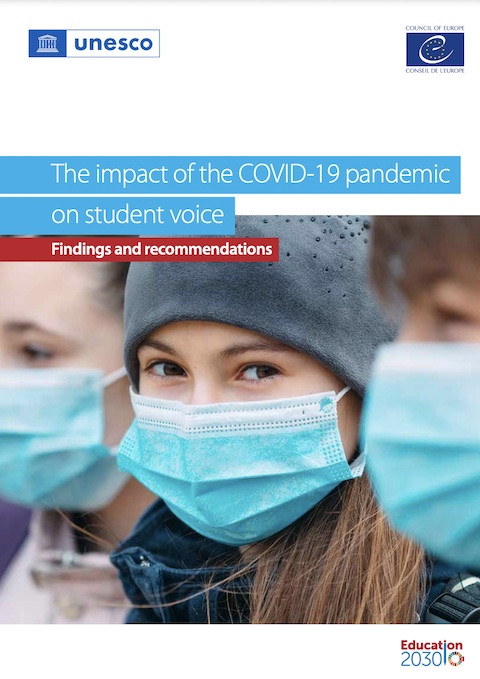 The Impact of the COVID-19 Pandemic on Student Voice: Findings and Recommendations Year of publication: 2021 Corporate author: UNESCO | Council of Europe The COVID-19 pandemic has had serious consequences on the education of young people and their ability to engage and participate meaningfully. In 2020, UNESCO and the Council of Europe decided to collaborate on a research project with a view to examining the impact of the COVID-19 pandemic on student voice and particularly the consequences of the subsequent school closures on student voice opportunities in Europe and in the Middle East and North Africa (MENA). This publication details the findings of this study and provides recommendations for school directors and personnel, teachers, educators, policy-makers and young people to build on the lessons learned from the pandemic and help the education community work collectively towards promoting societies that are guided by human rights, with student voice and participation at the centre. It is primarily intended for policy-makers, educators, teachers working in formal school systems. It may also be of interest to professionals working in non-formal education settings or other sectors – namely the justice, social and health sectors – working with student.
  The Impact of the COVID-19 Pandemic on Education: International Evidence From the Responses to Educational Disruption Survey (REDS) Year of publication: 2022 Author: Sabine Meinck | Julian Fraillon | Rolf Strietholt Corporate author: Организация Объединенных Наций по вопросам образования, науки и культуры (UNESCO) | International Association for the Evaluation of Educational Achievement (IEA) The COVID-19 pandemic disrupted education provision at an unprecedented scale, with education systems around the world being impacted by extended school closures and abrupt changes to normal school operations. The Responses to Educational Disruption Survey (REDS) investigated how teaching and learning were affected by the health crisis, and how education stakeholders responded to the educational disruption across and within countries. The study aimed to provide a systemic, multi-perspective, and comparative picture of the situation at the secondary education level (grade eight) in 11 countries spanning Africa, Asia, Arab region, Europe, and Latin America. While many other efforts exist that collect and provide similar information, they are mostly derived from non-representative rapid surveys and lack internationally comparable information from schools, collected in a systematic and scientific manner. The REDS International Report presents unique data, collected from countries, schools, teachers, and students for the first time, in chapters that cover several themes on which data were collected which include student and teacher well-being, students’ academic progress during the school closures, and the measures countries have implemented to keep all children learning. Initial findings provide evidence for better orienting and tailoring policy responses to crisis and provide invaluable information on what may be required to accelerate education, recover from crisis, and to strengthen the resilience of education systems in the future.