
Resources
Explore a wide range of valuable resources on GCED to deepen your understanding and enhance your research, advocacy, teaching, and learning.
3,229 Results found
 Global Citizenship Education and the Discourse Environment in the University Setting: Focused on the Organizing Process of Course of Studies (Literature and Environment; Vol. 19, No. 2) Year of publication: 2020 Author: Bongjun Cha | Shinhyung Seong | Yunyoung Han Corporate author: Association for the Study of Literature & Environment Education plays an important role on responding to the global issues caused by the globalization phenomenon during the late 20th century. One of them is the discourse of ‘Global Citizenship Education,’as many researchers focus on the educational goal and curriculum about this discourse from elementary to college education levels in Korea. This study examines the curriculum development and its operating status in each education levels based on the revised curriculum of elementary, middle and high school education since 2015. In particular, this study analyzes mainly on the organizing curriculum of environmental issues and sustainable development. In addition, this research explores college education system in order to develop this discourse as concentrating on the eight universities’ Global Citizenship Education curricula, initiated by Asia-Pacific Centre of Education for International Understanding under the auspices of UNESCO (APCEIU) in Korea. Lastly, this study suggests the importance of the discourse environment for elevating the sense of global citizenship through this study. 대학생 세계시민교육과 환경 담론: 교육과정 구성을 중심으로 (문학과환경; Vol. 19, No. 2) Year of publication: 2020 Author: 차봉준 | 성신형 | 한윤영 Corporate author: 문학과환경학회 20세기 말 전 지구적 현상으로 부각된 세계화가 노출한 여러 문제적 상황들, 즉 지방ㆍ지역ㆍ국가ㆍ세계 수준의 정치가 서로 유기적으로 연결된 지구촌 문제의 효과적 해결을 위해 교육이 담당해야 할 역할이 뚜렷해졌다. 그 중의 하나가 이른바 ‘세계시민교육’이라 명명된 담론일 것이며, 우리나라도 초ㆍ중등 교육과정에서부터 고등교육에 이르기까지 이에 대한 교육목표 설정과 교육과정 개발에 연구를 집중하고 있다. 본 연구에서는 이러한 일련의 교육과정 개발과 운영 현황을 2015년 개정 초ㆍ중등교육과정을 통해 살펴보았다. 그리고 그 가운데서도 특히 환경문제와 지속가능한 발전에 대한 교육과정의 편성 현황을 분석해 보았다. 또한 2018년 유네스코 아시아태평양국제이해교육원(APCEIU) 주관으로 개발된 국내 8개 대학의 세계시민교육 운영 현황을분석하면서, 이에서 더 나아가 이러한 교육정책과 시대적 요구에 부응하기 위한 한 방편으로 국내 대학에 보편적으로 적용할 수 있는 교육과정으로서의 세계시민교육의 모형을제시함에 목적을 두었다. 특히 이를 위해 환경담론이 어떻게 교육과정에 구성되었는지를 바탕으로 세계시민의식 고양을 위한 환경담론의 필요성을 제안하려 한다.
 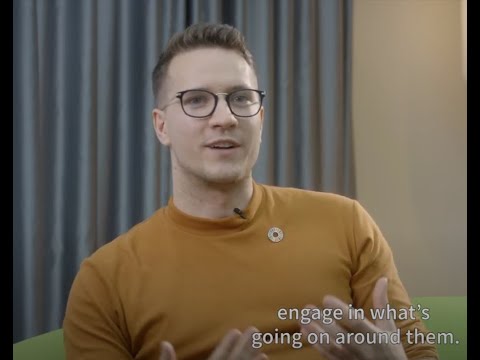 Why Is Target 4.7 So Important to the Sdgs? With Paul Bradley, SCVO Year of publication: 2020 Author: Paul Bradley Corporate author: Bridge 47 In this Bridge 47 Network Story, Paul Bradley of The Scottish Council for Voluntary Organizations eloquently talks about why Target 4.7 and Global Citizenship Education is crucial to Achieving the United Nations's SDGs (Sustainable Development Goals).
  UNESCO-UNEVOC Study on the Trends Shaping the Future of TVET Teaching (Trends Mapping Studies) Year of publication: 2020 Author: Gita Subrahmanyam Corporate author: UNESCO International Centre for Technical and Vocational Education and Training (UNEVOC) This report presents the results of the trends mapping study on the future of technical and vocational education and training (TVET) teaching, conducted by UNESCO-UNEVOC. The study aimed to engage the international TVET community to: (i) improve the understanding of the implications of global disruptions; (ii) gather knowledge, insights, experiences; and (iii) highlight promising practices in preparing TVET teaching staff to deliver the skills needed in the 21st century and beyond. Coordinated by UNESCO-UNEVOC, trends mapping studies aim to further the international community's understandings on contemporary key issues concerning TVET. The studies review existing literature and policies, and engage TVET stakeholders from around the world through surveys and virtual conferences.
  How Children Living in Poor Informal Settlements in the Greater Accra Region, Ghana, Perceive Global Citizenship (International Journal of Development Education and Global Learning; Vol. 12, No. 1) Year of publication: 2020 Author: Jane Leithead | Steve Humble Corporate author: UCL Press This investigation looks at the antecedents and outcomes of 141 children living in poor informal settlements in the Greater Accra Region of Ghana identifying with global citizenship. It finds that the model of global citizenship devised by Reysen and Katzarska-Miller (2013) is a moderately good fit for this group of children. Structural equation modelling demonstrates that antecedents of global awareness as well as friends and family supporting global citizenship (normative environment) predict the child’s self-identification as a global citizen. This in turn predicts six prosocial traits: intergroup empathy, valuing diversity, social justice, environmental sustainability, intergroup helping and responsibility to act. The research suggests that there may be other elements to a global citizenship model that could be investigated in future research.
  Action on Global Goals: Community Toolkit Year of publication: 2019 Author: Julia Haimlinger Corporate author: Global Action Plan (GAP) Ireland This toolkit aims to bring Development Education (DevEd) and Education for Sustainable Development (ESD), already established in the formal education sector, to the non-formal adult and community sector. Our toolkit is based on the idea to not have knowledge for knowledge sake, but through critical thinking and reflection we can aim to work towards taking action for positive change. For the goals to be reached, everyone needs to do their part: governments, the private sector, civil society and you! These are universal goals for all countries to be achieved. This resource pack will give you some fun and creative ideas on how to get informed about the Sustainable Development Goals, to create active global citizens and do your bit for the planet.
  Development Education in Theory and Practice: An Educator’s Resource Year of publication: 2016 Author: Michal Cenker | Louiza Hadjivasiliou | Patrick Marren | Niamh Rooney Corporate author: UNIDEV | NGO Support Centre (Cyprus) | Pontis Foundation (Slovakia) | Kimmage Development Studies Centre (Ireland) This publication has been produced to provide a new teaching resource for academics and educators active in the field of Development Education and related disciplines. It covers twelve themes, each chapter includes both a conceptual overview and a teaching methodology section. The conceptual overview introduces the topic, explores the key concepts, theories and current debates. The teaching methodology section gives educators a set of tools that could help them introduce the topic in both formal and non-formal settings.
  The Colourful World of Tomatoes: A Teaching Resource for Primary Schools Year of publication: 2016 Corporate author: Südwind | Cumbria Development Education Centre(CDEC) This resource allows children from 6 to 10 years to get to know the tomato from different perspectives. All exercises are based on the principle of global learning and are varied, interactive and experience-oriented.Thus it is possible for the children not only to look at this diverse topic from different perspectives, but also to immerse themselves in the tomato world. Activity’ objectives:• The students expand their knowledge about tomatoes and vegetables growing in times of globalisation.• Students learn about unknown types of tomatoes.• They recognise why different varieties are important.
 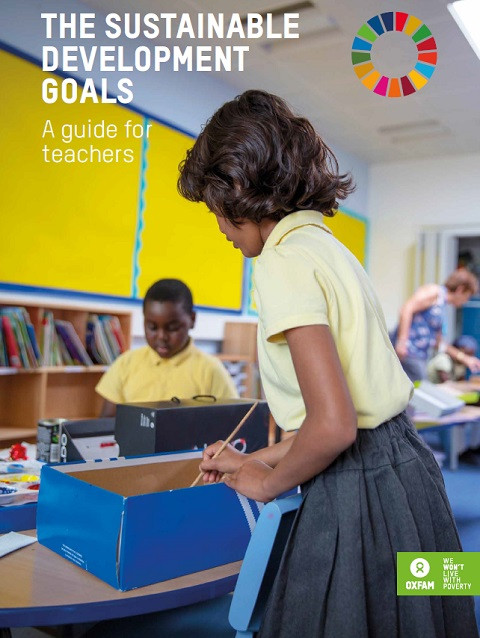 The Sustainable Development Goals: A Guide for Teachers Year of publication: 2019 Corporate author: Oxfam GB This guide supports teachers and educators working with young people to deepen their understanding of education about and for the SDGs and to see how global citizenship education (GCE) approaches and methodologies can underpin good practice. The guide also explores the benefits and challenges of using the SDG framework with learners in schools.
 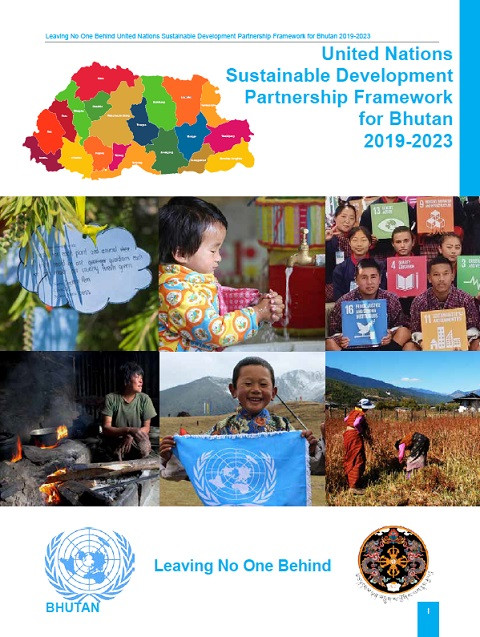 United Nations Sustainable Development Partnership Framework for Bhutan 2019-2023: Leaving No One Behind Year of publication: 2019 Corporate author: UN Bhutan This Partnership Framework 2019-2023 is the common strategic framework for UN activities in Bhutan, working closely with the different agencies to effectively meet the needs of the current stage of development in the country. Strongly committed to the promotion of “A Just, harmonious and sustainable Bhutan where no one is left behind”, this document highlights strategic priorities, integrated programming, and continued partnership between the Royal Government of Bhutan, its development partners, key stakeholders, as well as between UN agencies to overcome the many inequalities still present in Bhutan.