
Resources
Explore a wide range of valuable resources on GCED to deepen your understanding and enhance your research, advocacy, teaching, and learning.
2,162 Results found
 NISSEM Global Briefs (Volume II): Educating for the Social, the Emotional and the Sustainable; Pedagogy, Practice and Materials Year of publication: 2020 Author: Andy Smart | Margaret Sinclair Corporate author: Networking to Integrate SDG Target 4.7 and SEL skills into Educational Materials (NISSEM) The timeframe for achieving the Sustainable Development Goals (SDGs) is tight, and the world also faces the consequences of Covid-19. NISSEM Global Briefs aim to show how SDG Target 4.7 themes and social and emotional learning (SEL) can be embedded in education policies, programs, curricula, materials, and practice, to help make progress towards sustainable development.
  Découvrir le monde, apprendre la solidarité : Éducation à la citoyenneté mondiale et solidaire dans l’enseignement (ECMS) ; 2020-2022 Year of publication: 2020 Corporate author: Fédération Francophone et Germanophone des Associations de Coopération au Developpement (ACODEV) | Annoncer la Couleur (ALC) | Îles de Paix Cette publication explique ce qu’est l’ECMS et sa plus-value dans la formation de vos élèves, comment s’en emparer dans vos (futures) classes et présente les différents types d’appui que vous pouvez attendre des ONG et d’Annoncer la Couleur.
 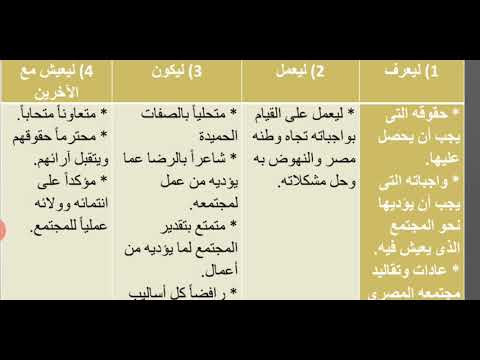 How to be a Good Citizen Year of publication: 2020 Corporate author: Helalia Language School This video is an educational lesson for the first year of middle school. The lesson focuses on what a good citizen is and how a student can be a good citizen. كيف تكون مواطن صالح Year of publication: 2020 Corporate author: Helalia Language School الفيديو عبارة عن درس تعليمي للصف الأول الاعدادي. ويركز الدرس على ماهية المواطن الصالح وكيف يمكن أن يكون الطالب مواطنا صالحا.
  Les clés de l’énergie: Guide pour découvrir, enquêter et agir au sein de son établissement scolaire Year of publication: 2020 Corporate author: Eco-Ecole L’énergie est présente dans toutes les sphères de notre quotidien et favoriser sa gestion durable et responsable est un enjeu majeur dans la lutte contre le réchauffement climatique ! Afin d’aider les communautés éducatives à s’approprier ce sujet, le programme Eco-Ecole, en partenariat avec le Conseil Départemental de Seine-Saint-Denis et l’ADEME, dévoile son nouvel outil : Les clés de l’énergie : Guide pour découvrir, enquêter et agir au sein de son établissement.En abordant l’énergie à travers le bâti, l’alimentation, le numérique et les déplacements, ce guide permet aux enseignant.e.s et à leurs élèves de se questionner sur les enjeux environnementaux liés à cette thématique et de réfléchir à des solutions à mettre en place à leur échelle.Destiné principalement à être utilisé dans le secondaire, cet outil contient :• des éléments de contexte et des clés de compréhension sur le thème de l’énergie ;• des pistes d’enquête concrètes pour réaliser un diagnostic ;• des déroulés d’ateliers pour découvrir la thématique et faire émerger des idées d’actions dans son établissement ;• des supports d’activités (à photocopier, découper ou reproduire) disponibles dans le corps du guide et dans les annexes.
 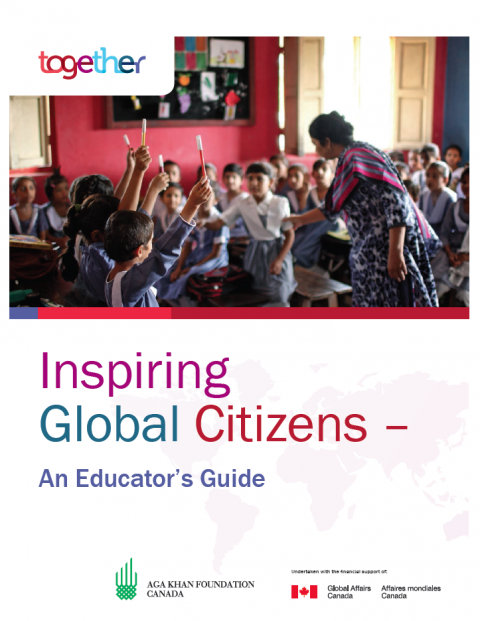 Inspiring Global Citizens - An Educator's Guide Year of publication: 2017 Corporate author: AGA Khan Foundation Canada This resource is intended for use by teachers of intermediate and secondary school grades to support education about global development and related themes such as global citizenship. The activities included in the resource are designed to assist students in increasing their understanding of the interconnectedness of the world, of the factors contributing to global inequalities, and of some effective and sustainable ways to help reduce global poverty. It is hoped that students will be inspired to take action to make their own contribution to improving lives everywhere.
 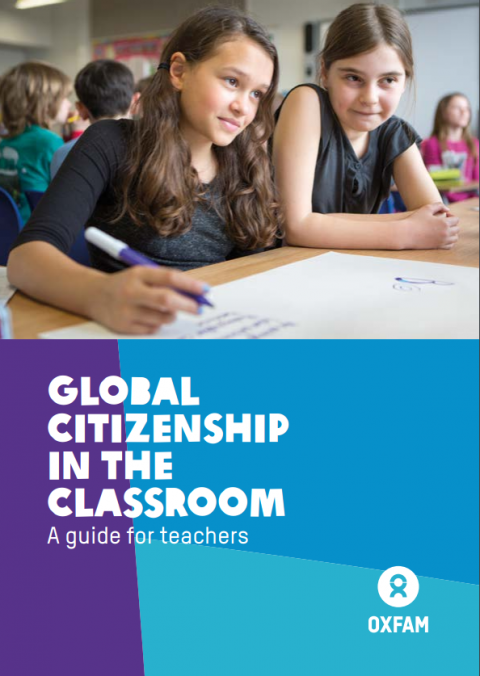 Global Citizenship in the Classroom: A guide for teachers Year of publication: 2015 Corporate author: Oxfam GB A practical and reflective guide full of practical tools and ideas that can be applied to almost any topic to develop learner participation and global learning.
  Radicalisations Awareness Network (RAN) Edu's Guide on training programmes 'Effective and confident teachers and other school staff' Year of publication: 2016 Corporate author: Radicalisations Awareness Network (RAN) This document will help teachers, principals, schools and (local and national) authorities discuss and design training programmes. Different training modules are identified, like (de)polarisation training, critical thinking, and how to turn a school into a safe and democratic mini society. Radicalisations Awareness Network (RAN) Edu's Guide on training programmes 'Effective and confident teachers and other school staff' Year of publication: 2016 Corporate author: Radicalisations Awareness Network (RAN) Ce document aidera les enseignants, les directeurs d'école, les écoles et les autorités (locales et nationales) à discuter et à concevoir des programmes de formations. Différents modules de formation sont identifiés, comme la formation de dépolarisation, la pensée critique, et comment transformer une école en une mini société sûre et démocratique.
  Beyond Bali Education Package Year of publication: 2012 Author: Lily Taylor | Saul Karnovsky The Beyond Bali Project funded by Building Community Resilience (BCR) aims to develop and produce an education resource for secondary school students (years 8/9) on the Bali bombings and the Bali Peace Park. The resource is designed to build social resilience to violent extremism by: - providing students with the skills and tools to critically analyze and challenge violent extremism, its causes and consequences - raising awareness and education on the social impacts of violent extremism - encouraging students to think about how societies can resist the influence of violent extremism - engaging students through activities and discussion about the Bali Peace Park as social resistance to terrorism.