
Resources
Explore a wide range of valuable resources on GCED to deepen your understanding and enhance your research, advocacy, teaching, and learning.
2,162 Results found
 Caja de herramientas para instituciones educativas: Líneas de acción de Habilidades socioemocionales orientación vocacional y profesional Year of publication: 2017 Corporate author: ENEL Foundation | Organización de Estados Iberoamericanos para la Educación, la Ciencia y la Cultura (OEI) Esta caja de herramientas está dirigida a agentes educativos que se encuentren motivados en articular a su quehacer pedagógico acciones encaminadas a facilitar la toma de decisiones de los jóvenes durante su trayectoria de vida, mediante el fortalecimiento de las habilidades socioemocionales y la orientación vocacional y profesional, con el fin de posibilitar transformaciones ya sea de tipo personal, familiar o social y en miras al desarrollo sostenible.
  Mercosur Reads Year of publication: 2023 Corporate author: Argentina. Ministry of Education | National Library of Teachers | Organization of Ibero-American States for Education, Science and Culture (OEI) This relaunch brings together stories by prominent authors from Argentina, Brazil, Bolivia, Chile, Paraguay and Uruguay. Its purpose is to contribute to the process of regional integration, encourage knowledge of the official languages (Spanish, Portuguese and Guaraní) and the development of quality education for all. Mercosur lee Year of publication: 2023 Corporate author: Argentina. Ministry of Education | National Library of Teachers | Organización de Estados Iberoamericanos para la Educación, la Ciencia y la Cultura (OEI) Este relanzamiento reúne los relatos de destacadas y destacados autores de Argentina, Brasil, Bolivia, Chile, Paraguay y Uruguay. Su propósito es contribuir al proceso de integración regional, incentivar el conocimiento de las lenguas oficiales (español, portugués y guaraní) y el desarrollo de una educación de calidad para todas y todos.
  Index for Inclusion: Developing Learning and Participation in Schools Year of publication: 2015 Author: Tony Booth | Mel Ainscow Corporate author: Organization of Ibero-American States for Education, Science and Culture (OEI) | FUHEM Education This guide provides a set of support materials for self-assessment of all aspects of a school, related to inclusive education, including activities at recess and in the classroom, as well as in the communities and in the context in which it's found. All staff, parents and guardians, as well as the students themselves (whether children, adolescents, or youth) are invited to contribute to the implementation of a plan for inclusion. Guía para la Educación Inclusiva: Desarrollando el aprendizaje y la participación en los centros escolares Year of publication: 2015 Author: Tony Booth | Mel Ainscow Corporate author: Organización de Estados Iberoamericanos para la Educación, la Ciencia y la Cultura (OEI) | FUHEM Education Está guía brinda un conjunto de materiales de apoyo a la autoevaluación de todos los aspectos de un centro escolar, relacionados con la educación inclusiva, incluyendo las actividades en el recreo y en las aulas, así como en las comunidades y en el contexto en el que se encuentra. Se invita a que todo el personal, los padres y tutores, así como los propios estudiantes (sean niños, adolescentes o jóvenes), contribuyan a la implementación de un plan para la inclusión.
 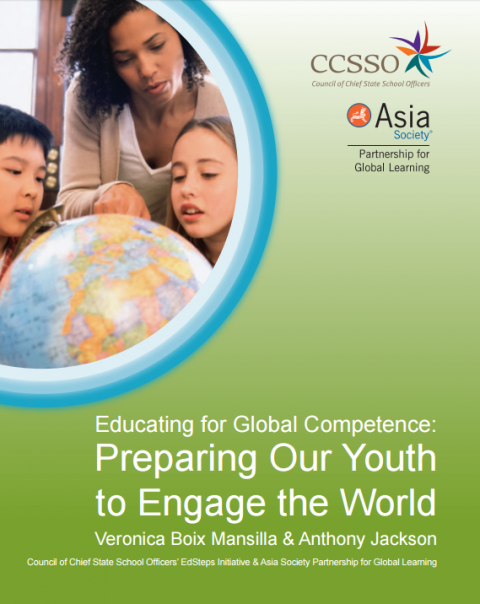 Educating for global competence: preparing our youth to engage the world Year of publication: 2011 Author: Veronica Boix Mansilla | Anthony Jackson Corporate author: Asia Society | Council of Chief State School Officers (CCSSO) Contemporary societies are marked by new global trends - economic, cultural, technological, and environmental shifts that are part of a rapid and uneven wave of globalization. The growing global interdependence that characterizes our time calls for a generation of individuals who can engage in effective global problem solving and participate simultaneously in local, national, and global civic life. Put simply, preparing our students to participate fully in today's and tomorrow's world demands that we nurture their global competence.This document introduces a definition of global competence developed by the Global Competence Task Force - a group of state education agency leaders, education scholars, and practitioners - under the auspices of the Council of Chief State School Officers EdSteps initiative (CCSSO-EdSteps) and the Asia Society Partnership for Global Learning (see page (iv) for task force participants). The definition builds on seminal work within the states and a broad range of organizations working to advance global knowledge and critical thinking skills. A process of careful articulation and vetting yielded the definition of global competence here proposed:Global competence is the capacity and disposition to understand and act on issues of global significance.Globally competent individuals are aware, curious, and interested in learning about the world and how it works. They can use the big ideas, tools, methods, and languages that are central to any discipline (mathematics, literature, history, science, and the arts) to engage the pressing issues of our time. They deploy and develop this expertise as they investigate such issues, recognize multiple perspectives, communicating their views effectively, and taking action to improve conditions.Educating for Global Competence: Preparing Our Youth to Engage the World is intended for classroom teachers, administrators, informal educators, policymakers, community leaders, researchers, parents, students, and all other stakeholders interested in preparing our youth for the 21st century. Becoming better at education for global competence involves rethinking practices and recognizing that there are no simple recipes for success. As such, this book is meant to be used flexibly - browse, make connections, and concentrate on the chapters that you find most pertinent to your work. Experiment with ideas, challenge concepts, and share with colleagues. Ultimately this book must work for you. It is meant to be read in the way that best meets your needs, inspires your curiosity, and proves fruitful in the classroom.Chapter one offers a rational for global education in our nation and worldwide. Chapter two introduces a conceptual framework for global competence and explains the key role of disciplinary and interdisciplinary foundations in student learning. Chapter three, four, five and six focus, respectively, on four core capacities associated with global competence: investigating the world, recognizing perspectives, communicating ideas, and taking action. Chapter seven considers core principles of instruction for teaching global competence. Chapter eight looks at what students and education institutions can do to promote global competence - and how they might create a culture of global competence for youth and adults. Finally, chapter nine places global competence in the larger framework of public education systems in and beyond the United States. Eduquer pour compétence globale: préparer nos jeunes à engager le monde Year of publication: 2011 Author: Veronica Boix Mansilla | Anthony Jackson Corporate author: Asia Society | Council of Chief State School Officers (CCSSO) Les sociétés contemporaines sont marquées par de nouvelles tendances mondiales - changements économiques, culturels, technologiques et environnementaux qui font partie d'une vague rapide et inégal de la mondialisation. L'interdépendance mondiale croissante qui caractérise notre temps appelle à une génération de personnes qui peuvent se livrer à la résolution de problème mondial efficace et participer simultanément à la vie civique locale, nationale et mondiale. Simplement, la préparation de nos étudiants de participer pleinement au monde les exigences d'aujourd'hui et de demain que nous entretenons leur compétence mondiale. Ce document présente une définition de la compétence globale développée par le Groupe de travail mondial Compétence - un groupe de chefs d'Etat de l'agence de l'éducation, spécialistes de l'éducation, et les praticiens - sous les auspices du Conseil de l'école Chief State initiative des officiers de EdSteps (CCSSO-EdSteps) et la Asia Partnership Society for global Learning (voir page (iv) pour les participants du groupe de travail). La définition se fonde sur le travail séminal dans les états et un large éventail d'organisations de travail pour faire avancer les connaissances mondiales et de la pensée critique. Un processus d'articulation minutieuse et vetting a abouti à la définition de la compétence globale proposée ici: la compétence globale est la capacité et la disposition pour comprendre et agir sur les questions d'importance mondiale. Globalement les personnes compétentes sont au courant, curieux et intéressés à en apprendre sur le monde et comment il fonctionne. Ils peuvent utiliser les grandes idées, des outils, des méthodes et des langues qui sont au cœur de toutes les disciplines (mathématiques, la littérature, l'histoire, la science et les arts) pour engager les questions pressantes de notre temps. Ils déploient et développer cette expertise comme ils enquêtent sur ces questions, reconnaissent de multiples points de vue, de communiquer leurs points de vue de manière efficace, et prendre des mesures pour améliorer les conditions. Eduquer pour Global Competence: Préparer les jeunes d'engager le monde est destiné aux enseignants, administrateurs, éducateurs informels, les décideurs, les leaders communautaires, les chercheurs, les parents, les étudiants et toutes les autres parties intéressées à préparer nos jeunes pour le 21e siècle. Devenir meilleur à l'éducation pour la compétence globale implique de repenser les pratiques et en reconnaissant qu'il n'y a pas de recettes simples pour le succès. En tant que tel, ce livre est destiné à être utilisé avec souplesse - parcourir, faire des liens, et de se concentrer sur les chapitres que vous trouverez les plus pertinents pour votre travail. Expérience avec des idées, des concepts de défi, et de partager avec des collègues. En fin de compte ce livre doit travailler pour vous. Il est destiné à être lu de la manière qui répond le mieux à vos besoins, inspire votre curiosité, et prouve fructueuse dans la salle de classe. Le premier chapitre offre un rationnel pour l'éducation mondiale dans notre pays et dans le monde. Le deuxième chapitre présente un cadre conceptuel pour la compétence globale et explique le rôle clé des fondations disciplinaires et interdisciplinaires dans l'apprentissage des élèves. Chapitre trois, quatre, cinq et six focus, respectivement, sur quatre capacités essentielles associées à la compétence mondiale: enquête dans le monde, reconnaissant les perspectives, communiquer des idées, et de prendre des mesures. Le chapitre sept considère les principes de base de l'enseignement pour l'enseignement de la compétence globale. Chapitre huit examine ce que les étudiants et les établissements d'enseignement peuvent faire pour promouvoir la compétence globale - et comment ils pourraient créer une culture de compétence globale pour les jeunes et les adultes. Enfin, le chapitre neuf places compétence globale dans le cadre plus large des systèmes d'éducation du public dans et au-delà des États-Unis.
  Education à la citoyenneté et aux droits de l'homme: manuel pour les jeunes en Mauritanie Year of publication: 2015 Author: Sidi Mohamed Ould Mohamed Abdellahi | Bamariam Koita | Mohamed El Moctar Ould Sidina | Abdel Wedoud Corporate author: Mauritania. Ministère de la culture et de l'artisanat | Mauritanian National Commission for Education, Science and Culture | UNESCO Rabat Prepared by UNESCO in cooperation with the Mauritanian Ministry of Culture and Crafts, and with the support of the Spanish Agency for International Development Cooperation (AECID), this manual aims to - with the active help of trainers and facilitators - sensitize young Mauritanians to the fundamental concepts of citizenship and human rights. This educational tool, which includes practical exercises adapted to a young audience, consists of 20 didactic cards that describe and explain Mauritania national legislation on human rights.Ce Manuel, composé de 20 fiches thématiques, offre de manière inédite des connaissances sur les conventions et standards internationaux en matière de démocratie et de droits de l’homme, ainsi qu’une contextualisation aux cadres normatifs nationaux de la Mauritanie. Des questions clés, des exercices interactifs, et des références pour aller plus loin sont autant d’outils pédagogiques pour familiariser les jeunes avec des notions fondamentales, dans le cadre de l’éducation aussi formelle que non formelle. Car Si l’éducation à la citoyenneté est rattachée à un territoire national dans la mesure où est citoyenne toute personne disposant de droits et de devoirs attachés à une nationalité, à un État, à une histoire sociale et culturelle, l’éducation aux droits de l’homme se réfère quant à elle à un cadre normatif universel et déterritorialisé : sa mission est de cultiver le sentiment d’appartenance de chacun(e) à l’humanité, caractérisée par une dignité propre. Dans une démarche éducative, ce Manuel conjugue les deux dimensions, les interpé- nètre et les met en perspective. L’objectif est de permettre aux jeunes, avec l’aide de formateurs et d’animateurs, d’approfondir et de mettre en perspective leurs connaissances relatives aux valeurs de citoyenneté et aux principes de droits de l’homme, à travers un va-et vient constant entre l’idéal universel et le contexte politique, social, culturel et environnemental dans lequel ils se trouvent.Fruit de la collaboration entre l’UNESCO et le Ministère de la Culture et de l’Artisanat de Mauritanie, et bénéficiant du soutien de l’Agence espagnole pour la coopération internationale pour le développement (AECID), ce Manuel propose des pistes pour explorer et interroger les conditions d’exercice de la citoyenneté, ainsi que des problématiques sociétales émergeantes. Mieux comprendre, pour mieux agir, c’est aussi cela être un agent de changement, de paix et de développement.
  Educación para la ciudadanía y la convivencia: jóvenes por el empoderamiento y la transformación; ciclo cinco (décimo, undécimo, duodécimo) Year of publication: 2014 Corporate author: Secretaría de Educación del Distrito (SED) | Fe y Alegría These twelve modules make reference to a series of activities that focus on how children from all the educative grades understand and live citizenship, strengthening and facilitating the learning processes based on autonomy. This educative materials, which are aimed at being implemented inside the classrooms, attempt to serve as input resources for educators and other agents that work on or are interested in working with citizenship education and coexistence. The overall objective is to provide quality education.
  Trust me Year of publication: 2016 Corporate author: Childnet International The main aim of this resource is to educate young people about inaccurate and pervasive information that they might come across online. This resource is intended to stimulate and facilitate discussions around online risk.Developed in partnership with the London Grid for Learning (LGfL) Safeguarding Board, the resource contains lesson plans for both primary and secondary level that aim to empower educators to discuss how to think critically around the areas of content, contact, and propaganda material that may seek to persuade or change their views.