
Resources
Explore a wide range of valuable resources on GCED to deepen your understanding and enhance your research, advocacy, teaching, and learning.
3,454 Results found
 Conférence mondiale de l'UNESCO sur l'éducation au développement durable: 31 mars-2 avril 2009, Bonn, Allemagne: procédure Year of publication: 2009 Corporate author: German Federal Ministry of Education and Research (BMBF) | German Commission for UNESCO Alors que la Décennie des Nations Unies pour l'éducation en vue du développement durable (DEDD) approchait de son point médian, le «Worldconferenceon Education pour le développement durable de l'UNESCO - Passer à la deuxième moitié de la Décennie des Nations Unies» s'est tenu du 31 mars au 2 avril 2009 à Bonn. Elle a réuni 900 participants de 147 pays, dont 49 ministres et sous-ministres. Les participants comprenaient des représentants des États membres de l'UNESCO, des organismes des Nations Unies, des organisations de la société civile, des établissements d'enseignement, des jeunes et du secteur privé, ainsi que des experts individuels. La Conférence a été organisée par l'UNESCO et le Ministère fédéral allemand de l'éducation et de la recherche, en coopération avec la Commission allemande pour l'UNESCO. Le programme a été élaboré en consultation avec un groupe consultatif international. UNESCO world conference on education for sustainable development: 31 March-2 April 2009, Bonn, Germany: proceedings Year of publication: 2009 Corporate author: German Federal Ministry of Education and Research (BMBF) | German Commission for UNESCO As the United Nations Decade of Education for Sustainable Development (DESD) approached its midpoint, the “UNESCO World Conference on Education for Sustainable Development – Moving into the Second Half of the UN Decade” was held from 31 March to 2 April 2009 in Bonn, Germany. It brought together 900 participants from 147 countries, among them 49 Ministers and Deputy-Ministers. Participants included representatives of UNESCO Member States, UN agencies, civil society organizations, education institutions, youth, and the private sector, as well as individual experts. The Conference was organized by UNESCO and the German Federal Ministry of Education and Research, in cooperation with the German Commission for UNESCO. The programme was developed in consultation with an international advisory group. Материалы Всемирной конференции ЮНЕСКО по образованию в интересах устойчивого развития (2009 г., Бонн, Германия) Year of publication: 2009 Corporate author: German Federal Ministry of Education and Research (BMBF) | German Commission for UNESCO As the United Nations Decade of Education for Sustainable Development (DESD) approached its midpoint, the “UNESCO World Conference on Education for Sustainable Development – Moving into the Second Half of the UN Decade” was held from 31 March to 2 April 2009 in Bonn, Germany. It brought together 900 participants from 147 countries, among them 49 Ministers and Deputy-Ministers. Participants included representatives of UNESCO Member States, UN agencies, civil society organizations, education institutions, youth, and the private sector, as well as individual experts. The Conference was organized by UNESCO and the German Federal Ministry of Education and Research, in cooperation with the German Commission for UNESCO. The programme was developed in consultation with an international advisory group. Conférence mondiale de l'UNESCO sur l'éducation en vue du développement durable, 31 Mars-2 Avril 2009, Bonn, Allemagne: actes Year of publication: 2009 Corporate author: German Federal Ministry of Education and Research (BMBF) | German Commission for UNESCO As the United Nations Decade of Education for Sustainable Development (DESD) approached its midpoint, the “UNESCO World Conference on Education for Sustainable Development – Moving into the Second Half of the UN Decade” was held from 31 March to 2 April 2009 in Bonn, Germany. It brought together 900 participants from 147 countries, among them 49 Ministers and Deputy-Ministers. Participants included representatives of UNESCO Member States, UN agencies, civil society organizations, education institutions, youth, and the private sector, as well as individual experts. The Conference was organized by UNESCO and the German Federal Ministry of Education and Research, in cooperation with the German Commission for UNESCO. The programme was developed in consultation with an international advisory group.
 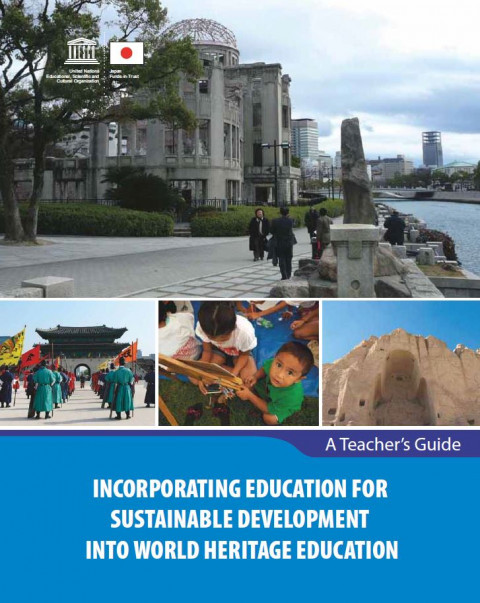 Incorporating education for sustainable development into world heritage education: a teacher's guide Year of publication: 2010 Corporate author: UNESCO Bangkok This publication, A Teacher’s Guide: Incorporating Education for Sustainable Development into World Heritage Education, represents the collective efforts of workshop participants to produce a practical tool for teachers to modify available curricula and incorporate ESD concepts and principles into WHE. It has taken a long time for the guide to be available in print. Nonetheless, the content of the guide remains practical and relevant in incorporating Education for Sustainable Development into World Heritage Education. Intégrer l'éducation au développement durable dans l'éducation au patrimoine mondial: un guide pour l'enseignant Year of publication: 2010 Corporate author: UNESCO Bangkok Cette publication, intitulée Un guide pour les enseignants: intégrer l'éducation au développement durable dans l'éducation au patrimoine mondial, représente les efforts collectifs des participants à l'atelier pour produire un outil pratique pour les enseignants afin de modifier les programmes disponibles. Le guide a mis du temps à être disponible en version imprimée. Néanmoins, le contenu du guide reste pratique et pertinent pour intégrer l'éducation au développement durable dans l'éducation au patrimoine mondial.
  The Critical global educator: global citizenship education as sustainable development Year of publication: 2016 Author: Maureen Eills An acknowledged challenge for humanitarian democratic education is its perceived lack of philosophical and theoretical foundation, often resulting in peripheral academic status and reduced prestige. A rich philosophical and theoretical tradition does however exist. This book synthesises crucial concepts from Critical Realism, Critical Social Theory, Critical Discourse Studies, neuro-, psycho-, socio- and cognitive-linguistic research, to provide critical global educators with a Cultural Historical Activity Theory (CHAT) framework for self- and negotiated evaluation.
  IIEP-UNESCO 12th Medium-Term Strategy: 2026–2029 Year of publication: 2026 Corporate author: UNESCO International Institute for Educational Planning (IIEP) The 2026-2029 Medium-Term Strategy of the UNESCO International Institute for Educational Planning provides a vision for transforming educational planning into tangible results for education systems across the globe. Building on more than 60 years of experience, the Strategy puts the focus not only on policy and plan design, but on collective and agile implementation.
 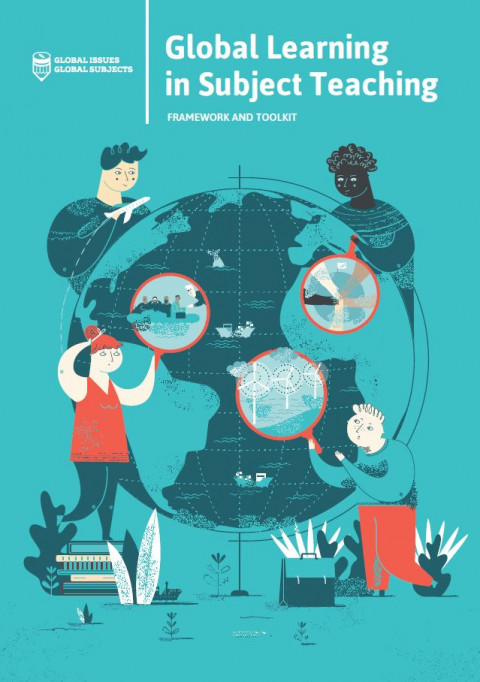 Global Learning in Subject Teaching: Framework and Toolkit Year of publication: 2020 Corporate author: Center for Citizenship Education (CCE) | Global Issues, Global Subjects (GIGS) The brochure 'Global Learning in Subject Teaching: Framework and Toolkit' has been developed as a proposal for teachers, educators and educational institutions on how to reach pupils with Global Learning. In its practical part, the brochure provides the reader with a toolkit of 20 ready-to-use lesson plans for subject lessons where the subject curriculum topics are linked with global issues such as migration, climate change and gender equality.
 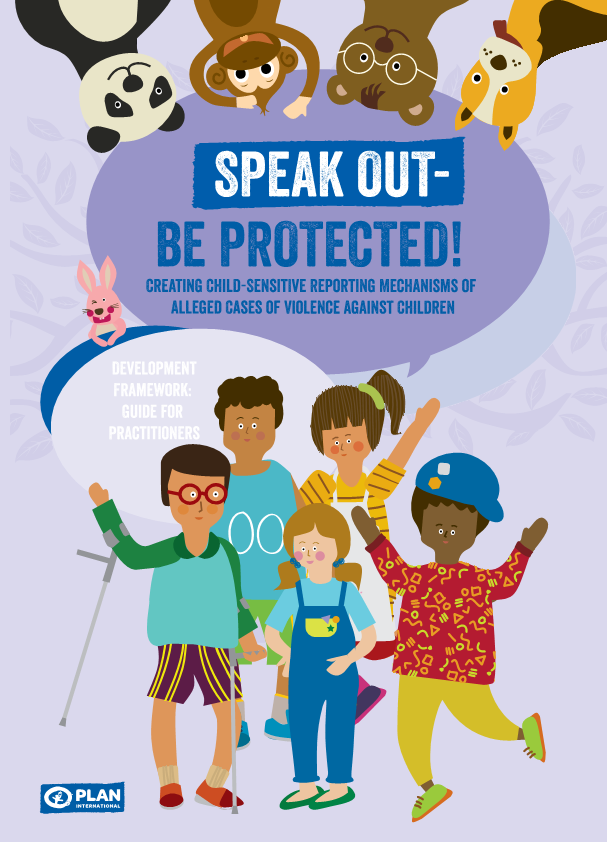 Speak Out - Be Protected! Development Framework: Guide for Practitioners; Creating Child-sensitive Reporting Mechanisms of Alleged Cases of Violence Against Children Year of publication: 2016 Author: Raša Sekulović | Stephanie Delaney Corporate author: Plan International Produced by Plan International, the Child-Sensitive Reporting Mechanisms toolkit “Speak Out – Be Protected!” identifies simple, user-friendly processes through which children and their peers (and families) can raise child protection concerns and report them to child protective agencies, services or trusted community groups and institutions.