
Resources
Explore a wide range of valuable resources on GCED to deepen your understanding and enhance your research, advocacy, teaching, and learning.
2,161 Results found
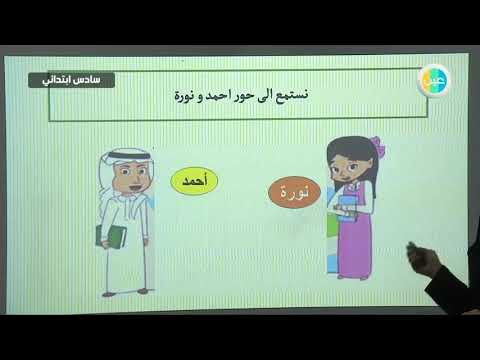 iEN Social Studies and Citizenship Lessons: Personality Enhancement Program - Sixth Primary Year of publication: 2020 Author: Fawzia Alghamdi Corporate author: iEN National Education Portal The teacher explains a sixth grade lesson on character development and enhancement. The lesson for students of the Kingdom of Saudi Arabia in a social studies course. With the Coronavirus pandemic, lessons explaining across platforms have emerged. دروس عين الدراسات الاجتماعية والمواطنة– برنامج تعزيز الشخصية - سادس ابتدائي Year of publication: 2020 Author: Fawzia Alghamdi Corporate author: iEN National Education Portal تقوم المعلمة بشرح درس للصف السادس الابتدائي في تنمية وتعزيز الشخصية. الدرس لطلاب المملكة العربية السعودية في مقرر الدراسات الاجتماعية. لقد ظهرت الدروس التي تشرح عبر المنصات مع جائحة كورونا.
  Educación para la ciudadanía y la convivencia: sintiendo y pensando; ciclo uno (primero y segundo) Year of publication: 2014 Corporate author: Secretaría de Educación del Distrito (SED) | Fe y Alegría These twelve modules make reference to a series of activities that focus on how children from all the educative grades understand and live citizenship, strengthening and facilitating the learning processes based on autonomy. This educative materials, which are aimed at being implemented inside the classrooms, attempt to serve as input resources for educators and other agents that work on or are interested in working with citizenship education and coexistence. The overall objective is to provide quality education.
 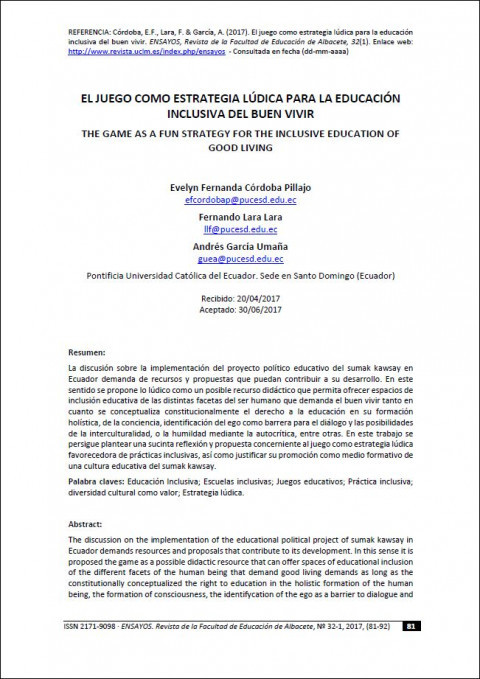 The Game as a Fun Strategy for the Inclusive Education of Good Living Year of publication: 2017 Author: Evelyn Fernanda Córdoba Pillajo | Fernando Lara Lara | Andrés García Umaña The discussion on the implementation of the educational political project of sumak kawsay in Ecuador demands resources and proposals that contribute to its development. In this sense it is proposed the game as a possible didactic resource that can offer spaces of educational inclusion of the different facets of the human being that demand good living demands as long as the constitutionally conceptualized the right to education in the holistic formation of the human being, the formation of consciousness, the identifycation of the ego as a barrier to dialogue and the possibilities of interculturality, humility through self-criticism among others. This paper aims to present a reflection and an idea about the game as a playful strategy in the learning of inclusive practices as well as justify the promotion as Formative medium of an educative culture of sumak kawsay. El Juego como Estrategia Lúdica para la Educación Inclusiva del Buen Vivir Year of publication: 2017 Author: Evelyn Fernanda Córdoba Pillajo | Fernando Lara Lara | Andrés García Umaña La discusión sobre la implementación del proyecto político educativo del sumak kawsay en Ecuador demanda de recursos y propuestas que puedan contribuir a su desarrollo. En este sentido se propone lo lúdico como un posible recurso didáctico que permita ofrecer espacios de inclusión educativa de las distintas facetas del ser humano que demanda el buen vivir tanto en cuanto se conceptualiza constitucionalmente el derecho a la educación en su formación holística, de la conciencia, identificación del ego como barrera para el diálogo y las posibilidades de la interculturalidad, o la humildad mediante la autocrítica, entre otras. En este trabajo se persigue plantear una sucinta reflexión y propuesta concerniente al juego como estrategia lúdica favorecedora de prácticas inclusivas, así como justificar su promoción como medio formativo de una cultura educativa del sumak kawsay.
 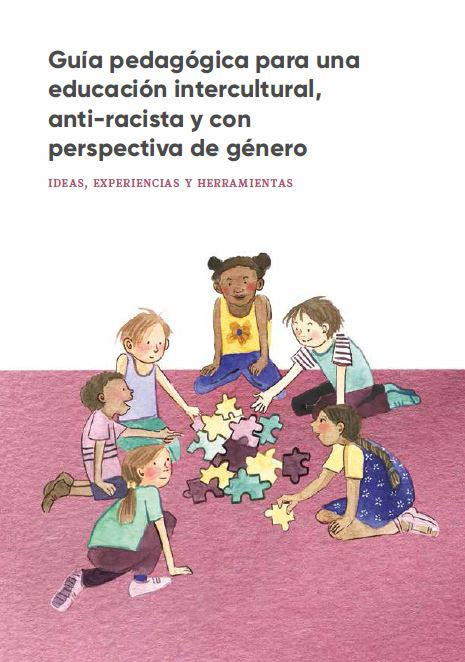 Pedagogical Guide for an Intercultural, Anti-racist and Gender Perspective Education: Ideas, Experiences and Tools Year of publication: 2017 Author: Carolina Stefoni | Andrea Riedemann | Fernanda Stang | Andrea Guerrero | Antonia Garcés | Marta Camarena Corporate author: Programa Interdisciplinario de Estudios Migratorios (PRIEM) | Universidad Alberto Hurtado | Fundación para la Superación de la Pobreza (FUSUPO) The main purpose of this Guide is, then, to share some ideas, tools and experiences that can help build and walk the path towards an intercultural, anti-racist and gender perspective education in various educational spaces. It is directed primarily - though not exclusively, of course - to all those people who are part of formal and informal teaching-learning processes. It is important to emphasize that the Guide does not pretend to be a recipe for a mechanical application, but a tool box that each educational community can use considering its specific context, its particular needs and its potentialities. Guía pedagógica para una educación intercultural, anti-racista y con perspectiva de género: ideas, experiencias y herramientas Year of publication: 2017 Author: Carolina Stefoni | Andrea Riedemann | Fernanda Stang | Andrea Guerrero | Antonia Garcés | Marta Camarena Corporate author: Programa Interdisciplinario de Estudios Migratorios (PRIEM) | Universidad Alberto Hurtado | Fundación para la Superación de la Pobreza (FUSUPO) El propósito principal de esta Guía es, entonces, compartir algunas ideas, herramientas y experiencias que puedan ayudar a construir y andar el camino hacia una educación intercultural, anti-racista y con perspectiva de género en diversos espacios educativos. Está dirigida principalmente -aunque no de manera exclusiva, por supuesto- a todas aquellas personas que sean parte de procesos de enseñanza-aprendizaje formales e informales. Es importante enfatizar que la Guía no pretende ser un recetario para una aplicación mecánica, sino una caja de herramientas que cada comunidad educativa puede usar considerando su contexto específico, sus necesidades particulares y sus potencialidades.
 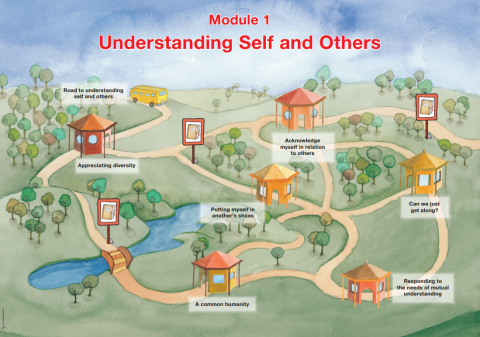 Learning to live together: poster Corporate author: United Nations Children's Fund (UNICEF) | Interfaith Council on Ethics Education for Children | Arigatou Foundation The poster is for the Learning to Live Together programme. The Learning to Live Together programme is built on two complementary learning modules, ‘Understanding Self and Others’ and ‘Transforming the World Together,’ based on four core ethical values: respect, empathy, responsibility and reconciliation. Educación para la ciudadanía y convivencia: aprendiendo a vivir juntas y juntos, base para construir cultura de paz; ciclo uno (primero y segundo) Year of publication: 2015 Corporate author: Secretaría de Educación del Distrito (SED) | Fe y Alegría These twelve modules make reference to a series of activities that focus on how children from all the educative grades understand and live citizenship, strengthening and facilitating the learning processes based on autonomy. This educative materials, which are aimed at being implemented inside the classrooms, attempt to serve as input resources for educators and other agents that work on or are interested in working with citizenship education and coexistence. The overall objective is to provide quality education. Educación para la ciudadanía y convivencia: aprendiendo a vivir en dignidad y armonía. Compartiendo la vida; ciclo dos (tercero y cuarto) Year of publication: 2014 Corporate author: Secretaría de Educación del Distrito (SED) | Fe y Alegría These twelve modules make reference to a series of activities that focus on how children from all the educative grades understand and live citizenship, strengthening and facilitating the learning processes based on autonomy. This educative materials, which are aimed at being implemented inside the classrooms, attempt to serve as input resources for educators and other agents that work on or are interested in working with citizenship education and coexistence. The overall objective is to provide quality education.