
Resources
Explore a wide range of valuable resources on GCED to deepen your understanding and enhance your research, advocacy, teaching, and learning.
518 Results found
 Botswana National Implementation Plan for Sustainable Development Goal (SDG) 4 - Education 2030 Year of publication: 2018 Corporate author: Botswana National Commission for UNESCO The Sustainable Development Goal (SDG) 4 is an ambitious and specific goal to drive the education development agenda from 2016 – 2030 and a means through which all the seventeen (17) SDGs will be achieved. The SDGs aim among others, to end poverty, hunger and inequality, take action on climate change and the environment, improve access to health and education, and build strong institutions and partnerships.To ensure adequate attention to the different thematic areas of education, SDG 4 has been broken down into seven targets and three means of implementation. The targets and the means of implementation are crafted in such a way that all the critical areas of education, both emerging and the unfinished Education for All (EFA) business could be addressed in some way through the global education agenda.This publication presents Botswana’s National Strategy for the Implementation of SDG 4 – Education 2030, which was developed with guidance from the Incheon Declaration on Education 2030. The Incheon Declaration on Education 2030 is a guide to Member States on the implementation of SDG 4. It provides an outline on how to translate the agenda into national priorities and further proposes some strategies and thematic indicators for measuring success on the different SDG 4 targets.
  Education à la citoyenneté en RDCONGO : Quelles strategies et pour quelle éducation à la démocratie en R.D.C? Year of publication: 2008 Author: Abbé Louis Mpala Cette brochure se veut une introduction générale à toutes les brochures qui seront consacrées à chaque type d'éducation proposé. Ce projet ne peut être réalisé que si Dieu le permet et si je trouve un mécène.Cet écrit peut servir d'un instrument de travail à toute personne soucieuse de voir notre pays avoir des fils dont le cour est circoncis. Comme tout travail humain, ma brochure a des limites. A vous de la parfaire. Destiné à être exposé aux journées scientifiques organisées par l'Institut Supérieur Pédagogique de Lubumbashi (I.S.P.), ce texte est mis à la disposition de tout éducateur. Cet écrit a mes empreintes d'agrégé de l'Enseignement Secondaire Degré Supérieur (E.S.D.S.)pour le cours de philosophie. Voilà qui justifie mon souci de voir les objectifs éducationnels opérationnels.A vous lectrice et lecteur engagés dans un groupe d'encadrement familial, politique ,scolaire, socio-culturel etc., je confie ma brochure.
  UNESCO IICBA: strategic plan Year of publication: 2019 Corporate author: UNESCO International Institute for Capacity-Building in Africa (IICBA) UNESCO IICBA’s Strategic Plan for 2018-2021 is guided by its mandate and mission to strengthen the capacity of Member States in Africa in teacher policy and development. This work is vital to realizing its vision of an integrated, prosperous and peaceful Africa where everyone has access to qualified, motivated and professionally supported teachers. This plan is supported by a vision for Strategic Partnerships, because UNESCO IICBA recognizes their value in promoting regional and national cooperation in teacher-related issues, and in fostering dialogue on teachers and education. Strategic partnerships have three objectives:Successfully implement UNESCO IICBA’s Strategic Plan 2018-2021 Ensure the efficiency and effectiveness of resource mobilizationStrengthen advocacy, cooperation and coordination mechanisms The Strategic Plan is also supported by a Communication Strategy that covers all of UNESCO IICBA’s programme areas and will support collaboration, coordination and institutional operations. The strategy aims to contribute to effective communication that will:Help to fulfill UNESCO IICBA’s strategic goals and objectivesAmplify the visibility of UNESCO IICBA to its stakeholdersInform partners and donors on implementation progress, and demonstrate UNESCO IICBA’s accountabilityEnsure people understand what UNESCO IICBA represents and doesImprove teachers’ professional image and raise awareness to address teachers’ issues in AfricaKeep UNESCO IICBA team members proud, motivated, innovative and accountable in their tasks
  "It is Very Painful to Talk About”: The Impact of Attacks on Education on Women and Girls Year of publication: 2019 Author: Holly Cartner Corporate author: Global Coalition to Protect Education from Attack (GCPEA) This report presents the key findings of GCPEA’s multi-country study on the impact of attacks on education on women and girls.10 GCPEA’s research focuses on the types and causes of abuse most typically committed against female students in the context of attacks on education, and the long-term consequences that female students may face as a result of such attacks.11 GCPEA initiated this study to contribute to a better understanding of the implications for girls and women when education is attacked and to inform our advocacy for better strategies to protect girls and women, prevent attacks and abuse, and diminish harmful consequences against them.This report relies on previous GCPEA research, including Education Under Attack 2018 and 2014, and updates, and the organization’s field research in Nigeria and the Democratic Republic of Congo, which focused specifically on the experiences of women and girls when education is attacked. In addition, the report draws from interviews with numerous country and regional experts and an extensive review of secondary data sources, including reports by United Nations (UN) agencies, development and humanitarian non-governmental organizations (NGOs), human rights organizations, government bodies, and think tanks, including numerous contributions from GCPEA’s member organizations.
  Charlevoix Declaration on Quality Education for Girls, Adolescent Girls and Women in Developing Countries Year of publication: 2018 Corporate author: G7 The Charlevoix Declaration is a commitment from the Leaders of the G7 to work towards inclusive, quality, equitable education for girls, adolescent girls, and women in developing countries and crisis contexts.The Charlevoix Declaration on Quality Education for Girls, Adolescent Girls and Women in Developing Countries represents a joint effort from the Leaders of G7 countries to step up for girls and women in conflict and crisis contexts. Focusing both on dismantling the barriers to education and improving the quality of education, the G7 have committed to promote and improve learning outcomes for both refugees and host communities, while also working to reduce the time children and youth, especially girls, are out of school as a result of conflict and displacement.To support the implementation of the Charlevoix Declaration, Canada also led the mobilization of CDN $3.8+ billion. With contributions from the World Bank, the European Union, Japan, Germany, and the United Kingdom, this initiative represents the single largest investment in education for girls in conflict and crisis settings.
 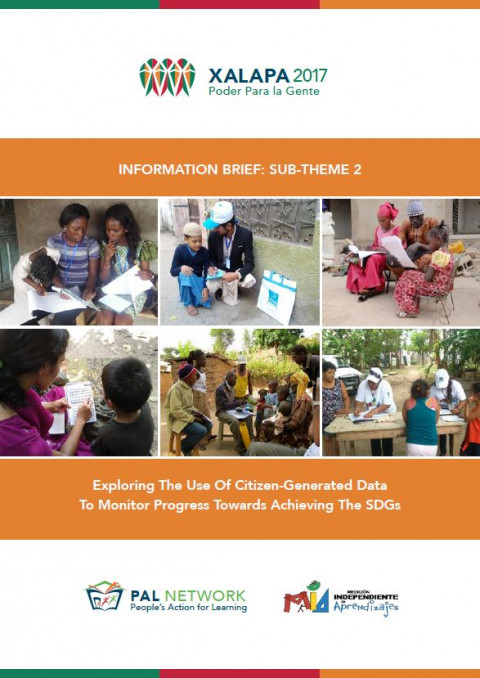 Exploring the Use of Citizen-generated Data to Monitor Progress Towards Achieving the SDGs Year of publication: 2017 Corporate author: People's Action for Learning Network The 5th Annual PAL Network meeting was held in Xalapa, Mexico from 13th to 16th March 2017. The meeting was jointly hosted by Medición Independiente de Aprendizajes (MIA) and the PAL Network. The meeting provided structured opportunities for deep exploration of this year’ theme: ‘Power to the People’. The theme was critically explored by over 80 participants from more than 19 Global South countries in four different sub‑theme groups. Each sub-theme focused on a different aspect of citizen participation in conducting household-based learning assessments with a focus on value, potential and next steps.
 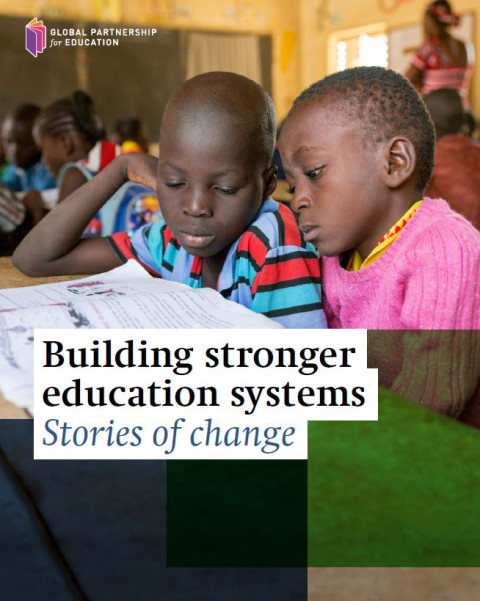 Building Stronger Education Systems: Stories of Change Year of publication: 2019 Corporate author: The Global Partnership for Education (GPE) A compilation of results stories which show the progress that GPE's developing country partners are making in getting more children, especially girls, in school and learning. The brochure includes stories from Afghanistan, Benin, Burkina Faso, Djibouti, Eritrea, Ethiopia, Guyana, Kenya, Pakistan, Papua New Guinea and Sudan. Construire des systèmes éducatifs plus performants : parcours de réussite Year of publication: 2019 Corporate author: The Global Partnership for Education (GPE) Cette brochure présente des parcours de réussite attestant des progrès accomplis par les pays en développement partenaires du PME pour que davantage d’enfants, et en particulier de filles, aillent à l’école et bénéficient d’une éducation de qualité.Elle met en évidence les cas des pays tels que l'Afghanistan, le Bénin, le Burkina Faso, Djibouti, l’Érythrée, l’Éthiopie, le Guyana, le Kenya, le Pakistan, la Papouasie-Nouvelle-Guinée et le Soudan.
 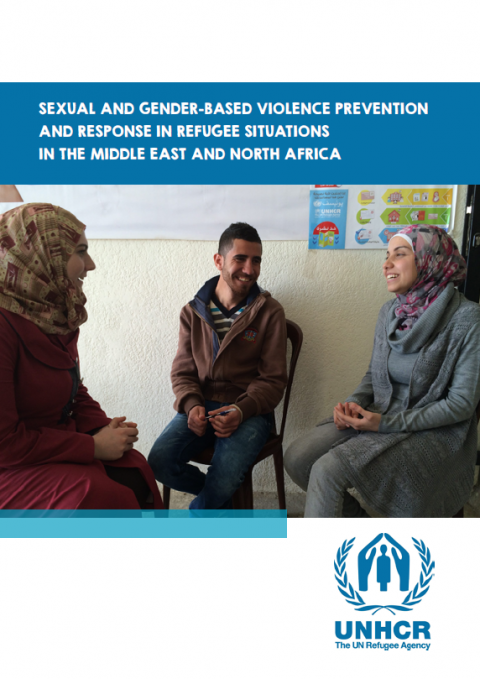 الوقاية من العنف الجنسي والعنف الجندري والاستجابة لهما في حالات اللاجئين في منطقة الشرق الأوسط وشمال أفريقيا Year of publication: 2015 Corporate author: UN. Office of the United Nations High Commissioner for Refugees (UNHCR) تواجه منطقة الشرق الأوسط وشمال أفريقيا الأزمات الانسانية والتهجير القسري على نطاق غير مسبوق. هذه الصراعات إلى جانب التهجيرالناتج عنها تلقي باعبائها بشكل غير متناسق على على النساء والأطفال، والذين يضمون 78% من اللاجئين السوررين. وقد اصبح العنف الجنسي والجندري واسع الانتشار بشكل متزايد في هذه الدول المتاثرة بالنزاع، وغالبا ما يكون أحد أسباب الفرار منها.أن العنف الجنسي والعنف الجندري هما مشكلة خطيرة تنتهك حقوق الانسان، وتتفاقم أكثر فأكثر نتيجة الصراعات والنزوح الذي ينتج عن ذلك. ودعما للعمليات المتعددة القطاعات والمنسقة للوقاية من هذا العنف الجنسي والجندري والاستجابة لهما، يحدد هذا التقرير الإستراتيجيات بالتوافق مع المعايير الدولية، التي تستخدمها المفوضية بالتعاون مع السلطات المحلية، والمنظمات الغير حكومية، وغيرها من الشركاء في جميع أنحاء المنطقة، لتحقيق نتائج ملموسة في الوقاية من العنف الجنسي والجندري وحماية اللاجئين. Sexual and Gender-based Violence Prevention and Response In Refugee Situations in the Middle East and North Africa Year of publication: 2015 Corporate author: UN. Office of the United Nations High Commissioner for Refugees (UNHCR) The Middle East and North Africa (MENA) region is facing humanitarian crises and forced displacement on an unprecedented scale. These conflicts and the resulting displacement disproportionately burden women and children, who now comprise 78 per cent of Syrian refugees. Sexual and gender-based violence (SGBV) is becoming increasingly widespread in these conflict-affected countries, and is often one of the causes of flight. In support for multi-sectorial and coordinated SGBV prevention and response, this report outlines strategies, in line with international standards, that UNHCR uses in coordination with national authorities, non-governmental organizations (NGOs), and other partners across the region, to bring tangible results in preventing and responding to SGBV in refugee situations, as well as in the inter-agency response in situations of internal displacement.