
Resources
Explore a wide range of valuable resources on GCED to deepen your understanding and enhance your research, advocacy, teaching, and learning.
874 Results found
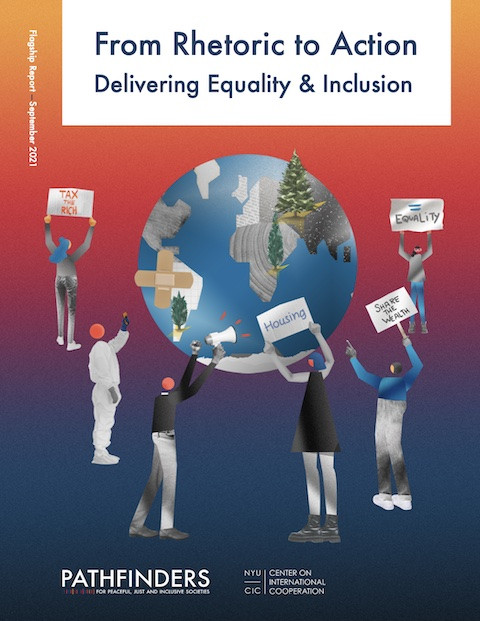 From Rhetoric to Action: Delivering Equality & Inclusion Year of publication: 2021 Author: Faiza Shaheen | Alexander Bossakov | Avner Cohen | Amanda Lenhardt | Nendirmwa Noel | Paula Sevilla Núñez | Paul von Chamier Corporate author: Pathfinders for Peaceful, Just and Inclusive Societies, NYU. Center on International Cooperation This flagship report of the Pathfinders Grand Challenge on Inequality and Exclusion is about the solutions that will deliver equality and inclusion.The report constructs a bridge between the rhetoric of “build back better” and action: a bridge between promise and progress. It underlines the need for renewed social contracts between citizens, civil society, the private sector, and governments, as well as between high and low- and middle-income countries. These social contracts must be built to serve future generations, to guard against climate breakdown and pandemics while delivering respect, opportunity, and justice for all.This report should serve as a practical handbook for policymakers and influencers; as a source of possibility for the public; and, as a call to all political leaders to act.
 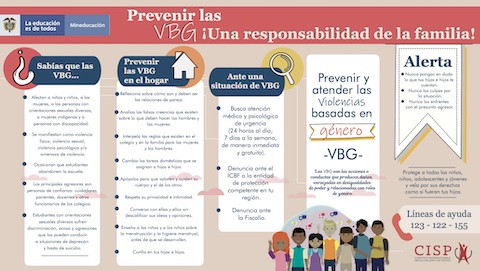 Preventing GBV: A Family Responsibility! Corporate author: Ministry of National Education of Colombia This infographic explains about what happens with gender-based violence, define it and explain what to do when it occurs. This infographic is intended to make the family aware of their role within this phenomenon and what the role they play in it.
 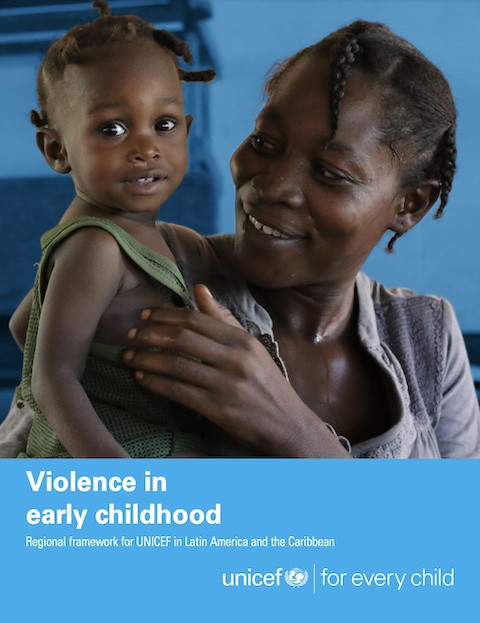 Violence in Early Childhood Year of publication: 2017 Author: Cecilie Modovar | Maria Elena Ubeda Corporate author: United Nations Children's Fund (UNICEF) It presents a comprehensive, multi-sectorial framework that aims to provide guidance to UNICEF country offices on how to improve programme interventions and synergies between programme areas in order to enhance young children’s development potential by reducing their exposure to violence. While early childhood is understood as the period from conception until age 8, the framework emphasizes the critical period from age 0-3. La violencia en la primera infancia Year of publication: 2017 Author: Cecilie Modovar | Maria Elena Ubeda Corporate author: United Nations Children's Fund (UNICEF) Se presenta un marco multisectorial integral, cuyo objetivo es orientar a las oficinas nacionales de UNICEF para mejorar las intervenciones programáticas y las sinergias entre las esferas de programa, a fin de potenciar el desarrollo de los niños pequeños reduciendo su exposición a la violencia. Aunque la primera infancia abarca el período que va desde la concepción hasta los 8 años de edad, este marco se centra en el período comprendido entre los 0 y los 3 años de edad debido a su importancia crítica.
  The Urgency of Talking About Sexuality in Early Childhood Year of publication: 2021 Corporate author: Red Papaz This virtual meeting seeks to build a scenario for public discussion to guide and contribute to the strengthening of protective environments for children and adolescents. The psychologists María Clara González and Claudia Sánchez Salamanca talk about the importance of sex education in early childhood. La urgencia de hablar de sobre sexualidad en primera infacia Year of publication: 2021 Corporate author: Red Papaz En este encuentro virtual se busca construir un escenario de discusión pública para orientar y contribuir al fortalecimiento de entornos protectores para la niñez y la adolescencia. Las psicólogas María Clara González y Claudia Sánchez Salamanca hablan sobre la importancia de la educación en sexualidad en la primera infancia.
 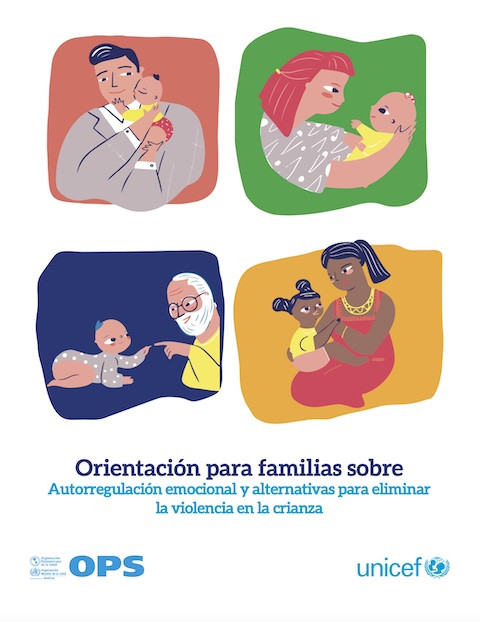 Guidance for Families on Emotional Self-Regulation and Alternatives to Eliminate Violence in Parenting Year of publication: 2020 Author: Maite Onochie Corporate author: United Nations Children's Fund (UNICEF) | Pan American Health Organization (PAHO) This material seeks to guide families in the role of caregivers. It proposes important recommendations in the first three years of life. It gives alternatives on how to calm young children, how to handle self-care by caregivers, how to handle crying, and promote emotional regulation and containment. Orientación para familias sobre: Autorregulación emocional y alternativas para eliminar la violencia en la crianza Year of publication: 2020 Author: Maite Onochie Corporate author: United Nations Children's Fund (UNICEF) | Pan American Health Organization (PAHO) Este material busca guiar a las familias en el papel de cuidadores. Propone recomendaciones importantes en los tres primeros años de vida. Da alternativas sobre como calmar a los niños pequeños, cómo manejar el autociodado por parte de los cuidadores, como manejar el llanto y promover la regulación y contención emocional.
  Manual pedagógico Educapaz Year of publication: 2015 Corporate author: Fundación CEPAS Este documento es el resultado de la recopilación de experiencias pedagógicas con los niños de distintas organizaciones de latinoamerica. Es creado para niveles de salacuna con contenido para niños menores de 2 años. Invita a pensar y reflexionar sobre la importancia de promover un mundo de paz a partir de los primeros meses de vida. Se contemplan 41 actividades, 21 de sala cuna y 20 de niveles medios.
  Human Dignity: Contemporary Pattern and Traditional Patterns (Revista Brasileira de Direito; vol. 11, no. 2) Year of publication: 2015 Author: Antonio Pelé Corporate author: Faculdade Meridional-IMED The concept of human dignity refers to the intrinsic and absolute value of human beings and repre- sents the grounding human rights. Those features are usually studied as if they were the results, in the history of Western thought, of the progressive recognition of the human moral value. Our work aims to show precisely the contrary, showing some clear differencies between the current paradigm of human dignity and the previous and traditional patterns of dignity. Thus, the basic features of each (current and previous) pattern are analyzed in order to show that the contemporary paradigm of human dignity as little in common with the previous paradigms of dignity.