
Resources
Explore a wide range of valuable resources on GCED to deepen your understanding and enhance your research, advocacy, teaching, and learning.
2,161 Results found
 Peace education: framework for teacher education, 2005 Year of publication: 2005 Corporate author: UNESCO New Delhi UNESCO has taken a commendable initiative in promoting peace education. It has generated some important literature and educational material on peace education. ‘Learning the Way of Peace: A Teacher’s Guide to Peace Education’ is a pioneering work. It is because of UNESCO’s initiative that this material on peace education for teacher education has been developed. It would be useful to read this document in conjunction with “Learning the Way of Peace.” Éducation à la Paix: cadre pour la formation des enseignants 2005 Year of publication: 2005 Corporate author: UNESCO New Delhi L'UNESCO a pris une initiative louable dans la promotion de l'éducation de la paix. Il a généré une certaine littérature importante et du matériel éducatif sur l'éducation de la paix. «Apprendre la Voie de la Paix: Guide de l'Enseignant à l'Éducation de la Paix» est un travail de pionnier. Il est à cause de l'initiative de l'UNESCO que ce matériel sur l'éducation de la paix pour la formation des enseignants a été mis au point. Il serait utile de lire ce document en collaboration avec «Apprendre le Chemin de la Paix. »
  Education à la citoyenneté et aux droits de l'homme: manuel pour les jeunes en Mauritanie Year of publication: 2015 Author: Abdel-Wedoud (dit Deddoud Ould Abdallah) | Mohamed El Moctar Ould Sidina | Bamariam Koita | Sidi Mohamed Ould Mohamed Abdellahi Corporate author: Mauritania. Ministère de la culture et de l'artisanat | Mauritanian National Commission for Education, Science and Culture | UNESCO Rabat Ce Manuel, composé de 20 fiches thématiques, offre de manière inédite des connaissances sur les conventions et standards internationaux en matière de démocratie et de droits de l’homme, ainsi qu’une contextualisation aux cadres normatifs nationaux de la Mauritanie. Des questions clés, des exercices interactifs, et des références pour aller plus loin sont autant d’outils pédagogiques pour familiariser les jeunes avec des notions fondamentales, dans le cadre de l’éducation aussi formelle que non formelle. Car Si l’éducation à la citoyenneté est rattachée à un territoire national dans la mesure où est citoyenne toute personne disposant de droits et de devoirs attachés à une nationalité, à un État, à une histoire sociale et culturelle, l’éducation aux droits de l’homme se réfère quant à elle à un cadre normatif universel et déterritorialisé : sa mission est de cultiver le sentiment d’appartenance de chacun(e) à l’humanité, caractérisée par une dignité propre. Dans une démarche éducative, ce Manuel conjugue les deux dimensions, les interpé- nètre et les met en perspective. L’objectif est de permettre aux jeunes, avec l’aide de formateurs et d’animateurs, d’approfondir et de mettre en perspective leurs connaissances relatives aux valeurs de citoyenneté et aux principes de droits de l’homme, à travers un va-et vient constant entre l’idéal universel et le contexte politique, social, culturel et environnemental dans lequel ils se trouvent.Fruit de la collaboration entre l’UNESCO et le Ministère de la Culture et de l’Artisanat de Mauritanie, et bénéficiant du soutien de l’Agence espagnole pour la coopération internationale pour le développement (AECID), ce Manuel propose des pistes pour explorer et interroger les conditions d’exercice de la citoyenneté, ainsi que des problématiques sociétales émergeantes. Mieux comprendre, pour mieux agir, c’est aussi cela être un agent de changement, de paix et de développement.
  Education à la citoyenneté et aux droits de l'homme: manuel pour les jeunes au Maroc Year of publication: 2015 Corporate author: UNESCO Rabat | Conseil national des droits de l'homme (Morocco) Prepared by UNESCO, in collaboration with the Moroccan National Human Rights Council (CNDH) and the support of the Spanish Agency for International Development Cooperation (AECID), this manual aims to sensitize young Moroccan to the fundamental concepts of citizenship and human rights. This educational tool, which consists of 20 didactic cards that describe and explain Morocco national legislation on human rights, documents the human rights international conventions and instruments and puts them in perspective in the Moroccan legislative context. The manual also includes practical exercises adapted to a young audience. تعليم المواطنة وحقوق الإنسان. دليل لشباب المغرب Year of publication: 2015 Corporate author: UNESCO Rabat | Conseil national des droits de l'homme (Morocco) Prepared by UNESCO, in collaboration with the Moroccan National Human Rights Council (CNDH) and the support of the Spanish Agency for International Development Cooperation (AECID), this manual aims to sensitize young Moroccan to the fundamental concepts of citizenship and human rights. This educational tool, which consists of 20 didactic cards that describe and explain Morocco national legislation on human rights, documents the human rights international conventions and instruments and puts them in perspective in the Moroccan legislative context. The manual also includes practical exercises adapted to a young audience.
  Manuel d'apprentissage de la démocratie pour les jeunes en Tunisie Year of publication: 2011 Corporate author: UNESCO Rabat The main aim of these manual and guide is to raise awareness among Tunisian youth about the values of democracy, human rights and responsible citizenship, and empower youth to make their voice heard during this critical period in the Tunisian democratic transition.
 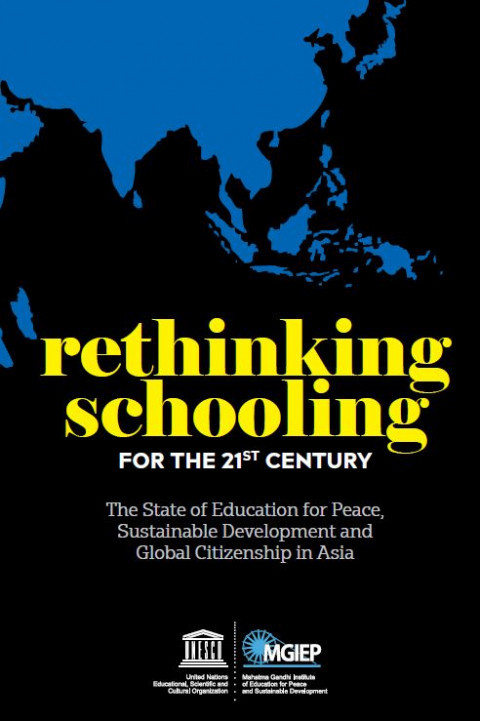 Rethinking Schooling for the 21st Century: The State of Education for Peace, Sustainable Development and Global Citizenship in Asia Year of publication: 2017 Corporate author: Mahatma Gandhi Institute of Education for Peace and Sustainable Development (MGIEP) Calls to gear up schools for the 21st century are ubiquitous today. Dominant international educational discourse hails the potential of 'the youth dividend' and digital technology for enhancing growth. Some Asian education systems are held up as models for an innovation-led utopian future. But across much of Asia, neither the reality of schooling nor the patterns of development with which it is associated give cause for blithe optimism.This study is informed by UNESCO’s commitment to realising the Sustainable Development Goals (SDGs) through educational reform worldwide. Since its inception, UNESCO has championed a humanistic vision of education — a vision today encapsulated in SDG 4.7. These ideals need to be strongly restated and defended in an era when educational debate worldwide has come to be framed by a narrowly economistic and instrumentalist agenda.Deriving urgent significance from this broader context, the present report analyses how far the ideals of SDG 4.7 – of 'education for peace, sustainable development and global citizenship' - are embodied in policies and curricula across 22 Asian societies. At one level, it seeks to develop benchmarks against which future progress can be assessed. It also argues forcefully that conceptions of the fundamental purposes of schooling need to be reconfigured, if the ideals to which the global community has subscribed are actually to be realised.
 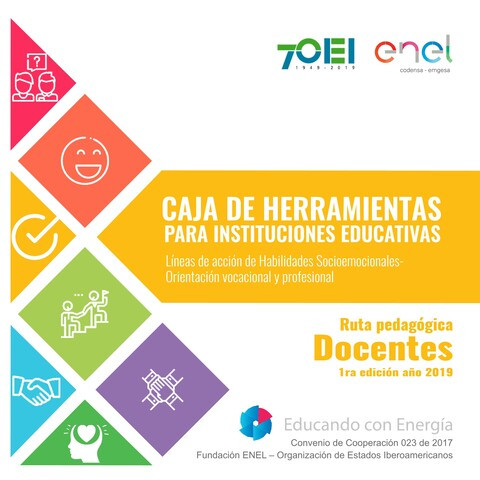 Toolbox for Educational Institutions: Lines of Action of Socio-Emotional Skills Vocational and Professional Orientation Year of publication: 2017 Corporate author: ENEL Foundation | Organization of Ibero-American States for Education, Science and Culture (OEI) This toolbox is aimed at educational agents who are motivated to articulate in their pedagogical work actions aimed at facilitating the decision-making of young people during their life path, by strengthening socio-emotional skills and vocational and professional guidance, in order to enable transformations, whether personal, family or social, and with a view to sustainable development. Caja de herramientas para instituciones educativas: Líneas de acción de Habilidades socioemocionales orientación vocacional y profesional Year of publication: 2017 Corporate author: ENEL Foundation | Organización de Estados Iberoamericanos para la Educación, la Ciencia y la Cultura (OEI) Esta caja de herramientas está dirigida a agentes educativos que se encuentren motivados en articular a su quehacer pedagógico acciones encaminadas a facilitar la toma de decisiones de los jóvenes durante su trayectoria de vida, mediante el fortalecimiento de las habilidades socioemocionales y la orientación vocacional y profesional, con el fin de posibilitar transformaciones ya sea de tipo personal, familiar o social y en miras al desarrollo sostenible.
 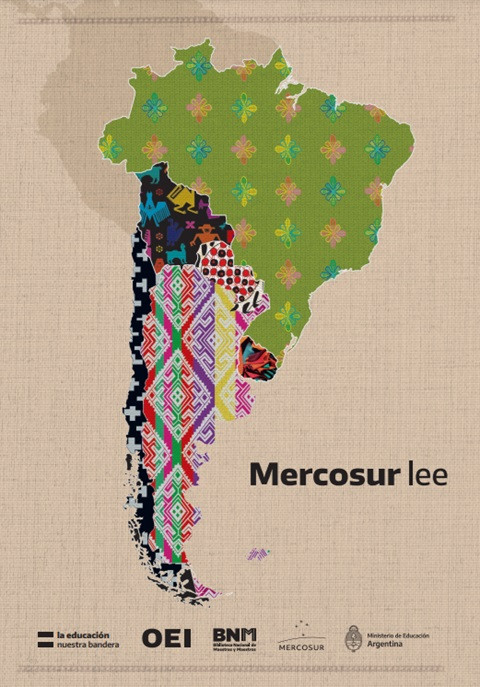 Mercosur Reads Year of publication: 2023 Corporate author: Argentina. Ministry of Education | National Library of Teachers | Organization of Ibero-American States for Education, Science and Culture (OEI) This relaunch brings together stories by prominent authors from Argentina, Brazil, Bolivia, Chile, Paraguay and Uruguay. Its purpose is to contribute to the process of regional integration, encourage knowledge of the official languages (Spanish, Portuguese and Guaraní) and the development of quality education for all.