
Resources
Explore a wide range of valuable resources on GCED to deepen your understanding and enhance your research, advocacy, teaching, and learning.
3,229 Results found
 Национальный добровольный обзор достижений Целей устойчивого развития в Кыргызской Республике 2020 Year of publication: 2020 Corporate author: Kyrgyzstan. Ministry of Economy | United Nations (UN) Данный добровольный обзор содержит в себе информацию по выполнению Кыргызской Республикой целей устойчивого развития 2030, задачи и направления дальнейшей деятельности. Отдельное внимание уделено ЦУР 4 "Образование", где приоритетом является повышение качества и охвата образованием на всех уровнях, а также развитие системы непрерывного образования. Voluntary National Review on the Implementation of the Sustainable Development Goals in the Kyrgyz Republic 2020 Year of publication: 2020 Corporate author: Kyrgyzstan. Ministry of Economy | United Nations (UN) This voluntary review contains information on the implementation of the 2030 Sustainable Development Goals by the Kyrgyz Republic, objectives and directions for further activities. Special attention is paid to SDG 4 "Education", where the priority is to improve the quality and coverage of education at all levels, as well as the development of the lifelong education system.
  DEAR: Action Through Education Year of publication: 2020 Corporate author: Development Education and Awareness Raising (DEAR) Programme | European Commission This video explains how DEAR programme works and supports educators in their endeavours to spread greater understanding of the world around us.
  Global Education in Estonia: The European Global Education Peer Review Process; National Report on Global Education in Estonia Year of publication: 2019 Corporate author: Global Education Network Europe (GENE) | European Union (EU) This National Report contains the findings from the Peer Review of Global Education in Estonia that took place during 2019. It provides an overview of Global Education in the country and includes observations and recommendations intended to assist Estonian Global Education actors to further improve and increase provision in the country.
  The State of Global Education in Europe 2019 Year of publication: 2020 Corporate author: Global Education Network Europe (GENE) | European Union (EU) This fourth edition of the State of Global Education in Europe has been developed to provide an updated account of current key issues, policy priorities, funding trends and activities inGlobal Education in Europe, among the Ministries and Agencies that participate in GENE. This report explores key trends, policy themes and budgetary information for Global Education in European countries, drawing on information provided by GENE member Ministries and Agencies during 2018 and 2019.
 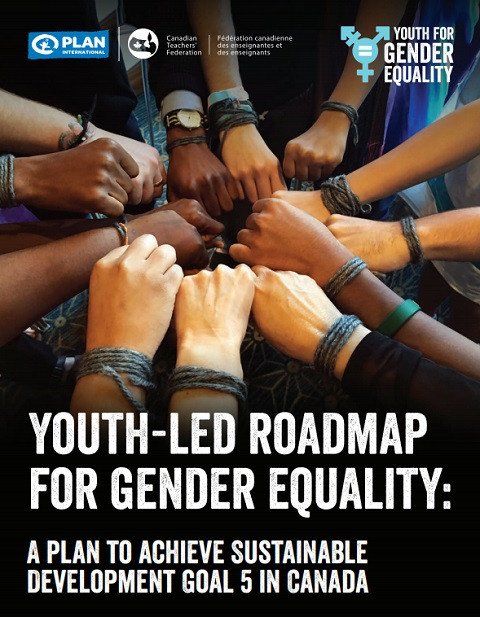 Youth-Led Roadmap for Gender Equality: A Plan to Achieve Sustainable Development Goal 5 in Canada Year of publication: 2019 Corporate author: Plan International Canada | Canadian Teachers’ Federation The uniquely youth-led Roadmap – launched at the Women Deliver 2019 Global Conference in Vancouver, on Tuesday, June 4, 2019. It reflects the powerful perspectives of over 300 youth from all over Canada with diverse experiences and backgrounds, such as youth who have experienced homelessness, Indigenous youth, young people of colour, newcomers to Canada and members of the 2SLGBTQIA+ community, among others, as well as individuals from remote and rural communities in Canada.The Roadmap includes 20 recommendations that individual Canadians can take today to achieve gender equality within their homes, communities and beyond. It also includes more than 40 additional recommendations targeted at public institutions, the private sector and governments to help Canada achieve Sustainable Development Goal 5: Gender equality, by the goals’ end date of 2030.
  학교 간 협의체 활동을 통한 세계시민교육 활성화방안 (Drake 모형의 적용 가능성 모색) Year of publication: 2016 Author: 김형숙 | 홍순희 | 최윤재 | 박소현 | 한영신 | 김현아 Corporate author: 서울특별시교육청 교육연구정보원 본 연구는 학교 간 협의체 활동을 통한 세계시민교육 활성화 방안 연구로 교과교육 및 창의적 체험활동을 통한 세계시민교육 적용방안을 모색하고 초·중·고등학교의 교육과정을 분석하여 세계시민교육에 적합한 교육내용을 제시한다. 서울특별시교육청교육연구정보원이(가) 창작한 [서교연2019-25]2019 위탁연구(학교 현장 적용을 위한 평화교육 정책 연구) 최종보고서 저작물은 "공공누리 제4유형(출처표시-상업적 이용금지-변경금지)" 조건에 따라 이용 할 수 있습니다.
 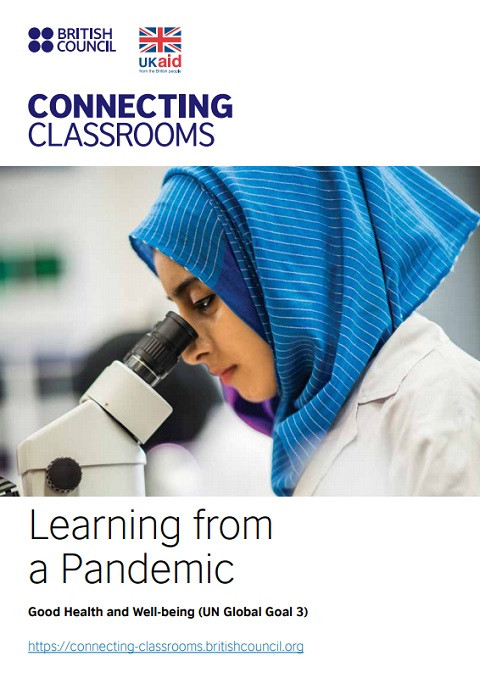 Connecting Classrooms: Learning From a Pandemic; Good Health and Well-Being (UN Global Goal 3) Year of publication: 2020 Corporate author: British Council | UK aid This resource will help you make a contribution to a recovery curriculum in schools, and beyond this, by providing interesting, engaging and relevant content that encourages pupils to recall, discuss and process some of their thoughts, feelings and memories. Over the course of six lessons, pupils will have opportunities to develop an understanding of:• Covid-19 in the context of some of the world’s most common communicable diseases and pandemics from the past• how communicable diseases like Covid-19 may start and spread, and how this is investigated• relevant prevention strategies to foster positive physical and mental health and well-being.In doing so, pupils will have the opportunity to develop core skills in critical thinking and problem solving, citizenship, student leadership, creativity and imagination and aspects of digital literacy. This learning unit is also designed to support the United Nations’ Global Goals for Sustainable Development (SDGs), in particular Goal 3: Good health and well-being.
 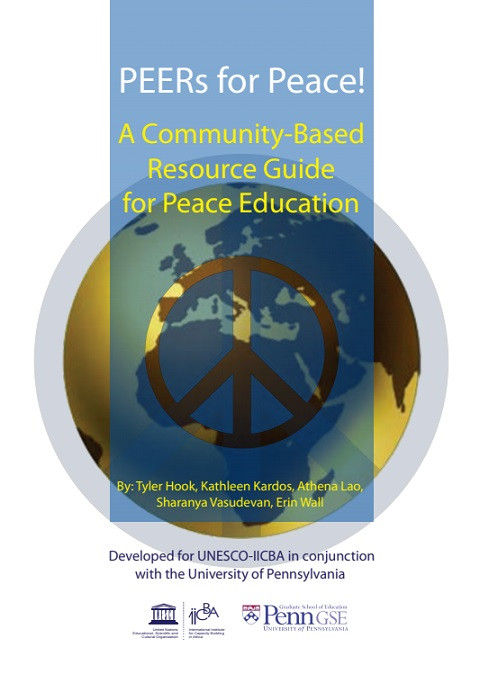 PEERs for Peace!: A Community-Based Resource Guide for Peace Education Year of publication: 2016 Author: Tyler Hook | Kathleen Kardos | Athena Lao | Sharanya Vasudevan | Erin Wall Corporate author: UNESCO International Institute for Capacity-Building in Africa (IICBA) | University of Pennsylvania This peace education resource guide is designed for teachers of upper primary grades in sub‐Saharan African countries to help them foster the development of peaceful skills, attitudes, and practices in their students and empower students to use peaceful tools to respond productively to conflict. Throughout the seven units in this peace education resource guide, students will explore the concepts of problem solving, empathy, effective communication, and respect (PEER) and how they relate to conflict in various areas of their lives, including families, schools, communities, governments, and more.
 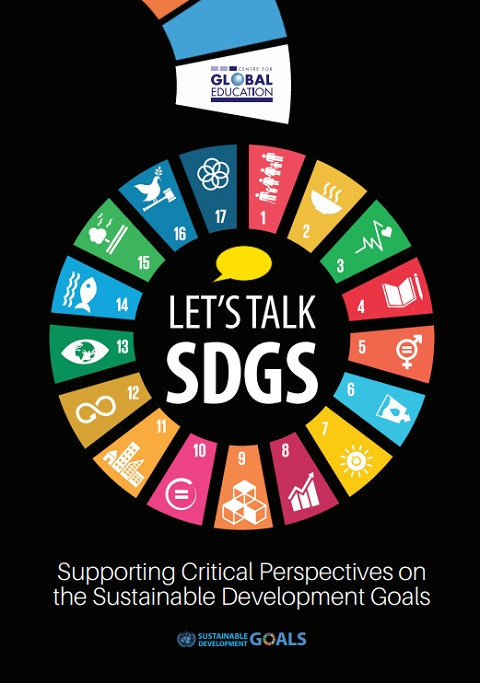 Let’s Talk SDGs: Supporting Critical Perspectives on the Sustainable Development Goals Year of publication: 2020 Author: Caroline Murphy Corporate author: Centre for Global Education (CGE) This resource is an invitation to development educators to critically interrogate the Sustainable Development Goals and discuss their capacity to deliver upon their intended outcomes. It invites users to ask if the SDGs can support effective global learning and represent a sound critique of the international system. The resource is a useful starting point for a critical discussion on the Goals' capacity for effective advocacy and education toward the eradication of poverty and inequality.