
Resources
Explore a wide range of valuable resources on GCED to deepen your understanding and enhance your research, advocacy, teaching, and learning.
3,229 Results found
 서울 세계시민교육 이행현황 및 향후 추진 과제 연구 Year of publication: 2021 Author: 김동택 | 서용덕 | 고선규 | 김지영 | 임재민 | 장경원 | 홍윤빈 Corporate author: 서울특별시교육청 교육연구정보원 이 연구는 서울시 교육청이 추진하고 있는 세계시민교육 이행 현황을 객관지표와 주관지표를 통해 분석하고 이를 바탕으로 향후 추진되어야 할 정책 과제들(협업체계, 교육 내실화, 내용·동력·변인, 데이터 축적 및 활동 플랫폼 구축 등)을 연구하는 데 목적이 있다. 이를 위하여 2015년부 터 시작되어 현재까지 진행된 세계시민교육의 성과를 확인하기 위해 객관 지표와 주관지표를 점검하였으며, 여기서 나타난 결과들을 바탕으로 앞으 로의 정책 방향을 설정하기 위해 정책 제안을 시도하였다. 서울특별시교육청교육연구정보원이(가) 창작한 서교연 2020-33 위탁연구(서울 세계시민교육 이행현황 및 향후 추진 과제 연구) 최종보고서 저작물은 "공공누리 제4유형(출처표시-상업적 이용금지-변경금지)" 조건에 따라 이용 할 수 있습니다.
  Address by Audrey Azoulay, Director-General of UNESCO, on the occasion of Peace and Prosperity Forum, Jeju Korea Year of publication: 2018 Corporate author: UNESCO. Director-General, 2017-2025 (Azoulay, A.) This address was delivered by Audrey Azoulay, Director-General of UNESCO, on the occasion of Peace and Prosperity Forum Jeju Korea; 28 June 2018.
  UN Youth 2030 전략과 한국 청년 Year of publication: 2020 Author: 임유진 | 김선기 | 정보영 | 정준영 | 진형익 Corporate author: 유네스코한국위원회 유네스코한국위원회가 2018년 유엔이 발표한 'Youth 2030 전략'을 바탕으로 청년 연구자들과 함께 한국사회의 청년 활동과 청년 정책, 청년 참여 등을 점검한 연구보고서이다.
 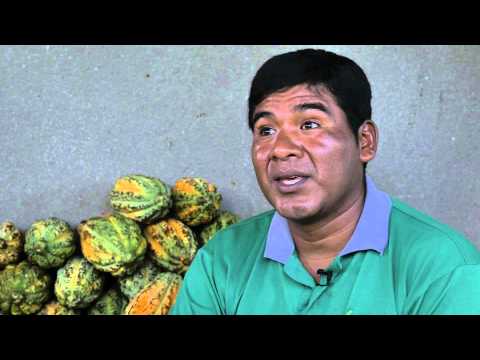 Changeons le commerce, pas le climat Year of publication: 2015 Corporate author: Artisans du Monde Cette vidéo donne la parole aux producteurs, premières victimes des conséquences de la hausse des températures.Cette vidéo est un des supports: de la mallette pédagogique "Le grand voyage d'un chocolat équitable" du kit "Consommer responsable, l'alimentation" co-édité avec CANOPE
  Let's Build a Fairer and More United World, with Young People from Here and Elsewhere Year of publication: 2021 Corporate author: Quebec Association of International Cooperation Organizations (AQOCI) Discussion panel organized as part of the Quebec Days of International Solidarity (JQSI) by the Regional Committee for Education for International Development of Lanaudière (CRÉDIL) and the Table de concertation jeunesse en solidarité Internationale (TCJSI) of AQOCI. The event took place on November 25, 2021, and presented the engagement projects of young people from here and elsewhere to highlight the importance of youth involvement for the construction of a fairer and more united world. Construisons un monde plus juste et solidaire, avec les jeunes d’ici et d’ailleurs Year of publication: 2021 Corporate author: Association québécoise des organismes de coopération internationale (AQOCI) Panel de discussion organisé dans le cadre des Journées québécoises de la solidarité internationale (JQSI) par le Comité régional d’éducation pour le développement international de Lanaudière (CRÉDIL) et la Table de concertation jeunesse en solidarité internationale (TCJSI) de l’AQOCI. L'événement avait lieu le 25 novembre 2021 et présentait les projets d’engagement de jeunes d'ici et d'ailleurs afin de mettre en valeur l’importance de l’implication jeunesse pour la construction d’un monde plus juste et solidaire.
 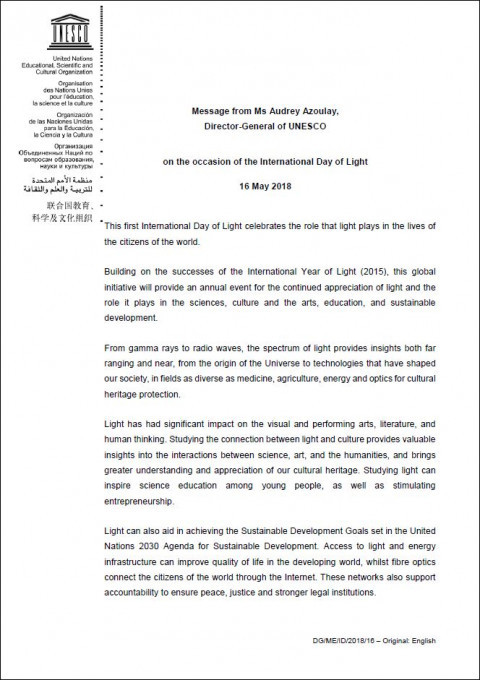 Message from Ms Audrey Azoulay, Director-General of UNESCO, on the occasion of the International Day of Light, 16 May 2018 Year of publication: 2018 Corporate author: UNESCO. Director-General, 2017-2025 (Azoulay, A.) This message was delivered by Audrey Azoulay, Director-General of UNESCO, on the occasion of the International Day of Light, on 16 May 2018.
 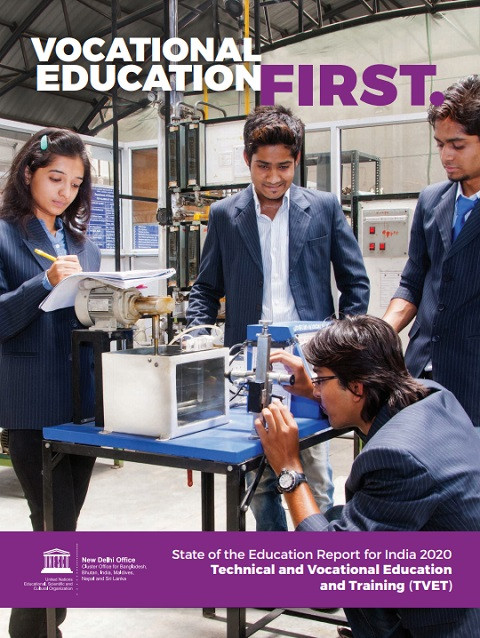 Vocational Education First: State of the Education Report for India 2020; Technical and Vocational Education Training (TVET) Year of publication: 2020 Author: Leena Chandran Wadia | Neela Dabir Corporate author: UNESCO New Delhi This report aims to capture the intense activity of the vocational education and training sector and highlights achievements and promising practices in India. The report makes important recommendations for reforms and for the use of TVET to empower youth to adapt to the post-COVID world.
  12 Claves para fortalecer la educación ciudadana en Chile Year of publication: 2021 Corporate author: Programa de las Naciones Unidas para el Desarrollo (PNUD) Conjunto de claves dirigidas a responsables de generar políticas, directivos escolares, docentes, estudiantes, padres y apoderados para implementar la educación ciudadana en sus comunidades educativas. Esta guía está pensada para promover la reflexión crítica entre los generadores de políticas y en las distintas comunidades educacionales a partir de una visión integral que enfatiza el protagonismo de las comunidades educativas en la toma de decisión relativa a los procesos de enseñanza, aprendizaje y gobernanza escolar.
  SDG4 관점에서 한국의 COVID-19 대응 진단 및 Post COVID-19를 위한 제언 Year of publication: 2020 Author: 장상현 | 계보경 | 김민 | 박기웅 | 백송이 | 김명량 | 김동진 | 장경숙 | 김정희 | 황정원 | 김철희 | 최현식 | 박민선 | 엄정민 Corporate author: 한국교육학술정보원 본 연구는 UN의 지속가능개발목표(SDGs)의 네 번째인 SDG4의 관점에서 한국의 COVID-19에 대한 교육정책 분야의 대응 방안과 사례를 진단하고, COVID-19 이후에 맞이하게 될 시대의 SDG4 세부목표를 제안하기 위해 수행되었다. 모든 이를 위한 포용적이고 공평한 양질의 교육 보장과 평생학습의 증진을 위한 ‘교육2030 인천 선언(Education 2030: Incheon Declaration and Framework for Action)’이 채택된 이후, SDG4 교육목표를 달성하기 위한 범 정부와 민간 차원의 지원이 계속되었으나, COVID-19 팬데믹으로 인해 학생들 간의 학습 격차가 발생하고, 학습 기회가 약화되는 등 적극적인 대응책이 필요해지고 있는 상황이다. 이에 본 연구에서는 COVID-19 상황 하에서 한국의 교육 현황을 점검하고 포용성, 형평성, 양질의 교육을 실현할 수 있는 대응 방안을 탐색하며, 이를 바탕으로 글로벌 의제와 한국적 대응 방안을 융합한 포스트 COVID-19를 위한 SDG4 세부목표별 제언을 도출하고자 하였다. 본 저작물은 한국교육학술정보원에서 2020년 작성하여 공공누리 제 4유형으로 개방한 ‘SDG4 관점에서 한국의 COVID-19 대응 진단 및 Post COVID-19를 위한 제언(장상현 외)’을 이용하였으며 해당 저작물은 한국교육학술정보원(www.keris.or.kr)에서 무료로 다운받으실 수 있습니다.