
Resources
Explore a wide range of valuable resources on GCED to deepen your understanding and enhance your research, advocacy, teaching, and learning.
3,387 Results found
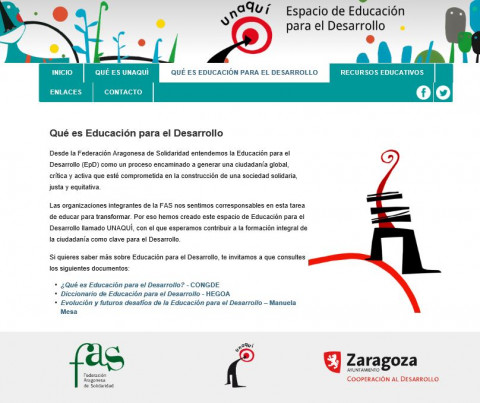 Qué es Educación para el Desarrollo Year of publication: 2019 Corporate author: UNAQUÍ El blog de Unaquí informa que desde la Federación Aragonesa de Solidaridad se entiende a la Educación para el Desarrollo (EpD) como un proceso encaminado a generar una ciudadanía global, crítica y activa que esté comprometida en la construcción de una sociedad solidaria, justa y equitativa. También informa que las organizaciones integrantes de la FAS se sienten corresponsables en la tarea de educar para transformar por lo que crearon ese espacio de Educación para el Desarrollo llamado UNAQUÍ para contribuir a la formación integral de la ciudadanía como clave para el Desarrollo. En el blog colocan información sobre distintos proyectos que son llevados a cabo.
 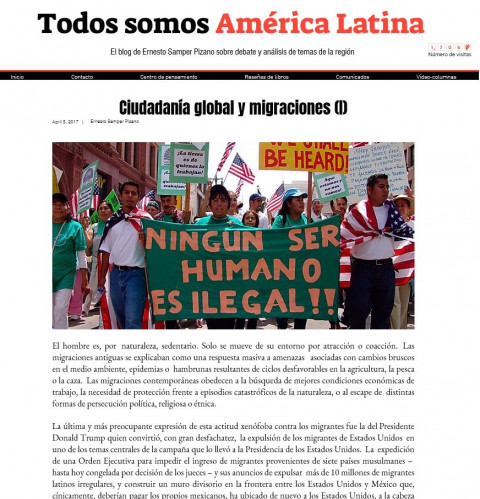 Global Citizenship and Migration Year of publication: 2017 Author: Ernesto Samper Pizano The news is a conference proclame in defense of migrants at a global scale. It was elaborated for the World People's Conference that took place in Bolivia in 2017 and it describes, very briefly, the situation of many inmigrants around the world, especially latinamericans. Ciudadanía global y migraciones Year of publication: 2017 Author: Ernesto Samper Pizano La noticia es una proclama a favor y defensa de los migrantes a nivel global. Esta fue elaborada para la Conferencia Mundial de los Pueblos que tuvo lugar en 2017 en Bolivia y describe muy brevemente la situación de los inmigrantes en el mundo, sobre todo de los latinoamericanos.
 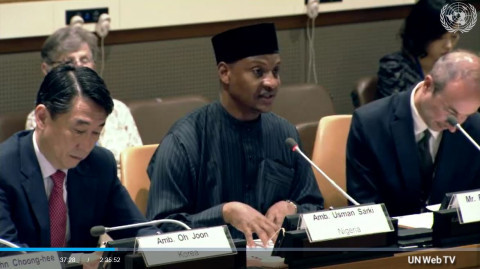 [Video] Global Citizenship Education for a just, peaceful, inclusive and sustainable world: a conceptual framework and its application in the field Year of publication: 2015 Corporate author: United Nations (UN) The Seminar held at UN HQs entitled, "Global Citizenship Education for a Just, Peaceful, Inclusive, and Sustainable world: A Conceptual Framework and its Application in the Field" was co-organized by the Permanent Missions of France, Nigeria, Qatar and the Republic of Korea, the United States Mission and the United Nations Educational, Scientific and Cultural Organization (UNESCO), in support of the Secretary-General’s Global Education First Initiative (GEFI).The panel discussion was moderated by H.E. Ambassador Hahn Choong‐hee of Korea. Some of the speakers for this event included H.E. Ambassador Richard Erdman, Acting Representative to ECOSOC of the Permanent Mission of the United States of America to the United Nations; H.E. Ambassador Usman Sarki, Deputy Permanent Representative of the Permanent Mission of the Federal Republic of Nigeria to the United Nations; Yousef Laram, Deputy Permanent Representative of the State of Qatar to the United Nations; Mr. Francois Gave, Counsellor at the Permanent Mission of France to the United Nations; and Christopher Castle, Chief of UNESCO’s Section of Global Citizenship Education.This event was divided into two segments. In the first, GCED was discussed at the level of concept. How can it strengthen the three pillars of the United Nations and the three pillars of sustainable development in furtherance of a just, peaceful, inclusive and sustainable world. In the second, examples from the field – the local, national and international levels – were presented and discussed as were certain opportunities going forward including the important role of media. [vidéo] Éducation à la Citoyenneté mondiale pour un monde juste, pacifique, inclusive et durable: un cadre conceptuel et son application dans le domaine Year of publication: 2015 Corporate author: United Nations (UN) Le séminaire a eu lieu au Siège de l'ONU intitulé «Éducation Mondiale Citoyenneté pour un monde juste, paisible, inclusive et durable: un cadre conceptuel et son application sur le terrain» a été co-organisée par les Missions permanentes de la France, le Nigeria, le Qatar et les République de Corée, la Mission des États-Unis et l'Organisation de l’ONU pour l'éducation, la science et la culture (UNESCO), à l'appui de First Éducation Mondiale Initiative du Secrétaire général (GEFI).Le débat a été animé par S.E. Ambassadeur Hahn Choong-hee de Corée. Certains des orateurs pour cet événement inclus S.E. Ambassadeur Richard Erdman, représentant par intérim à l'ECOSOC de la Mission permanente des États-Unis d'Amérique auprès de l'Organisation de l’ONU; IL. Ambassadeur Usman Sarki, Représentant permanent adjoint de la Mission permanente de la République fédérale du Nigéria auprès de l’ONU; Yousef LARAM, Représentant permanent adjoint de l'Etat du Qatar auprès de l'Organisation de l’ONU; M. François Gave, Conseiller à la Mission permanente de la France auprès de l’ONU; et Christopher Castle, la Section de l'éducation à la citoyenneté mondiale chef de l'UNESCO. Cet événement a été divisé en deux segments. Dans le premier, ECM a été discuté au niveau du concept. Comment peut-on renforcer les trois piliers de l'Organisation de l’ONU et les trois piliers du développement durable dans la poursuite d'un monde juste, pacifique, inclusif et durable. Dans le second, des exemples sur le terrain - aux niveaux local, national et international - ont été présentées et discutées de même que certaines opportunités à l'avenir, y compris le rôle important des médias.
  Integration or Inclusion in Education? Year of publication: 2020 Author: Dilmurod Yusupov How to create true inclusive conditions for children with disabilities and developmental disabilities so that they can receive a quality education and subsequently find decent work? Analysis of a draft document on the development of inclusive (integrated) education prepared by INR. Интеграция или инклюзия в образовании? Year of publication: 2020 Author: Dilmurod Yusupov Как создать настоящие инклюзивные условия для детей с инвалидностью и особенностями в развитии, чтобы они могли получать качественное образование и впоследствии найти достойную работу? Анализ проекта документа о развитии инклюзивного (интегрированного) образования, подготовленного МНО.
 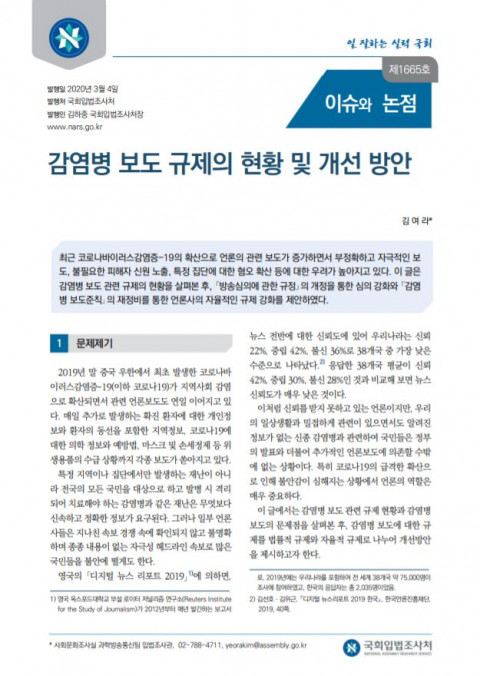 감염병 보도 규제의 현황 및 개선 방안 (이슈와 논점 제1665호) Year of publication: 2020 Author: 김여라 Corporate author: 국회입법조사처 최근 코로나바이러스감염증-19의 확산으로 언론의 관련 보도가 증가하면서 부정확하고 자극적인 보도, 불필요한 피해자 신원 노출, 특정 집단에 대한 혐오 확산 등에 대한 우려가 높아지고 있다. 하지만 우리의 일상생활과 밀접하게 관련이 있으면서도 알려진 정보가 없는 신종 감염병과 관련하여 국민들은 정부의 발표와 더불어 추가적인 언론보도에 의존할 수밖에 없는 상황이다. 특히 코로나19의 급격한 확산으로 인해 불안감이 심해지는 상황에서 언론의 역할은 매우 중요하다. 이 글에서는 감염병 보도 관련 규제 현황과 감염병 보도의 문제점을 살펴본 후, 감염병 보도에 대한 규제를 법률적 규제와 자율적 규제로 나누어 개선방안을 제시하고자 한다.
 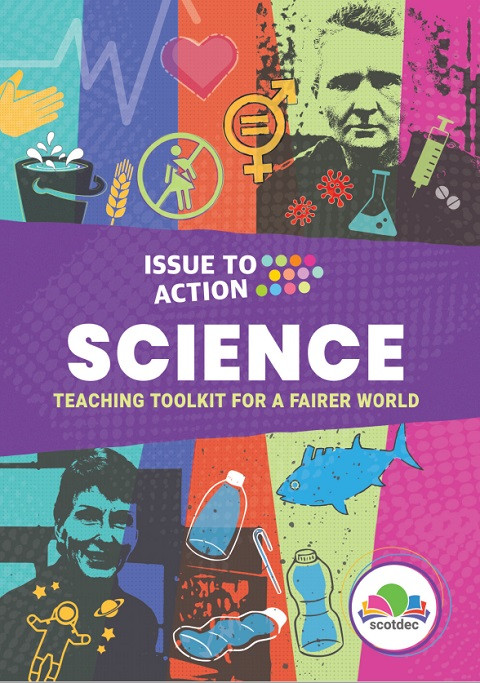 Issue to Action: Science; Teaching Toolkit for a Fairer World Year of publication: 2020 Author: Tracey Shaw | Claire Tatar | Krissie Davis Corporate author: Scotdec | European Union (EU) Global Citizenship Education is essential in enabling young people to access and participate in shaping modern society. All teachers and subjects have a role to play in educating young people to enable them to participate as fully as possible in building a fair and just world for all. Global Citizenship provides a wealth of real-life contexts for learning Science. By using relevant and meaningful topics, young people are more motivated to learn and understand the key role Science plays in driving change for a more sustainable future. The materials in this resource have been written by Science teachers and tested in Scottish classrooms. They focus on sustainability, plastic waste, health and wellbeing and women in Science.
 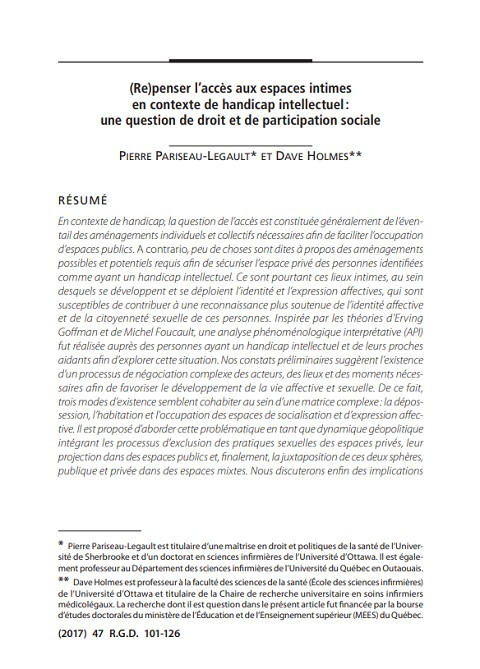 (Re)penser l’accès aux espaces intimes en contexte de handicap intellectuel: Une question de droit et de participation sociale (Revue générale de droit; vol. 47) Year of publication: 2017 Author: Éditions Wilson & Lafleur, inc Corporate author: Éditions Wilson & Lafleur, inc En contexte de handicap, la question de l’accès est constituée généralement de l’éventail des aménagements individuels et collectifs nécessaires afin de faciliter l’occupation d’espaces publics. A contrario, peu de choses sont dites à propos des aménagements possibles et potentiels requis afin de sécuriser l’espace privé des personnes identifiées comme ayant un handicap intellectuel. Ce sont pourtant ces lieux intimes, au sein desquels se développent et se déploient l’identité et l’expression affectives, qui sont susceptibles de contribuer à une reconnaissance plus soutenue de l’identité affective et de la citoyenneté sexuelle de ces personnes. Inspirée par les théories d’Erving Goffman et de Michel Foucault, une analyse phénoménologique interprétative (API) fut réalisée auprès des personnes ayant un handicap intellectuel et de leurs proches aidants afin d’explorer cette situation. Nos constats préliminaires suggèrent l’existence d’un processus de négociation complexe des acteurs, des lieux et des moments nécessaires afin de favoriser le développement de la vie affective et sexuelle. De ce fait, trois modes d’existence semblent cohabiter au sein d’une matrice complexe : la dépossession, l’habitation et l’occupation des espaces de socialisation et d’expression affective. Il est proposé d’aborder cette problématique en tant que dynamique géopolitique intégrant les processus d’exclusion des pratiques sexuelles des espaces privés, leur projection dans des espaces publics et, finalement, la juxtaposition de ces deux sphères, publique et privée dans des espaces mixtes. Nous discuterons enfin des implications de cette réflexion sur la « question de l’accès» et sur les politiques publiques visant à diminuer la discrimination systémique ciblant les personnes identifiées comme ayant un handicap intellectuel.