
Resources
Explore a wide range of valuable resources on GCED to deepen your understanding and enhance your research, advocacy, teaching, and learning.
3,229 Results found
 Des systèmes d’EFTP de qualité pour une transition formation-emploi réussiedes jeunes en Afrique Year of publication: 2020 Corporate author: UNESCO International Institute for Educational Planning (IIEP) | Agence luxembourgeoise pour la coopération au développement (LuxDev) | Institut de la Francophonie pour l'éducation et la formation (IFEF) Ce rapport constitue la synthèse analytique du 2e atelier régional de partage et de renforcement mutuel des acteurs de la formation professionnelle en Afrique, tenu à Nairobi du 18 au 20 juin 2019 sur le thème : « Améliorer la gestion de la qualité des systèmes d’EFTP pour une transition formation-emploi des jeunes d’Afrique réussie ».
  General Guidelines for the Implementation of the Peace Class in Preschool, Elementary and Middle School in Colombia Year of publication: 2016 Author: Enrique Chaux | Ana María Velásquez Corporate author: Colombia. Ministerio de Educación Nacional This document presents the general guidelines for educational communities in Colombia to carry out their peace education projects within the framework of the Peace Law. Orientaciones generales para la implementación de la cátedra de la paz: En los establecimientos educativos de preescolar, básica y media de colombia Year of publication: 2016 Author: Enrique Chaux | Ana María Velásquez Corporate author: Colombia. Ministerio de Educación Nacional En este documento se presentan las orientaciones generales para que las comunidades educativas de Colombia puedan llevar a cabo sus proyectos de educación para la paz en el marco de la cátedra para la paz.
  COVID-19: How to Include Marginalized and Vulnerable People in Risk Communication and Community Engagement Year of publication: 2020 Corporate author: United Nations Entity for Gender Equality and the Empowerment of Women (UN Women) | Regional Risk Communication and Community Engagement (RCCE) Women, the elderly, adolescents, youth, and children, persons with disabilities, indigenous populations, refugees, migrants, and minorities experience the highest degree of socio-economic marginalization. Marginalized people become even more vulnerable in emergencies. This is due to factors such as their lack of access to effective surveillance and early-warning systems, and health services. The COVID-19 outbreak is predicted to have significant impacts on various sectors. The development of this guide was led by UN Women and Translators without Borders on behalf of the Risk Communication and Community Engagement Working Group on COVID-19 Preparedness and Response in Asia and the Pacific, co-chaired by WHO, IFRC and OCHA.
  Sustainability: Gender Equality Year of publication: 2019 Corporate author: CSR Egypt This video deals with the concept of the fifth goal of the sustainable development goals (gender equality) and that women have a fundamental role to achieve the goals of sustainable development, and that is why they must be given the opportunity and support to obtain all their rights and effective participation in the advancement of Arab societies. الاستدامة: المساواة بين الجنسين Year of publication: 2019 Corporate author: CSR Egypt الفيديو يتطرق لمفهوم الهدف الخامس من اهداف التنمية المستدامة (المساواة بين الجنسين) و ان المرأة لها دور اساسى لتحقيق اهداف التنمية المستدامة و لذلك يجب ان يتم اتاحة الفرصة لها و دعمها للحصول على كافة حقوقها و مشاركتها الفعاله للنهوض بالمجتمعات العربية.
  Progress on the Sustainable Development Goals: The Gender Snapshot 2022 Year of publication: 2022 Author: Ginette Azcona | Antra Bhatt | Julia Brauchle | Guillem Fortuny Fillo | Yongyi Min | Heather Page | Yuxi Zhang Corporate author: United Nations Entity for Gender Equality and the Empowerment of Women (UN Women) | UN. Department of Economic and Social Affairs (UN. DESA) The latest available Sustainable Development Goal (SDG) 5 data show that the world is not on track to achieve gender equality by 2030. COVID-19 and the backlash against women’s sexual and reproductive health and rights are further diminishing the outlook for gender equality. Violence against women remains high; global health, climate, and humanitarian crises have further increased risks of violence, especially for the most vulnerable women and girls; and women feel more unsafe than they did before the pandemic. Women’s representation in positions of power and decision-making remains below parity. Only 47 per cent of data required to track progress on SDG 5 are currently available, rendering women and girls effectively invisible.Nearly halfway to the 2030 endpoint for the SDGs, the time to act and invest in women and girls is now.“Progress on the Sustainable Development Goals: The gender snapshot 2022” presents the latest evidence on gender equality across all 17 Goals, calling out the long road ahead to achieve gender equality. It emphasizes the interlinkages among the goals, the pivotal force gender equality plays in driving progress across the SDGs, and women and girls’ central role in leading the way forward.
  Advocacy for Impact: Gender and Education Year of publication: 2022 Author: Justine Brice | Elodie Gnonlonfoun | Marina Gutiérrez García de Viedma | Chattalie Jayatilaka Corporate author: United Nations Girls' Education Initiative (UNGEI) There has been an urgent need to include a gender-inclusive, anti-racist and decolonial lens in advocacy strategies in recent years. In the rare circumstances these lenses were applied, they were not effectively utilised when designing and implementing an advocacy campaign regarding education. Often, an intersectional approach was not used to consider context-specific power dynamics impacting girls’ ability to access education. The first objective of this report is to understand the “best practices to design and implement advocacy strategies that are gender-inclusive and anti-racist in the development sector, with a focus on gender and education”. The second objective was to examine the evidence regarding the effectiveness and impact of different advocacy strategies. Thirdly, the study aimed to understand the “best tools and approaches to measure advocacy impact." This research was conducted by an LSE student research team exploring gender-inclusive and anti-racist advocacy strategies.
  SDG Pulse 2024: The Pulse of Progress Towards the Sustainable Development Goals Year of publication: 2024 Corporate author: United Nations Conference on Trade and Development (UNCTAD) The SDG Pulse reveals progress in various areas, but setbacks continue to undermine momentum. Economic and social distress, particularly for those most in need, is exacerbated by the war in Ukraine, and in Gaza, leading to longer and more expensive trade routes, increased hunger and food insecurity, and rising CO2 emissions, impacting developing countries’ ability to meet the SDGs, and the need for reliable information becomes even more critical. SDG Pulse serves three main purposes: firstly, to update on the evolution of selected official SDG indicators and complementary data and statistics; second, to report on progress in developing new concepts and methodologies for SDG indicators for which UNCTAD is a global custodian; and third, to showcase UNCTAD’s support to member States in implementing the 2030 Agenda. Building on the previous edition, SDG Pulse continues to track progress according to four transformations identified at UNCTAD’s intergovernmental meeting in Bridgetown (UNCTAD, 2021). The report also delves into thematic issues relevant to the 2030 Agenda bringing to the forefront key messages related to trade and multilateralism, development finance, economic diversification, and sustainability and resilience. This year’s In-Focus topic explores gender equality in trade. Despite global advancements, gender inequality persists, affecting women's lives through economic participation, education, health, and political empowerment worldwide. UNCTAD’s new gender equality in trade indicator set helps illuminate gender gaps in trade to inform effective policy actions and accelerate just and equal development. This overview provides a glance at recent developments and analysis related to sustainable development.
 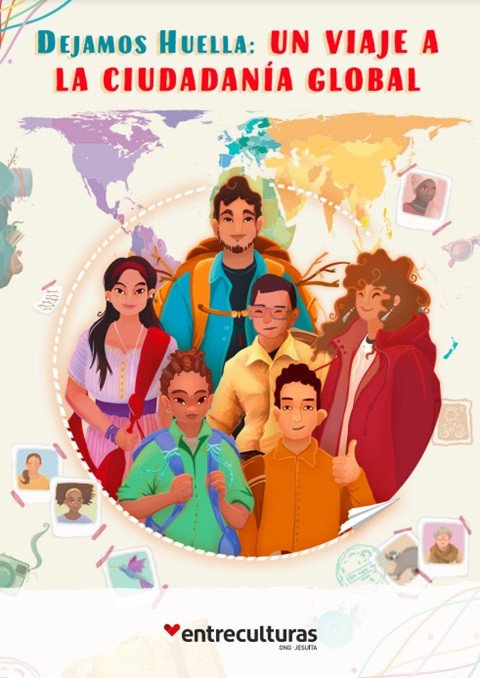 We Leave Our Mark: A Journey to Global Citizenship Year of publication: 2024 Corporate author: Entreculturas With this educational guide, students will be actively involved in exploring global and local issues with the aim of training agents of change in their own communities. They will take an educational journey through different themes (destinations) of Global Citizenship, such as gender equality, environmental protection, interculturality, inclusion, democratic participation, social justice and culture of peace. Each destination includes activities, games and practical exercises designed to raise students' awareness of the corresponding topic, using participatory dynamics such as games, puzzles, videos, and interactive simulations.