
Resources
Explore a wide range of valuable resources on GCED to deepen your understanding and enhance your research, advocacy, teaching, and learning.
2,161 Results found
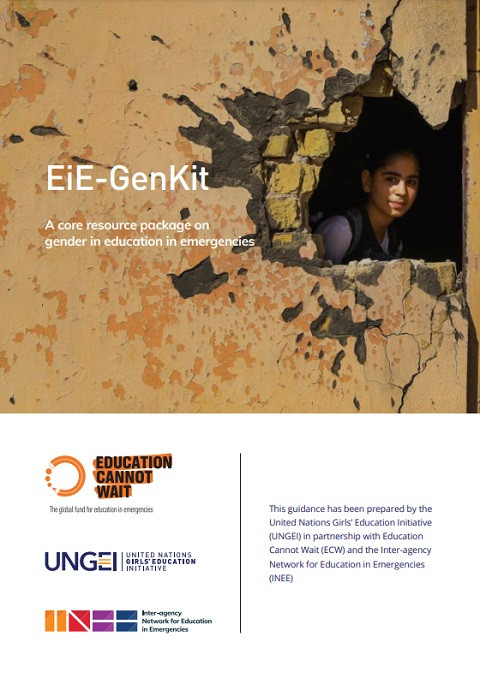 EiE-GenKit: A Core Resource Package on Gender in Education in Emergencies Year of publication: 2021 Corporate author: Education Cannot Wait (ECW) | Inter-agency Network for Education in Emergencies (INEE) | United Nations Girls' Education Initiative (UNGEI) When gender-responsive, quality education is available to all it has the potential to transform societies and build sustainable peace. A joint initiative from the Inter-agency Network for Education in Emergencies (INEE), Education Cannot Wait (ECW) and the UN Girls’ Education Initiative (UNGEI), the EiE-GenKit is a core resource package for gender in education in emergencies. The EiE-GenKit is the first resource of its kind, providing education practitioners with practical tools to promote gender-responsive programming from crisis to peace and sustainable development.The EiE-GenKit is based on extensive research and consultation with the latest resources, evidence, new tools and good practice available in one easy-to-use package. The EiE-GenKit builds on existing humanitarian processes for a streamlined approach to gender-responsive EiE. The EiE-GenKit offers tools for practical and immediate use including checklists, tipsheets and assessment templates supporting practitioners to ensure that each phase of an EiE intervention is gender-responsive. Bridging the gap between what we know about gender-responsive EiE and the tools we need to make it happen, the EiE-GenKit aims to promote improved gender and education outcomes of learners living in crises.
 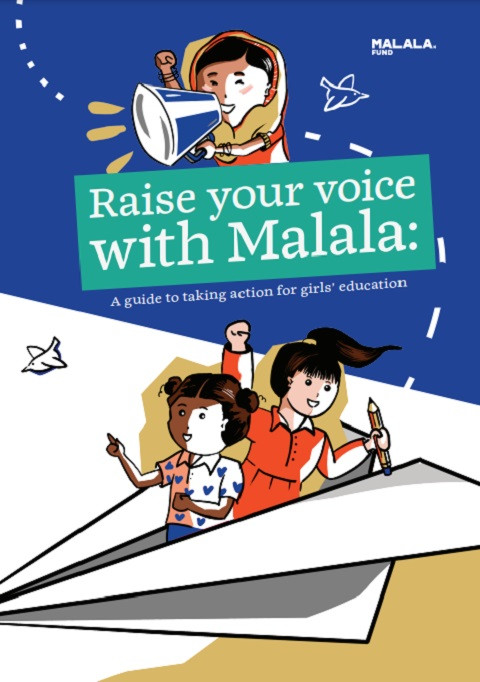 Raise Your Voice With Malala: A Guide to Taking Action for Girls’ Education Year of publication: 2018 Author: Emily Laurie | Eleanor Gall Corporate author: Malala Fund This guide gives young activists the tools to raise their voices and make change happen. Girls around the world are standing up in support of their out-of-school sisters and fighting to see every girl complete 12 years of free, safe, quality education. By taking action in their communities, girls can contribute to the peace and prosperity of our entire world. The guide includes real stories about girls around the world working to make sure all girls have the opportunity to go to school.
  Key Concepts: A Feminist Approach to Human Rights Education (Chapter 4) Year of publication: 2014 Author: Julie Maia Corporate author: Stanford Human Rights Education Initiative (SHREI) Developed for the Stanford Human Rights Education Initiative (SHREI), this curriculum project examines connections among Gender Studies, feminist theory, and human rights movements around the world. This SHREI project presents its four key concepts through four curricular units, or chapters, each with a series of activities that can easily be adapted for use in courses in many disciplines. Each chapter contains these elements: A definition of the key concept An example of the use of the concept in a human rights document A brief essay on the value of the concept for human rights education A series of activities that guide students in using gender, race/ethnicity/nation, and class as lenses for analyzing social justice issues include transnational and multicultural perspectives on gender and human rights issues use "best practices" pedagogies for teaching human rights topics in community colleges. Within each chapter, activities are orgaized from simple to complex. Most activities, however, have self-contained objectives and can be used independently of the others. Sections on “Extending the Learning” offer longer readings or in-depth material for advanced courses. The GCED Clearinghouse introduces only chapter 4, "global citizenship" of this SHERI project.
  Education for sustainable development country guidelines for changing the climate of teacher education to address sustainability: putting transformative education into practice Year of publication: 2011 Corporate author: UNESCO Jakarta This document on ESD Country Guidelines for TEIs is the result of the Regional Training Workshop Programme, titled “Developing Capacities of Teacher Education Institutions (TEIs) of Brunei Darussalam, Indonesia, Malaysia, Philippines and Timor-Leste in Reorienting Teacher Education to Address Sustainability” and has been developed by the five cluster countries of the UNESCO Office, Jakarta. The developed guidelines ultimately aim to reorient each country's curriculum, policies, standard practices and programmes to address sustainability and implement it in a tangible way. Although many idealistic descriptions of sustainability and sustainability education exist, faculties of education must decide which themes should receive particular focus and create their own guidelines and design criteria on this specific area. Therefore, these ESD Country Guidelines are significant initial steps to ensuring teacher education programmes fit the environmental, social, cultural and economic conditions and goals of each country's communities, regions and nations. Lignes directrices pour l'éducation au service du développement durable pour changer le climat de la formation des enseignants pour aborder la durabilité: mettre en pratique l'éducation transformatrice Year of publication: 2011 Corporate author: UNESCO Jakarta Le présent document sur EDD pour les Institutions de Formations des Enseignants (IFE) est le résultat du Programme régional d'ateliers de formation intitulé «Développer les capacités des établissements d'enseignement de Brunei Darussalam, de l'Indonésie, de la Malaisie, des Philippines et du Timor-Leste pour réorienter la formation des enseignants pour la durabilité» et a été développé par les cinq pays du Bureau de l'UNESCO à Jakarta. Les lignes directrices élaborées visent en fin de compte à réorienter les programmes, les politiques, les pratiques et les programmes standard de chaque pays en vue d'aborder la durabilité et de la mettre en œuvre de façon tangible. Bien que de nombreuses descriptions idéalistes de la durabilité et de l'éducation en matière de durabilité existent, les facultés d'éducation doivent décider quels thèmes devraient recevoir une attention particulière et créer leurs propres lignes directrices et critères de conception dans ce domaine spécifique. Par conséquent, ces EDD directrices sont des étapes importantes pour assurer que les programmes de formation des enseignants correspondent aux conditions et aux objectifs environnementaux, sociaux, culturels et économiques des communautés, des régions et des nations de chaque pays.
  2014 syllabus: character and citizenship education: primary Year of publication: 2014 Corporate author: Singapore. Ministry of Education. Student Development Curriculum Division Character and Citizenship Education (CCE) has always been at the heart of Singapore's education system. In CCE, students learn to be responsible to family and community; and understand their roles in shaping the future of nation. The emerging trends and global developments that impact the society, such as social changes, globalisation and technological advancements are taken into consideration in the development of the CCE curriculum.The goal of CCE is to inculcate values and build competencies in students to develop them to be good individuals and useful citizens. Since 1959, various key programmes have been introduced to inculcate values, habits, competencies and skills in students. Some of these programmes include Civics and Moral Education (CME, 1992), National Education (NE, 1997), Social and Emotional Learning (SEL, 2005), and learning experiences such as Co-Curricular Activities (CCA).The new CCE curriculum shifts focus from programmes to a common purpose. The desired outcomes of CCE are aligned to the Key Stage Outcomes (KSOs) and Desired Outcomes of Education (DOE). CCE is central to the Framework for 21st Century Competencies and Student Outcomes. It emphasizes the interconnectedness of the core values, social and emotional competencies and civic literacy, global awareness and cross-cultural skills that are critical for character and citizenship development of students. 2014 syllabus: le caractère et l'éducation à la citoyenneté: primaire Year of publication: 2014 Corporate author: Singapore. Ministry of Education. Student Development Curriculum Division Caractère et éducation à la citoyenneté (CEC) a toujours été au cœur du système éducatif de Singapour. En CEC, les élèves apprennent à être responsables de la famille et de la communauté; et de comprendre leurs rôles dans l'élaboration de l'avenir de la nation. Les nouvelles tendances et évolutions mondiales qui influent sur la société, tels que les changements sociaux, la mondialisation et les progrès technologiques sont pris en considération dans l'élaboration du programme d'études du CEC. Le but du CEC est d'inculquer des valeurs et de construire des compétences chez les élèves de les développer pour être de bons individus et des citoyens utiles. Depuis 1959, divers programmes clés ont été mis en place pour inculquer des valeurs, des habitudes, des compétences et des compétences chez les élèves. Certains de ces programmes comprennent l'éducation civique et l'éducation morale (ECM, 1992), l'éducation nationale (NE, 1997), social et apprentissage émotionnel (SPE, 2005), et les expériences d'apprentissage tels que Co-curriculaires Activités (CCA). Les nouveaux changements du curriculum CEC se concentrent des programmes à un but commun. Les résultats escomptés du CEC sont alignés sur les résultats clés de scène (RCS) et résultats souhaités de l'Education (RSE). CEC est au centre du cadre pour les compétences du 21e siècle et résultats des élèves. Il met l'aCECnt sur l'interdépendance des valeurs fondamentales, les compétences sociales et émotionnelles et alphabétisation civique, la sensibilisation mondiale et les compétences interculturelles qui sont critiques pour le caractère et la citoyenneté développement des élèves. Curricular guidelines and citizenship attitudes in Latin American students: a comparative analysis Year of publication: 2015 Author: Martín Bascopé | Macarena Bonhomme | Cristián Cox | Juan Carlos Castillo | Daniel Miranda Corporate author: Revista Latinoamericana de Ciencias Sociales, Niñez y Juventud Curricular guidelines have become progressively relevant for educating future active citizens. In such a context, it becomes crucial to explore the relationship between the curricular guidelines and how citizenship education is currently acquired by students in Latin American countries. Therefore, the aim of this paper is to comparatively evaluate the institutional view of citizenship expressed in each curriculum and students’ attitudes on civic issues. The exploratory factor analysis and curricular descriptive statistical analysis are based in two valuable and complementary sources, respectively: The Latin American module of the International Civic and Citizenship Study (ICCS) and the Regional System of Citizenship Skills (Sredecc). By making a systematic comparison of both sources, this study reveals that several curricular aspects are consistent with students’ citizenship attitudes and beliefs, and suggests some guidelines for improving and expanding citizenship education in Latin America, considering the importance of education for the formation of an active citizenship. Directives curriculaires et les attitudes de citoyenneté chez les étudiants latino-américains: une analyse comparative Year of publication: 2015 Author: Martín Bascopé | Macarena Bonhomme | Cristián Cox | Juan Carlos Castillo | Daniel Miranda Corporate author: Revista Latinoamericana de Ciencias Sociales, Niñez y Juventud Les directives curriculaires sont devenues progressivement pertinentes pour la formation des futurs citoyens actifs. Dans un tel contexte, il devient crucial d'explorer la relation entre les directives sur les programmes et la façon dont l'éducation à la citoyenneté est actuellement acquise par les étudiants dans les pays d'Amérique latine. Par conséquent, le but de cet article est d'évaluer comparativement la vision institutionnelle de la citoyenneté exprimée dans chaque programme et les attitudes des élèves sur les questions civiques. L'analyse factorielle exploratoire et l'analyse statistique descriptive scolaires reposent sur deux sources précieuses et complémentaires, respectivement: Le module latino-américain de l'Étude Internationale Civique et la Citoyenneté (EICC) et le Système Régional de la Citoyenneté des Compétences. En faisant une comparaison systématique des deux sources, cette étude révèle que plusieurs aspects scolaires sont compatibles avec les attitudes et les croyances de la citoyenneté des élèves, et suggère quelques lignes directrices pour l'amélioration et l'expansion de l'éducation à la citoyenneté en Amérique latine, compte tenu de l'importance de l'éducation pour la formation d'un la citoyenneté active.
  Holocaust & Human rights education center This curriculum guide was developed by a group of master teachers who have studied and taught the Holocaust in the context of history and the language arts. The New York State Core Curriculum and Learning Standards in English Language Arts and Social Studies have guided our selection of activities, historical documents and assessment tools. All materials and activities have been field-tested; they are challenging, age-appropriate and well suited to the needs of a diverse student population.