
Resources
Explore a wide range of valuable resources on GCED to deepen your understanding and enhance your research, advocacy, teaching, and learning.
3,229 Results found
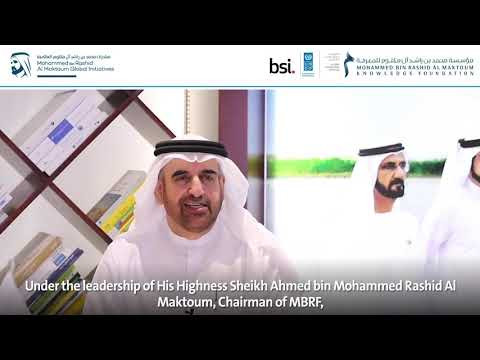 The Role of Knowledge in Achieving Sustainable Development Goals Year of publication: 2020 Corporate author: Mohammed Bin Rashid Al Maktoum Knowledge Foundation (MBRF) This video discusses the role of knowledge in achieving the sustainable development goals. In which the interlocutors host a group of specialists to talk about the efforts made in achieving the goals of sustainable development, and how the Arab nation can achieve the goals. دور المعرفة في تحقيق أهداف التنمية المستدامة Year of publication: 2020 Corporate author: Mohammed Bin Rashid Al Maktoum Knowledge Foundation (MBRF) الفديو يناقش دور المعرفة في تحقيق أهداف التنمية المستدامة. ويستضيف فيه المحاور مجموعة من المتخصصين للحديث حول الجهود المبذولة في تحقيق أهداف التمية المستدامة، وكيف يمكن للوطن العربي تحقيق الأهداف.
  The Sustainable Development Goals Report 2024 Year of publication: 2024 Corporate author: United Nations (UN) The Sustainable Development Goals Report 2024 details the significant challenges the world is facing in making substantial strides towards achieving the SDGs based on the latest data and estimates. It features areas with setbacks while also showcasing where tangible progress has been made, for instance, in reducing global child mortality, preventing HIV infection, and access to energy and mobile broadband. The report also highlights where action must accelerate, particularly in critical areas undermining SDG progress - climate change, peace and security, inequalities among and between countries, among others. According to the report, with just six years remaining, current progress falls far short of what is required to meet the SDGs. Without massive investment and scaled up action, the achievement of the SDGs — the blueprint for a more resilient and prosperous world and the roadmap out of current global crises — will remain elusive. The lingering impacts of the COVID-19 pandemic, escalating conflicts, geopolitical tensions and growing climate chaos have severely hindered progress. The report details the urgent priorities and areas needed for stronger and more effective action to ensure the 2030 promise to end poverty, protect the planet and leave no one behind.
  World Public Sector Report 2023: Transforming Institutions to Achieve the Sustainable Development Goals After the Pandemic Year of publication: 2023 Corporate author: United Nations (UN) The World Public Sector Report 2023 examines the role that national institutional and governance innovations and changes that emerged during the COVID-19 pandemic can play in advancing progress towards the 2030 Agenda for Sustainable Development. The report focuses on three main questions: How can Governments reshape their relationship with people and other actors to enhance trust and promote the changes required for more sustainable and peaceful societies? How can Governments assess competing priorities and address difficult policy trade-offs that have emerged since 2020? What assets and innovations can Governments mobilize to transform the public sector and achieve the SDGs? The report addresses them in chapters composed of short overviews followed by a set of in-depth contributions from a wide range of experts which examine institutional changes observed in different contexts, sectors and policy processes and explore the potential of those with a positive impact on the achievement of the SDGs to be sustained beyond the pandemic. The report aims to draw attention to institutional change as a key component of the societal transformations required to realize the 2030 Agenda for Sustainable Development.
  The Sustainable Development Goals Report 2023: Special Edition Year of publication: 2023 Corporate author: UN. Department of Economic and Social Affairs (UN. DESA) The annual report, a joint effort of the global statistical community, was launched during the UN High-level Political Forum on Sustainable Development as leaders from governments and different sectors of society gathered to chart strategies and efforts to fully implement the SDGs. The report provides essential data that allows decision-makers to guide efforts toward a sustainable recovery.
 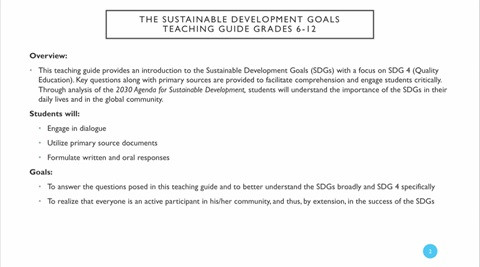 Teachers Guide on the SDGs Year of publication: 2022 Corporate author: United Nations (UN) This teaching guide, aimed at grade level K-12, gives an introduction and historical background to the SDGs. Key questions along with primary resources are provided to facilitate comprehension and engage students critically. Through analysis of the Preamble to the 2030 Agenda for Sustainable Development, the connection will be made to the Millenium Development Goals and Human Rights, to demonstrate continuity and evolution of certain principle values held by the international community. Focus then shifts to SDG 4, quality education, so that students can ore clearly analyze the progress that has been made regarding this topic on a micro level.
  Inter-Agency Policy Brief: Accelerating SDG Localization to Deliver on the Promise of the 2030 Agenda for Sustainable Development Year of publication: 2024 Corporate author: United Nations Centre for Human Settlement Programme (UN Habitat) | UN. Department of Economic and Social Affairs (UN. DESA) | United Nations Development Programme (UNDP) SDG localization is the process of adapting and customizing the SDGs and translating them into local development plans and strategies that fit the needs, context, and priorities of a particular region or locality, in coherence with national frameworks. It means placing local communities at the center of sustainable development and anchoring development action on the principles of inclusion, partnership, and multilevel governance, with adequate data and financing availability at the local level. This inter-agency policy brief examines the critical role of local and regional governments in accelerating achievement of the 2030 Agenda and provides policy recommendations to help advance the essential work of localizing SDG action. This policy brief was prepared by UNDESA, UN Habitat and UNDP in close collaboration with the Global Taskforce of Local and Regional Governments and United Cities and Local Governments, with input from the United Nations Regional Commissions: UNECA, UNECE, UNECLAC, UNESCAP, and UNESCWA.
  Indonesia SDG Push Framework: Unlocking New Pathways to SDG Acceleration Year of publication: 2024 Corporate author: United Nations Development Programme (UNDP) SDG Push is about realizing development ambition and redefining how we build acceleration pathways. It helps pinpoint policy choices that ‘move the needle’ towards the achievement of the Sustainable Development Goals. A UNDP flagship initiative, SDG Push uses digital and data innovation, systems thinking, and futures approaches to provide a comprehensive and country-specific tool to plan and implement SDG breakthroughs in a variety of development contexts. SDG Acceleration Pathways, specific to context and need, were co-created in collaboration with Indonesia, Moldova, Namibia, Peru and South Africa. These pilots helped to refine the SDG Push approach and the digital SDG Push Diagnostic and formed the foundation of the Integrated SDG Insights Reports, presented at the 2023 SDG Summit. This integrated, modular approach includes the analysis of development trends and priorities with data visualization, integrating generative dialogue, foresight methods and economic modelling to assess the impact of potential accelerators.
 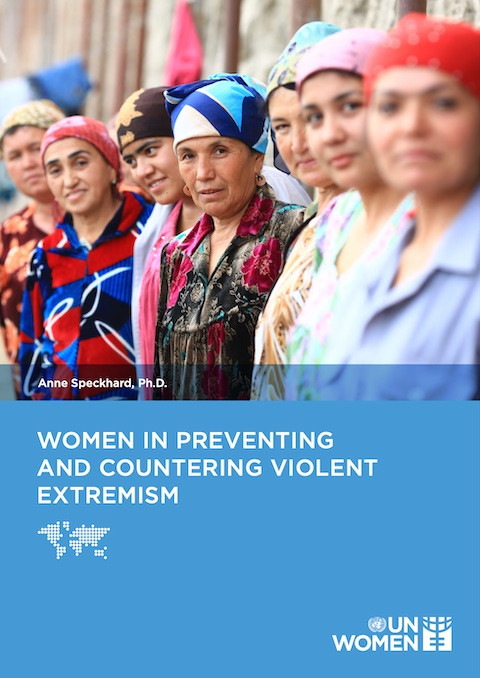 A Training Manual: Women in Preventing and Countering Violent Extremism Year of publication: 2021 Author: Anne Speckhard Corporate author: United Nations Entity for Gender Equality and the Empowerment of Women (UN Women) This publication serves as guidance for actors involved in the prevention and countering of violent extremism (P/CVE) in Europe and Central Asia including state officials, members of non-governmental organizations, community activists, staff of UN agencies, international and regional organizations to help them understand violent extremism’s gender dimensions. It is designed as a training guide, for staff and trainers who are working with different counterparts engaged in P/CVE, and want to help create more effective and gender-sensitive responses. Participants may for example include civil society activists, women leaders, teachers, journalists, lawyers, social workers, religious authorities, youth, police, local and national governmental officials. The five modules in this guide include learning objectives, explanatory text, warm-up activities, practical exercises, references for further reading and empirical experiences from the region of Europe and Central Asia. Modules may be used all together or one-by-one. The ideal timeframe for delivering the training using all the modules is at least two and a half days (half day per unit). The training is suitable for groups of five to twenty-five people. When organizing the workshop consider gender, age and diversity factors to have the richest learning experience possible. Participants should feel that they are in a safe space where they can openly share their ideas and experiences. Needed materials are indicated for the different exercises. As the guide is aimed at increasing the awareness of persons with different levels of sensitivity and knowledge on violent extremism and gender equality, across Europe and Central Asia, it is an introduction which readers should complement with other resources for deeper and more technical insights. The training should also be tailored to the participants’ interests and needs and to the local context.
  Progress on the Sustainable Development Goals: The Gender Snapshot 2021 Year of publication: 2021 Corporate author: United Nations Entity for Gender Equality and the Empowerment of Women (UN Women) | UN. Department of Economic and Social Affairs (UN. DESA) The pandemic has tested and even reversed progress in expanding women’s rights and opportunities. Women have not recovered lost jobs and income, hunger is on the rise, and school closures threaten girls’ educational gains. Women’s participation in government, research and resource management remains far from equal. Vulnerable groups of women, including migrants, those with disabilities and those affected by conflict, are frequently left behind. Disparities between rich and poor countries are preventing equal access to lifesaving COVID-19 vaccines and treatments, putting women in poorer countries at disproportionate risk. Moreover, despite women’s central roles in responding to COVID-19, including as front-line health workers, they do not have the leadership positions they deserve. Building forward differently and better will require placing women and girls at the centre of all aspects of response and recovery, including through gender- responsive laws, policies and budgeting.Progress on the Sustainable Development Goals: The Gender Snapshot 2021 presents the latest evidence on gender equality across all 17 Sustainable Development Goals, highlighting the progress made since 2015 but also the continued alarm over the COVID-19 pandemic, its immediate effect on women’s well-being and the threat it poses to future generations.