
Resources
Explore a wide range of valuable resources on GCED to deepen your understanding and enhance your research, advocacy, teaching, and learning.
950 Results found
 Les aspects culturels dans les religions chrétienne et musulmane Year of publication: 2011 Corporate author: UNESCO Beirut | Université Saint Joseph de Beyrouth This book allows the readers the opportunity to know about the cultural aspects related to religions, mainly in Lebanon and the Near East, their meaning and their aim. This knowledge will help the reader, firstly, to grasp the meaning of these various aspects, whether they concern him directly or the people who live in the same country, with whom he shares common space and living. Secondly, the book contributes to the Lebanese understanding one another’s behaviors and their own behavior concerning these aspects. Therefore, the book also contributes to the Lebanese looking at one another with more trust before starting to criticize. This book includes chapters that cover most of the different cultural aspects in Christian and Islamic religions. The first chapter deals with time, passing through each month of the year and its days, in a chronological manner. The second chapter delves into religious occasions in the Christian then Islamic religions. It explains the meaning of Holidays and remembrances of God and their particular aspects as well as the religious reasons of each. This chapter includes a part about al-‘awliya’ and Saints who are mentioned in some of the Lebanese daily rituals. Chapter three delves into the individual’s life stages from birth to religious vows, to marriage and death. The aspects that go with these stages constitute an important part in the life of the Lebanese. This chapter details the aspects and traditions of all these stages in which people take part, thus creating a common ground in a multi-religious society. Chapter four deals with religious practices, acts of worship, and legal prescriptions. It describes them and deals with their spiritual meaning to individuals who express their faith when practicing them. Prayer, Mass, and Pilgrimage, among others, are religious practices that are detailed in a way to make the reader understand what they mean to those who perform them. Chapter five leads us into religious places and their meaning, from churches to mosques and monasteries, khalwat and husayniyyat, all of which have different and divergent meanings to visitors. Yet, they all show the importance given by man to the place when expressing his faith and his relation with the Creator. Chapter six takes us to religious habits and customs, such as the clothes worn by religious dignitaries, their symbolism and meaning. It also deals with some general habits and customs. The reader may find that some chapters overlap. In fact, we have tried to make each part related to the others yet independent from them. This method facilitates the reading and understanding of any subject on its own without the need to refer to prior or subsequent parts. Finally, those who had any – minor or major – contribution in this book – despite the lacks that some readers might see – hope that they have offered a useful work in the process of discovering others who are different and who hold rich traditions as well human and spiritual values.
 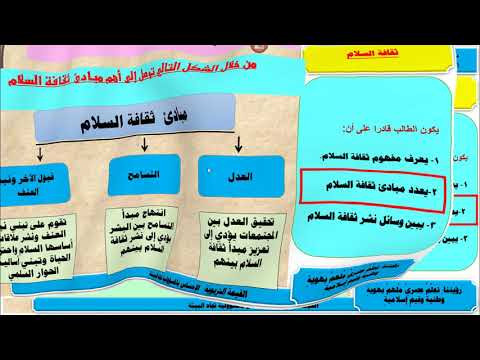 Citizenship of a Culture of Peace Year of publication: 2021 Author: Graeme Simpson Corporate author: AL-andalus Educational Complex The video is a lesson from the social studies book for the tenth grade in the State of Qatar. The teacher explains citizenship for peace and its dissemination. The teacher begins by explaining the concept of a culture of peace and goes on to the principles of peace and the foundations for its dissemination. The class is suitable for Arab students in general to understand what peace is and how to spread it. مواطنة ثقافة السلام Year of publication: 2021 Author: Graeme Simpson Corporate author: AL-andalus Educational Complex الفيديو عبارة عن حصة تدريسية من كتاب الدراسات الاجتماعية للصف العاشر بدولة قطر. يشرح المعلم فيها المواطنة من أجل السلام ونشرها. يبدأ المعلم بشرح مفهوم ثقافة السلام ويستطرد في مبادئ السلام وأسس نشره. الحصة مناسبة للطلبة العرب عموما في فهم ماهية السلام وسبل نشره.
 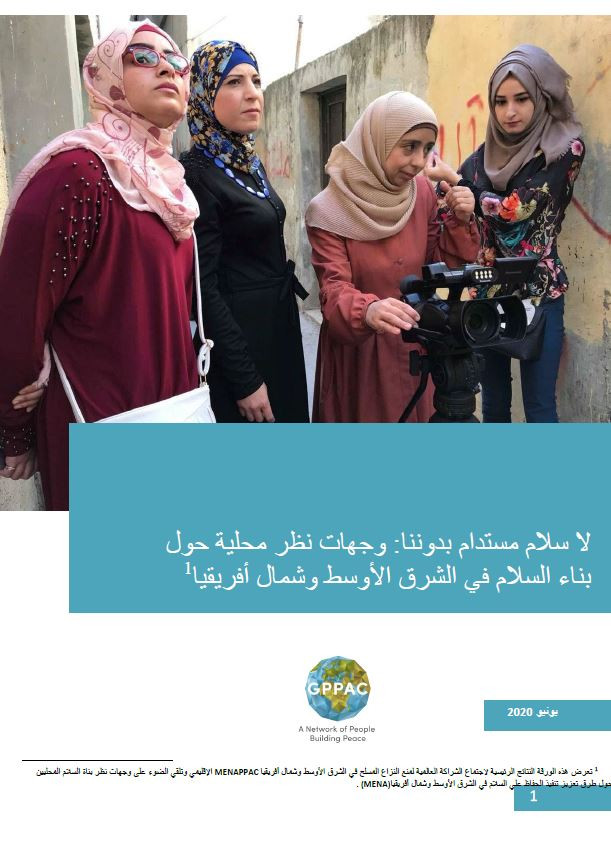 No Sustainable Peace Without Us: Local Perspectives on Peacebuilding in the Middle East and North Africa Year of publication: 2020 Corporate author: Global Partnership for the Prevention of Armed Conflict (GPPAC) This paper presents the main outcomes of the Global Partnership for the Prevention of Armed Conflict in the Middle East and North Africa meeting. The paper sheds light on the perspectives of local peacebuilders on ways to promote peacekeeping in the Middle East and North Africa region. لا سلام مستدام بدوننا: وجهات نظر محلية حول بناء السلام في الشرق الأوسط وشمال أفريقيا Year of publication: 2020 Corporate author: Global Partnership for the Prevention of Armed Conflict (GPPAC) تعرض هذه الورقة النتائج الرئيسية لاجتماع الشراكة العالمية لمنع النزاع المسلح في الشرق الأوسط وشمال أفريقيا. وتلقي الورقة الضوء على وجهات نظر بناة السلام المحليين حول طرق تعزيز الحفاظ على السلام في منطقة الشرق الأوسط وشمال أفريقيا.
  Cultural Diversity and Shared Citizenship Year of publication: 2008 Author: BoAzza Binasher | Abdullah Alalawai Corporate author: Modern Times Magazine This integrated file from the Journal of Modern Times reviews the issue of citizenship and cultural diversity. The file reviews many reflective questions on the subject of shared citizenship. The file contributes in general to setting a democratic cultural policy that guarantees the values of solidarity and peace in order to preserve human civilization. ملف التنوع الثقافي و المواطنة المشتركة Year of publication: 2008 Author: BoAzza Binasher | Abdullah Alalawai Corporate author: Modern Times Magazine يستعرض هذا الملف المتكامل من مجلة الأزمنة الحديثة قضية المواطنة والتنوع الثقافي. حيث يستعرض الملف تساؤلات كثيرة حول موضوع المواطنة المشتركة. ويسهم الملف عموما في وضع سياسة ثقافية ديموقراطية تضمن قيم التضامن والسلام من أجل الحفاظ على المكتسبات الإنسانية.
 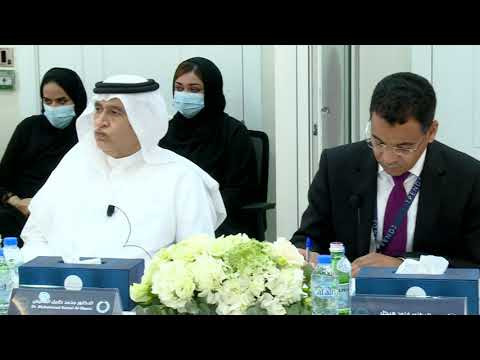 Spreading a Culture of Peace and Tolerance in the World: What Should We Do? Year of publication: 2021 Corporate author: TRENDS Research & Advisory The video is a symposium, moderated by Emirati researcher and writer Mohammed Khalfan Al Sawafi. The symposium focuses on six main axes: “Religious discourse and the importance of confronting hate speech and extremism, the Human Fraternity Document as a framework for promoting the values of peace and tolerance around the world, and human rights as an entry point for promoting a culture of tolerance and peace, making it an entry point to confront the conflicts of the world and the region, and ways to strengthen it in the region and the world, and toward a vision common for a more peaceful and tolerant world. The video interviews a group of specialists. نشر ثقافة السلام والتسامح في العالم: ما الذي ينبغي علينا فعله؟ Year of publication: 2021 Corporate author: TRENDS Research & Advisory الفيديو عبارة عن ندوة أدراها الباحث والكاتب الإماراتي محمد خلفان الصوافي. تركز الندوة على ستة محاور رئيسية هي "الخطاب الديني وأهمية مواجهة خطابات الكراهية والتطرف، ووثيقة الأخُوَّة الإنسانية كإطار لتعزيز قيم السلام والتسامح حول العالم، وحقوق الإنسان كمدخل لتعزيز ثقافة التسامح والسلام، وجعلها مدخلاً لمواجهة صراعات العالم والمنطقة، وسبل تعزيزها في المنطقة والعالم، ونحو رؤية مشتركة لعالم أكثر سلاماً وتسامحاً". الفيديو يتحاور فيه مجموعة من المختصين. اجتماع دولي للخبراء: تعزيز الحوار بين الثقافات في الدول العربية؛ تقرير Year of publication: 2012 Corporate author: UNESCO Beirut Within the framework of the project “Fostering a Culture of Peace and Dialogue” an international meeting of experts on Fostering a Culture of Intercultural Dialogue in the Arab States took place in Beirut, Lebanon on 6 and 7 March 2012 at the Holiday Inn Hotel in Verdun. The meeting was organized by UNESCO Beirut Office in partnership with the Government of Saudi Arabia and the King Abdulaziz Center of National Dialogue and in collaboration with the Arab Thought Foundation. The 2 days event was a landmark meeting of 35 experts and professionals from more than 11 countries, representing a wide range of fields in conflict resolution, research and education, media and journalism. The meeting is the first activity of a series of regional activities and interventions to be organized within the framework of the UNESCO project “Fostering a Culture of Peace and Dialogue”.