
Resources
Explore a wide range of valuable resources on GCED to deepen your understanding and enhance your research, advocacy, teaching, and learning.
1,471 Results found
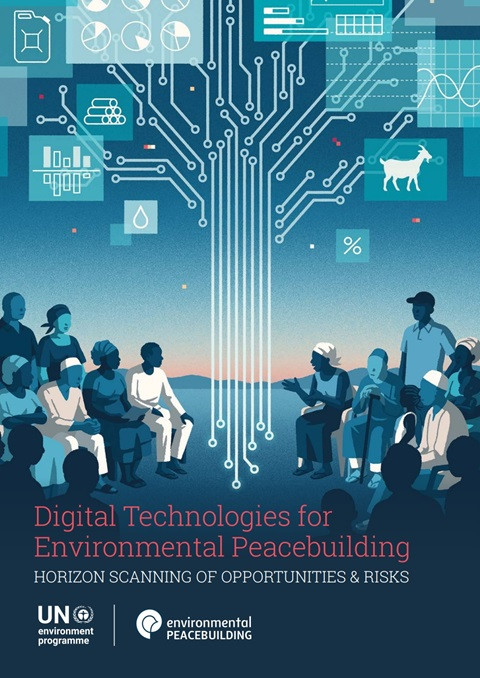 Digital Technologies for Environmental Peacebuilding: Horizon Scanning of Opportunities and Risks Year of publication: 2024 Corporate author: United Nations Environment Programme (UNEP) This report specifically delves into how digital technologies can be harnessed to manage environmental and natural resource risks that contribute to insecurity and social conflict, as well as the opportunities they present for peacebuilding, cooperation, and social cohesion. It examines relevant use cases spanning the peace and security continuum and concludes with a set of important policy and governance recommendations. The report is designed to inform and contribute to significant upcoming frameworks addressing digital technologies, including the Summit of the Future and the Global Digital Compact.
 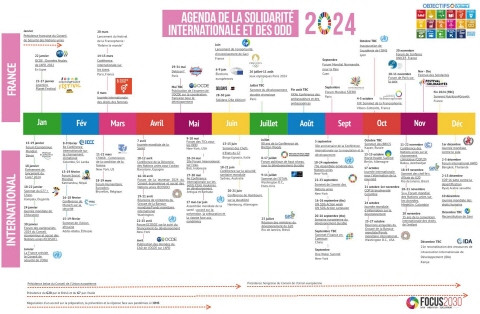 Solidarité Internationale 2024: Les grandes étapes à venir Year of publication: 2023 Corporate author: Focus 2030 2024 : fin du multilatéralisme ou renouveau ? Les Objectifs de développement durable en suspens. L’année à venir sera l’occasion de mobiliser de manière régulière la communauté internationale autour de nombreux sommets internationaux et rencontres dont les résultats seront susceptibles de changer la face du monde. 2024: End of Multilateralism or Renewal? Sustainable Development Goals in Limbo. The upcoming year will provide a regular platform for mobilizing the international community through numerous international summits and meetings, the outcomes of which have the potential to reshape the world.
 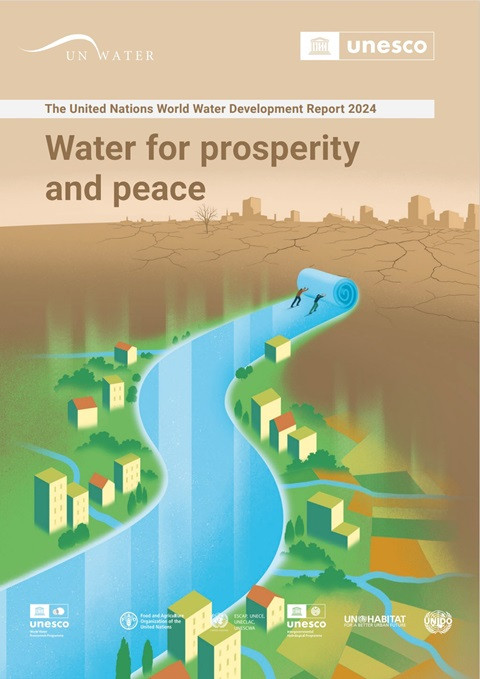 The United Nations World Water Development Report 2024: Water for Prosperity and Peace Year of publication: 2024 Corporate author: UNESCO World Water Assessment Programme (WWAP) Developing and maintaining a secure and equitable water future underpins prosperity and peace for all. The relationship also works in the opposite direction, as poverty and inequality, social tensions, and conflict can amplify water insecurity. The 2024 edition of the United Nations World Water Development Report (UN WWDR) calls attention to the complex and interlinked relationships between water, prosperity and peace, describing how progress in one dimension can have positive, often essential, repercussions on the others.
  [Executive Summary] The United Nations World Water Development Report 2024: Water for Prosperity and Peace Year of publication: 2024 Author: Richard Connor Corporate author: UNESCO World Water Assessment Programme (WWAP) This is the executive summary of the 2024 edition of the United Nations World Water Development Report (UN WWDR). [요약보고서] 2024년 유엔 세계물개발보고서: 번영과 평화를 위한 물 Year of publication: 2024 Author: Richard Connor Corporate author: UNESCO World Water Assessment Programme (WWAP) 누구나 안전하고 공평하게 물을 이용할 수 있도록 개발하고 관리하는 것은, 번영과 평화를 위한 초석이다. 그러나 빈곤과 불평등, 사회적 긴장과 갈등으로 인해 물 안보가 저해됨에 따라 번영과 평화가 약화되는 부작용이 초래되기도 한다. 본 보고서는 지속가능한 물 관리와 번영, 평화 간의 복잡한 상호관계에 주목하여, 어느 한 부문에서의 진보과정이 다른 부문들에게 어떻게 긍정적이고, 때로는 필수적인 영향을 미치는지에 대해 설명하고자 한다.
  Address by Irina Bokova, Director-General of UNESCO, on the occasion of the conference: Creating Sustainable Society of Peace: A Legacy of King Bhumibol Adulyadej of Thailand Year of publication: 2017 Corporate author: UNESCO. Director-General, 2009-2017 (Bokova, I.G.) This address was delivered by Irina Bokova, Director-General of UNESCO, on the occasion of the conference: Creating Sustainable Society of Peace: A Legacy of King Bhumibol Adulyadej of Thailand; UNESCO, 26 September 2017.
 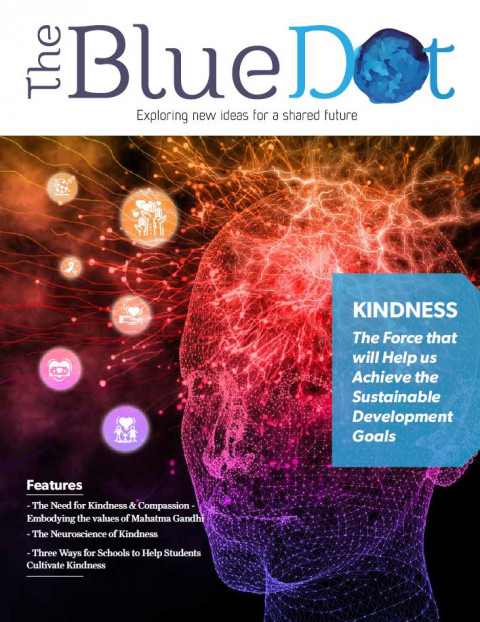 Kindness: The Force That Will Help Us Achieve the Sustainable Development Goals (The Blue Dot Issue 11, 2020) Year of publication: 2020 Corporate author: Mahatma Gandhi Institute of Education for Peace and Sustainable Development (MGIEP) In the eleventh issue of The Blue Dot, we focus on ‘Kindness’ – as the force that will help us achieve the Sustainable Development Goals, towards making the world more peaceful and sustainable – a better place to live in the future for our children. We hear from Ramesh Pokhriyal ‘Nishank’, Minister of Human Resource Development, Government of India on ‘The Need for Kindness and Compassion – Embodying the values of Mahatma Gandhi’, experts such as Zoran Josipovic on the neuroscience behind kindness; Michael Karlin and Brendran Ozawa-De Silve on the science and theory behind kindness, and from educators (Vicki Zakrzewski and John-Tyler Binfet) on how kindness can be practiced in our classrooms.Our cover story on ‘Kindness – the force to Achieve the Sustainable Development Goals’ discusses the biology of kindness, how kindness can help us achieve the SDGs and Kindness and SDGs and the Youth. Further, we have a hand-picked collection of youth stories on kindness, extracted from the 7,300+ stories we have from 120 countries around the world as part of UNESCO MGIEP’s #KindnessMatters for the SDGs youth campaign.
 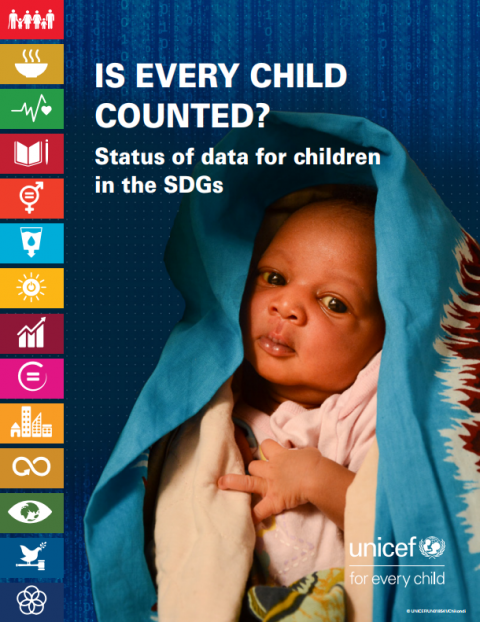 Is every child counted? Status of data for children in the SDGs Year of publication: 2017 Corporate author: United Nations Children's Fund (UNICEF) “Is every child counted”, a recent status report by UNICEF, shows that sufficient data are available for less than half of child-related SDG indicators. Many indicators, such as those on poverty and violence, are not comparable across countries, and are either too limited or of poor quality, leaving governments without the information they need to accurately address challenges facing millions of children, or to track progress towards achieving the Goals. Data are also very limited on the situation of the most disadvantaged populations within each country. Better disaggregated data on these populations is necessary. The report also identifies priorities for enhancing the collection, analysis and use of data for children.
 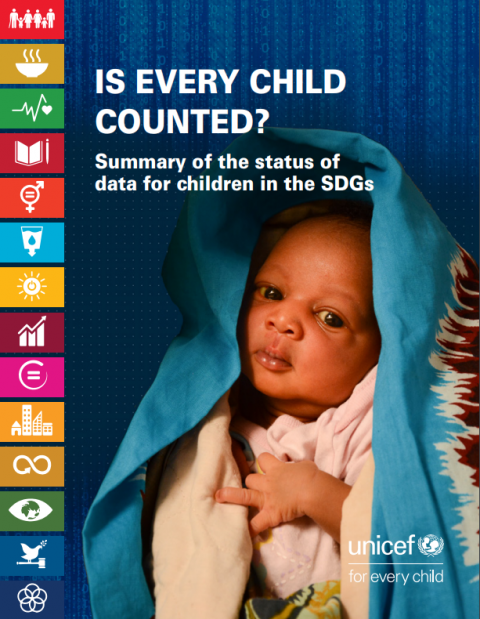 Is every child counted? Summary of the status of data for children in the SDGs Year of publication: 2017 Corporate author: United Nations Children's Fund (UNICEF) “Is every child counted”, a recent status report by UNICEF, shows that sufficient data are available for less than half of child-related SDG indicators. Many indicators, such as those on poverty and violence, are not comparable across countries, and are either too limited or of poor quality, leaving governments without the information they need to accurately address challenges facing millions of children, or to track progress towards achieving the Goals. Data are also very limited on the situation of the most disadvantaged populations within each country. Better disaggregated data on these populations is necessary. The report also identifies priorities for enhancing the collection, analysis and use of data for children.
  Embracing Peace through UNESCO World Heritage Year of publication: 2024 Author: 장정아 | 김민성 | 김수진 | 김원호 | 안치영 | 오성희 | 오창현 | 이성영 | 이현경 | 전원희 Corporate author: Korean National Commission for UNESCO This resource kit is the product of long labor by 10 researchers consisting of scholars on UNESCO heritage and teachers working in schools that belong to the UNESCO Associated Schools Network (ASPnet). It is distinct from existing educational resources in several ways. First, this kit goes beyond introducing the variously inscribed World Heritage properties one after another, to explain the rich significance of the heritage properties through keywords such as peace, cultural diversity, and sustainability. We also sought to overcome misconceptions about World Heritage and presented the content through various interesting cases for easy, hands-on application in classroom settings. In 2024, KNCU has pilot-tested the teaching materials presented in this resource kit in Korean middle and high schools belonging to UNESCO ASPnet. An online teacher training course based on this book has also been provided in June this year.