
Resources
Explore a wide range of valuable resources on GCED to deepen your understanding and enhance your research, advocacy, teaching, and learning.
3,436 Results found
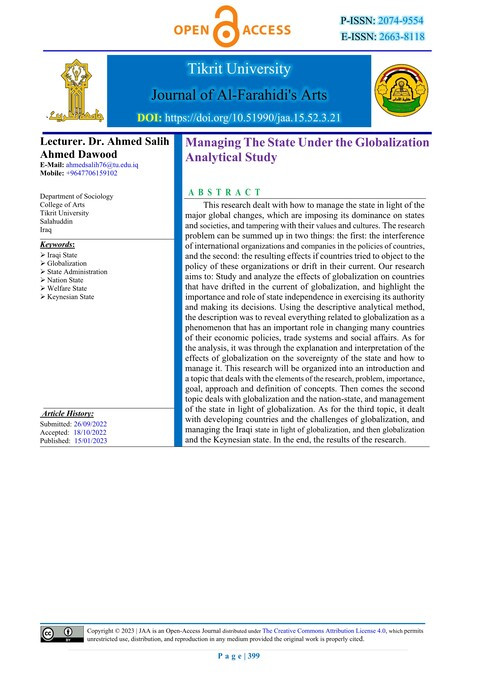 إدارة الدولة في ظل العولمة: دراسة تحليلية (مجلة آداب الفراهيدي؛ Vol.15, Issue.52-3) Year of publication: 2023 Author: Ahmed Saleh Ahmed Dawood Corporate author: Tikrit University تناول هذا البحث كيفية ادارة الدولة في ظل المتغيرات العالمية الكبرى، التي باتت تفرض سطوتها على الدول والمجتمعات، وتعبث بقيمها وثقافاتها. وتتلخص مشكلة البحث في امرين: الاول: تدّخّل المنظمات والشركات العالمية في سياسات الدول وحتى الداخلية منها، والثاني: الاثار الناتجة لو حاولت الدول الاعتراض على سياسة هذه المنظمات او الانجراف في تيارها. ويهدف بحثنا الى: دراسة وتحليل اثار العولمة على الدول التي انجرفت بتيار العولمة، وابراز اهمية ودور استقلال الدولة في ممارسة سلطتها واتخاذ قراراتها. مستعينين بالمنهج الوصفي التحليلي، فكان الوصف للكشف عن كل ما يتعلق بالعولمة كظاهرة لها اهمية ودور في تغيير الكثير من الدول لسياساتها الاقتصادية وانظمتها التجارية وشؤونها الاجتماعية. اما التحليل فكان من خلال شرح وتفسير اثار العولمة على سيادة الدولة وكيفية ادارتها. وسينتظم بحثنا هذا في مقدمة وثلاث مباحث، تناول المبحث الاول عناصر البحث، مشكلة واهمية وهدف ومنهج وتعريف بالمفاهيم. ثم يأتي المبحث الثاني ليتناول العولمة والدولة القومية، وادارة الدولة في ظل العولمة. اما المبحث الثالث فتناول الدول النامية وتحديات العولمة، وادارة الدولة العراقية في ظل العولمة، ومن ثم العولمة والدولة الكينزية. وفي النهاية النتائج التي أسفر عنها البحث، ومن ثم التوصيات.
  An Analysis of Global Citizenship Education Year of publication: 2011 Author: He Xiaofang The nation-state has always been the basic unit of modern civic education research. However, with the continuos advancement of the globalization process, there are an increasing more people participate in various global matters as a "global citizens". This is not only a useful complement to the modern civic education paradigm, but also a fundamental challenge of the civic education system in the nation-state. 全球公民教育观探析 Year of publication: 2011 Author: He Xiaofang 民族国家一直是现代公民教育研究的基本单元。然而,伴随着全球化进程的不断推进,以积极的践行者的身份参与民族国家界限之外的各种事务的“全球公民”的出现,既是对现代公民教育研究范式的有益补充,又是对民族国家公民教育体系的根本挑战。
  Five States and / or One Region? : National and Regional Dualism in Central Asia Year of publication: 2015 Author: Farkhod Tolipov | Abdugani Mamatazimov | Elmira Nogoibaeva | Sanat Kushkumbaev | Tamerlan Ibraimov | Galiya Ibragimova | Azina Kushkumbaeva Corporate author: Central Asian Studies The aim of the group of scientists and researchers of the Almaty Club, created with the support of the Friedrich Ebert Foundation, was to analyze and search for common solutions to intra-regional problems.This publication is the result of the work of researchers from 5 countries of the Central Asian region. It discusses issues of regional integration and cooperation, creating a platform for scientific research, overcoming geopolitical tensions and strategic uncertainty, as the main factors that impede regional evolutionary processes. Пять государств и/или один регион? : Национально-региональный дуализм в Центральной Азии Year of publication: 2015 Author: Farkhod Tolipov | Abdugani Mamatazimov | Elmira Nogoibaeva | Sanat Kushkumbaev | Tamerlan Ibraimov | Galiya Ibragimova | Azina Kushkumbaeva Corporate author: Central Asian Studies Целью группы ученых и исследователей "Алматы-клуба", созданного при поддержке Фонда Фридриха Эберта стал анализ и поиск общих решений внутрирегиональных проблем.Эта публикация является результатом работы исследователей 5 стран центральноазиатского региона. Здесь обсуждаются вопросы региональной интеграции и сотрудничества, создания платформы для научных исследований, преодоление геополитического напряжения и стратегической неопределенности, как основных факторов, препятствующих региональным эволюционным процессам.
  Thoughts on Global Citizenship (Universal) Year of publication: 2017 Author: Nahla Abu Aliwa Corporate author: Arab Council for Childhood and Development (ACCD) This article addresses global citizenship as one of the hot topics the world currently. The researcher highlighted the difference between global citizenship and traditional citizenship. He also touched upon the concept of multiculturalism and its importance in this multicultural world. Emphasis was placed on the Education for Global Citizenship initiative proposed by UNESCO. أفكار حول المواطنة العالمية ( الكوكبية ) Year of publication: 2017 Author: Nahla Abu Aliwa Corporate author: Arab Council for Childhood and Development (ACCD) يتناول هذا المقال المواطنة الكوكبية باعتبارها أحد الموضوعات المطروحة بقوة على الساحة العالمية. قام الباحث بإلقاء الضوء على الفرق بين المواطنة العالمية والمواطنة التقليدية. وأيضا تطرق لمفهوم التعددية الثقافية وأهميته في العالم المتنوع الثقافات. كما تم التركيز على مبادرة التربية من أجل المواطنة العالمية والتي طرحتها منظمة اليونسكو.
  Landmarks of Mercy between Islam and Multiculturalism Year of publication: 2016 Author: Abdel Karim Osman Ali Corporate author: Nile Valley University Conference paper in which the researcher sought to: Explaining the greatness and comprehensiveness of the Allah’s path Disclosure of the features of mercy through the Qur’anic intentions to recognize and respect cultural diversity Show the distinction of Islam over the latest political theories in the West. معالم الرحمة بين الاسلام والتعددية الثقافية Year of publication: 2016 Author: Abdel Karim Osman Ali Corporate author: Nile Valley University ورقة مؤتمر سعى الباحث فيها إلى: بيان عظمة المنهج الرباني وشموله. الكشف عن معالم الرحمة من خلال المقاصد القرآنية في إقرار واحترام التنوع الثقافي تبيين تميز الإسلام على آخر النظريات السياسية في الغرب.
 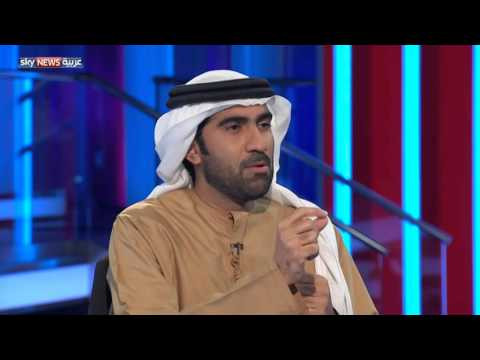 Gulf Society .. and the Multiplicity of Foreign Cultures Year of publication: 2014 Corporate author: Sky News Arabia This video is a TV program discussing the case of multiculturalism in the Arab Gulf countries. The multiculturalism is brought to the Gulf by foreign workers. There program is having guests discussing the issue. What are the negative and positive effects of foreign cultures on local culture in the countries of the region? What are the ways to preserve the identity and values of society?