
Resources
Explore a wide range of valuable resources on GCED to deepen your understanding and enhance your research, advocacy, teaching, and learning.
3,451 Results found
 Research on Building Ideological Foundation of a Sense of Community for the Chinese Nation Year of publication: 2020 Author: Wang Jian | Hu Hong-Xing Corporate author: Central Minzu University From a global perspective, the development of citizenship education emphasizing national identity has become the core theme of multicultural society. At present, the research on the sense of community for Chinese nation focuses on two themes: one is the situation of “the pattern of diversity in unity of the Chinese nation”, and the other is the sense of community for Chinese nation. It is an important part of Xi Jinping’s thought on ethnic work of the new era to strengthen the consciousness and foundation of the Chinese nation community. To lay an ideological foundation of the Chinese nation community in the new era, we need to unswervingly carry out the propaganda and education of Marxist views on the motherland, the nation, culture and history. It means that firstly we should study Marxist views on them and their relations to form a Marxist ideological system of national work. Secondly, we need to understand the Xi Jinping’s guiding ideology of ethnic work in the new era and firmly follow the “Chinese road” with Chinese characteristics to solve ethnic problems. Finally, starting from the path of culture, education, and propaganda, we need to strengthen a strategy of the Chinese Nation Community. 打牢中华民族共同体意识的思想基础研究 Year of publication: 2020 Author: Wang Jian | Hu Hong-Xing Corporate author: 中央民族大学 从世界范围来看,强调国家认同的公民教育已发展成为当前全球多元文化社会治理的核心 主题。我国学术界对中华民族共同体的研究,目前集中在两个主题,一是研究“中华民族多元一体格局”的多 民族国情,二是研究“中华民族共同体意识”。铸牢中华民族共同体意识、打牢中华民族共同体思想基础,既 是马克思主义民族理论中国化的重要产物,也是习近平新时代民族工作指导思想的核心内容。新时代打牢中 华民族共同体意识的思想基础,需要坚持不懈地开展马克思主义祖国观、民族观、文化观、历史观宣传教育。 首先,打牢中华民族共同体意识的思想基础需要深入研究马克思主义的祖国观、民族观、文化观、历史观及其 相互关系,形成马克思主义的民族工作思想体系; 其次,打牢中华民族共同体意识的思想基础需要从政治上深 入理解习近平新时代民族工作的指导思想,坚定走有中国特色的解决民族问题的“中国道路”; 最后,从教育 路径入手,提出打牢中华民族共同体思想基础的治理方略。
  Preschool Children's Citizenship Education in Global Context: The Transformation of Ideas and Development Trends Year of publication: 2019 Author: Xu Peng Corporate author: International and Comparative Education In recent years, preschool children’s citizenship education has been emphasized globally and gradually becomes a main content in early childhood curriculum. Traditional ideas on early age citizens see some new changes. As the core of early age children’s citizenship education, children’s citizenship is gradually transferred from citizens in waiting to citizens today, including right, active participation, identity and sense of belonging, and collective responsibility. The above transformation highlights global trends such as enriching ideas and contents on citizenship, regarding equity as the logic starting point, paying attention to young children’s participation and experience, and being rooted in indigenous context and culture. In the meantime, potential challenges still exist for the future development of young children's citizenship, such as the difficulty of transferring ideas, ambiguous standing point and the tokenism of curriculum content and practice. 国际视域下学前儿童公民教育: 理念嬗变与发展趋势 Year of publication: 2019 Author: Xu Peng Corporate author: International and Comparative Education 近年来,学前儿童公民教育愈发受到各国学者的关注,并逐渐成为学前教育 课程的重要内容,传统的儿童公民理念也出现了新的发展动向。首先,作为儿童公民教育 的核心,儿童公民身份正在由“等待中的公民”向“今日之公民”逐渐过渡 ;其次,儿童 公民身份的核心范畴也由单纯包含儿童权利扩展为主动参与、身份认同和归属感、公民责 任等内容。上述理念嬗变彰显了学前公民教育丰富公民理念与内涵、以公平为逻辑起点、 关注儿童参与和体验、立足本土历史文化等发展趋势。但是,学前儿童公民教育的未来发 展仍然面临诸多潜在挑战,如理念的转向困难、本土立场难以明确以及课程内容与实践的 形式化等。
  From Maker to Creative Citizens: Maker Citizens and Its Cultivation from the Perspective of Smart Education Year of publication: 2019 Author: Wang Youmei | Wan Ping | Zhao Wenzhu | Yang Gang Corporate author: Digital Education Studies The goal of smart education is to cultivate talents with good value orientation, high thinking quality and strong decisive ability, which provides a brand new target framework and value pursuit for maker education. Firstly, this paper starts from the connotation of makers, clarifies the logical relationship between the concepts of maker citizens and creative citizens, and builds the capability dimension and literacy structure of maker citizens. Secondly, based on the International MakEY creator citizen project, this paper analyzes the paths and strategies of the UK and Iceland to cultivate students’ creativity through maker space in detail, and illustrates the role of maker space in cultivating the digital literacy and creativity of children and adolescents. Finally, this paper, on the basis of case analysis and the development of smart education in China, proposes the realization path and some strategies to cultivate maker citizens in China, and establishes the concept and system of citizenship education for “Lifelong, All People, Whole Process, All Space, and Whole Society”, which provides theoretical basis and case references for the cultivation of Chinese makers’ citizens, and promotes the integral development of maker education and smart education. 从创客到创造性公民:智慧教育视野下的 创客公民及其培养 Year of publication: 2019 Author: Wang Youmei | Wan Ping | Zhao Wenzhu | Yang Gang Corporate author: Digital Education Studies 智慧教育的目标在于培养具有良好价值取向、较高思维品质和较强施为能力的人才,这为创客教育提供了 全新的目标框架与价值追求。文章首先从创客内涵出发,厘清创客公民、创造性公民等概念之间的逻辑关系,构建创客公民 的能力维度与素养结构;其次基于国际 MakEY 创客公民项目,通过案例研究,详细分析了英国和冰岛通过创客空间培养 学生创造力的路径与策略,阐释创客空间在培养儿童与青少年数字素养和创造力方面的作用;最后在案例分析的基础 上,基于国内智慧教育发展,提出了我国创客公民培养的实现路径和若干策略,建立“终身、全民、全程、全空间、全社会” 创客公民教育理念与体系,为我国创客公民培养提供理论依据和案例参考,推进创客教育与智慧教育融合发展。
 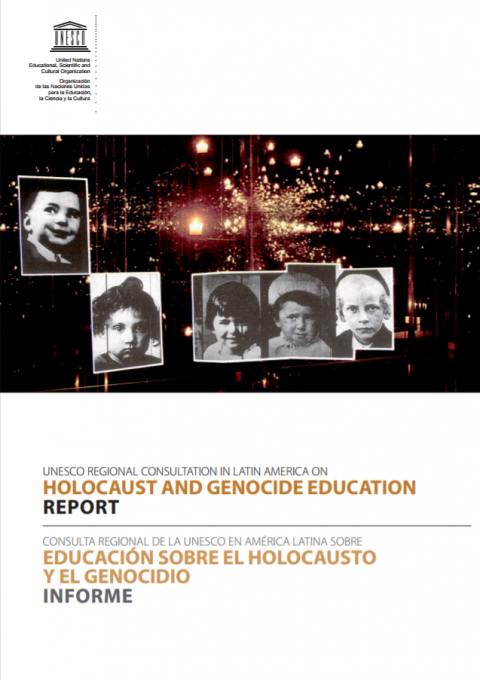 Consulta regional de la UNESCO en América Latina sobre educación sobre el Holocausto y el genocidio: informe Year of publication: 2014 Corporate author: UNESCO Santiago This consultation with Latin American Member States sought to raise awareness amongst policymakers and education specialists of the region about the history of the Holocaust, as it can contribute to the prevention of genocide, following United Nations General Assembly resolution 60/7 on Holocaust remembrance. The meeting also aimed at fostering concrete cooperation between UNESCO and Member States on education about the history of genocide and mass atrocities, notably the Holocaust, with a view of introducing the subject in the curriculum and of developing relevant educational programmes in the region. The overall objectives of the project were as follows:▶ Strengthen educational leaders’ awareness and support for Holocaust remembrance and education about the history of genocide and mass atrocities, in line with regional efforts to foster education for peace and human rights.▶ Increase the implementation of education programmes about the history of the Holocaust and other genocides, and support interested Ministries of Education to introduce these subjects in the curriculum.▶ Foster regional exchanges about this topic and facilitate access to good practices regarding Holocaust and genocide related issues and peace education.
 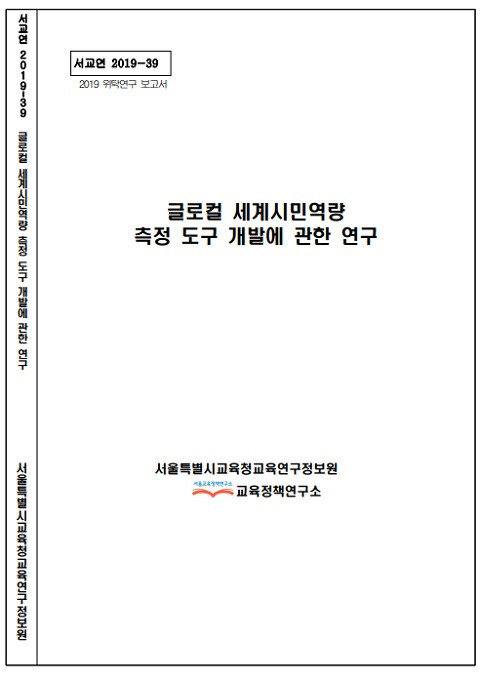 글로컬 세계시민역량 측정 도구 개발에 관한 연구 Year of publication: 2020 Author: 이병하 | 장훈 | 강신구 | 구본상 | 김동현 | 이현숙 Corporate author: 서울특별시교육청 교육연구정보원 본 자료는 글로컬 세계시민역량 개념을 정의하고 지표를 제시하며 글로컬 세계시민역량을 측정하기 위한 도구 개발을 제안하기 위한 연구보고서이다. 서울특별시교육청교육연구정보원이(가) 창작한 [서교연2019-39]2019 위탁연구(글로컬 세계시민역량 측정 도구 개발에 관한 연구) 최종보고서 저작물은 "공공누리 제4유형(출처표시-상업적 이용금지-변경금지)" 조건에 따라 이용 할 수 있습니다.
 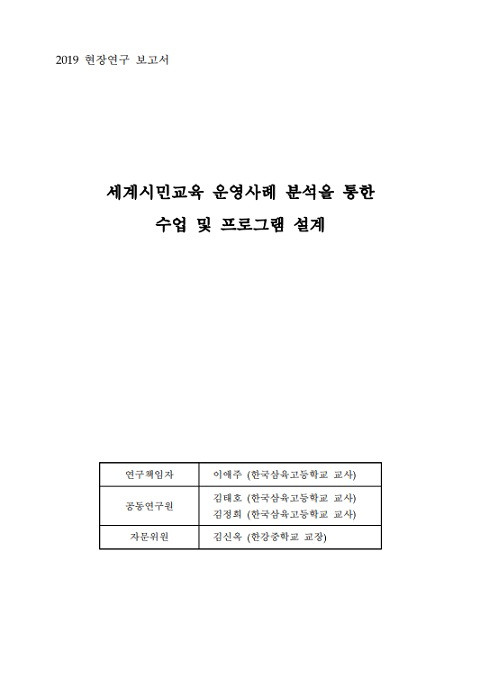 세계시민교육 운영사례 분석을 통한 수업 및 프로그램 설계 Year of publication: 2019 Author: 이애주 | 김태호 | 김정희 Corporate author: 서울특별시교육청 교육연구정보원 본 연구의 목적은 세계시민교육의 중요성을 인지하고 선행과제 및 여러 문헌을 연구해 교육현장에 활용 가능한 수업이나 프로그램 사례들을 정리하여 소개하는 것이며 나아가 기존 프로그램과 조금은 차별화된 프로그램을 개발하여 차후 세계시민교육을 하고자 하는 교사나 학교에 도움을 주고자 함이었다. 또한, 학생들이 세계 시민성의 개념을 인지하고 작은 행동이 유기적으로 연결되어 영향을 미칠 수 있다는 것을 의식하는 기회를 마련하고자 하였으며 나아가 세계시민으로서 ‘나는 무엇을 기여할 수 있고 실천할 수 있는 사람인가’에 대한 고민과 실천 의지를 다지고 자신의 실제 생활에서 적용하고 변화를 일으킬 수 있도록 프로그램을 설계하고자 하였다.이에 본 연구는 연구학교 보고서, 서적, 논문, 관련 기관 자료들을 수집하고 정리하여 세계화, 인권, 문화 다양성, 평화, 지속가능발전의 개념들이 각 교과와 교육과정 속에서 어떻게 운영되고 있는지 살펴보았다. 프로젝트 수업을 통해 심화 개념을 배우고, 캠프, 토의, 대회 운영, 소논문 작성을 통해 스스로 연구하고 탐구하며, 연극, 봉사, 캠페인과 같은 활동을 통해 실천력을 길러 나가는 과정이 학교 전반에 걸쳐 유기적으로 이루어짐을 관찰할 수 있었다. 또한, 전문가, 유관기관, 해외 연계 프로그램을 활용하여 타인과의 관계와 문화적 다양성을 이해하며 성숙한 세계 시민성을 기르는 과정도 특징적이었다. 그러나, 진로교육의 직접적인 연계성이 떨어지고 교육 여건에 따라 일부 프로그램 운영이 어렵다는 점이 아쉬웠다.이를 보완하는 방안으로 심화 탐구와 학생의 자율성은 그대로 유지하며 진로 연계성을 조금 더 높인 모의유엔 프로그램과 국내외 여러 그룹과의 소통을 더욱 빠르고 편하게 진행할 수 있는 구글 클래스룸을 운영하였다. 그리고 연구의 결과물로 수업과 창의적 체험활동에서 활용할 수 있는 모의유엔 가이드라인을 제공하였으며 구글 클래스룸의 운영사례를 소개함으로 학생과 교사 개인 간, 학급이나 학교 간의 소통과 협업이 더 쉽게 이뤄지는 방안을 안내했다. 두 프로그램 모두 학생의 자율성에 기초하며 그 안에서 인간, 국가, 세계에 대한 이해와 책임을 점차 키워나갈 수 있다. 학생들은 하나의 문제를 해결하기 위해 협력하고 서로의 차이를 이해하며 공공의 선을 위해 각자의 위치에서 해결방안을 찾아 실천하는 성숙한 세계시민으로 성장할 것이다. 그러나, 여전히 인력 및 시설의 인프라가 제대로 갖춰져 있지 않아 더욱 원활한 운영을 위한 연구와 지원이 필요하다. 서울특별시교육청교육연구정보원이(가) 창작한 [서교연2019-71]2019 현장연구 최종보고서(세계시민교육 운영사례 분석을 통한 수업 및 프로그램 설계) 저작물은 "공공누리 제4유형(출처표시-상업적 이용금지-변경금지)" 조건에 따라 이용 할 수 있습니다.
 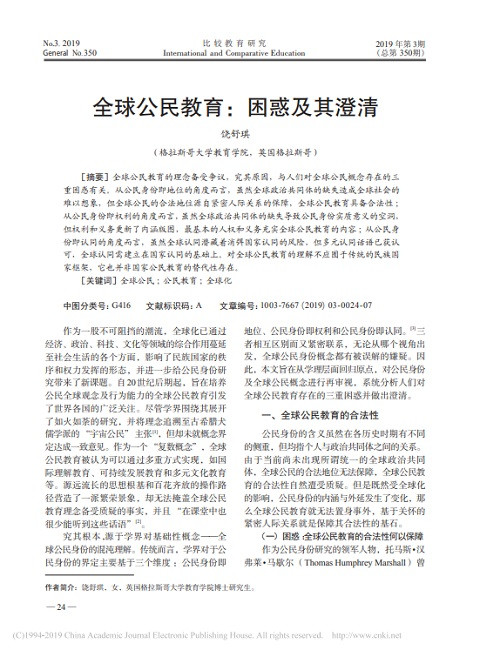 全球公民教育:困惑及其澄清 (比较教育研究; No. 3) Year of publication: 2019 Author: Rao Shuqi Corporate author: Beijing Normal University 全球公民教育的理念备受争议,究其原因,与人们对全球公民概念存在的三 重困惑有关。从公民身份即地位的角度而言,虽然全球政治共同体的缺失造成全球社会的 难以想象,但全球公民的合法地位源自紧密人际关系的保障,全球公民教育具备合法性 ; 从公民身份即权利的角度而言,虽然全球政治共同体的缺失导致公民身份实质意义的空洞, 但权利和义务更新了内涵版图,最基本的人权和义务充实全球公民教育的内容 ;从公民身 份即认同的角度而言,虽然全球认同潜藏着消弭国家认同的风险,但多元认同话语已获认 可,全球认同需建立在国家认同的基础上。对全球公民教育的理解不应囿于传统的民族国 家框架,它也并非国家公民教育的替代性存在。