
Resources
Explore a wide range of valuable resources on GCED to deepen your understanding and enhance your research, advocacy, teaching, and learning.
3,790 Results found
 Peace and Justice: It’s up to Youth; Resource Pack Year of publication: 2017 Author: Valerie Duffy | Ismael Hayden | Dermot O’Brien Corporate author: National Youth Council of Ireland (NYCI) | Irish Aid This resource for youth workers on Peace, Justice and the SDGs focuses on Goal 16. It provides activities and opportunities for young people (and those who work with young people) to engage more on key issues of our time, to reflect on root causes and consequences, and to clear a path for this generation to lay strong foundations for present and future pathways to peace, justice, equality, and human rights.
  학교교육을 통한 세계시민교육 안착방안 Year of publication: 2017 Author: 신혜진 | 이춘희 | 류성남 | 장은경 Corporate author: 서울특별시교육청 교육연구정보원 | 서울교육정책연구소 이 연구는 세계시민교육이 학교교육을 통해 어떻게 운영되고 있는지 실태를 분석하여 세계시민교육이 학교교육에서 안착할 수 있는 방안을 모색해 보고자 하였다. 특히 세계시민교육이 학교에서 효과적으로 안착되기 위하여 교원의 역할이 중요하기에 교원을 대상으로 연구를 수행하였다. 최초로 서울시 전체 교원을 대상으로 연구하며 학교현장에서 세계시민교육이 단위학교 차원에서 어떻게 운영되고 있는지의 현황에 대한 이해를 높이고자 하였다. 이를 위하여 먼저 선행연구 및 주요정책문건 분석을 통한 세계시민교육의 주요 개념 및 정의를 고찰하였다. 다음으로 세계시민교육의 단위학교 적용 사례를 살펴보고 세계시민교육에 대한 교원인식, 교내 활용정도, 교원연수 등을 중심으로 세계시민교육의 학교활용현황을 분석하였다. 마지막으로 세계시민교육이 학교 내에서 안착할 수 있는 방안을 제안한다. 서울특별시교육청교육연구정보원이(가) 창작한 [정책-17-06] 학교교육을 통한 세계시민교육 안착방안 저작물은 "공공누리 제4유형(출처표시-상업적 이용금지-변경금지)" 조건에 따라 이용 할 수 있습니다.
  경희대학교 후마니타스칼리지 2020 가이드북 (Humanitas College 2020) Year of publication: 2020 Corporate author: 경희대학교 후마니타스칼리지 신입생에게 후마니타스칼리지 교양교육에 대한 이해를 돕고, 후마가 한 해 동안 거둔 성과를 담은 『2020 후마니타스칼리지 가이드북』이 발간됐다. 후마는 2014년부터 해마다 가이드북을 발간하고 있다.『2020 후마 가이드북』에는 미래비전을 새로 정립하고 재도약에 나선 후마의 행보를 담았다. 신입생뿐 아니라 구성원 모두가 눈여겨볼 만하다. 대학 내에서의 세계시민교육 교과과정 및 현장 활동 우수 사례들을 담고 있으며 세계시민교육은 단순한 실험이나 실습이 아닌 ‘실천’임을 강조한다. 앞으로 세계시민교육을 수강하고 독립연구를 계획하는 학생들에게 도움이 될 것으로 보인다.
  We Make Europe: Active Citizenship and Lifelong Learner Year of publication: 2013 Corporate author: European Civil Society Platform on Lifelong Learning (EUCIS-LLL) This material captures some of the sparks of civic engagement and aimed to contribute to the debates that took place in the context of the European Year of Citizens 2013. Its purpose was to bring together various perspectives and experiences in order to show the wealth and dynamism as well as the limitations and pitfalls of what is active European citizenship nowadays.
 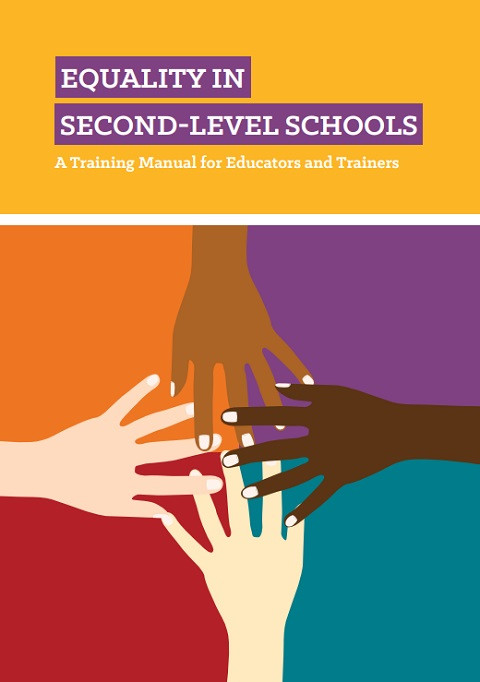 Equality in Second-level Schools: A Training Manual for Educators and Trainers Year of publication: 2014 Author: Mary Gannon | Karen O'Shea Corporate author: Equality Authority | European Union (EU) This resource is based on two and a half days of training delivered to second-level teachers on how to guide discussion and take action on equality in the curriculum and the school. The activities and resources provide ideas and methodologies to engage students in discussing and taking action on equality, human rights and social justice issues in the classroom, the school and the community. These include issues relating to the 9 equality grounds in Irish equality legislation: gender, civil status, family status, sexual orientation, religion, age, disability, race and the Traveller community. Exploring and taking action in these areas supports the development of key skills across curricula including critical and creative thinking, communication, active citizenship and working together.
 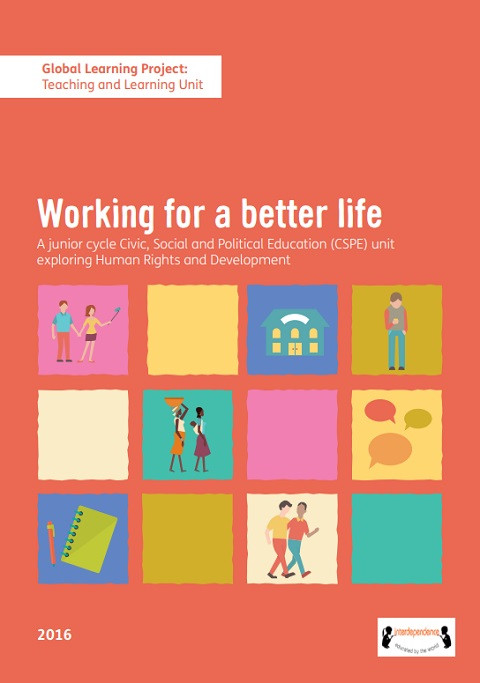 Working for a Better Life: A Junior Cycle Civic, Social and Political Education (CSPE) Unit Exploring Human Rights and Development Year of publication: 2016 Author: Kathryn Moore | Mella Cusack Corporate author: A Partnership with Africa (APA) | City of Dublin Education and Training Board (CDETB) The aim of this Teaching and Learning Unit is to encourage teachers and junior cycle students to question the sources of generalisations about ‘developing countries,’ and to use a human rights framework when engaging with case studies about people who are working to lift themselves out of situations of poverty and inequality. The unit can also be used to support teaching and learning in Civic, Social and Political Education (CSPE), and to contribute to the delivery of Wellbeing at junior cycle level. The unit could also be used in citizenship, social justice or development education module for Transition Year students.
  Children's Global Thinking: Research Investigating the Engagement of Seven-to-Nine-Year Old Children with Critical Literacy and Global Citizenship Education Year of publication: 2014 Author: Rowan Oberman | Fiona O’Shea | Beth Hickey | Claire Joyce Corporate author: Education for a Just World Partnership | St. Patrick's College | Trócaire | Centre for Human Rights and Citizenship Education (CHRCE) The focus of this research is two-fold. Firstly, it investigates how children aged seven to nine years conceptualise global and justice issues. Secondly, it explores children’s engagement with critical literacy strategies as part of a global citizenship education programme. This research project is undertaken with the intention of providing an empirical basis to support the development of pedagogy integrating global citizenship education into different curriculum areas.
  Des histoires du passé: Le féminisme dans les manuels d’histoire et d’éducation à la citoyenneté selon des élèves québécois de quatrième secondaire (Revue des sciences de l'éducation de McGill; Vol. 52, No. 2) Year of publication: 2017 Author: Marie-Hélène Brunet Corporate author: McGill University. Faculty of Education L’article s’intéresse à la manière dont les élèves traitent les contenus liés au féminisme dans les manuels d’histoire. Un questionnaire a été distribué à 575 élèves québécois de quatrième secondaire afin d’identifier leurs conceptions du manuel et du féminisme. Neuf élèves ont ensuite été rencontrés en entrevue afin d’évaluer leur compréhension de l’agentivité des femmes de même que leur réaction à des récits contradictoires. Les résultats montrent l’importance de prendre en compte les représentations des élèves afin d’évaluer le processus de médiation. Une très forte proportion des élèves (88 %) considère le manuel comme le reflet d’une vérité objective. Ils ressentent un inconfort devant la tâche et tentent d’amoindrir les différences entre les récits en sélectionnant les éléments correspondant à leurs conceptions initiales. Une majorité des élèves rencontrés différencient, de façon variable, les textes en fonction de l’agentivité.
  Objectifs du développement durable (odd) & éducation à la citoyenneté et à la solidarité internationale (ecsi): Quelles mobilisations pour quels changements ? Year of publication: 2019 Corporate author: Educasol Du mois de mai au mois de juillet 2019, Educasol a organisé un parcours d’animation-formation structuré autour de 5 temps et consacré à l’interaction entre Objectifs du Développement Durable et Education à la Citoyenneté et à la Solidarité internationale. Trois angles d’analyse ont été priorisés : culture et universalité, transversalité et territoire, et enfin la question du changement. Ce parcours a permis d’initier un processus permettant aux participants de :• Penser leurs actions d’ECSI,• Se penser eux-mêmes à partir de leurs actions et organisations,• Penser les autres autant que possible en évitant la projection de soi• Questionner la relation avec les bailleurs,• Construire une représentation commune des ODD et identifier les conditions qui en permettraient un meilleur usage Cette publication regroupe l’ensemble des documents produits dans le cadre des 3 journées du parcours et lors de la séance conclusive.
 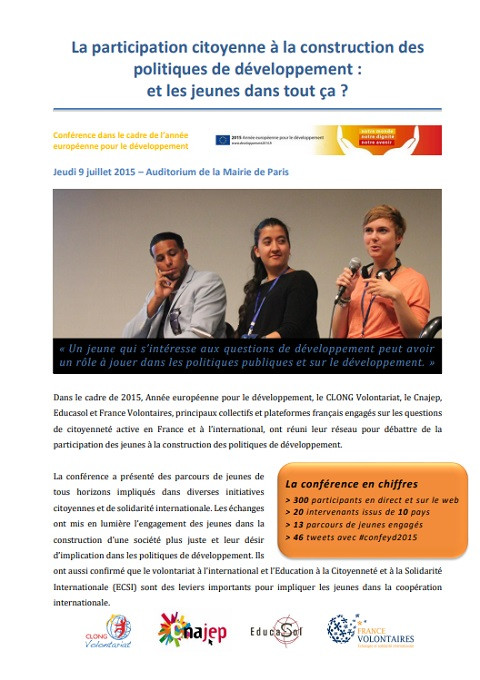 La participation citoyenne à la construction des politiques de développement: Et les jeunes dans tout ça ? Year of publication: 2015 Corporate author: Educasol Le Jeudi 9 juillet 2015, à Paris, le CLONG Volontariat, le Cnajep, Educasol et France Volontaires, principaux collectifs et plateformes français engagés sur les questions de citoyenneté active en France et à l’international, ont réuni leur réseau pour débattre de la participation des jeunes à la construction des politiques de développement. Ce document reprend les temps forts et messages clefs de la journée.