
Resources
Explore a wide range of valuable resources on GCED to deepen your understanding and enhance your research, advocacy, teaching, and learning.
3,797 Results found
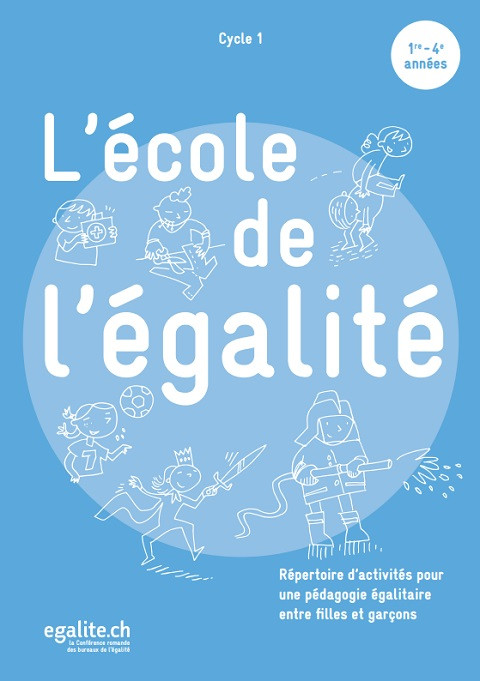 L'école de l'égalité: Répertoire d’activités pour une pédagogie égalitaire entre filles et garçons; 1re-4e années Year of publication: 2019 Corporate author: egalite.ch Cette ressource pour le cycle 1 propose des activités clé en main pour travailler sur les questions de genre et promouvoir l'égalité filles-garçons en classe et à l'école. Chaque brochure propose des séquences pédagogiques en lien avec le Plan d’études romand. Chacune de ces activités invite à un travail pluridisciplinaire.
  Education for Global Citizenship: Meanings and Practices for a Transformative Cosmopolitism Year of publication: 2017 Author: Alejandra Boni Aristizabal According to the author: "The article aims to analyze in depth the meanings of global citizenships in order to characterize the pedagogical practices of what is known as education for global citizenship. After a brief analysis of the different stages that education for development has gone through, from the assistencialist approach of the 50s to education for global citizenship, we study different perspectives of cosmopolitanism: a vision from the field of ethics, mainly from Martha Nussbaum's perspective that talks about cosmopolitan abilities, from politics, that has democratic proposals such as David Held's, critical perspectives as Boaventura de Souza Santos' ones, and the sociological perspective that allows us to identify intercultural communicative processes where the cosmopolitan view is produced, according to Ulrick Beck's or Gerald Delanty's words. After this, we conclude with a discussion about how to encourage education for develpment spaces that foster global citizenship." Educación para la Ciudadanía Global: Significados y espacios para un cosmopolitismo transformado Year of publication: 2017 Author: Alejandra Boni Aristizabal Según la autora: "El presente artículo tiene como objetivo profundizar en los significados de la ciudadanía global con el fin de caracterizar las prácticas pedagógicas de lo que se conoce como educación para la ciudadanía global. Tras una breve análisis de las distintas etapas por las que ha pasado la educación para el desarrollo, desde el planteamiento asistencialista de los años 50 hasta la educación para la ciudadanía global, nos detenemos en diferentes perspectivas del cosmopolitismo: la visión desde la ética, fundamentalmente a través de la obra de Martha Nussbaum que nos habla de las habilidades cosmopolitas, desde la política, que contiene propuestas de democracia como las de David Held y perspectivas más críticas como las de Boaventura de Sousa Santos, y la perspectiva sociológica que nos permite identificar los procesos de comunicación intercultural donde se produce la mirada cosmopolita, según palabras de Ulrick Beck o Gerard Delanty. Tras ello, concluiremos con una discusión sobre cómo potenciar espacios de educación para el desarrollo desde donde contribuir a la formación de ciudadanos globales"
  L’éducation à la citoyenneté en Egypte Year of publication: 2013 Author: Madeline Waddell Corporate author: University of Puget Sound Le printemps arabe a apporté l'espoir d'un Moyen-Orient démocratique pour beaucoup dans la communauté internationale. Alors que la littérature sur les transitions démocratiques comprend un ensemble de composants, les chercheurs sur la région se sont concentrés sur les développements institutionnels tels que les élections et les constitutions. Bien que ces composants structurels sont essentiels, ce document préconise pour l'éducation à la citoyenneté comme un autre élément crucial dans les transitions démocratiques. Bien que généralement pas partie de cette littérature, l'éducation à la citoyenneté implique la construction d'une population informée et active capable de contribuer à une culture totale de la démocratie. Cet article analyse ces efforts pédagogiques en Egypte transitoire par contraste le rôle de l'État dans l'éducation à la citoyenneté avec celle de la société civile. Ce contraste conduit à la conclusion que l'aCECnt mis sur le troisième secteur est nécessaire pour la réalisation des objectifs de l'éducation à la citoyenneté apolitique. Le système scolaire de l'Egypte est non seulement le plus robuste dans le monde arabe, mais a toujours été utilisé par différents régimes autoritaires pour faire avancer des objectifs politiques. Lorsque juxtaposée à l'immergence d'une abondance des ONG après la révolution 2011, il devient un cas d'étude idéal. L'analyse est basée sur les théories de l'éducation à la citoyenneté et à la recherche du système éducatif égyptien, et est complétée par des entretiens informels dans le pays.
  Postcolonial Perspectives on Global Citizenship Education Year of publication: 2012 Author: Vanessa Andeotti | Lynn Mario T. Menezes de Souzz This volume bridges the gap between contemporary theoretical debates and educational policies and practices. It applies postcolonial theory as a framework of analysis that attempts to engage with and go beyond essentialism, ethno- and euro-centrisms through a critical examination of case studies and conceptual issues.
 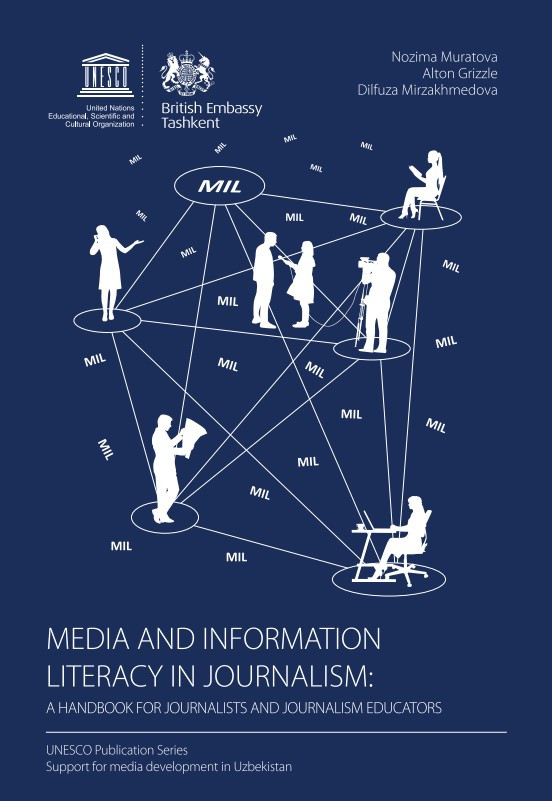 Media and Information Literacy in Journalism: A Handbook for Journalists and Journalism Educators Year of publication: 2019 Author: N. Muratova | A. Grizzle | D. Mirzakhmedova Corporate author: UNESCO Tashkent This handbook aims at being an important and practical tool for journalists in fulfilling their professional activities and mainly in media information literacy (MIL).The first three parts of the Handbook include theoretical material and are accompanied with exercises and case studies; the last part consists entirely of practical tools and exercises that aim to ensure that the material was understood. The Handbook deals with "fake news" and disinformation, provides a conceptual framework for media and information literacy, shows its importance, and explores principles and role of the MIL in journalism education. Also, the Handbook covers topics such as ethics on the Internet, human rights and work with sources, journalistic skills in collecting and processing information, ways to verify and provide reliable information, and the identification of fakes that may adversely affect the public. Медиа- и информационная грамотность в журналистике: Пособие для журналистов и преподавателей журналистики Year of publication: 2019 Author: N. Muratova | A. Grizzle | D. Mirzakhmedova Corporate author: UNESCO Tashkent Данное руководство нацелено на то, чтоб стать важным и практичным инструментом журналистов в осуществлении их профессиональной деятельности и главным образом в овладении медиа информационной грамотностью (МИГ).Первые три части книги включают в себя теоретический материал и сопровождены заданиями и кейсами по теме, последняя часть всецело состоит из практического инструментария и упражнений, которые направлены на закрепление изученного материала. В пособии рассматривается работа с «фэйковыми новостями» и дезинформацией, приведёна концептуальная основа, на которой строится медийная и информационная грамотность, показана ее важность, исследованы принципы и роль МИГ в журналистском образовании. Кроме этого в пособии рассмотрены такие темы, как этика в интернете, права человека и работа с источниками, мастерство журналиста в сборе и обработке информации, способы проверки и предоставления достоверных сведений, выявление фейков, которые могут отрицательно повлиять на общественность.
  Climate Action: Teacher Resource Year of publication: 2018 Author: Gráinne Ryan Corporate author: An Taisce The Climate Action Teacher Resource has been devised to equip Geography, C.S.P.E., Science, English teachers with the tools and guidance to explore the topic of climate change through their curriculum. This comprehensive guide provides teachers with the resources to educate, encourage and inspire students to take action on climate change, a challenge that faces Irish society and the wider international community.
  Climate Revolution: How Dare Youth; Resource Pack Year of publication: 2019 Author: Valerie Duffy | Leo Gilmartin | Valery Molay | Dermot O’Brien Corporate author: National Youth Council of Ireland (NYCI) This resource explores the issue of Climate Change and the Sustainable Development Goals. Produced as part of the national One World Week youth work programme and during an era of youth-led climate strikes, Climate Revolution contains many new and innovative activities that cover a wide range of learning levels on topics related to climate change and climate justice.It is designed for Global Educators, Youth Workers, Development Education practitioners, trainers, climate activists, changemakers of all shapes and sizes but in particular those working with the current generation of young people.
 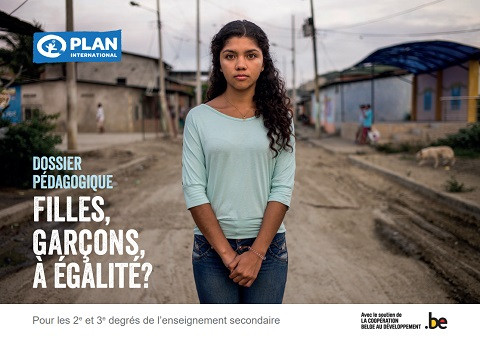 Filles, garçons, à égalité?: Dossier pédagogique Year of publication: 2017 Corporate author: Plan International Belgique | La coopération belge au développement Ce dossier pédagogique vise à sensibiliser les adolescent-e-s à propos des inégalités entre garçons et filles et à les faire réfléchir aux conséquences.Prendre conscience du poids des stéréotypes et les questionner constamment en les observant à travers le prisme du genre sont des étapes décisives sur la voie de l’égalité. En utilisant les différentes fiches de ce dossier, les enseignants peuvent aider leur élèves à développer des lunettes ‘genre’ et à mieux comprendre ce qui les entoure.