
Resources
Explore a wide range of valuable resources on GCED to deepen your understanding and enhance your research, advocacy, teaching, and learning.
518 Results found
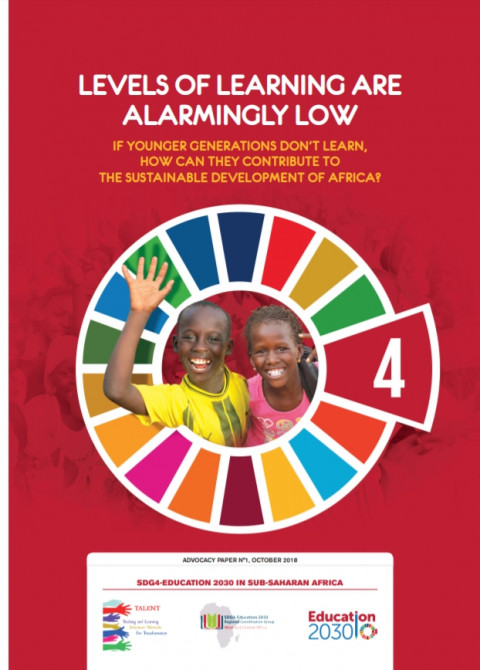 Les niveaux d'apprentissage sont alarmants: si les jeunes générations n'apprennent pas, peuvent-elles contribuer au développement durable de l'Afrique? Year of publication: 2018 Corporate author: UNESCO Dakar | Regional Coordination Group on SDG 4-Education 2030 in West and Central Africa | Teaching and Learning Educators’ Network for Transformation Avec l’adoption de le Programme pour le développement durable à l’horizon 2030, les États membres de l’ONU et les organisations partenaires ont convenu d’assurer, d’ici 2030, une éducation inclusive et équitable de qualité et de promouvoir des possibilités d’apprentissage tout au long de la vie pour tous. S’appuyant sur les programmes inachevés des Objectifs du Millénaire pour le développement et de l’Éducation pour tous, l’éducation et les apprentissages de qualité sont au cœur même de l’ODD4 et de la CESA 16-25 (voir l’encadré 1 dans la section suivante). En effet, cinq des sept cibles de l’ODD4 sont spécifiquement formulées pour s’attaquer à la crise mondiale de l’apprentissage. En outre, la CESA 16-25 appelle spécifiquement les États membres de l’Union Africaine à aborder les questions de qualité et d’équité dans l’éducation, en particulier au niveau pré-primaire, un domaine négligé en termes d’investissements et de politiques, et au niveau primaire où les disparités géographiques laissent sur le côté les filles et les femmes, les plus pauvres et ceux qui vivent dans les zones reculées. La question est désormais de savoir si ces engagements internationaux et régionaux ont été traduits en politiques et stratégies nationalesqui peuvent s’attaquer aux niveaux alarmants des résultats d’apprentissage.
 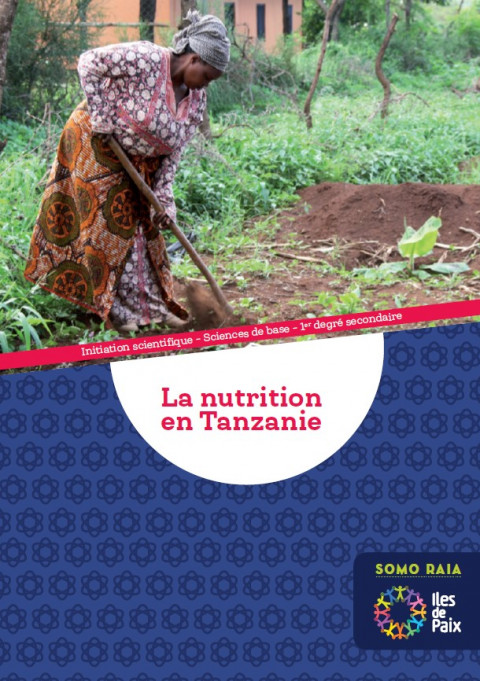 La nutrition en Tanzanie Year of publication: 2018 Corporate author: Îles de Paix L’objectif de ce dossier est d’amener l’élève à appréhender la problématique de la malnutrition et ses conséquences dans un pays en voie de développement ainsi que les moyens mis en place par une ONG pour y remédier. En parallèle, l’élève pourra découvrir ou revoir les principes de base d’une alimentation saine et réfléchir à ses habitudes alimentaires. Au travers des activités, l’élève devra mettre en œuvre des savoir-faire, tels que la lecture et l’analyse de graphiques et de tableaux, la réalisation de graphiques, l’analyse de textes et de divers types de documents. Une partie documentaire, destinée à l’enseignant, permet d’approfondir la thématique.
 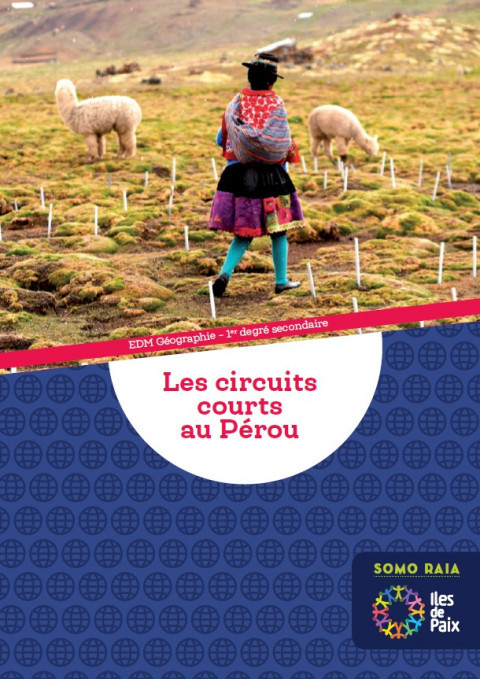 Les circuits courts au Pérou Year of publication: 2018 Corporate author: Îles de Paix Conçu en vue de s’intégrer dans la formation géographique et historique des étudiants, son objectif est que chaque élève puisse découvrir les enjeux liés au commerce dans un pays lointain. Cette découverte des circuits courts au Pérou se fait par le biais de 3 activités. L’enseignant peut y trouver des exercices variés, permettant de travailler plusieurs compétences. Au travers des activités, l’élève devra mettre en œuvre des savoir-faire, tels que la lecture de cartes, l’identification de documents et l’organisation d’informations, en vue d’acquérir de nouveaux savoirs et de développer de nouvelles compétences. Une partie documentaire, destinée à l’enseignant, permet d’approfondir la thématique.
 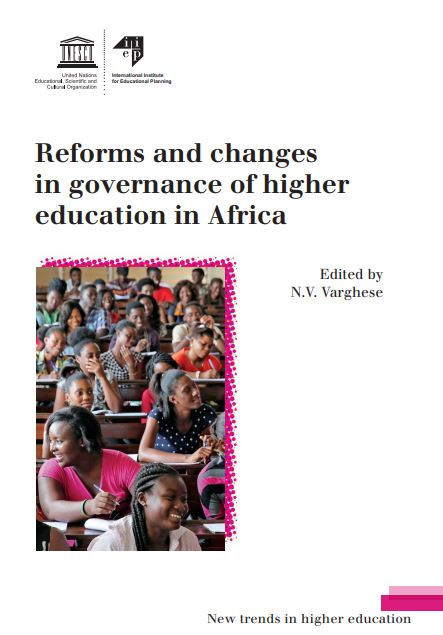 Reforms and Changes in Governance of Higher Education in Africa Year of publication: 2016 Author: N.V. Varghese Corporate author: UNESCO International Institute for Educational Planning (IIEP) Higher education in Africa has received favourable political attention and funding support in the period following independence. The rationale for state funding was questioned in the 1980s, and the higher education reforms in the 1990s centred on finding alternative ways of financing and on improving the managerial efficiency of universities. This focus was reflected in the market-friendly reforms that led to the privatization of public institutions and the promotion of private institutions. These reforms resulted in substantial changes in the governance and management of higher education. IIEP initiated a research study to analyse the reforms and to understand their effects on the governance of higher education at institutional and national levels. Based on studies carried out in Ethiopia, Ghana, Kenya, Nigeria, and South Africa, this book shows how the reforms have effected changes in the governance and management of institutions of higher education in Africa.
 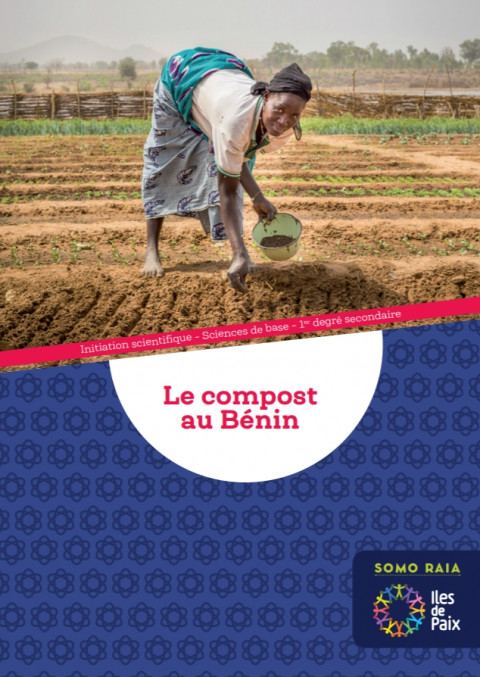 Le compost au Bénin Year of publication: 2018 Corporate author: Îles de Paix L’objectif de ce dossier est d’amener les élèves à découvrir ce qu’est le recyclage de la matière organique via le compost. En parallèle, ils pourront réfléchir à la manière dont le compost peut être utilisé pour remédier aux problèmes de fertilité des sols dans un pays en voie de développement tel que le Bénin. Au travers des activités, les élèves devront mettre en œuvre des savoir-faire, tels que la réalisation et l’analyse d’expériences, l’analyse de textes et de dessins, la réalisation de classements et de schémas. Une partie documentaire, destinée à l’enseignant, permet d’approfondir la thématique.
 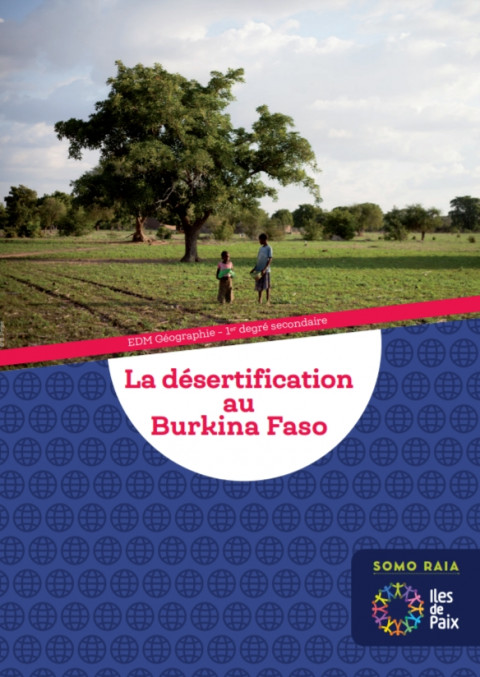 La désertification au Burkina Faso Year of publication: 2019 Corporate author: Îles de Paix Au Burkina Faso, les changements climatiques contribuent à accentuer le phénomène de désertification et à aggraver les problèmes alimentaires. L’objectif de ce dossier est que les étudiants puissent découvrir ce pays d’Afrique ainsi que les enjeux liés à la désertification. Au travers des activités, les élèves auront la possibilité d’exercer plusieurs compétences via des documents variés : chansons, documents écrits, iconographies, cartes, schémas, etc. Une partie documentaire, destinée à l’enseignant, permet d’approfondir la thématique.
 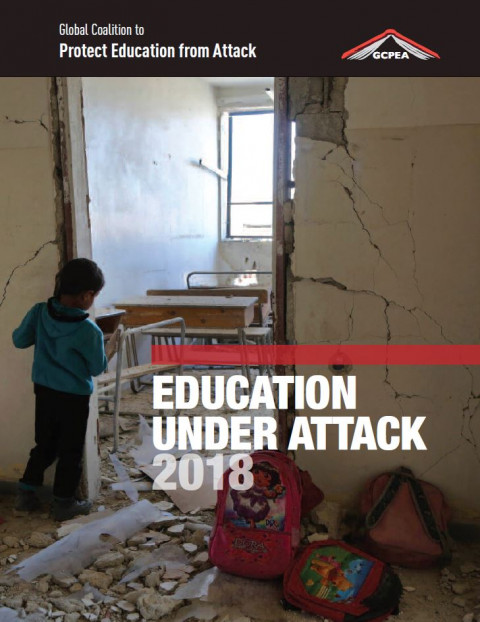 Education Under Attack 2018 Year of publication: 2018 Corporate author: Global Coalition to Protect Education from Attack (GCPEA) This report is the fourth edition of Education under Attack. It builds on the 2014 study published by the Global Coalition to Protect Education from Attack and the 2007 and 2010 publications by the United Nations Educational, Scientific and Cultural Organization (UNESCO). The present edition covers the five-year period from January 2013 to December 2017. The previous edition included profiles of 30 countries that had experienced at least five incidents of attacks on education in which students or education personnel were harmed, including at least one direct attack or one person killed, between 2009 and mid-2013. The current study includes profiles of 28 countries that experienced at least 20 attacks on education during the 2013-2017 reporting period, regardless of the severity of the incidents. Although significant data gaps remain and data quality varies, reporting of attacks on education has become more comprehensive and systematic over the last five years.Each country profile includes information on six categories of attacks on education, as relevant: Physical attacks or threats of attacks on schools Physical attacks or threats directed at students, teachers, and other education personnel Military use of schools and universities Child recruitment at, or en route to or from, school or university Sexual violence by armed parties at, or en route to or from, school or university Attacks on higher education
 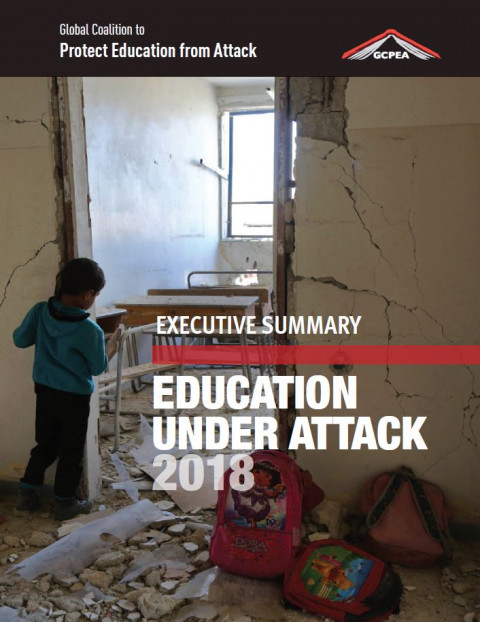 [Summary] Education Under Attack 2018; Executive Summary Year of publication: 2018 Corporate author: Global Coalition to Protect Education from Attack (GCPEA) A global study of threats or use of force, either deliberate or indiscriminate, against students, teachers, academics, education support and transport staff or education officials, and against schools, universities and other education institutions carried out for political military, ideological, sectarian, ethnic or religious reasons from 2013 to 2017. [Resumen] Ataques a la Educación 2018; Resumen Ejecutivo Year of publication: 2018 Corporate author: Global Coalition to Protect Education from Attack (GCPEA) Estudio global de las amenazas o instancias de uso deliberado o indiscriminado de la fuerza contra estudiantes, docentes, académicos, personal auxiliar educativo y de transporte o funcionarios de educación, y contra escuelas, universidades y otras instituciones educativas, perpetradas con fines políticos, militares, ideológicos, sectarios, étnicos o religiosos entre 2013 y 2017. [Résumé] L’education prise pour cible 2018; Un résumé de Year of publication: 2018 Corporate author: Global Coalition to Protect Education from Attack (GCPEA) Une étude globale des menaces ou de l'usage de la force, délibérée ou non, contre les élèves, les enseignants, les universitaires, le personnel scolaire et des transports ou les agents de l'éducation; et contre les écoles, les universités et autres institutions éducatives, menées pour des raisons politiques, militaires, idéologiques, sectaires, ethniques ou religieuses de 2013 à 2017.