
Resources
Explore a wide range of valuable resources on GCED to deepen your understanding and enhance your research, advocacy, teaching, and learning.
1,450 Results found
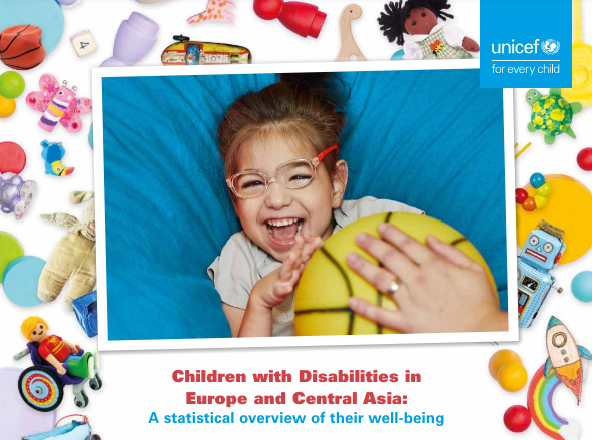 Children with Disabilities in Europe and Central Asia: A Statistical Overview of Their Well-Being Year of publication: 2023 Corporate author: United Nations (UN) This regional report provides critical evidence for decision-makers across countries to use in both policy and programming. In the context of the Global Disability Inclusion Strategy and Policy, UNICEF in Europe and Central Asia will use this valuable resource to embark on the next level of engagement to give all children with disabilities the opportunity to realize their rights on an equal basis with their peers. Дети с инвалидностью в Европе и Центральной Азии: статистический обзор их благополучия Year of publication: 2023 Corporate author: United Nations (UN) Данный региональный доклад содержит важные фактические данные, которые лица, принимающие решения в разных странах, могут использовать при разработке политических документов и программ. ЮНИСЕФ в Европе и Центральной Азии в контексте Глобальной стратегии и политики по вовлечению людей с инвалидностью будет использовать этот ценный ресурс, чтобы перейти на следующий уровень взаимодействия, дающий всем детям с инвалидностью перспективы реализации своих прав наравне со сверстниками.
 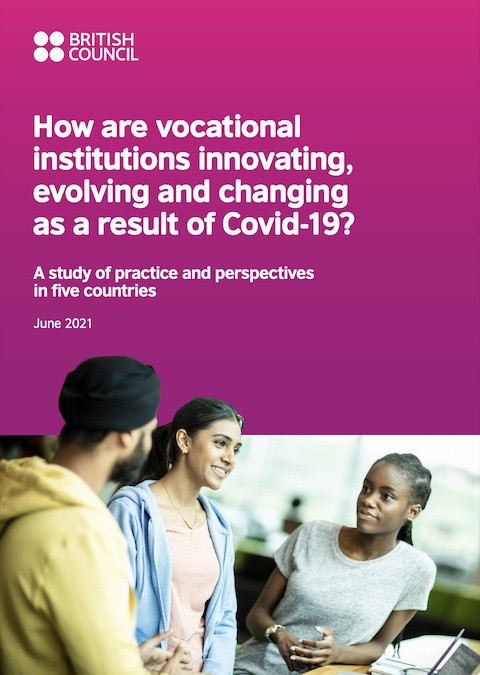 How Are Vocational Institutions Innovating, Evolving and Changing as a Result of COVID-19?: A Study of Practice and Perspectives in Five Countries Year of publication: 2021 Corporate author: British Council As an international problem, Covid-19 requires international cooperation. The social, economic and educational recovery from the pandemic can be enhanced by knowledge transfer and exchange. This research brought together 15 technical and vocational education and training (TVET) institutions from the five countries in the British Council’s I-WORK Programme (Improving Work Opportunities - Relaying Knowledge) to explore innovation, evolution and change stemming from the pandemic. TVET practitioners and leaders from Ghana, India, Malaysia, South Africa and the UK were asked to reflect on five key questions: How are institutional policy and structures likely to change to reflect the changing situation? Is this different for private institutions? What changes are proposed to the curriculum/ occupational areas to reflect the rapidly changing demand and how are they identifying this demand? How will learners get the practical and work-based experience they need and what changes to work- based learning and apprenticeships are needed? What changes are needed to the skills and type of staff in the teaching institution? How can new delivery models and ways of working promote more inclusive practice? The research took place as institutions approached almost a year of adapting their teaching, learning and support to localised lockdowns and the restrictions of the pandemic. The national policy context may have been different in each country, but the research findings pointed to a single conclusion: that across the board, the move to digital learning and teaching had brought benefits, opportunities and challenges that might not otherwise have been realised.
 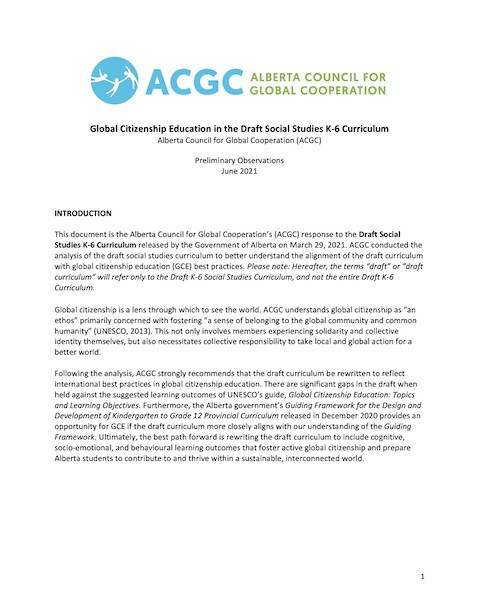 Global Citizenship Education in the Draft Social Studies K-6 Curriculum Year of publication: 2021 Corporate author: Alberta Council for Global Cooperation (ACGC) This document is the Alberta Council for Global Cooperation’s (ACGC) response to the Draft Social Studies K-6 Curriculum released by the Government of Alberta on March 29, 2021. ACGC conducted the analysis of the draft social studies curriculum to better understand the alignment of the draft with global citizenship education (GCE) best practices.Global citizenship is a lens through which to see the world. ACGC understands global citizenship as “an ethos” primarily concerned with fostering “a sense of belonging to the global community and common humanity” (UNESCO, 2013). This not only involves members experiencing solidarity and collective identity themselves, but also necessitates collective responsibility to take local and global action for a better world.Following the analysis, ACGC strongly recommends that the draft curriculum be rewritten to reflect international best practices in global citizenship education. There are significant gaps in the draft when held against the suggested learning outcomes of UNESCO’s guide, Global Citizenship Education: Topics and Learning Objectives. Furthermore, the Alberta government’s Guiding Framework for the Design and Development of Kindergarten to Grade 12 Provincial Curriculum released in December 2020 provides an opportunity for GCE if the draft curriculum more closely aligns with our understanding of the Guiding Framework. Ultimately, the best path forward is rewriting the draft curriculum to include cognitive, socio-emotional, and behavioural learning outcomes that foster active global citizenship and prepare Alberta students to contribute to and thrive within a sustainable, interconnected world.
 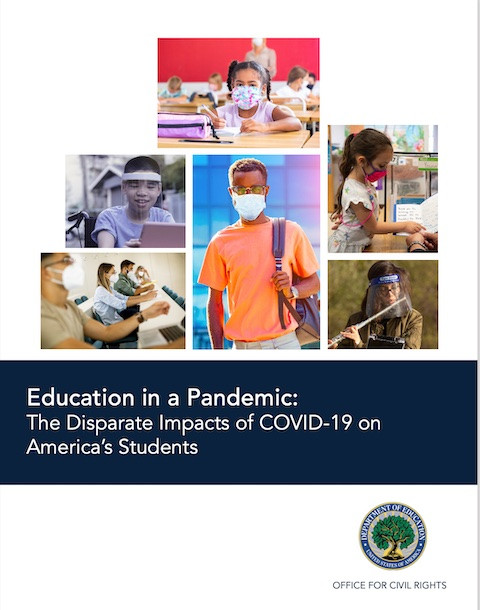 Education in a Pandemic: The Disparate Impacts of COVID-19 on America’s Students Year of publication: 2021 Corporate author: USA. Department of Education. Office for Civil Rights (OCR) The U.S. Department of Education’s Office for Civil Rights published, Education in a Pandemic: The Disparate Impacts of COVID-19 on America’s Students, in response to President Biden’s Executive Order on Supporting the Reopening and Continuing Operation of Schools and Early Childhood Education Providers. The report explores how the impacts of COVID-19 are falling disproportionately on students who went into the pandemic with the fewest educational opportunities, many of whom are from marginalized and underserved communities, with early research showing disparities based on race, ethnicity, LGBTQ+ identity, and other factors.
 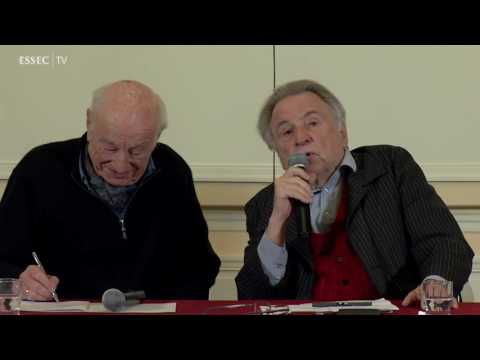 SANS TABOU, Debate Between Edgar Morin and Régis Debray on "Citizenship" Year of publication: 2016 Corporate author: ESSEC Business School Debate "Without Taboo" between Edgar Morin and Régis Debray on the theme of "Citizenship", moderated by Jean-Michel Blanquer, Managing Director of Essec at the Maison de d'Amérique Latine on November 17, 2016 and organized by the chair Edgar Morin on the complexity of Essec directed by Professor Laurent Bibard. SANS TABOU, débat entre Edgar Morin et Régis Debray sur "La Citoyenneté" Year of publication: 2016 Corporate author: ESSEC Business School Débat "Sans Tabou" entre Edgar Morin et Régis Debray sur le thème de "La Citoyenneté", animé par Jean-Michel Blanquer, Directeur Général de l'Essec à la Maison de l'Amérique Latine le 17 novembre 2016 et organisé par la chaire Edgar Morin de la complexité de l'Essec dirigée par le professeur Laurent Bibard.
 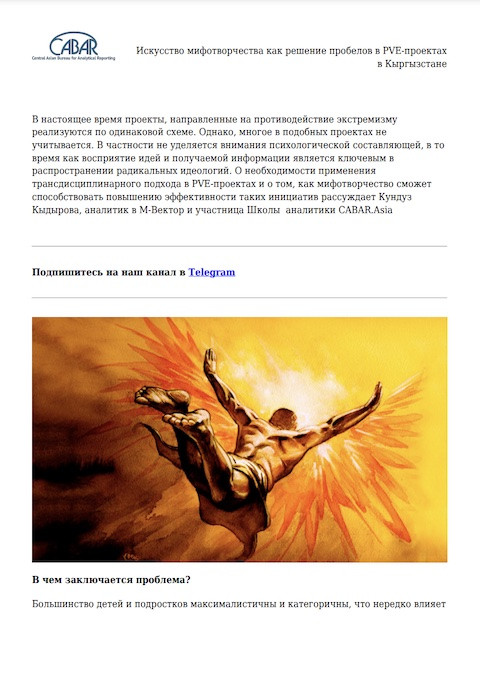 The Art of Mythmaking as a Solution to Gaps in PVE Projects in Kyrgyzstan Year of publication: 2020 Author: Kunduz Kydyrova Corporate author: Central Asian Bureau for Analytical Reporting (CABAR) | Institute for War and Peace Reporting (IWPR) Currently, projects aimed at countering extremism are being implemented according to the same scheme. However, much is not considered in such projects. In particular, no attention is paid to the psychological component, while the perception of ideas and information received is key in the spread of radical ideologies. Kunduz Kydyrova, an analyst at M-Vector and a member of the CABAR.asia School of Analytics, discusses the need to apply a transdisciplinary approach in PVE projects and how mythmaking can help increase the effectiveness of such initiatives. Искусство мифотворчества как решение пробелов в PVE-проектах в Кыргызстане Year of publication: 2020 Author: Kunduz Kydyrova Corporate author: Central Asian Bureau for Analytical Reporting (CABAR) | Institute for War and Peace Reporting (IWPR) В настоящее время проекты, направленные на противодействие экстремизму реализуются по одинаковой схеме. Однако, многое в подобных проектах не учитывается. В частности не уделяется внимания психологической составляющей, в то время как восприятие идей и получаемой информации является ключевым в распространении радикальных идеологий. О необходимости применения трансдисциплинарного подхода в PVE-проектах и о том, как мифотворчество сможет способствовать повышению эффективности таких инициатив рассуждает Кундуз Кыдырова, аналитик в М-Вектор и участница Школы аналитики CABAR.Asia.
 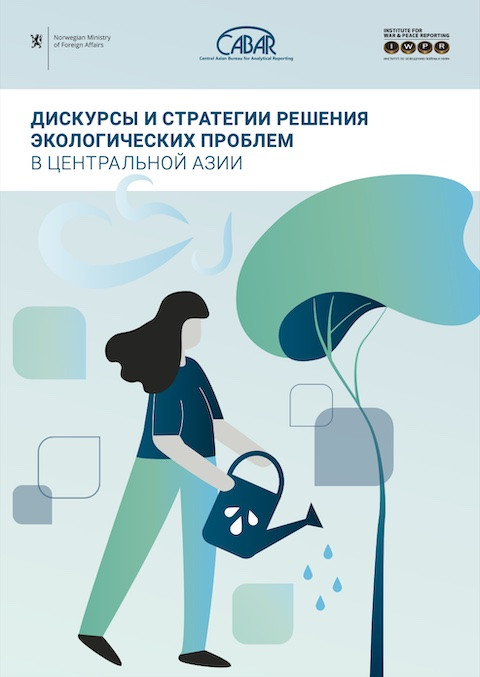 Discourses and Strategies for Solving Environmental Issues in Central Asia Year of publication: 2020 Author: Muslimbek Buriev Corporate author: Central Asian Bureau for Analytical Reporting (CABAR) | Institute for War and Peace Reporting (IWPR) The representative office of the Institute for War and Peace Reporting (IWPR) in Central Asia and CABAR.asia present an analytical note entitled “Discourses and Strategies for Solving Environmental Issues in Central Asia”. This work is an effort to outline the most significant environmental issues in the region and to analyze measures to solve them. In addition, it attempts to highlight cases of successful practice as well as to identify existing programs with significant shortcomings.The work is meant for young experts and consultants, researchers, decision-makers, as well as a wide range of readers interested in environmental issues and governance in Central Asia.