
Resources
Explore a wide range of valuable resources on GCED to deepen your understanding and enhance your research, advocacy, teaching, and learning.
2,776 Results found
 The education we want: youth advocacy toolkit Year of publication: 2015 Author: James Edleston | Dan Smith, Sumaya Saluja | David Crone | Chernor Bah | Emily Laurie Corporate author: UN Global Education First Initiative - Youth Advocacy Group (YAG) | Plan | A World at School This toolkit is for anyone who believes passionately in the power of education as a force for good in the world and the right for all children to get a good quality education, no matter where they are and what the circumstances. We hope this toolkit will support you to carry out your own advocacy campaign. If you are just beginning to think about taking action on education, you can work your way through the toolkit from start to finish. But you can also dip in to pick up useful hints or activities to help you carry out your existing plans. We know this toolkit doesn’t cover everything you might need and we’ve tried to sign-post you to other resources where possible. Included in here are lots of real stories of change, led by young people, from all over the world. We hope they inspire you. The young global movement for education is growing, and you can be part of it.
  دليل شباب تونس في تعلّم الديمقراطيّة Year of publication: 2011 Corporate author: UNESCO Rabat The main aim of these manual and guide is to raise awareness among Tunisian youth about the values of democracy, human rights and responsible citizenship, and empower youth to make their voice heard during this critical period in the Tunisian democratic transition.
  Preventing Violent Extremism through Sport: Technical Guide; Criminal Justice Handbook Series Year of publication: 2020 Corporate author: UN. Office on Drugs and Crime (UNODC) The Technical Guide on Preventing Violent Extremism through Sport, developed in consultation with international experts, recognizes the importance of promoting the well-being of children and youth. It applies an approach that encourages prosocial behaviour and good safeguarding and welfare practices, with particular emphasis on educational and social development measures in line with the United Nations Guidelines for the Prevention of Crime.The guide, addressed mainly to policy makers and implementing organizations, has been carefully designed to support effective integration of sport-based learning in primary prevention frameworks. By adopting a five-zone approach to prevent violent extremism namely safe space, empowerment, resilience, social inclusion and education, it supports informed policy development and a Theory of Change that can shape curriculum design and content. To further support global efforts in preventing violent extremism, UNODC is also developing an e-learning module and a practical tool for trainers that will be published soon and will complement this technical guide.
  Building Back Better: Youth, Power and Planet Year of publication: 2020 Author: Valerie Duffy | Leo Gilmartin | Eva Janssens | Dermot O’Brien Corporate author: National Youth Council of Ireland (NYCI) Building Back Better: Youth, Power and Planet is about power. The understanding of power in youth work is vitally important for the development of young people as they navigate through their lives and society.The aim of this resource is to support young people and youth workers in understanding power, seeing power, claiming power, and activating power. It includes a wealth of background information on concepts around power and terminology, as well as a guide on ‘How to Use this Resource’, activities, stimulus sheets. This toolkit explores the issue of power and helps you make links to the Sustainable Development Goals.It is designed for global educators, youth workers, development education practitioners, trainers, climate activists, changemakers of all shapes and sizes but in particular those working with the current generation of young people.Building Back Better contains 4 main sections:Section 1. Defining PowerSection 2. Seeing PowerSection 3. Claiming PowerSection 4. Activating PowerIt also contains:an introduction to power in theory and in practice 10 activities with interactive exercisesaction power templates for planningstriking visuals, case studies on human development for adapting This was resource was created by the NYCI Youth 2030 programme. Kit de Plaidoyer pour la promotion de l'éducation multilingue: y compris les exclus Year of publication: 2007 Corporate author: UNESCO Bangkok
 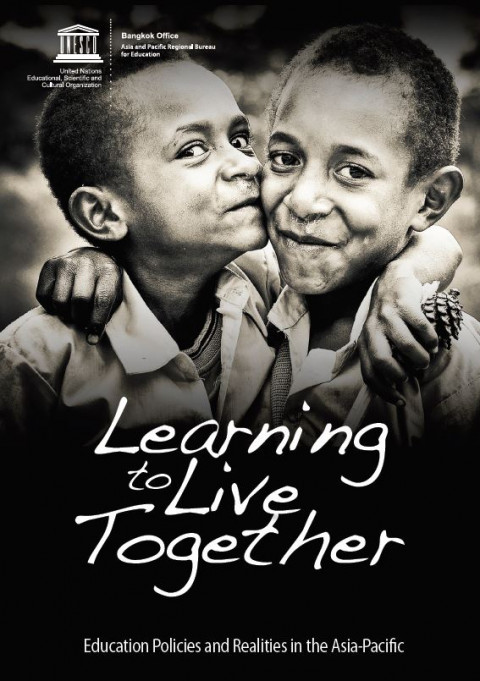 Learning to live together Year of publication: 2014 Corporate author: UNESCO Bangkok The importance of LTLT has increased in recent years. Indeed, relevant competencies appear to be gaining focus in international frameworks and educational initiatives across countries. This is all the more necessary as Voogt and Roblin (2012) argue, given the demands of our increasingly knowledge-based society in which “ideas and knowledge function as commodities” (p. 299 –300) and to which effective social and emotional skills are critical. It is perhaps all the more critical given the multivariate global challenges in the 21st Century and the need for unified global commitment to effectively combat these challenges. In this context, the significance of LTLT is reflected in both the rise of and growing interest in Global Citizenship Education (GCE), Education for Sustainable Development (ESD), Education for International Understanding (EIU) as well as peace and human rights education. The UN Secretary-General’s Global Education First Initiative, which lists ‘Fostering Global Citizenship’ as one of its three global priorities, also implicitly recognizes the significance of LTLT as a precursor to the building of a more peaceful society, one in which discrimination is intolerable and common challenges such as climate change and abject poverty are tackled together.Yet despite the significance of LTLT in the 21st Century, and despite numerous international initiatives to foster LTLT competencies, there is a large gap of evidence identifying how this supposition is translated into effective policy and curricula, and eventually into the reality of schools, teachers and learners. This report is a response to this gap, and attempts to understand how ten selected countries in the Asia-Pacific region – Afghanistan, Australia, Indonesia, Malaysia, Myanmar, Nepal, The Philippines, Republic of Korea, Sri Lanka and Thailand – have reflected and integrated LTLT into their education policies and initiatives. This variety of countries aims to reflect their diverse experiences in terms of reflecting LTLT through their education systems. By exploring a number of areas, namely policy, curricula, teachers and assessment, this study aims to identify what has so far been achieved in education systems of the Asia-Pacific region in the area of LTLT.This report is therefore targeted predominantly at education policy makers, researchers, academics as well as education practitioners of the Asia-Pacific region. Given its connection to Global Citizenship Education and other relevant international initiatives around sustainability and peace education, this report is also relevant to UNESCO’s partner organizations and the broader educational development community.This report will first present the research framework for the study, before exploring the social and economic contexts in the ten selected countries and wider regional factors in the Asia-Pacific in relation to global challenges in Chapter Two. Chapter Three will then examine national policy frameworks, including the vision of those policies in defining LTLT in education. Chapter Four focuses on the national curriculum in selected countries and the extent to which they incorporate learning objectives, subjects, and extra-curricular activities reflecting the concept of LTLT and related skills and competencies. In Chapter Five, teaching practices are examined, including the role of teachers and teacher education, as well as teaching methods and application of media and information literacy (MIL) in the classroom. Chapter Six then looks at assessment, and how far countries have attempted to develop assessment frameworks that measure the skills and competencies related to LTLT. Finally, Chapter Seven provides reflections and conclusions based on the main findings of the study, while also identifying trends across policy domains, shortcomings and some policy considerations. Learning to live together: have we failed? A summary of the ideas and contributions arising from the forty-sixth session of UNESCO's International Conference on Education, Geneva, 5-8 September 2001 Year of publication: 2003 Corporate author: UNESCO International Bureau of Education (IBE) | UNESCO Brasilia The present book is based mainly on the work of the forty-sixth session of the International Conference on Education (ICE), organized by UNESCO’s International Bureau of Education (IBE) and held in Geneva from 5 to 8 September 2001. The theme of the conference was ‘Education for All for Learning to Live Together: Contents and Learning Strategies - Problems and Solutions’. Unless stated otherwise, the numerous quotations chosen to illustrate the points made in this book are from ICE documents and contributions. The Conclusions and Proposals for Action adopted by the 2001 ICE are provided in Chapter V.The ICE is the only regularly occurring event during which Ministers of Education from all over the world can meet. It therefore serves as a unique and highly appreciated international forum for high-level dialogue on educational issues and their policy implications.The 2001 ICE brought together over 600 participants from 127 countries, including in particular 80 Ministers and 10 Vice-Ministers of Education, as well as representatives of intergovernmental and non-governmental organizations. The themes of the 2001 ICE were, and still are, very relevant all over the world: those in charge of education have become well aware of the necessity and complexity of living together, as well as of the role and limits of education in this respect.The ICE was inspired by abundant literature dealing with the principle issues that participants debated, including: Preparatory reports; National reports presented by the Member States; Examples of initiatives and good practice (including those presented at the conference as video case studies); Messages from Ministers of Education attending the Conference; And contributions from the numerous researchers, experts, educationists and decision makers at all levels of education who also participated in the Netforum between April and August 2001. More information and opinions on the vast issue of Education for All for Learning to Live Together were added during the Conference itself, in the form of keynote addresses, presentations and debates during the two plenary sessions, six thematic workshops and the special session devoted to partnerships with civil society.The present book draws on this wealth of experience, research, opinions, ideas and visions of the future. It seeks to contribute to bringing the debate on Education for All for Learning to Live Together closer to actors of the global educational community. By setting out ins concise way the key issues and proposed actions, and illustrating them with concrete examples, numerous quotations and a number of questions, this book is intended particularly for teacher trainers, teachers themselves and their professional organizations, as well as for all actors in civil society who endeavour to improve the quality of education, to encourage dialogue and to foster in this way the capacity for living together.Neither a ‘conference report’ nor a scientific or academic work, this book is intended to be a sort of ‘gallery of photographs’ of the forty-sixth session of the ICE – its atmosphere of dialogue, the themes of its debates, and the first-hand descriptions and experiences exchanged. Far from prescribing norms or standards, it intends to share information, ideas and practices, rather like the ICE itself, in a spirit of exchange and dialogue. Learning to live together: have we failed? A summary of the ideas and contributions arising from the forty-sixth session of UNESCO's International Conference on Education, Geneva, 5-8 September 2001 Year of publication: 2003 Corporate author: UNESCO International Bureau of Education (IBE) | UNESCO Brasilia Le présent ouvrage repose principalement sur les travaux de la quarante-sixième session de la Conférence Internationale sur l'Éducation (CIE), organisée par le Bureau International d'Éducation (BIE) de l'UNESCO et tenue à Genève du 5 au 8 Septembre 2001. Le thème de la conférence était ‘L'éducation pour tous pour apprendre à vivre ensemble: contenus et stratégies d'apprentissage - problèmes et solutions’. Sauf indication contraire, les nombreuses citations choisies pour illustrer les points soulevés dans ce livre sont des documents de l'CIE et les contributions. Les Conclusions et Propositions d'Action adoptées par la CIE de 2001 sont présentés au Chapitre V.L'CIE est l'événement qui se produit seulement régulièrement au cours de laquelle les ministres de l'éducation de partout dans le monde peuvent se rencontrer. Il sert donc comme un forum international unique et très apprécié pour le dialogue de haut niveau sur les questions d'éducation et de leurs implications politiques.La CIE de 2001 a réuni plus de 600 participants de 127 pays, y compris en particulier 80 inistres et 10 Vice-Ministres de l'Éducation, ainsi que des représentants d'organisations intergouvernementales et non gouvernementales. Les thèmes de la CIE 2001 étaient, et sont encore, très pertinent partout dans le monde: les responsables de l'éducation ont pris conscience de la nécessité et de la complexité de vivre ensemble, ainsi que du rôle et des limites de l'éducation à cet égard .L'CIE a été inspiré par une abondante littérature portant sur les principaux points de débat, y compris:Rapports Préparatoires;Les rapports nationaux présentés par les États membres;Exemples d'initiatives et bonnes pratiques (y compris celles qui sont présentées à la conférence que des études de cas vidéo);Messages des Ministres de l'Éducation présents à la Conférence;Et les contributions des nombreux chercheurs, des experts, des éducateurs et des décideurs à tous les niveaux de l'éducation qui a également participé à l'Netforum entre Avril et Août de 2001. Plus d'informations et d'opinions sur la grande question de l'éducation pour tous pour apprendre à vivre ensemble ont été ajoutés au cours de la Conférence elle-même, sous la forme de discours d'ouverture, des présentations et des débats au cours des deux sessions plénières, six ateliers thématiques et la session extraordinaire consacrée aux partenariats avec la société civile.Le présent ouvrage se fonde sur cette richesse de l'expérience, de la recherche, des opinions, des idées et des visions de l'avenir. Elle vise à contribuer à ramener le débat sur l'éducation pour tous pour apprendre à vivre ensemble plus près des acteurs de la communauté éducative mondiale. En énonçant ins de manière concise les questions clés et les actions proposées, et en les illustrant par des exemples concrets, de nombreuses citations et un certain nombre de questions, ce livre est particulièrement destiné aux formateurs d'enseignants, les enseignants eux-mêmes et leurs organisations professionnelles, ainsi que pour tous les acteurs dans la société civile qui s'efforcent d'améliorer la qualité de l'éducation, d'encourager le dialogue et de favoriser ainsi la capacité de vivre ensemble.Ni un ‘rapport de la conférence’, ni une œuvre scientifique ou universitaire, ce livre est destiné à être une sorte de «galerie de photos» de la quarante-sixième session de la CIE - son atmosphère de dialogue, les thèmes de ses débats, et la descriptions et les expériences de première main échangées. Loin de prescrire des normes ou des normes, elle a l'intention de partager des informations, des idées et des pratiques, un peu comme l'CIE lui-même, dans un esprit d'échange et de dialogue.
 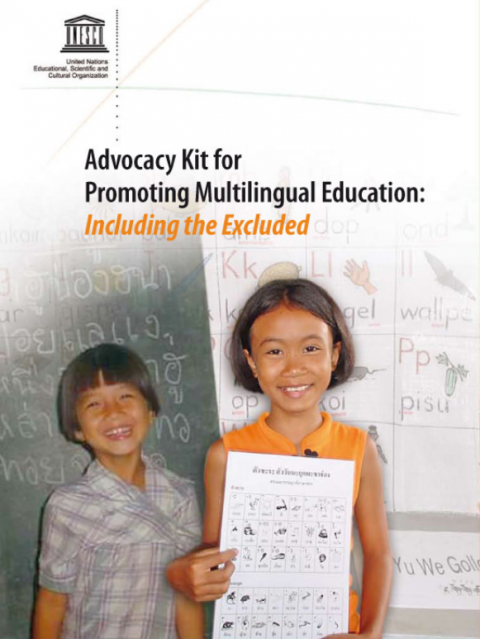 Advocacy kit for promoting multilingual education: including the excluded Year of publication: 2007 Corporate author: UNESCO Bangkok Who Can Use This Kit? This kit was prepared for all of those who want to ensure that “Education for All” does, indeed, include everyone! The kit will be especially valuable for policy makers, education practitioners and specialists who want to improve access to and quality of education for those excluded by language. It will also be helpful for speakers of ethnic minority languages who want to improve the education situation in their own communities.This kit is designed to raise awareness on the importance of mother tongue-based multilingual education (MLE). It presents key arguments and facts about MLE and provides important insights about the value and benefits of providing education in learners’ mother tongue. The kit also presents ideas, research findings and concrete examples that you can use to think about your own situation and suggests steps for taking actions to make your school system more responsive to linguistic diversity.The kit is not a definitive textbook, and it will not have an answer for every problem that you might face. To help you as much as possible, at the end of each booklet we have included lists of references. In addition, each booklet contains a glossary of terms and, at the front of each booklet is a one-page summary of its contents.How Can You Use This Kit? This kit contains three main booklets. Each booklet has a designated audience: 1) policy makers, 2) education programme planners and practitioners and 3) community members. Please remember that developing MLE requires contributions from everyone at all levels. For that reason, we encourage you to use all three booklets along with other available resources as you work together to plan, implement and sustain your MLE programmes.This kit can be used in many different ways. For those who are already involved in MLE programmes, you might use these ideas to help you to promote mother tongue instruction and strengthen your programme. Those who are not familiar with multilingual education but want to improve educational access for minority language students might use these booklets to identify specific points that they can investigate and discuss in their own contexts.
 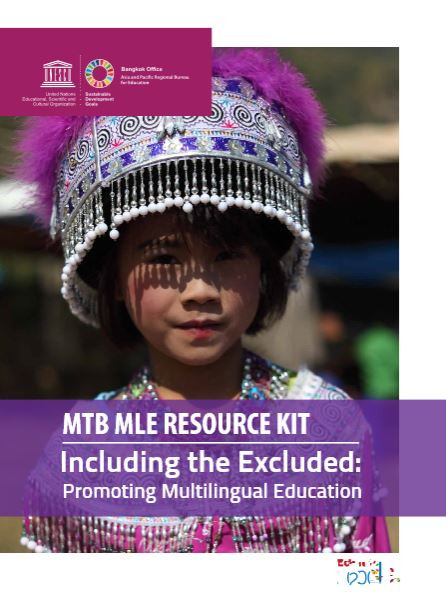 MTB MLE resource kit: Including the excluded: promoting multilingual education Year of publication: 2016 Author: Susan Malone Corporate author: UNESCO Bangkok Who Can Use this Resource Kit?This MTB MLE Resource Kit is for people who are committed to the idea that all children have the right to quality education in a language they speak and understand. MTB MLE programmes that are sustained within the formal education system require contributions from all stakeholders, working together and supporting one another. The next three booklets were developed for three specific stakeholder groups: policy makers, programme implementers and community members. These three booklets, with the case studies, provide a “big picture” of successful MTB MLE programmes and suggestions for the roles each group can take as they plan, implement and maintain their programmes. How Can You Use this Resource Kit?Each booklet is organized around key questions about MTB MLE that are frequently asked by policy makers, implementers and community members. Responses to each question include examples of specific activities that are part of successful MTB MLE programmes in a variety of contexts. Working together, stakeholders can identify the specific activities that are best suited for their own situation and make the best use of all available resources.