
Resources
Explore a wide range of valuable resources on GCED to deepen your understanding and enhance your research, advocacy, teaching, and learning.
3,799 Results found
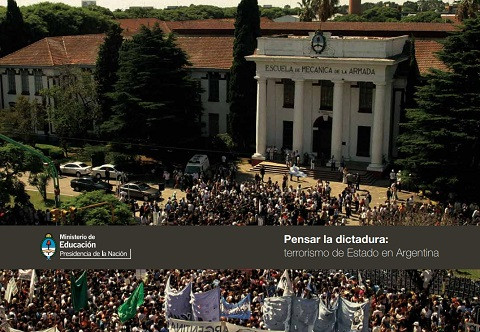 Thinking of the Dictatorship: State Terrorism in Argentina Year of publication: 2010 Corporate author: Ministry of Education (Argentina) This book presents, in questions and answers format, basic information and the enumeration of the main historical and theoretical problems that arise from dictatorship and State Terrorism, to accompany teachers in the complex task of teaching this subject. Pensar la dictadura: Terrorismo de Estado en Argentina Year of publication: 2010 Corporate author: Ministry of Education (Argentina) Este libro presenta, en formato de preguntas y respuestas información básica y la enumeración de los principales problemas históricos y teóricos que se desprenden de la dictadura y el terrorismo de estado, para acompañar a los docentes en la compleja tarea de la enseñanza de esta temática.
 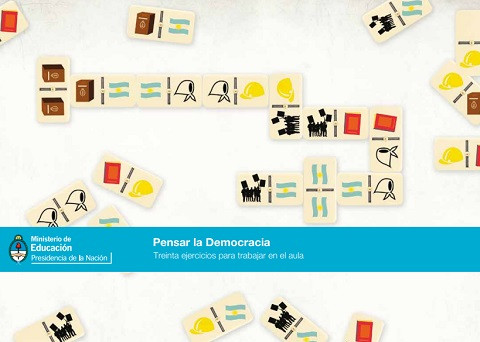 Thinking of Democracy: Thirty Exercises to Work on in the Classroom Year of publication: 2013 Author: María Celeste Adamoli | Cecilia Flachsland | Violeta Rosemberg Corporate author: Argentina. Ministry of Education This book presents tools for education for democratic citizenship. The text proposes thirty exercises, short texts that link and put in counterpoint two precise events of the last three decades (phrases, slogans, laws, facts, dates, mobilizations, objects, songs, films, proper names, life stories, etc. ) that allow us to reflect on different facets of the Argentine democratic experience that began in 1983. Pensar la democracia: Treinta ejercicios para trabajar en el aula Year of publication: 2013 Author: María Celeste Adamoli | Cecilia Flachsland | Violeta Rosemberg Corporate author: Argentina. Ministry of Education Este libro presenta herramientas para la educación para la ciudadanía democrática. El texto propone treinta ejercicios, textos breves que vinculan y ponen en contrapunto dos acontecimientos precisos de las últimas tres décadas (frases, consignas, leyes, hechos, fechas, movilizaciones, objetos, canciones, películas, nombres propios, historias de vida, etc.) que permiten reflexionar sobre distintas facetas de la experiencia democrática argentina iniciada en1983.
  Global Education for Teachers: MOOC Year of publication: 2020 Author: Nicole Blum | Frances Hunt Corporate author: University College London (UCL) The Global Education for Teachers MOOC (Massive Online Open Course) is a three-week course for teachers (3 hours per week) around the world hosted by FutureLearn. The course has been designed specifically for teachers as an introduction to global education and related terms such as global learning / global citizenship education. It will engage teachers with key issues and debates in global education, support collaboration between teachers around the world and provide practical support on how to introduce global issues into teaching. It is intended to develop teachers’ confidence, knowledge and skills to include global education in teaching and in so doing, better prepare students to take on the global challenges they will face now and in the future.
  자유학기제와 미디어리터러시: 학교교사와 미디어교육 강사를 위한 가이드북 Year of publication: 2018 Author: 김양은 | 박한철 | 배은주 | 박정원 Corporate author: 시청자미디어재단 | 방송통신위원회 자유학기제에서 이루어지는 미디어교육을 담당하는 학교교사와 강사를 위한 미디어리터러시 교육 가이드북이다. 교육방법, 수업설계, 수업모형 및 미디어교육 참고자료 등 미디어교육과 관련한 교수학습자료를 다양하게 수록하였으며, 호주 및 캐나다의 미디어교육 사례도 참고할 수 있다.
 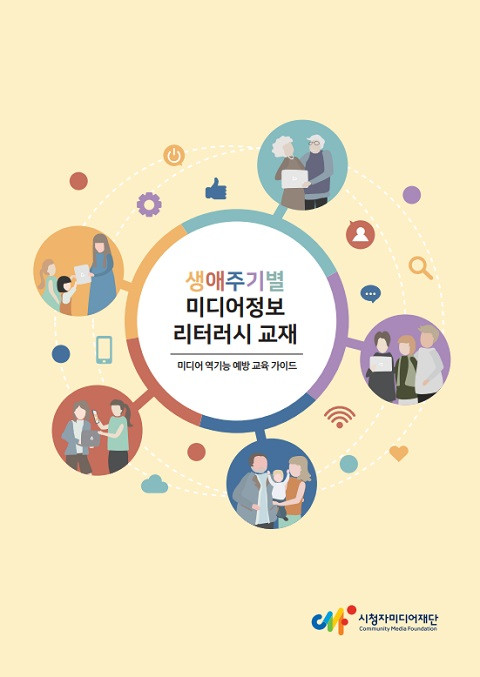 생애주기별 미디어정보 리터러시 교재: 미디어 역기능 예방 교육 가이드 Year of publication: 2018 Author: 김은규 | 정수진 | 김수정 Corporate author: 시청자미디어재단 본 교재의 목적은 과잉 정보 시대에 온라인, 소셜 미디어 등을 통해 전달되는 허위정보에 대응 하는 시민의 ‘미디어정보 리터러시’ 함양에 있다. 교재는 기본적으로 미디어정보의 의미와 활용, 미디어정보의 영향력, 좋은 정보와 거짓 정보의 구별, 허위정보의 유해성 등의 내용이 차시별로 제시되도록 구성했으며, 학교 중심의 미디어교육에서 벗어나 어린이, 청소년, 학부모, 성인, 실버세대의 다섯영역으로 유형화한 것이 특징이다. 또한, 이론식 수업이 아니라 실습 활동이 되도록 체험활동, 토론 등 다양한 수업 방식을 제시함으로써 각 개인이 수업 내용을 쉽게 체득할 수 있도록 했다.
 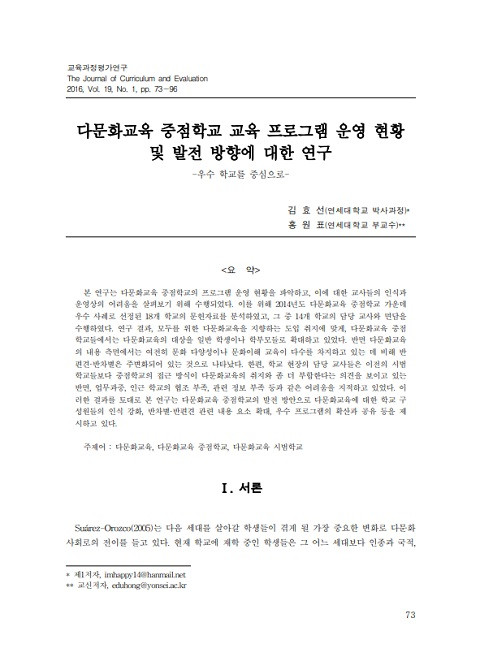 Effects and Limits of Core Schools for Multicultural Education (The Journal of Curriculum and Evaluation; Vol. 19, No. 1) Year of publication: 2016 Author: Hyosun Kim | Wonpyo Hong Corporate author: Korea Institute for Curriculum and Evaluation (KICE) This study investigates curriculum programs of core schools for multicultural education and teachers’ responses to their effects and limits. To address these topics, this study analyzes curricular documents collected from 18 elementary and secondary schools selected as exemplary cases in 2014. It also conducted in-depth interviews with 14 teachers who are in charge of planing and implementing multicultural programs in core schools. Major results support that multicultural core schools expand the targets of multicultural education to mainstream students, their parents and local residents beyond minority students and their parents. It turned out, however, that multicultural core schools still tend to untouch structural biases and discriminations, while focusing on extending students’ awareness of cultural and racial diversities. This study also reveals that participating teachers face such difficulties as heavy workloads, lack of collaboration from local schools, and lack of relevant experiences and instructional materials. Based on these results, this study suggests the sharing of successful programs, enhancing teachers awareness of the significance of multicultural education, and further supports for teachers in charge of multicultural education to achieve the targeted goals of multicultural core schools. 다문화교육 중점학교 교육 프로그램 운영 현황 및 발전 방향에 대한 연구 (교육과정평가연구; Vol. 19, No. 1) Year of publication: 2016 Author: 김혜선 | 홍원표 Corporate author: 한국교육과정평가원 본 연구는 다문화교육 중점학교의 프로그램 운영 현황을 파악하고, 이에 대한 교사들의 인식과 운영상의 어려움을 살펴보기 위해 수행되었다. 이를 위해 2014년도 다문화교육 중점학교 가운데 우수 사례로 선정된 18개 학교의 문헌자료를 분석하였고, 그 중 14개 학교의 담당 교사와 면담을 수행하였다. 연구 결과, 모두를 위한 다문화교육을 지향하는 도입 취지에 맞게, 다문화교육 중점학교들에서는 다문화교육의 대상을 일반 학생이나 학부모들로 확대하고 있었다. 반면 다문화교육의 내용 측면에서는 여전히 문화 다양성이나 문화이해 교육이 다수를 차지하고 있는 데 비해 반편견·반차별은 주변화되어 있는 것으로 나타났다. 한편, 학교 현장의 담당 교사들은 이전의 시범학교들보다 중점학교의 접근 방식이 다문화교육의 취지와 좀 더 부합한다는 의견을 보이고 있는 반면, 업무과중, 인근 학교의 협조 부족, 관련 정보 부족 등과 같은 어려움을 지적하고 있었다. 이러한 결과를 토대로 본 연구는 다문화교육 중점학교의 발전 방안으로 다문화교육에 대한 학교 구성원들의 인식 강화, 반차별·반편견 관련 내용 요소 확대, 우수 프로그램의 확산과 공유 등을 제시하고 있다.
  해외 학교 민주시민교육 교육과정 및 교과서 분석 Year of publication: 2019 Author: 오유석 | 김세희 | 서현수 | 이인선 | 김원석 | 정하윤 | 김원태 Corporate author: 대한민국 교육부 | 민주주의연구소 민주주의 국가에서 시민교육은 중요한 의미를 지닌다. 다수의 국가들에서 생활 속 민주주의 실현과 사회구성원의 정치사회화를 위하여 민주시민교육을 체계적으로 실시하고 있다. 특히 학교 민주시민교육은 국가마다 서로 다른 맥락과 역사적 전개 과정을 통해 다양한 학제, 교육과정, 교과서로 운영된다. 학교 시민교육은 학생들이 민주주의 가치와 개념을 이해하고 민주주의 발전에 참여하며 민주적 생활양식을 내 재화하도록 이끈다는 공통 목표를 지닌다. 이를 위해 민주시민교육 과정은 대부분 주제, 내용, 방법이 상황, 필요성, 입장 등에 따라 다양하게 선정될 수 있도록 보장 하며, 다양한 관점으로 특정 주제를 바라볼 수 있도록 풍부한 자료 제시하고 있다. 본 연구는 서구 민주주의 국가에서 실시되고 있는 학교민주시민교육을 살펴보기 위해 프랑스, 핀란드, 독일, 영국, 미국의 사례를 분석하였다. 5개의 사례 국가에서 실시되고 있는 학교 민주시민교육의 배경 및 맥락, 전개 과정뿐만 아니라 원칙을 살펴보고, 교육과정과 교과서를 분석함으로써 각 국가의 학교 민주시민교육의 특징 및 시사점을 도출했다. 이를 근거로 한국 학교 민주시민교육 활성화를 위한 정책을 제안하는 데 연구의 목적을 두었다.