
Resources
Explore a wide range of valuable resources on GCED to deepen your understanding and enhance your research, advocacy, teaching, and learning.
2,781 Results found
 Aprender a vivir juntos: Un programa intercultural e interreligioso para la educación ética: Resumen Year of publication: 2015 Corporate author: United Nations Children's Fund (UNICEF) | Interfaith Council on Ethics Education for Children | Arigatou Foundation What is the Learning to Live Together? How was it developed? Where and how can it be used? In the Executive Summary you can find answers to all these questions, as well as information about outstanding projects that show the potential of the programme. Learning to live together: an intercultural and interfaith programme for ethics education: Executive Summary Year of publication: 2015 Corporate author: United Nations Children's Fund (UNICEF) | Interfaith Council on Ethics Education for Children | Arigatou Foundation What is the Learning to Live Together? How was it developed? Where and how can it be used? In the Executive Summary you can find answers to all these questions, as well as information about outstanding projects that show the potential of the programme.
  The Role of the Mother Tongue in Learning Standard Arabic at the Primary Stage in the Algerian School Year of publication: 2012 Author: Khaled Abdel Salam Corporate author: Farhat Abbas Setif University Our study has two mean objectives: To determine the first language consequences, whatever they are general, Arabic, or Kabyle, in the learning of school language at different vocabulary, singular, grammar, and, conjugation structures, therefore, exploring if they are helping factors in the learning process or hampering it. To identify the cognitive strategies used by the novices in their learning process in relation to their language performance and errors made in the oral and written expression. In order to deal with this situation, we utilized the descriptive analytical method, in which we had chosen randomly two samples composed of 90 scholars (45 scholars speaking general Arabic language, and 45 scholars speaking Kabyle language), on which we administered two tests, one in the form of an interview about personal and health informations, and the other one about the environment conservation. After, we had analysed the content of the responses, via the extraction of the language errors expanded, and categorising them to different styles or patterns, and computing their frequencies, and explaining them, we founded the following results: Whatever, the first language is general, Arabic or Kabyle, it has a big consequence over all the language structures, therefore, making the scholars language not different from them. According to these results, we can conclude that these factors are not considered as helping factors in the learning process. There is a tendency for the novices to utilize more, both of the revising strategies of courses and the deduction strategy compared to the others. there are no significant differences between scholars speaking general Arabic language and scholars speaking kabyle language in the vocabulary structure, but, there are significant differences between these two samples on the grammatical and conjugational structures, related to personal, pedagogical and familiar factors. According to these results, we can conclude that the language level of the novices on both samples is not related to the abilities required by the school system. دور اللغة الأم في تعلم اللغة العربية الفصحى في المرحلة الابتدائية بالمدرسة الجزائرية Year of publication: 2012 Author: Khaled Abdel Salam Corporate author: Farhat Abbas Setif University تهدف دراستنا إلى التعرف على تأثيرات اللغة األولى سواء كانت عامية عربية او قبائلية في تعلم اللغة المدرسية في مختلف البنيات اللغوية الصوتية والمفرداتية والتركيبية والنحوية والصرفية. وبالتالي الكشف إن كانت ،عامال ميسرا في التعلم أو معرقال. و التعرف على االستراتيجيات المعرفية التي يستعملها المتعلمون في تعلمهم وعالقتها بأدائهم اللغوي في التعبيرين الشفوي والكتابي. ولتحقيق ذلك استعملنا المنهج الوصفي التحليلي، فاخترنا عينتين بمجموع 90 تلميذا (45 ناطقا بالعامية العربية و45 ناطقا بالقبائلية). فطبقنا عليهما ثالث اختبارات، أحدهما شفوي على شكل مقابلة حول معلومات شخصية وصحية واآلخر كتابي حول المحافظة على البيئة، ومقياس حول ،استراتيجيات التعلم. ولما حللنا محتوى االجابات واستخرجنا األخطاء اللغوية المنتشرة وصنفناها إلى مختلف األنماط وبعد حسابنا لتكراراتها و تحليلنا وتفسيرنا لها، توصلنا إلى النتائج اآلتية: ـ أن اللغة األولى سواء كانت عامية عربية او قبائلية قد أثرت بشكل كبير في كل بنيات اللغة الصوتية، التركيبية، النحوية والصرفية بشكل كبير حتى أصبحت .لغة التعليم ال تختلف كثيرا عنها. لذلك استنتجنا أنه ال يمكن اعتبارها عامال ميسرا في التعلم .ـ أن المتعلمين يستخدمون كثيرا استراتيجيات المراجعة للدروس واالستنباط أكثر من االستراتيجيات األخرى .ـ أنه ال توجد عالقة بين االستراتيجيات المستعملة وأداء المعلمين باللغة المدرسية شفويا وكتابيا ـ وأنها ال توجد فروق ذات داللة إحصائية بين الناطقين بالعامية العربية و الناطقين بالقبائلية في البنية الصوتية لكن هناك فروقا دالة إحصائيا بينهما في البنيتين النحوية والصرفية لكنها تعود إلى عوامل اخرى ذاتية وبيداغوجية .وأسرية .واستنتجنا ان مستوى المتعلمين من العينتين بلغة التعليم لم يرتق إلى الكفاءات المنشودة في المنهاج المدرسي.
  The Clandestine Schools in Ecuador. Roots of Intercultural Indigenous Education Year of publication: 2015 Author: María Isabel González Terreros By the mid-twentieth century in Ecuador, indians implemented clandestine schools to teach their people. Those schools were persecuted and harassed by landowners, who did not see pertinent that indians were educated. This was a pioneering, innovative and different project. Pioneer because it is the first known project with these features in Ecuador; innovative because it was leaded by Indians who took their cultural background to school (such as the teaching of ancestral language and some knowledge about nature and territory); and different because it was a proposal contrary to the homogenizing and assimilationist education that the Nation-state was implementing in rural areas. That proposal was led by Dolores Cacuango, a Quechua Indian who was subject to the hacienda system (in which communities did farm work for the employer, in exchange for a piece of land to live in with their families). She, who suffered injustice and had no chance to go to school, insisted that children and young people should "learn letter" (that is, they should learn Castilian). Las Escuelas Clandestinas en Ecuador. Raíces de la Wducación Indígena Intercultural Year of publication: 2015 Author: María Isabel González Terreros A mediados del siglo xx en Ecuador los indígenas implementaron escuelas clandestinas para enseñar a los suyos, escuelas que fueron perseguidas y hostigadas por los hacendados que no veían pertinente que los indígenas se educaran. Se trató de un proyecto pionero, novedoso y diferente. Pionero porque es el primero que se conoce con estas características en el Ecuador; novedoso porque fue dirigido por indígenas que llevaron los saberes culturales a la escuela, como la enseñanza del idioma ancestral y algunos conocimientos sobre la naturaleza y el territorio; y diferente porque fue una propuesta contraria a la educación homogeneizante y asimilacionista que el Estado-nación implementaba en zonas rurales. Esta propuesta fue dirigida por Dolores Cacuango, una indígena kichwa que estuvo sometida al sistema de hacienda, en el que las comunidades realizaban trabajos agrícolas para el patrón a cambio de tener un pedazo de tierra y vivir con sus familias. Ella, que vivió la injusticia y no tuvo la posibilidad de ir a la escuela, se empeñó en que los niños y jóvenes “aprendieran letra”.
  The Game as a Fun Strategy for the Inclusive Education of Good Living Year of publication: 2017 Author: Evelyn Fernanda Córdoba Pillajo | Fernando Lara Lara | Andrés García Umaña The discussion on the implementation of the educational political project of sumak kawsay in Ecuador demands resources and proposals that contribute to its development. In this sense it is proposed the game as a possible didactic resource that can offer spaces of educational inclusion of the different facets of the human being that demand good living demands as long as the constitutionally conceptualized the right to education in the holistic formation of the human being, the formation of consciousness, the identifycation of the ego as a barrier to dialogue and the possibilities of interculturality, humility through self-criticism among others. This paper aims to present a reflection and an idea about the game as a playful strategy in the learning of inclusive practices as well as justify the promotion as Formative medium of an educative culture of sumak kawsay. El Juego como Estrategia Lúdica para la Educación Inclusiva del Buen Vivir Year of publication: 2017 Author: Evelyn Fernanda Córdoba Pillajo | Fernando Lara Lara | Andrés García Umaña La discusión sobre la implementación del proyecto político educativo del sumak kawsay en Ecuador demanda de recursos y propuestas que puedan contribuir a su desarrollo. En este sentido se propone lo lúdico como un posible recurso didáctico que permita ofrecer espacios de inclusión educativa de las distintas facetas del ser humano que demanda el buen vivir tanto en cuanto se conceptualiza constitucionalmente el derecho a la educación en su formación holística, de la conciencia, identificación del ego como barrera para el diálogo y las posibilidades de la interculturalidad, o la humildad mediante la autocrítica, entre otras. En este trabajo se persigue plantear una sucinta reflexión y propuesta concerniente al juego como estrategia lúdica favorecedora de prácticas inclusivas, así como justificar su promoción como medio formativo de una cultura educativa del sumak kawsay.
 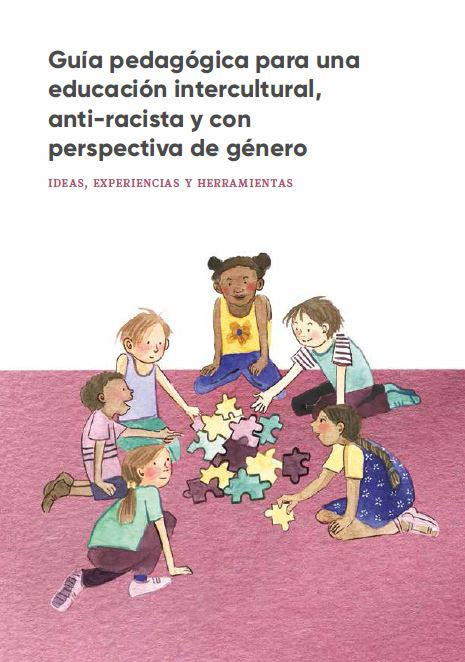 Pedagogical Guide for an Intercultural, Anti-racist and Gender Perspective Education: Ideas, Experiences and Tools Year of publication: 2017 Author: Carolina Stefoni | Andrea Riedemann | Fernanda Stang | Andrea Guerrero | Antonia Garcés | Marta Camarena Corporate author: Programa Interdisciplinario de Estudios Migratorios (PRIEM) | Universidad Alberto Hurtado | Fundación para la Superación de la Pobreza (FUSUPO) The main purpose of this Guide is, then, to share some ideas, tools and experiences that can help build and walk the path towards an intercultural, anti-racist and gender perspective education in various educational spaces. It is directed primarily - though not exclusively, of course - to all those people who are part of formal and informal teaching-learning processes. It is important to emphasize that the Guide does not pretend to be a recipe for a mechanical application, but a tool box that each educational community can use considering its specific context, its particular needs and its potentialities. Guía pedagógica para una educación intercultural, anti-racista y con perspectiva de género: ideas, experiencias y herramientas Year of publication: 2017 Author: Carolina Stefoni | Andrea Riedemann | Fernanda Stang | Andrea Guerrero | Antonia Garcés | Marta Camarena Corporate author: Programa Interdisciplinario de Estudios Migratorios (PRIEM) | Universidad Alberto Hurtado | Fundación para la Superación de la Pobreza (FUSUPO) El propósito principal de esta Guía es, entonces, compartir algunas ideas, herramientas y experiencias que puedan ayudar a construir y andar el camino hacia una educación intercultural, anti-racista y con perspectiva de género en diversos espacios educativos. Está dirigida principalmente -aunque no de manera exclusiva, por supuesto- a todas aquellas personas que sean parte de procesos de enseñanza-aprendizaje formales e informales. Es importante enfatizar que la Guía no pretende ser un recetario para una aplicación mecánica, sino una caja de herramientas que cada comunidad educativa puede usar considerando su contexto específico, sus necesidades particulares y sus potencialidades.