
Resources
Explore a wide range of valuable resources on GCED to deepen your understanding and enhance your research, advocacy, teaching, and learning.
3,797 Results found
 사회과 교육과정에 반영된 세계시민교육: 제6차 교육과정에서 2015 개정 교육과정의 변화를 중심으로 (교육연구; Vol. 68) Year of publication: 2017 Author: Jungwoo Lee Corporate author: Sungshin Women's University Educational Research Institute 이 연구는 제6차 교육과정에서 2015 개정 교육과정까지의 초등학교와 중학교 사회과 교육과정의 성격과 목표, 성취기준에 반영되어 있는 세계시민교육 관련 내용을 분석한 것이다. 분석 결과는 세 가지로 요약된다. 첫째, 세계시민교육 관련 주제는 초등학교 5-6학년과 중학교 급에서는 제6차 교육과정부터 꾸준히 등장하였다. 초등학교 3-4학년의 경우 2007 개정 교육과정부터 다양성 및 소수자와 관련된 내용으로 세계화 관련 내용이 제시되기 시작하였다. 둘째, 인지, 정서, 행동 영역 중에서는 전반적으로 인지적 영역에 대한 강조가 상대적으로 강하게 나타났다. 하지만 초등학교 5-6학년 군에서는 교육과정 개정이 거듭될수록 인지, 정서, 행동 영역에 대한 강조가 고르게 나타나고 있는 반면, 3-4학년군은 상대적으로 정서 영역이, 중학교 급은 인지 영역에 대한 강조가 강하게 나타나는 등 학교 급별 차이가 있었다. 셋째, 관점 면에서는 국가주의적 관점이 지배적인 가운데 세계정의와 거버넌스, 신자유주의 관점이 혼재되어 있었다. 이러한 분석 결과가 교육과정 및 교수학습에 시사하는 바를 논의하였다.
  Study on Youth participated on the Development of Global Citizenship: Focused on A case of Community Link Extra Curricular School Activities (Forum for Youth Culture; Vol. 36) Year of publication: 2013 Author: Oksoon Kim | Insoon Shin Corporate author: Research Center for Korean Youth Culture The purpose of this study is to investigate the effects of global citizenship program that had been provided as a CLECSA for creativity to middle school students. Global citizenship program had been administered by the specialists of Hanbart welfare center at Dae Jeon city during the 2nd semester of 2012. Achieving the purpose of study, researchers compare 216 students who had the global citizenship program with 71 student who did not have in terms of ① universal value of human being, ②respect for diversity, ③ interests in global issues, ④ intension of participating in problem solving, ⑤ inclination for globalization. From the analysis of the questionnaires, three important result has been came out. First, female students showed high scores in the area of interests in global issues but low in the area of intension of participating in problem solving. Second, experience of going abroad did not affect the global citizenship, however, the experience of staying foreign countries over one year affected the global citizenship, especially in the area of universal value of human being, respect for diversity, and inclination for globalization. Third, a group of students who had the global citizenship program showed high scores in the area of interests in global issues and intention of participating in problem solving. Based upon the research findings, researchers suggested that CLECSA for creativity should reinforce in terms of quantity and quality and develop the diverse programs for multicultural education on the basis of global education. 세계시민교육 참여 청소년에 관한 연구: 지역사회 연계형 창의적 체험활동의 일례를 중심으로 (청소년문화포럼; Vol. 36) Year of publication: 2013 Author: 김옥순 | 신인순 Corporate author: 한국청소년문화연구소 본 연구는 세계시민교육 프로그램의 효과를 고찰하고자, 2012년 2학기 중 대전의 한밭복지관이 주관한 창의적 체험활동에 참여했던 중학생 216명과 일반 중학생 71명 등 총 287명을 대상으로 인간의 보편적 가치, 다양성에 대한 가치존중, 세계문제에 대한 흥미와 관심, 문제해결에 대한 참여의지, 세계지향성 등 5개 영역의 세계시민의식을 비교하는 설문조사를 실시하여 분석한 것이다. 이를 통해 밝혀진 연구 결과는 다음과 같다. 첫째, 여자 청소년은 다양성에 대한 가치존중이 남자 청소년 보다 높지만, 세계문제에 대한 흥미와 관심, 그리고 문제해결에 대한 참여의지는 낮았다. 둘째, 외국에 가본 경험 유무는 세계시민의식에 유의미한 차이를 보이지 않았고, 외국에서 1년 이상 살아본 경험이 있는 청소년은 인간의 보편적 가치, 다양성에 대한 가치존중, 세계지향성 등 3개 영역의 점수가 높은 것으로 나타났다. 셋째, 세계시민교육 프로그램에 참여한 청소년은 일반 청소년보다 세계문제에 대한 흥미와 관심이 많았고, 문제해결에 대한 참여의지도 높았다. 본 연구는 이러한 연구 결과를 통해, 창의적 체험활동 시간을 이용한 세계시민교육의 양적, 질적인 보완과 지역사회와의 다양한 연계 방안, 다문화에 대해 높아지는 관심과의 연계 등을 제안하였다.
  Un Mundo en Igualdad Year of publication: 2019 Corporate author: Fundación Entreculturas “Un Mundo en Igualdad” es el primer ejemplar de una serie de recopilaciones de recursos educativos diseñados por Entreculturas para trabajar distintas temáticas globales con grupos de niños, niñas y jóvenes.En esta ocasión, esta publicación recoge una serie de recursos educativos para trabajar sobre la promoción de la igualdad de género, con el objetivo de desarrollar conocimientos, valores y competencias sociales y ciudadanas para promover que los grupos aprendan que la igualdad está en sus manos y que pueden ser protagonistas de los cambios necesarios para alcanzar una sociedad igualitaria.La publicación ofrece propuestas didácticas divididas en cuatro bloques de edad. Cada bloque recoge un itinerario adaptado con distintas actividades de menor a mayor grado de complejidad para trabajar con grupos de niñas, niños y jóvenes, tanto en el ámbito formal como en el no formal, de 4 a 18 años.
  Hacia una ciudadanía eco-global: Un mundo de alternativas Year of publication: 2017 Corporate author: Fundación Entreculturas En este cuaderno se ofrece tres propuestas desde las que crear alternativas para labrar desde la educación, una ciudadanía que sane la Tierra:1. Una propuesta ética para cuestionarnos más allá de lo evidente e ir a las causas de fondo así como las claves para reorientarnos.2. Una propuesta política que nos da el marco y el recorrido de la acción para transitar como ciudadanía hacia 2030 y alcanzar los Objetivos de Desarrollo sostenible.3. Una propuesta pedagógica como herramienta para una ciudadanía que se convierta en agente de la transición hacia nuevos modelos y estilos de vida comprometidos con la justicia y la sostenibilidad.
 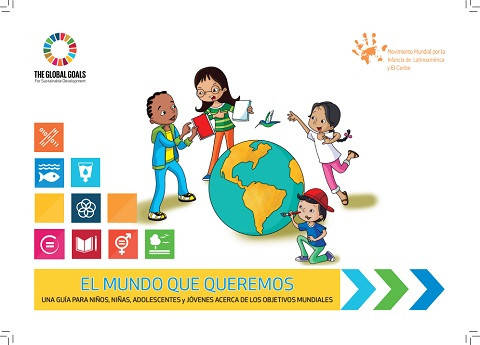 El mundo que queremos: Una guía para niños, niñas, adolescentes y jóvenes acerca de los objetivos mundiales Year of publication: 2015 Author: Dora Bardales | Paola Arenas Corporate author: Movimiento Mundial por la Infancia en Latinoamérica y el Caribe (MMI-LAC) El propósito de esta guía es ayudarle a comprender los Objetivos, la manera en que impactan su vida y lo que usted puede hacer día con día para ayudar a su gobierno a lograrlos. Este documento también nos ayudará a comprender lo que piensan los niños, niñas, adolescentes y jóvenes como usted acerca de estos Objetivos, lo que es más importante para usted, los pasos que se deben tomar para mejorar la vida de todos y la manera en que podemos trabajar jun.
  The Future of Education in Europe with Brikena Xhomaqi (LLLP) Year of publication: 2020 Author: Brikena Xhomaqi Corporate author: Bridge 47 Brikena Xhomaqi is the director of the Life Long Learning Platform (LLLP), an organisation that promotes life long learning and advocates for access to quality education for all. In this episode, Brikena discusses the future of education in Europe and the challenges and possibilities for global citizenship education.
  The History, Practice and Thinking of the Development of Italian Civic Education Year of publication: 2020 Author: An Yangchao | Jia Lishuai Corporate author: Beijing Normal University Italian civic education has a long history and has gone through three historical stages, namely, the period of dissociation between the government and the Catholic church, the period of politicization and the period of development under the background of “global citizenship”. Related measures taken by the government include Italian civic education courses, schools and multi-organizations to carry out civic education practice activities, and expanding the off-campus civic education path and other ways. As a whole, it shows the characteristics of changing from “non-standard” to “policy”, from “training learning” to “experiential learning”, from “single school curriculum” to “diversified subject participation”. 意大利公民教育发展的历程、实践与思考 Year of publication: 2020 Author: An Yangchao | Jia Lishuai Corporate author: 北京师范大学 意大利公民教育历经三个历史阶段,分别为游离期、政策化期和全球化期。其主要实施举措包括开设公民教育课程、学校联合多元组织开展公民教育实践活动、拓展校外公民教育路径。意大利公民教育从而在整体上呈现出发展方向由“非正规化”到“政策化”、教育主体由“单一的学校课程”到“多元化主体参与”、教育方法由“训练式”到“体验式”的三大特征,并积累了重视政府主导、调动多元教育主体、开发“体验式”教育资源等经验。
  美国国家认同教育发展趋势与启示 (现代大学教育; No. 2) Year of publication: 2020 Author: Zhang Liguo | Guo Liqiang Corporate author: Hunan Higher Education Association | Central South University 受全球化、信息化和文化多元化等因素影响,国家认同解构和分化的风险越来越大。在国家认同建构过程中,国家认同教育无疑发挥着独特而重要的作用。美国作为开展国家认同教育较为成功的国家之一,其国家认同教育在演进过程中呈现出教育理念由 “一元”向 “一体”转化,教育模式由 “强制”向 “浸润”过渡,教育场域由 “学校” “生活”延伸等典型特点,其中一些经验对中国国家认同教育具有一定的借鉴和启示意义。中国的国家认同教育应坚持塑同存异,在尊重文化多元性的同时,以铸牢共有价值观为精神纽带,有效调适国家认同统一性与多样性间的矛盾; 坚持知行结合,持续加强公民教育以塑 造负责任的积极公民; 坚持刚柔并济,以多元化的课堂教学与实践改革提高教育的实效性; 坚持内外兼修,深刻认识国家认同的核心素养属性,以开放的视野升华对国家认同教育的理解与认识。