
Resources
Explore a wide range of valuable resources on GCED to deepen your understanding and enhance your research, advocacy, teaching, and learning.
2,781 Results found
 A Small Change That Makes Them Happy in the Refugee Camps! Year of publication: 2021 Corporate author: 联合国儿童基金会 This video presents the difficulties and challenges faced by children with disabilities in a refugee camp in Syria, and UNICEF's efforts to address them. 一个小小改变,让难民营里的他们开心到飞起! Year of publication: 2021 Corporate author: 联合国儿童基金会 本视频介绍了叙利亚难民营中残障儿童所面临的困难与挑战,以及联合国儿童基金会为此所作出的努力。
 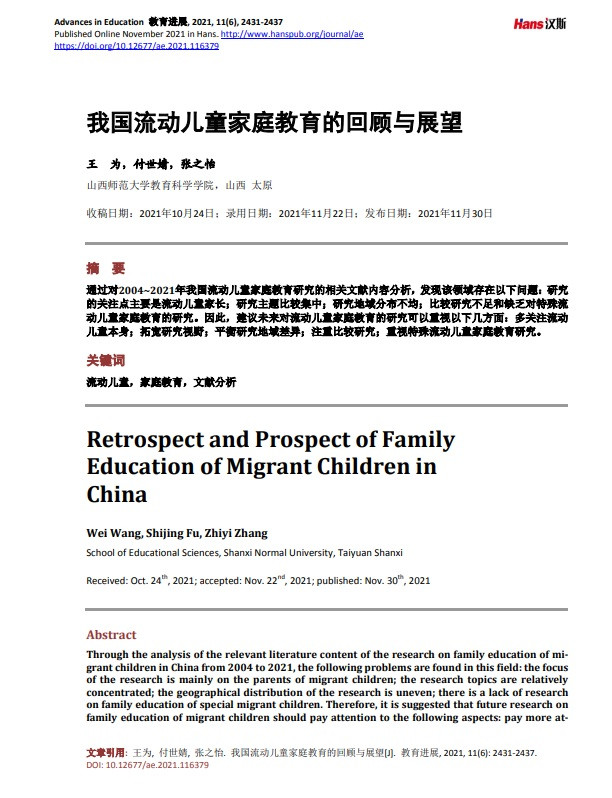 Retrospect and Prospect of Family Education of Migrant Children in China Year of publication: 2021 Author: 王为 | 付世婧 | 张之怡 This paper reviews the research literature on the family education of migrant children in China over the past 20 years, examines the problems in this area of research, and makes suggestions for future research. 我国流动儿童家庭教育的回顾与展望 Year of publication: 2021 Author: 王为 | 付世婧 | 张之怡 本文通过回顾过去近20年间关于中国流动儿童家庭教育的研究文献,探讨该领域研究中所存在的问题,并对未来研究提出相关建议。
  Educating Students to Improve the World (SpringerBriefs in Education) Year of publication: 2020 Author: Fernando Reimers This open access book addresses how to help students find purpose in a rapidly changing world. In a probing and visionary analysis of the field of global education Fernando Reimers explains how to lead the transformation of schools and school systems in order to more effectively prepare students to address today’s’ most urgent challenges and to invent a better future. It discusses several global citizenship curricula that have been adopted by schools and school networks, and ties them into an approach to lead school change into the uncharted territory of the future. Given its scope, the book will help teachers, school and district leaders tackle the change management needed in order to introduce global education, and more generally increase the relevancy of education. In addition, the book offers a “bridge” for more productive collaboration and communication between those who lead the process of educational change, and those who study and theorize this important work.
  Multicultural Education and Its Implications for Educational Leadership as an Introduction to Stimulating Management Quality: A Proposed Vision Year of publication: 2011 Author: Essam Jamal Selim Ghanem Corporate author: Al-Azhar University The study discusses multiculturalism. It also works as an analytical review of the literature that dealt with multicultural education in terms of historical development, concept, dimensions, fields, roles of teachers, students, and multicultural educational programs, and the implications of that for educational leadership and the role they can play in activating the application of education multicultural. التعليم المتعدد الثقافات ومضامينه للقيادة التربوية كمدخل لحفز الجودة الإدارية: رؤية مقترحة Year of publication: 2011 Author: Essam Jamal Selim Ghanem Corporate author: Al-Azhar University تناقش الدراسة التعددية الثقافية، حيث تعمل على مراجعة تحليلية للأدبيات التي تناولت التعليم المتعدد الثقافات من حيث التطور التاريخي، والمفهوم، والأبعاد، والمجالات، وأدوار المعلمين، والطلاب، والبرامج التعليمية المتعددة الثقافات، ومضامين ذلك للقيادة التربوية والدور الذي يمكن أن تلعبه في تفعيل تطبيق التعليم المتعدد الثقافات.
 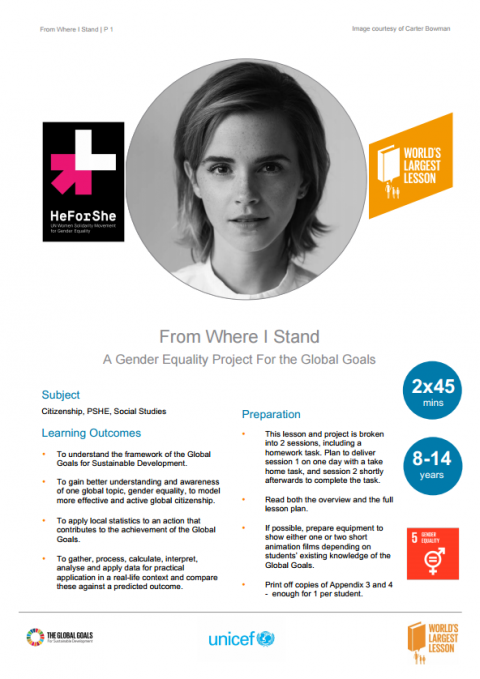 From Where I Stand: A Gender Equality Project for the Global Goals Corporate author: United Nations Children's Fund (UNICEF) This project enables you to think about and contribute to encouraging women and girls to have equal opportunities to be heard and to have real opportunities to participate in all political, economic and public spheres.
  Address by Irina Bokova, Director-General of UNESCO on the occasion of the opening of the PGA High-Level SDG Action Event on Education SDG4 Year of publication: 2017 Corporate author: UNESCO. Director-General, 2009-2017 (Bokova, I.G.) This address was given by Irina Bokova, Director-General of UNESCO on the occasion of the opening of the PGA High-Level SDG Action Event on Education SDG4.
 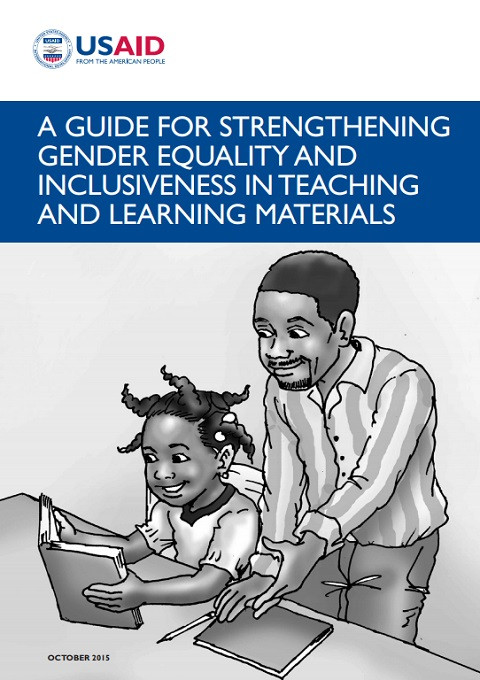 A Guide for Strengthening Gender Equality and Inclusiveness in Teaching and Learning Materials Year of publication: 2015 Corporate author: RTI International | United States Agency for International Development (USAID) The purpose of this guide is to provide guidance on how to represent members of all subgroups of a society in teaching and learning materials in equitable and non-stereotypical ways. Reviewers can use the strategies proposed in this guide to evaluate existing teaching and learning materials across primary and secondary levels. Authors or developers can employ the strategies to inform the development of new materials. This guide is organized according to themes that emerged from the review of relevant literature. Each theme reflects a particular type of bias that should be considered when evaluating or developing teaching and learning materials.