
Resources
Explore a wide range of valuable resources on GCED to deepen your understanding and enhance your research, advocacy, teaching, and learning.
306 Results found
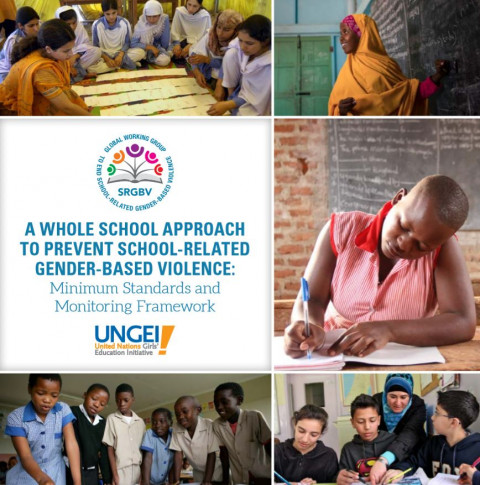 A Whole School Approach to Prevent School-Related Gender-Based Violence Year of publication: 2016 Corporate author: United Nations Girls' Education Initiative (UNGEI) The limitations of data collection and monitoring mechanisms around school-related gender-based violence (SRGBV) are widely acknowledged. This guide provides a framework to guide policy makers and practitioners in designing school violence prevention programmes and strengthening response actions. The prevention model is based on eight evidence-based standards and is accompanied by a monitoring approach with a set of proposed indicators at school, district and national levels. The goal is to enable implementation strategies to be adapted and monitored in order to improve data collection and accountability around incidents of SRGBV at the school, district and national levels.
  املبادرة العاملية للتعليم أوا: مبادرة األمني العام لألمم املتحدة Year of publication: 2012 Corporate author: United Nations (UN) أطلق الأمين العام للأمم المتحدة مبادرة التعليم أولاً العالمية (GEFI) لمدة خمس سنوات في سبتمبر 2012 لتسريع التقدم نحو تحقيق أهداف التعليم للجميع والأهداف الإنمائية للألفية المتعلقة بالتعليم. وتهدف المبادرة إلى: حشد مجموعة واسعة من الجهات الفاعلة للدفعة النهائية نحو عام 2015؛ وضع التعليم الجيد والملائم والتحويلي في قلب جداول الأعمال الاجتماعية والسياسية والتنموية؛ توليد تمويل إضافي وكاف للتعليم من خلال جهود الدعوة العالمية المستمرة. وقد حددت هذه المبادرة المجالات الثلاثة ذات الأولوية؛ إدخال كل طفل إلى المدرسة، وتحسين جودة التعلم، وتعزيز المواطنة العالمية. Iniciativa Mundial La Educación ante Todo: una Iniciativa del Secretario General de las Naciones Unidas Year of publication: 2012 Corporate author: United Nations (UN) The United Nations Secretary-General launched the five-year Global Education First Initiative (GEFI) in September 2012 to accelerate progress towards the Education for All goals and the education-related Millennium Development Goals. The Initiative aims to: Rally together a broad spectrum of actors for the final push to 2015; Put quality, relevant and transformative education at the heart of the social, political and development agendas; Generate additional and sufficient funding for education through sustained global advocacy efforts. This initiative outlined the three priority areas; Put every child in school, Improve the quality of learning, and Fostering global citizenship. L'Initiative Mondiale pour l'Education Avant tout: une Initiative du Secrétaire Général de l'Organisation des Nations Unies Year of publication: 2012 Corporate author: United Nations (UN) The United Nations Secretary-General launched the five-year Global Education First Initiative (GEFI) in September 2012 to accelerate progress towards the Education for All goals and the education-related Millennium Development Goals. The Initiative aims to: Rally together a broad spectrum of actors for the final push to 2015; Put quality, relevant and transformative education at the heart of the social, political and development agendas; Generate additional and sufficient funding for education through sustained global advocacy efforts. This initiative outlined the three priority areas; Put every child in school, Improve the quality of learning, and Fostering global citizenship. Global Education First Initiative: An Initiative of the United Nations Secretary-General Year of publication: 2012 Corporate author: United Nations (UN) The United Nations Secretary-General launched the five-year Global Education First Initiative (GEFI) in September 2012 to accelerate progress towards the Education for All goals and the education-related Millennium Development Goals. The Initiative aims to: Rally together a broad spectrum of actors for the final push to 2015; Put quality, relevant and transformative education at the heart of the social, political and development agendas; Generate additional and sufficient funding for education through sustained global advocacy efforts. This initiative outlined the three priority areas; Put every child in school, Improve the quality of learning, and Fostering global citizenship. Global Education First Initiative: An Initiative of the United Nations Secretary-General Year of publication: 2012 Corporate author: United Nations (UN) Le Secrétaire Général de l’ONU a lancé l’Éducation Globale Première Initiative (EGPI) pour les cinq ans en Septembre 2012 pour accélérer les progrès vers l'Éducation pour Tous et les Objectifs du Millénaire pour le Développement liés à l'éducation. L'initiative vise à: Rassemblement d' un large éventail d'acteurs pour la poussée finale à 2015; Mettre de qualités, de pertinence et d’éducation transformatrice au cœur des agendas sociaux, politiques et de développement; Générer des fonds supplémentaires et suffisants pour l'éducation grâce à des efforts de sensibilisation mondiale soutenue. Cette initiative a décrit les trois domaines prioritaires; Mettez tous les enfants à l'école, Améliorer la qualité de l'apprentissage, et Favoriser la citoyenneté mondiale. 글로벌 교육 우선 구상: 유엔 사무총장의 구상 Year of publication: 2012 Corporate author: United Nations (UN) 유엔 사무총장은 교육과 관련된 ‘모두를 위한 교육 목표(Education for All Goals)’와 ‘새천년개발목표(Millennium Development Goals)’의 진행을 가속화 시키기 위하여 2012년 9월 5개년 ‘글로벌교육우선구상(GEFI)’을 출범시켰다. 이 구상의 목표는 2015년 최종 추진을 위한 광범위한 활동의 스펙트럼을 함께 이어가며, 그 중심에 사회·정치적 개발 의제와 관련된 양질의 변화된 교육을 두고, 지속적인 글로벌 지지 노력을 통해 교육을 위한 충분한 추가적 펀딩을 확보한다. 본 사업은 세가지 우선 순위의 영역을 두는데, 그 첫 번째로는 모든 어린이를 학교에 입학시키는 것, 두 번째는 학습의 질을 향상시키는 것, 세 번째는 세계 시민을 육성하는 것이다.
  [Video] We must act now - for people and our planet Year of publication: 2019 Corporate author: UN. Department of Economic and Social Affairs (UN. DESA) The world is facing challenges of an unprecedented nature. A polarized political landscape, worrisome signs of a global economic slow-down, growing inequalities, conflicts and a global environmental crisis. The evidence is clear: we must act now. The international community has a brief window of opportunity to accelerate action, using the plan in place to achieve a positive outcome for everyone: the 2030 Agenda for Sustainable Development and its 17 transformative Sustainable Development Goals (SDGs).
  Creating Global Citizens: The AFS Effect Year of publication: 2019 Corporate author: AFS Intercultural Programs The AFS global community has countless testimonials of how our alumni, students, volunteers, families, and others are making a positive change in their communities. These stories are a true inspiration and a testament to the important impact our organization is creating worldwide. Our hope is that our exchange students become changemakers through their study abroad experience with significant contributions to the global corporate and non-profit sectors, while benefiting from the intercultural learnings and meaningful connections long after they return home. All AFS participants are active global citizens in the making, representing their countries as cultural ambassadors, each helping drive the AFS mission forward - the mission of building a more just and peaceful world.While the impact of AFS and studying abroad in general have been examined in the past through various research projects, this report is the first large-scale, global survey of the AFS alumni community based on responses from over 10,500 former AFS participants. It aims to explore the effect an AFS experience can have on the lives and careers of our alumni while investigating the impact of secondary school mobility globally. The study also includes real-life examples from our former participants of changes alumni can bring to their local communities thereby furthering the AFS mission worldwide. The results of this global survey demonstrate that AFS alumni are making an impact across industries, working on social causes, and contributing to their home and host countries alike. That is what we call the #AFSEffect.
 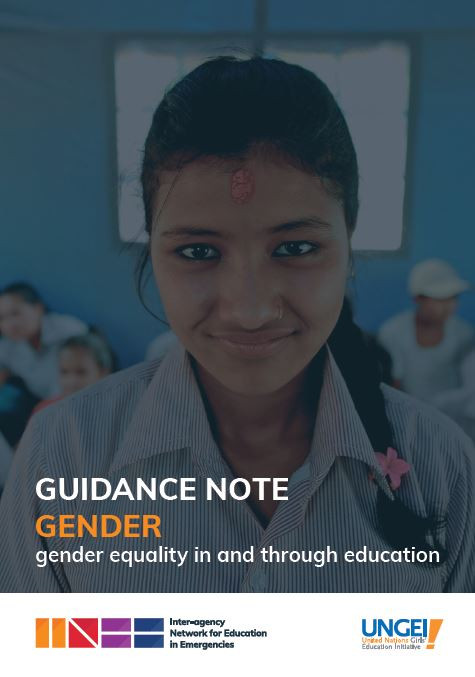 INEE Guidance Note on Gender: Equality in and Through Education Year of publication: 2019 Corporate author: Inter-agency Network for Education in Emergencies (INEE) With the launch of the Global Goals for Sustainable Development (SDGs) in 2015, the international community committed to providing inclusive and equitable quality education for all (SDG4) as well as achieving gender equality and the empowerment of all women and girls (SDG5). The Global Goals also emphasize the need to “leave no one behind” by focusing on those furthest behind first, such as those affected by crisis. In line with this, the Education 2030 Framework for Action stresses the importance of providing education in “safe, supportive and secure learning environments free from violence” and recommends a stronger, better coordinated response to ensure the protective space of education is maintained during crises and subsequent recovery efforts.In response to these global commitments, the INEE Guidance Note on Gender provides strategies to ensure that girls, boys, women, and men in contexts of conflict and crisis equally enjoy the protection and learning outcomes that quality education can provide. It also outlines principles for gender-responsive programming, in alignment with the INEE Minimum Standards for Education in Emergencies. The Guidance Note on Gender shows how attention to gender dynamics and social constraints will result in better education for all crisis-affected populations and help build inclusive, equitable education systems for the future. This guidance note also responds to recent developments in the humanitarian context, including the historic commitment made by G7 partners to quality education for girls in crisis situations. The ensuing Charlevoix Declaration on Quality Education for Girls, Adolescent Girls, and Women in Developing Countries recognizes that quality education can contribute to peace and stability as well as positive health and life outcomes for all. It is critical that the development community now harnesses this global momentum by working together to break the particular barriers that prevent too many girls and boys in situations of crisis and conflict from accessing the education they need. It is our hope that this Guidance Note on Gender will help better equip those at the frontlines of this work to do just that.